
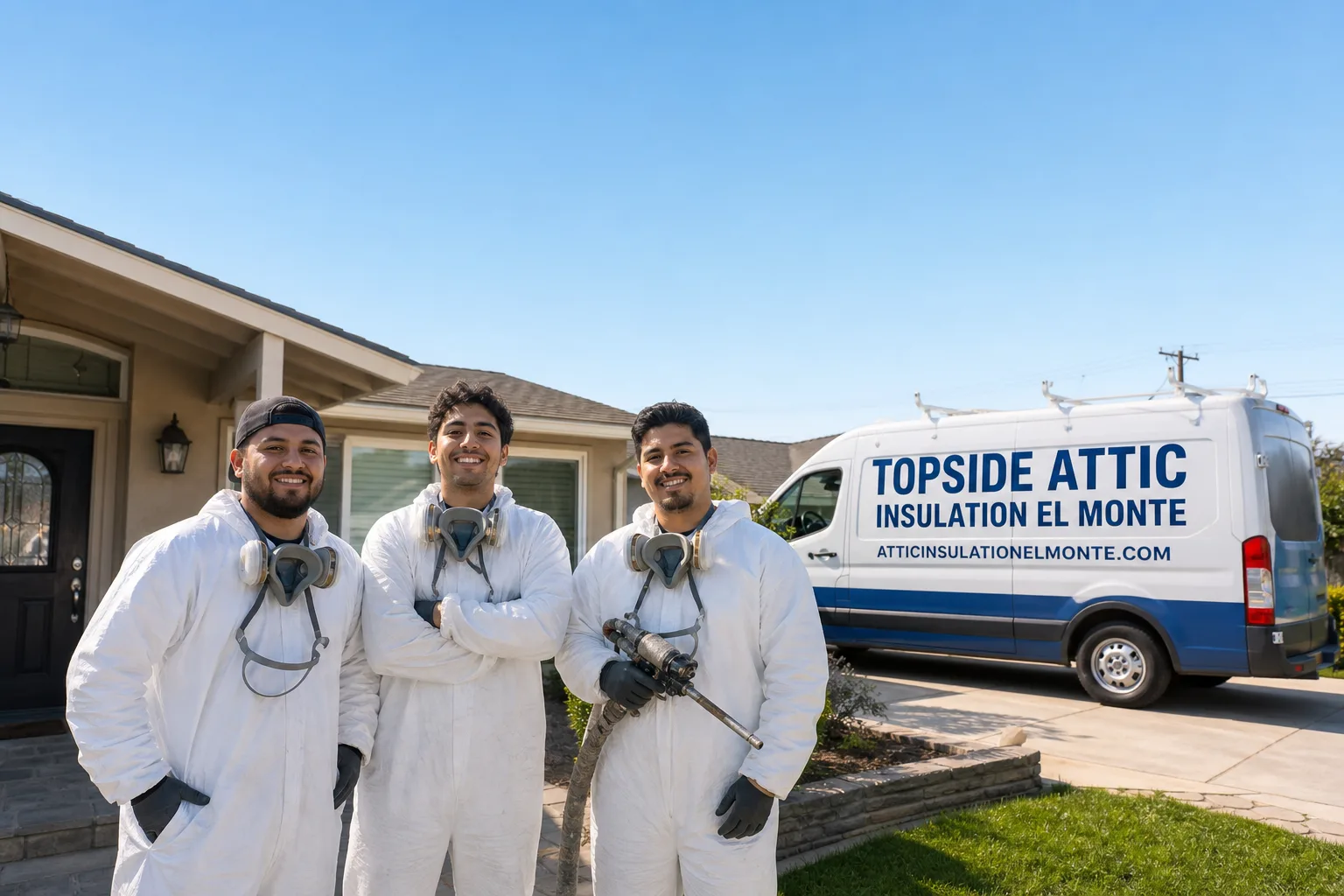
How Much Does Blown-In Insulation Cost in El Monte?
Blown-in insulation in El Monte, CA typically costs between $1,400 and $3,800 for a standard attic, with most single-story homes in the 1,200-to-2,000-square-foot range landing between $1,600 and $2,600 after air sealing is completed first. The wide range comes down to current insulation depth, attic access, and whether the job includes the air sealing that needs to happen before any insulation goes in – skip that step and you’re blowing money into a leaking envelope.
Those numbers reflect what we see in El Monte specifically – homes built in the 1950s through 1980s in neighborhoods like South El Monte, Garvey, and along Valley Boulevard tend to have the oldest stock insulation and the most air-sealing work to do before the blower hose ever comes out.
Blown-In Insulation Cost Breakdown (2026)
Blown-in insulation in El Monte is priced by the job scope, not just by the bag count. Here’s how the line items typically stack up in this market:
| Scope Item | Typical Cost Range (El Monte, 2026) |
|---|---|
| Attic air sealing (top plates, can lights, penetrations) | $450 – $900 |
| Blown-in fiberglass insulation (per 1,000 sq ft, to R-38) | $700 – $1,100 |
| Blown-in cellulose insulation (per 1,000 sq ft, to R-38) | $600 – $950 |
| Blown-in insulation upgrade from R-19 to R-49 (per 1,000 sq ft) | $400 – $750 (add-on to existing) |
| Insulation removal before re-blow (per 1,000 sq ft) | $500 – $900 |
| Attic hatch insulation and weatherstripping | $80 – $180 |
| Full attic blown-in job – small home (under 1,200 sq ft) | $1,400 – $2,000 |
| Full attic blown-in job – mid-size home (1,200-2,000 sq ft) | $1,600 – $2,600 |
| Full attic blown-in job – larger home (2,000-2,800 sq ft) | $2,400 – $3,800 |
A few things to understand about these numbers. First, air sealing is included in every job estimate we write – not because it inflates the price but because blowing insulation over unsealed top plates and open can-light penetrations in a 1960s El Monte bungalow is a waste of material. Second, the price per square foot drops as attic square footage goes up, so a 2,400-square-foot attic is not simply twice the cost of a 1,200-square-foot one. Third, if the existing insulation is rodent-contaminated or wet from a previous roof leak – both situations we see regularly in the older housing stock along Peck Road and Tyler Avenue – removal costs stack on top of the install price.
California Title 24 requires a minimum R-38 in climate zones 9 and 10, which covers El Monte. Many homes in the city are sitting at R-11 or R-19 – installed forty years ago – which means the job often involves blowing enough material to hit R-38 or higher, not just topping off a few inches.
Under Haven Standard Clause 1, you receive a written price with a flat scope and a written warranty before anyone touches your attic. That number on paper is the number on the invoice.
What Affects Blown-In Insulation Pricing in El Monte
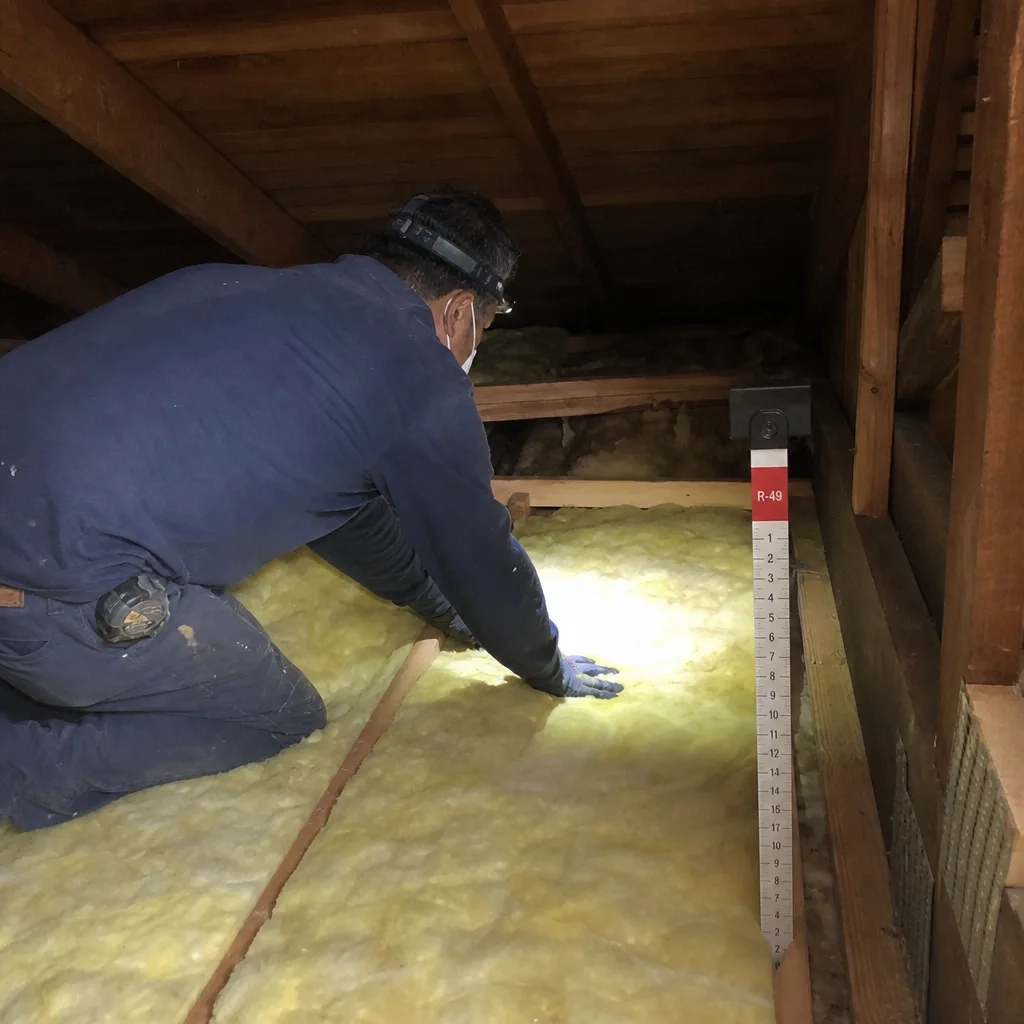
Six factors move the price more than anything else in this market. Each one is worth understanding before you compare estimates.
- Current insulation depth and condition. Homes built before 1980 in El Monte – which covers a large share of the housing stock in Garvey Avenue Corridor, the Cherrylee neighborhood, and blocks near Santa Anita Avenue – often have 3 to 4 inches of original rock wool or fiberglass that has settled, compacted, and in some cases been disturbed by pest activity. Getting to R-38 from that baseline requires significantly more material than topping off a home that already has R-19. If the existing insulation is contaminated, removal comes first, which adds a separate line item.
- Attic geometry and access. El Monte has a lot of low-pitch ranch-style roofs – the kind with tight knee walls, minimal headroom, and structural beams that make running a blower hose from one end to the other a slow process. A clean, open attic with a decent hatch near center costs less in labor than a chopped-up attic with two small access points and HVAC equipment sitting in the path of the blower. Attics under 18 inches of clearance add time regardless of square footage.
- Air sealing scope. This is the most variable cost on any attic job. An older El Monte home with recessed can lights throughout – common in remodels done in the 1990s – can have 30 to 60 unsealed penetrations, each of which needs to be capped and sealed before insulation covers them. Top plates in these homes often weren’t caulked during original construction. A blower-door test – a pressurization measurement that shows, in one number, how much conditioned air your home’s envelope is losing – identifies the full scope of air sealing needed. We run one before and after every applicable job so you can see the actual result rather than take our word for it.
- Material type: fiberglass versus cellulose. Both perform well in El Monte’s climate, and both are available in materials sourced from manufacturers like Owens Corning, Johns Manville, Knauf, and GreenFiber. Cellulose typically runs 5 to 10 percent less per square foot than fiberglass blown-in, though it settles slightly over time and requires marginally more material to hit the same R-value. Fiberglass blown-in does not settle and carries a consistent R-value per inch. Neither is wrong for this market – the decision usually comes down to existing attic conditions and what material works best in the specific attic configuration.
- Whether insulation removal is required. Rodent activity is common in El Monte attics, particularly in homes backing up to the Rio Hondo riverbed corridor and properties near Whittier Narrows. Contaminated insulation – material that carries urine, droppings, or nesting debris – needs to come out before new insulation goes in. Skipping removal in this situation creates an ongoing air-quality and odor problem. Removal pricing runs $500 to $900 per 1,000 square feet and gets quoted as a separate line item so you can see exactly what you’re paying for and why.
- Attic HVAC and electrical obstructions. A significant number of El Monte homes have package units or split systems with attic-mounted air handlers and ductwork running through the insulation plane. Navigating around pressurized ducts, refrigerant lines, and junction boxes slows the blowing process and adds labor. We flag these conditions in the written scope so the price accounts for them before work starts – not as an after-the-fact add-on.
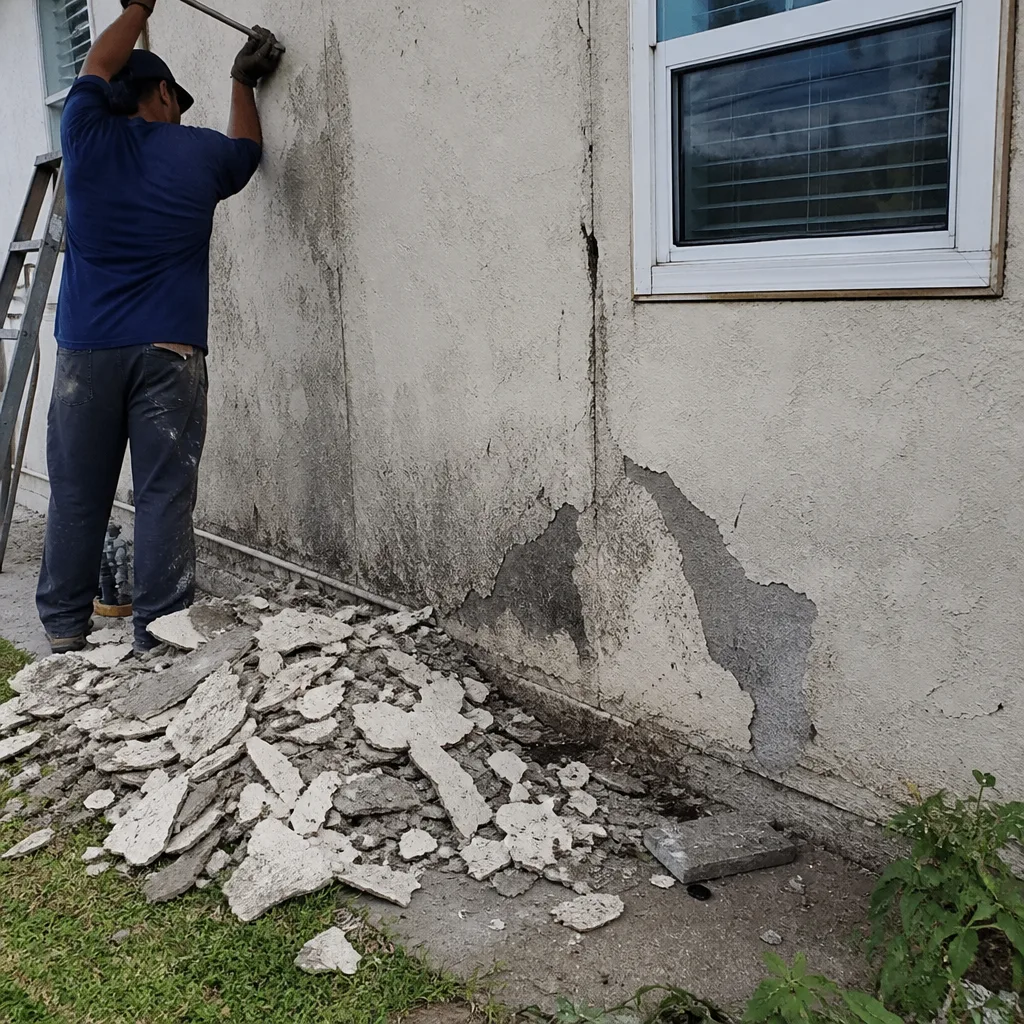 Before
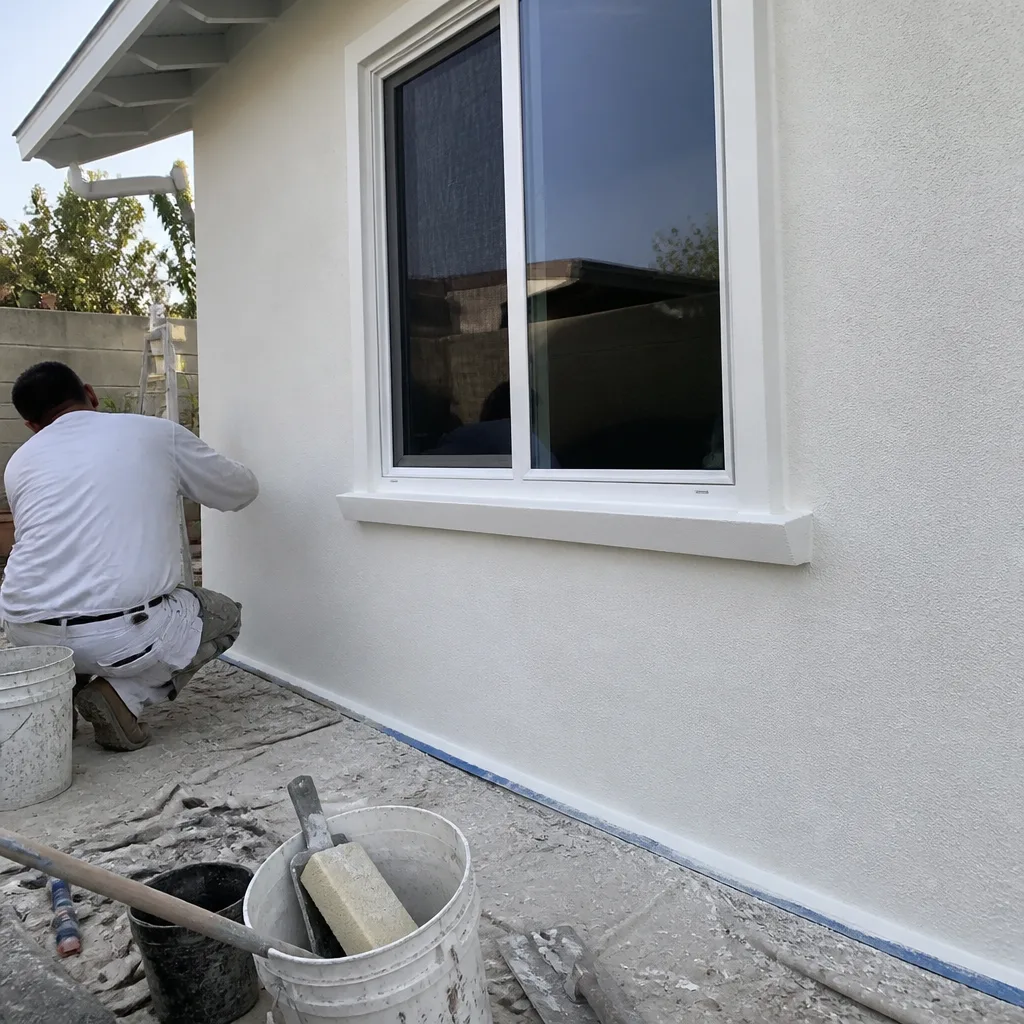 After
AfterHow Blown-In Insulation Compares to Other Insulation Types in El Monte
Blown-in is not the only option, and it’s worth knowing where it sits relative to spray foam and batt insulation – particularly if you’re also weighing costs on walls or a crawl space.
Blown-in vs. batt insulation: Batt insulation – the rolls of fiberglass or mineral wool that get cut and fitted between joists – costs less per square foot on material, but it leaves gaps around obstructions that blown-in cellulose or fiberglass fills naturally. For attic floors with irregular framing, existing wiring, or ductwork penetrations, blown-in almost always achieves better coverage. In El Monte’s older housing stock, batts often leave thermal bridges that blow-in avoids.
Blown-in vs. spray foam: Open-cell spray foam costs roughly $1.50 to $2.50 per square foot more than blown-in cellulose or fiberglass at equivalent R-value coverage. Closed-cell runs higher still. For attic floors, blown-in typically makes more economic sense; spray foam is better suited to attic rafters (creating a conditioned attic), rim joists, and specific air-sealing applications where its structural rigidity and moisture barrier properties matter. We offer both and write separate scopes for each so you can compare them honestly. You can see the full range of options on our Blown-In Insulation in El Monte service page.
Blown-in vs. radiant barrier: A radiant barrier – a reflective foil installed under the roof deck – addresses radiant heat gain, not conductive heat loss. In El Monte, where summer attic temperatures regularly exceed 140 degrees Fahrenheit, combining a radiant barrier with blown-in insulation at the floor level produces better year-round performance than either alone. They’re not an either/or choice.
The Air Sealing Step That Most El Monte Contractors Skip
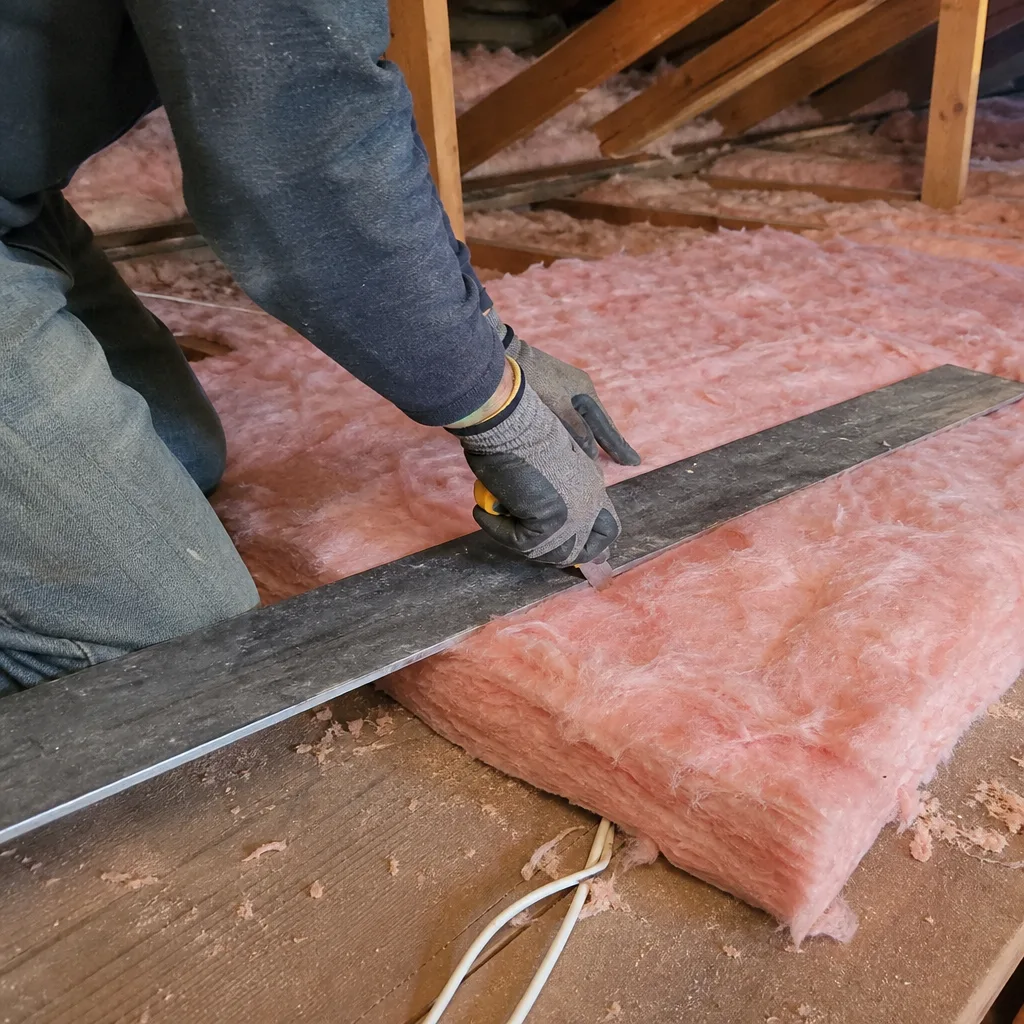
This section matters because it directly affects the price you pay and the performance you get.
Blown-in insulation slows conductive heat transfer – it resists the movement of heat through solid material. It does not stop air movement. A home with 14 inches of blown-in fiberglass but unsealed top plates, open recessed-light cans, and an unweatherstripped attic hatch is still losing a significant volume of conditioned air through those gaps every hour the HVAC system runs.
In El Monte, we routinely see blower-door readings in the 3,500 to 5,500 CFM50 range in pre-1980 homes before any sealing work – CFM50 being the cubic feet per minute of air moving through the building envelope when the house is pressurized to 50 Pascals. After completing attic air sealing on those same homes, the post-sealing number typically drops to the 1,800 to 2,800 CFM50 range. That reduction translates to a measurable drop in HVAC runtime and cooling bills.
Envelope Insulation Co., operating as Topside Attic Insulation in El Monte, does not blow insulation over an unsealed attic floor. Air sealing of top plates, can lights, and penetrations is completed first – and the scope for that work is written into the price before anyone starts. If a contractor’s estimate doesn’t include air sealing as a line item, ask specifically what penetrations they plan to seal before the blower hose comes out. The answer will tell you a lot about what you’re actually buying.
Every applicable job closes with before-and-after blower-door readings documented in writing, so you have a number that shows the performance change – not just a verbal assurance that the job went well. That documentation is included, not available on request.
How to Save on Blown-In Insulation in El Monte
There are real ways to reduce cost on this project without cutting corners on performance. There are also ways that look like savings but cost more over time.
Apply for utility rebates before the job starts. Southern California Edison offers rebates for insulation upgrades in existing homes that meet certain R-value thresholds. The exact rebate amounts and qualifying conditions change annually, but in recent years SCE has offered rebates in the $150 to $400 range for attic insulation upgrades to R-38 and above. Check SCE’s current rebate portal directly, or ask us to pull the current schedule when we’re on site – we can document the post-job R-value in writing for rebate submission.
Combine insulation with air sealing in one visit. Scheduling air sealing and blown-in insulation as a single mobilization costs less than two separate visits. Crew mobilization – the truck, the equipment, the blower machine – is a fixed cost per trip. Combining scopes onto one visit reduces that overhead.
Get a free second opinion on any written estimate you already have. Under the Haven Standard, we’ll read a competing written estimate with you – line by line – so you can see exactly what you’re comparing. If a competitor’s quote is $400 less but excludes air sealing, you’re not comparing equivalent scopes. We don’t charge for that review. Call (626) 415-3454 and we can usually schedule a same-week estimate visit.
Address rodent exclusion before booking insulation. If your attic has active pest activity, spending money on new insulation before exclusion work seals the entry points means you’ll be removing that insulation again in two to three years. Have exclusion completed first – then re-blow. It’s a harder conversation in the short term but it’s the accurate sequence.
Don’t skip to minimum code. California Title 24 requires R-38 in El Monte’s climate zone, but R-49 is achievable at a marginal additional material cost when you’re already running the blower machine. The incremental price difference between R-38 and R-49 is typically $150 to $300 on a standard El Monte attic – and the payback on the extra insulation comes faster in a climate where cooling loads run for six or seven months of the year.
Get the price in writing before anyone starts. This sounds obvious, but a verbal estimate that grows after the crew is in the attic is a pattern we hear about regularly from homeowners who found us after a bad experience elsewhere. A written price before any work starts – flat scope, written warranty – is Haven Standard Clause 1, and it’s how every job at Topside Attic Insulation is priced.
El Monte-Specific Insulation Conditions Worth Knowing
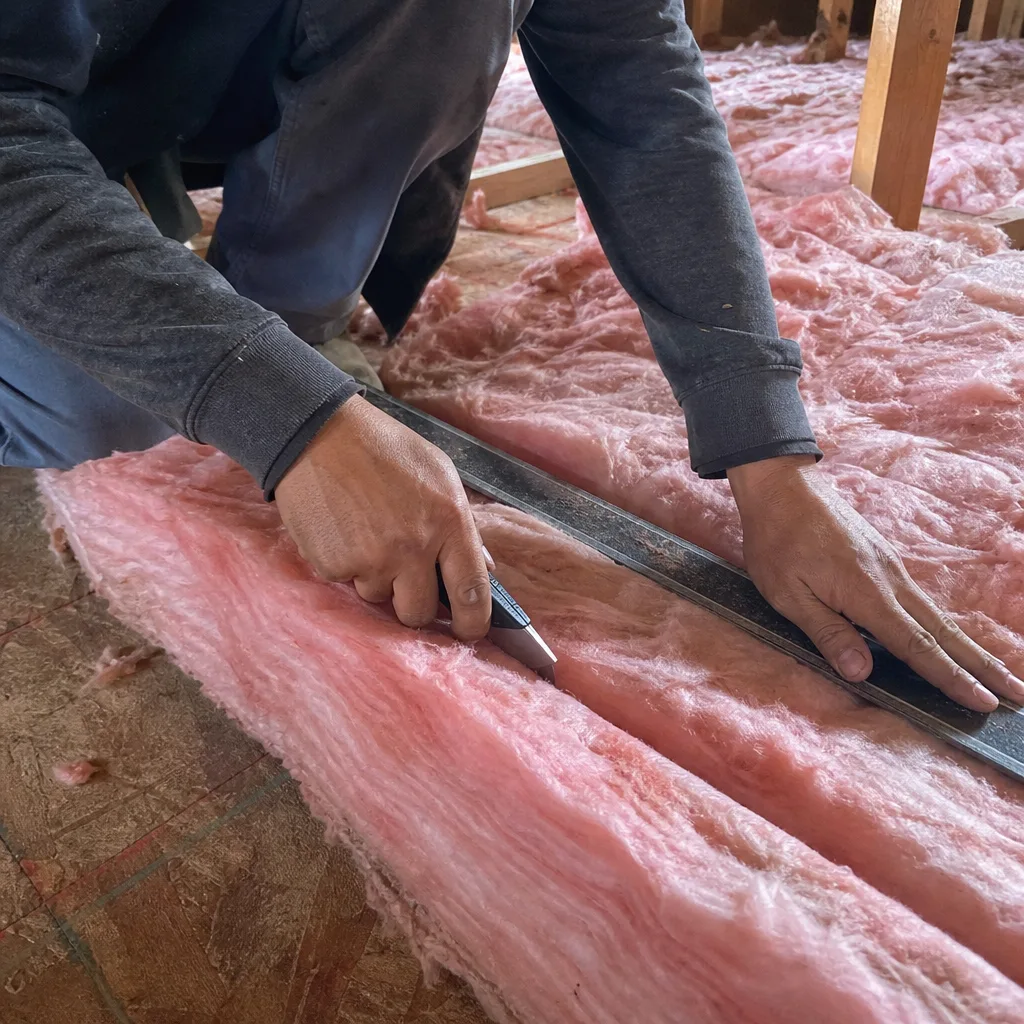
El Monte is not a generic Southern California market when it comes to insulation. The city’s housing stock skews significantly older than neighboring cities like Temple City or Baldwin Park – a large share of the single-family homes here were built between 1945 and 1975, before California had meaningful energy code requirements. That means original insulation, where it exists at all, is typically R-11 or less. Many of these attics have never had insulation upgraded since original construction.
The city’s position in the San Gabriel Valley creates a specific climate pattern worth understanding. El Monte sits in a heat basin: it gets less coastal marine influence than Pasadena or Arcadia to the north, and its urban density holds heat through the night better than communities farther east. July and August attic temperatures in a home without radiant barrier routinely exceed 140 to 150 degrees Fahrenheit. That heat moves into conditioned space by conduction through the ceiling – which is exactly what blown-in insulation at adequate R-value is designed to resist.
The combination of older housing stock, high summer heat gain, and a large proportion of homes with original ductwork in the unconditioned attic makes El Monte one of the higher-payback markets in Los Angeles County for attic insulation upgrades. We’ve seen post-job homeowner reports of cooling bill reductions in the 15 to 30 percent range after completing air sealing and blown-in insulation together – though actual savings depend on HVAC system condition, occupancy patterns, and existing duct leakage.
If your home is in the Garvey School area, near Peck Road, in the older blocks south of Valley Boulevard, or in the lower-density sections near the San Gabriel River, expect that a thorough inspection will find air-sealing work to do before the blowing begins. That’s the norm, not the exception, for pre-1980 construction here.
FAQs – Blown-In Insulation Cost in El Monte
How much does blown-in insulation cost for a typical El Monte home?
Most single-story El Monte homes in the 1,200 to 2,000 square foot range run between $1,600 and $2,600 for a full attic blown-in job that includes air sealing of penetrations first. Smaller homes under 1,200 square feet typically land between $1,400 and $2,000; larger homes in the 2,000 to 2,800 square foot range run $2,400 to $3,800. These numbers assume the existing insulation is intact – if removal is needed first, add $500 to $900 per 1,000 square feet. Call (626) 415-3454 for a written estimate specific to your home’s attic size and current insulation condition.
Is blown-in insulation cheaper than batt insulation in El Monte?
Blown-in and batt insulation run within a similar price range on a cost-per-square-foot basis, but blown-in typically delivers better coverage in the older attic configurations common in El Monte. Batt insulation cut and fitted between irregular joists leaves gaps around obstructions – gaps that blown-in cellulose or fiberglass fills. For most El Monte attics with existing wiring, ductwork, and non-standard framing, the incremental cost of blown-in over batt is justified by the coverage quality. If you have a competing written batt estimate, bring it to us and we’ll compare the scopes line by line at no charge.
Does blown-in insulation require removing the old insulation first?
Not always. If the existing insulation is dry, free of pest contamination, and not compressed below its original R-value, we can blow new material over it. If the attic shows signs of rodent activity – urine odor, droppings, nesting material – or if there has been a roof leak that left the insulation wet and compressed, removal is necessary before re-blowing. Removal runs $500 to $900 per 1,000 square feet and gets written as a separate line item in the scope so you know what you’re paying for. In El Monte attics near the Rio Hondo corridor and Whittier Narrows, we find pest-contaminated insulation in a meaningful share of the homes we inspect.
How long does blown-in insulation last in an El Monte attic?
Blown-in fiberglass insulation, once installed correctly, does not degrade in performance over time – it does not settle, compress, or lose R-value under normal conditions. Blown-in cellulose settles slightly in the first year after installation, which is accounted for by installing it at a slightly higher initial depth. Both materials, in a properly sealed El Monte attic, should maintain their installed R-value for 20 to 30 years or longer. The more common performance problem we find is not insulation degradation but insulation that was installed over unsealed penetrations – so the R-value was always present, but conditioned air was bypassing the insulation entirely through open gaps. That’s the air sealing problem, and it’s why we seal before we blow, every time.
Can I get a written estimate before committing to the job?
Yes – a written price before any work starts is Haven Standard Clause 1. That means a flat price, a written scope describing exactly what work is included, and a written warranty, all delivered before anyone touches your attic. There are no verbal estimates that evolve into larger invoices after the crew is in place. Call (626) 415-3454 to schedule an estimate visit, and you’ll leave that conversation with a number on paper – not a ballpark and a promise to follow up.
Key Takeaways
- Blown-in insulation in El Monte runs $1,400 to $3,800 for most single-family homes, depending on attic size, current insulation depth, and air-sealing scope.
- Air sealing of top plates, can lights, and penetrations must happen before insulation is added – blowing over unsealed gaps delivers a fraction of the performance you’re paying for.
- California Title 24 requires a minimum of R-38 in El Monte’s climate zone; many pre-1980 homes in the city are sitting at R-11 to R-19.
- Before-and-after blower-door numbers are documented on every applicable job so you have a measurable record of performance change, not just a verbal report.
- A written price and written scope are delivered before any work starts – that’s non-negotiable under the Haven Standard.
- Southern California Edison rebates may apply for qualifying R-value upgrades – ask when scheduling your estimate.
- If your attic shows pest activity, address exclusion before insulation – not after.
Get a Written Estimate for Blown-In Insulation in El Monte
If you’re trying to budget a Blown-In Insulation services job for your El Monte home, the most useful thing we can do is give you a written number based on your specific attic. We’ll measure the space, assess current insulation depth and condition, note any air-sealing work the attic needs, and hand you a flat written price with a full written scope before we leave – no obligation, no ballpark figures that grow later.
Wes Okafor leads the team at Topside Attic Insulation, and every job the crew completes closes with a Documented Photo Record and, on applicable jobs, before-and-after blower-door readings so you can see the actual performance result. The 365-Day Done Right Promise applies in writing to all completed work.
We’ve completed insulation and air-sealing work on homes throughout El Monte – from the older housing stock near Valley Boulevard and Garvey Avenue to the post-war blocks near the San Gabriel River and south toward Whittier Narrows. If you’ve already received a written estimate from another contractor, bring it – we’ll read it with you at no charge under the Free Second Opinion offer, and we’ll tell you plainly what’s included, what’s missing, and what the comparison looks like.
To schedule an estimate or ask a question about your specific attic, call (626) 415-3454. A live person answers – no voicemail loop, no callback window. You can also learn more about what we do and how we work on our home page.
Pricing reflects the El Monte market as of 2026. Topside Attic Insulation El Monte offers free estimates – call (626) 415-3454.
Written by Wes Okafor, Owner at Topside Attic Insulation El Monte, serving El Monte since 2016.
What Our Customers Say
"The winter gas bill dropped by about a third. They had estimated a quarter, so they under-promised."
- Genevieve R."Turned up on time, protected the hallway, and the written scope matched what was actually done."
- Bruno S."Two other companies quoted to blow more insulation on top of what was there. These were the only ones who said the existing material had to come out first, and explained why."
- Clifford E.