
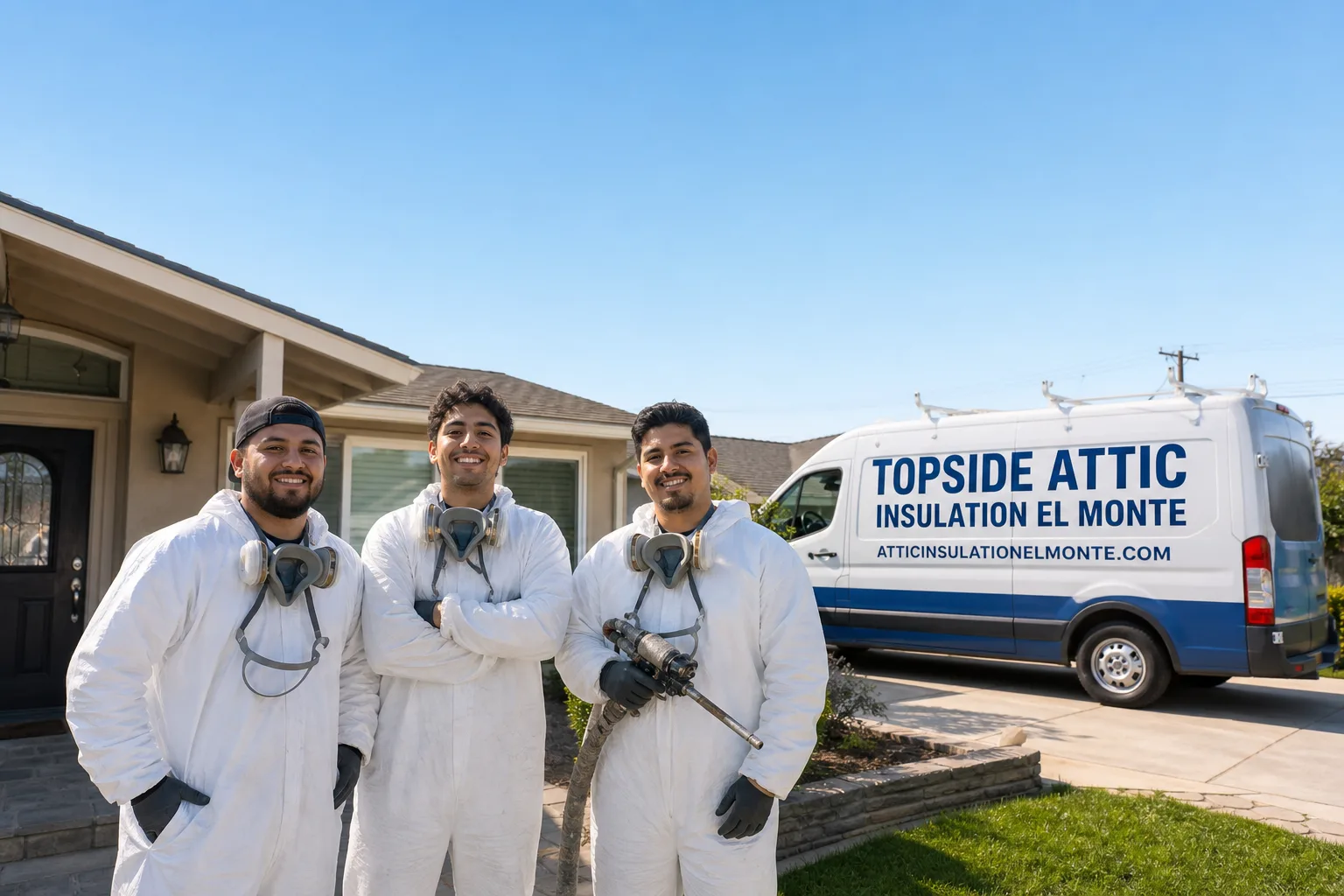
Trusted Spray Foam Insulation for El Monte Homeowners
Wondering how much Spray Foam Insulation costs in El Monte? Typically $2,800-$7,500 for a full attic application, and most residential jobs are completed in one to two days with crews available this week. At Topside Attic Insulation El Monte, we’ve sealed and insulated over 9,000 homes since 2016, and every project starts with a written price before any work begins - no exceptions. Our crews work across El Monte, from the older ranch homes near Peck Road to the newer builds in the northern hills, and we answer calls live at (626) 415-3454 around the clock.
El Monte’s combination of hot, dry summers and mild winters means your attic can hit 140°F in July, forcing your AC to work overtime if the envelope isn’t sealed. We’ve measured blower-door readings in local homes that were leaking twice the conditioned air they should - not because the insulation was missing, but because it was installed over unsealed top plates, can lights, and duct chases. Our approach treats air sealing as a hard prerequisite, not an upsell, and we publish before-and-after blower-door numbers on every job so you can see the actual performance change.
What Our Spray Foam Insulation Service Includes
Open-Cell Spray Foam
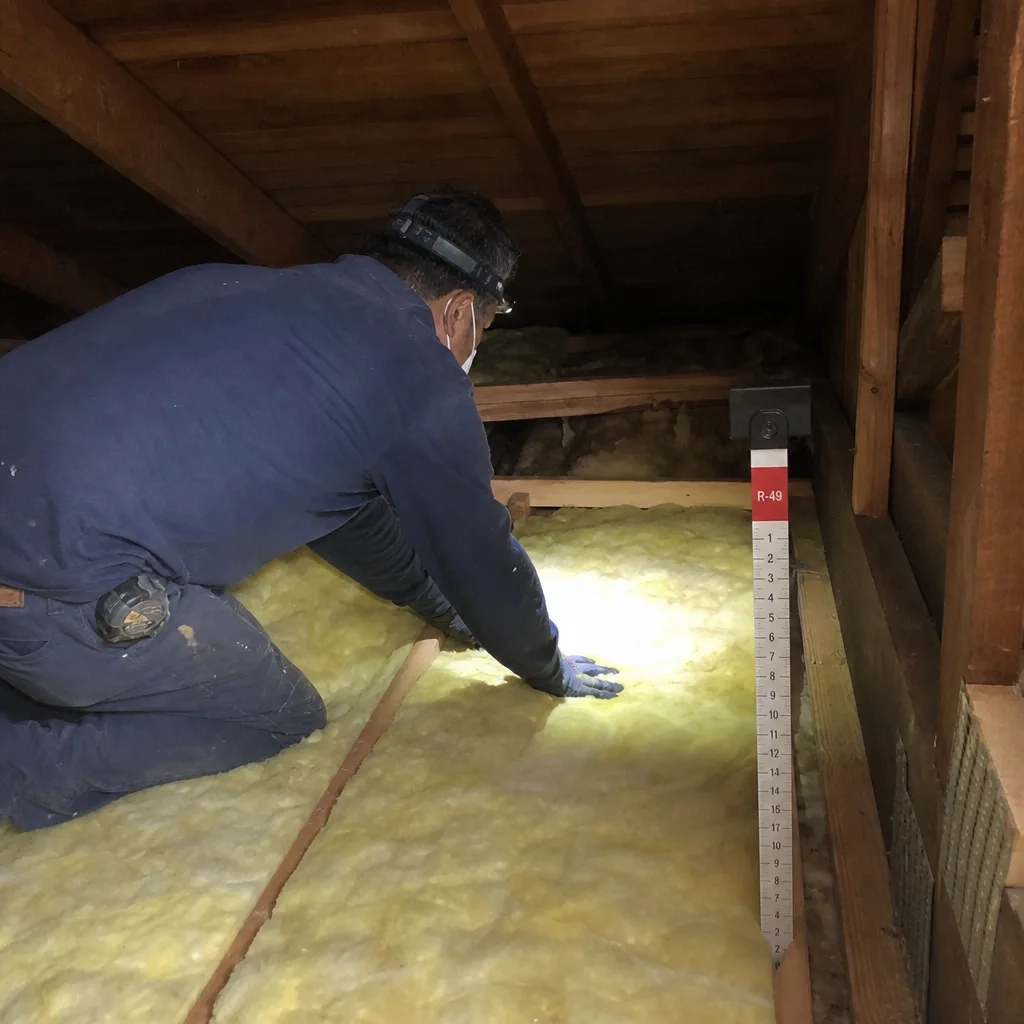
Open-cell spray foam is a half-pound density material that expands to fill cavities and remains soft and permeable after curing - it’s ideal for attic floors and wall cavities where you want the assembly to breathe and dry inward. In El Monte’s climate, we use open-cell in vented attics and above-grade walls where moisture management matters more than structural rigidity. Our crews apply it directly to the substrate after sealing all top plates, electrical penetrations, and can-light housings with targeted foam or gasketed covers; the blower-door test comes after, not before, so you know the air sealing worked.
Closed-Cell Spray Foam
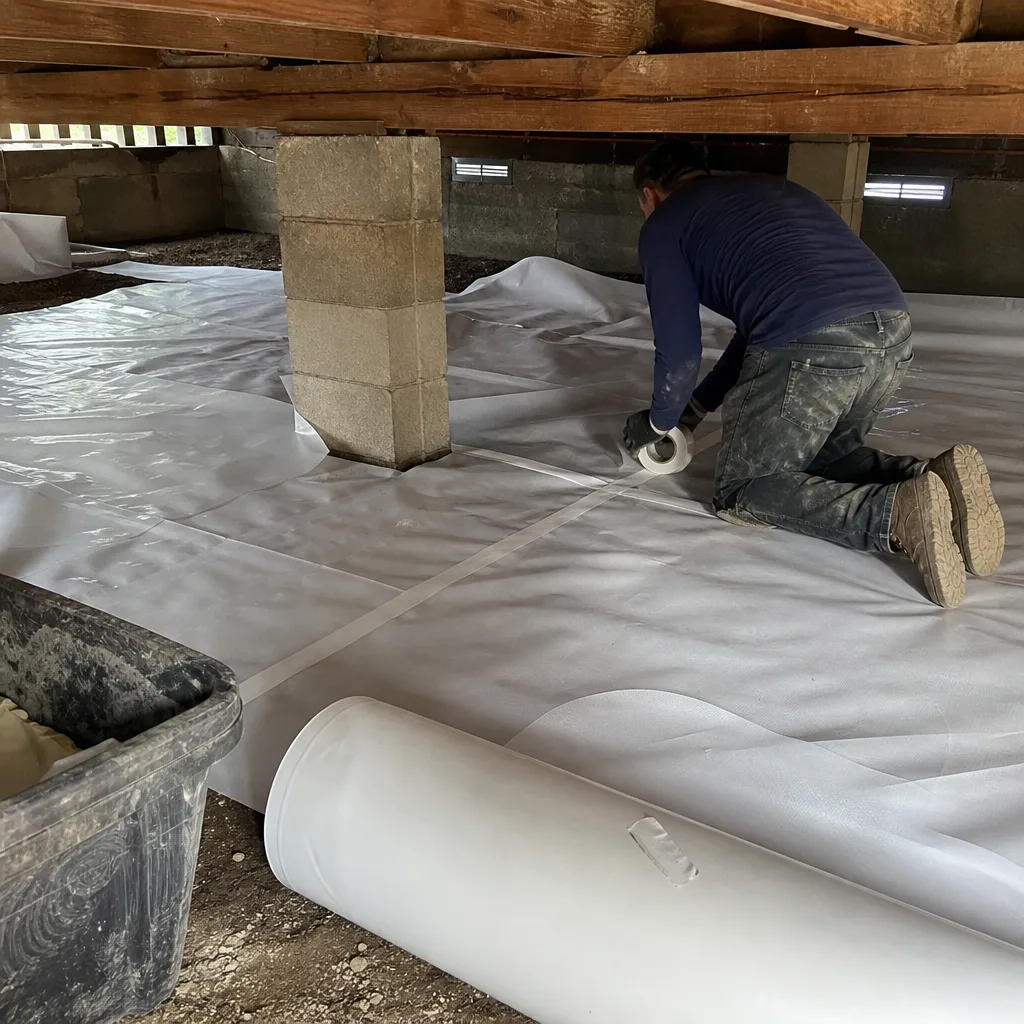
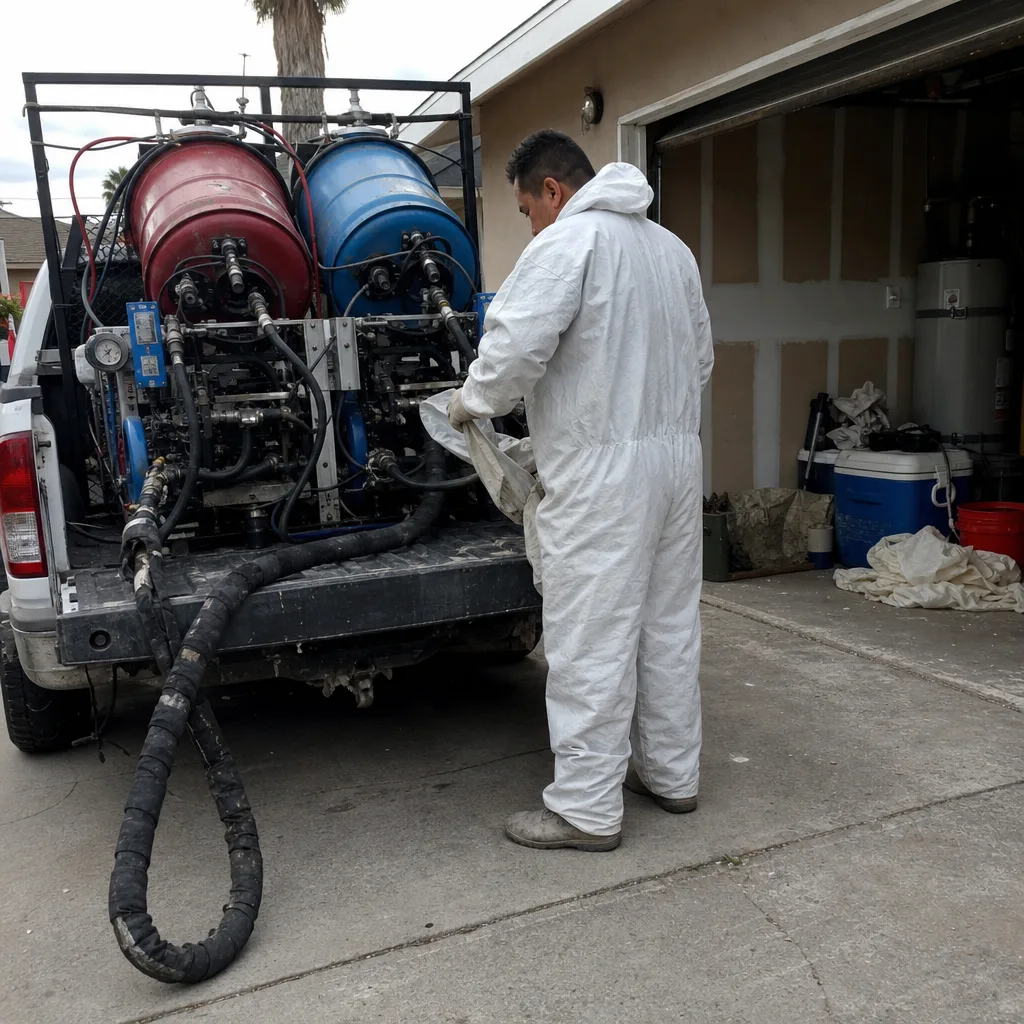
Closed-cell spray foam is a two-pound density material that cures rigid and provides both insulation and structural reinforcement - it’s the choice for crawl space walls, unvented roof decks, and any application where you need a vapor barrier in one pass. In El Monte homes with conditioned attics or sealed crawl spaces, we specify closed-cell for its R-7 per inch and its ability to reject bulk water. We source closed-cell products from Demilec and Johns Manville, among others, and we never lock you into a proprietary formula - the written scope names the exact product and density before anyone starts.
Rim Joist Spray Foam
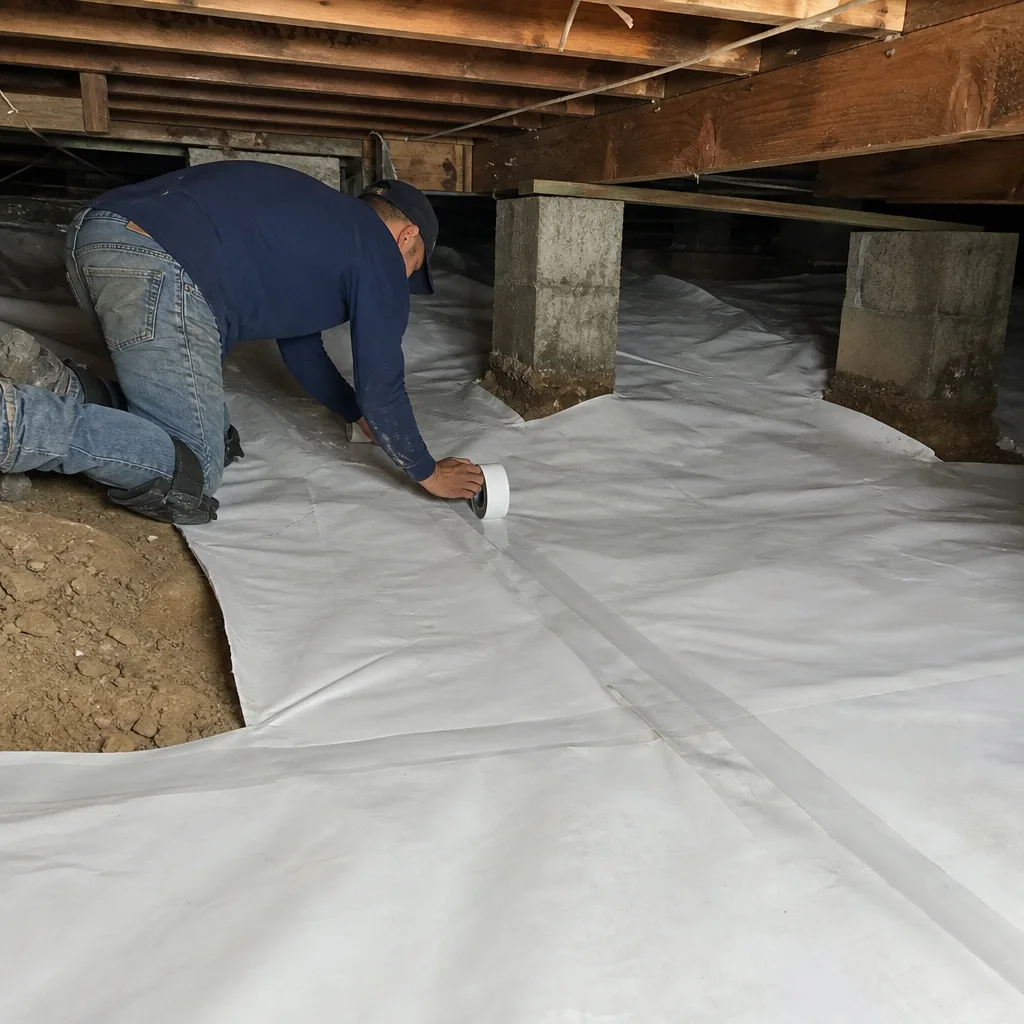
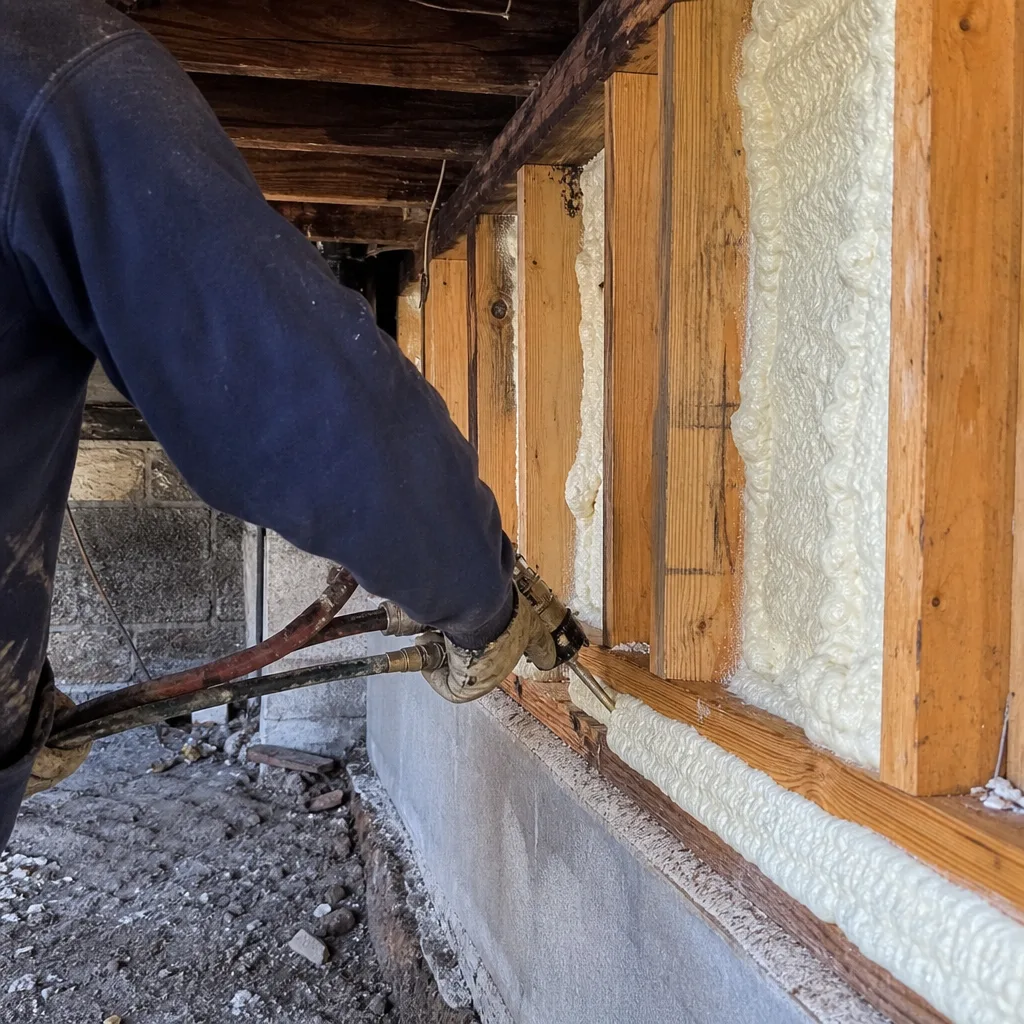
The rim joist - the perimeter band where your foundation walls meet the floor framing - is often the leakiest part of a home’s thermal boundary, and it’s almost never insulated in El Monte’s 1950s through 1980s stock. We remove any existing fiberglass, seal the joist bays with closed-cell spray foam, and verify the result with a smoke pencil or thermal camera before we close up. This is one of the highest-impact, lowest-cost upgrades we do; in a typical 1,400-square-foot ranch, rim joist sealing and foaming can drop the blower-door number by 300-500 CFM50 alone.
Garage Ceiling Spray Foam
Garage ceilings beneath conditioned bedrooms are a common source of comfort complaints in El Monte, especially in homes where the builder left the ceiling open to the garage with nothing but drywall and air. We treat these as conditioned-space boundaries: seal all penetrations for wiring, plumbing, and ductwork, then apply open-cell spray foam to the garage ceiling at R-19 or greater. The result is a bedroom that holds temperature without the floor feeling cold in January or hot in August, and we document the work with photos of every bay before and after.
Spray Foam Roof Deck
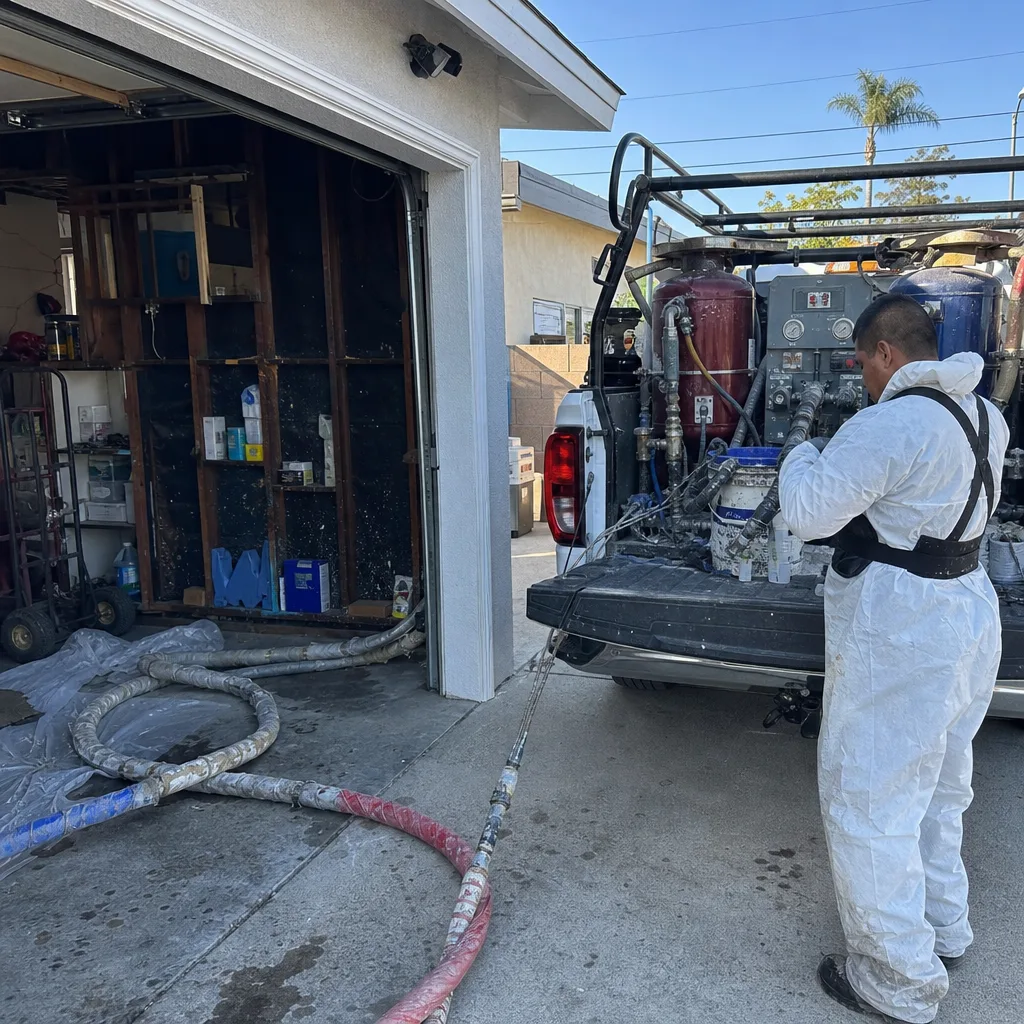
Spray foaming the roof deck - the underside of your roof sheathing - converts a vented attic into a conditioned, semi-conditioned, or unvented attic, depending on your HVAC configuration and local code. In El Monte, this makes sense when ductwork runs through the attic or when you need the storage space and don’t want to lose headroom to floor insulation. We use closed-cell foam at minimum R-30 for roof decks, sealed at all ridge and eave transitions, and we coordinate with your roofer or HVAC contractor if the assembly changes how your attic breathes. The permit and inspection are included in our scope; we handle the paperwork.
What happens when you call
- 1
A real person answersNo phone trees - you reach a local pro.
- 2
You get an upfront price rangeHonest numbers before anyone is dispatched.
- 3
A background-checked tech heads outLicensed & insured, dispatched right away.
- 4
You approve before work beginsNothing starts until you say go.
Brands We Service for Spray Foam Insulation
We work with the major spray foam manufacturers - Demilec, Johns Manville, Owens Corning, and others - and we specify by job, not by rebate or exclusivity. Our crews have applied Demilec’s heat-low-VOC formulations in El Monte homes where occupants have chemical sensitivities, and we’ve used Johns Manville’s AP Foil-faced assemblies in roof decks where ignition-barrier requirements apply. We don’t carry proprietary product lines, and we don’t push one brand over another to hit a distributor quota.
Whether your existing foam was installed with GreenFiber, Knauf, or any other make, we can assess it, repair it, or remove and replace it if it’s degraded or improperly applied. Our written scope names the exact product, density, and application thickness before work starts - that’s Haven Standard Clause 1, and it’s how we’ve operated since 2016.
 Before
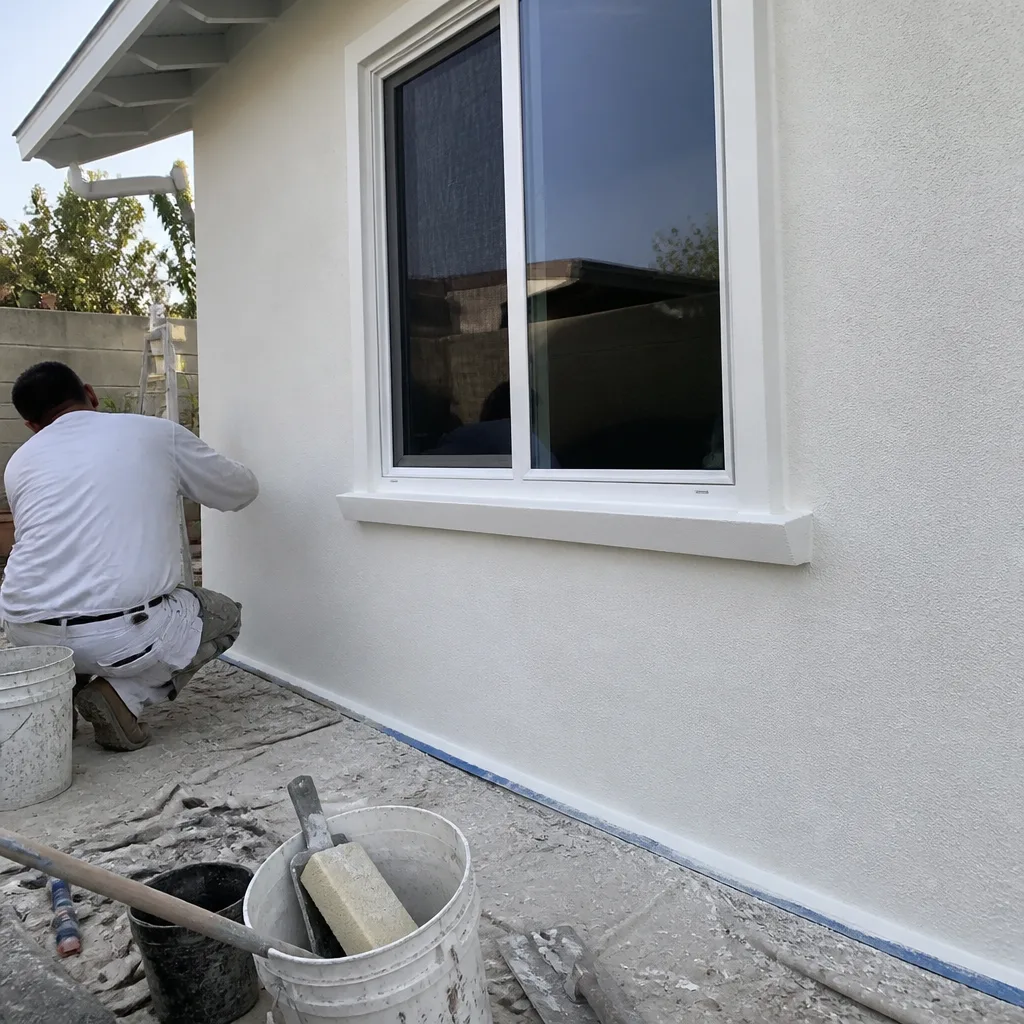 After
AfterSigns You Need Spray Foam Insulation Right Now
- Your upstairs bedrooms are 10-15 degrees hotter than the downstairs in summer. This temperature stratification usually means your attic floor is leaking conditioned air faster than your HVAC can replace it. We’ve measured this exact pattern in El Monte homes near Lower Azusa Road, where the original insulation was blown over unsealed top plates and the hot attic air was drafting downward through wall cavities.
- Your energy bill spikes every July and August despite a newer AC unit. A high-efficiency compressor can’t compensate for an envelope that loses 30% or more of its conditioned air to the attic. If your kilowatt-hour usage climbs disproportionately to temperature, the problem is almost certainly thermal bypass, not equipment failure.
- You feel drafts near outlets, baseboards, or can lights on exterior walls. These are telltale signs that your wall top plates aren’t sealed to the attic, and the pressure boundary is broken at the ceiling line. Spray foam alone won’t fix this - the sealing has to come first - but it’s the right insulation to install once the air barrier is continuous.
- Your existing insulation is compressed, displaced, or showing rodent damage. Fiberglass batts that have been walked on, wetted, or nested in lose most of their R-value and can become an air filter rather than an air barrier. In El Monte’s older stock, we’ve removed insulation that was doing more harm than good and replaced it with spray foam that bonds to the substrate and can’t settle.
- You’re finishing an attic or garage and need to meet Title 24 compliance. California’s energy code requires specific R-values and air-sealing performance for conditioned space conversions. Spray foam is often the only practical way to hit R-38 in a 2×6 rafter bay or R-30 in a 2×4 garage ceiling without furring down and losing headroom.
Our Spray Foam Insulation Process - Step by Step
- 1
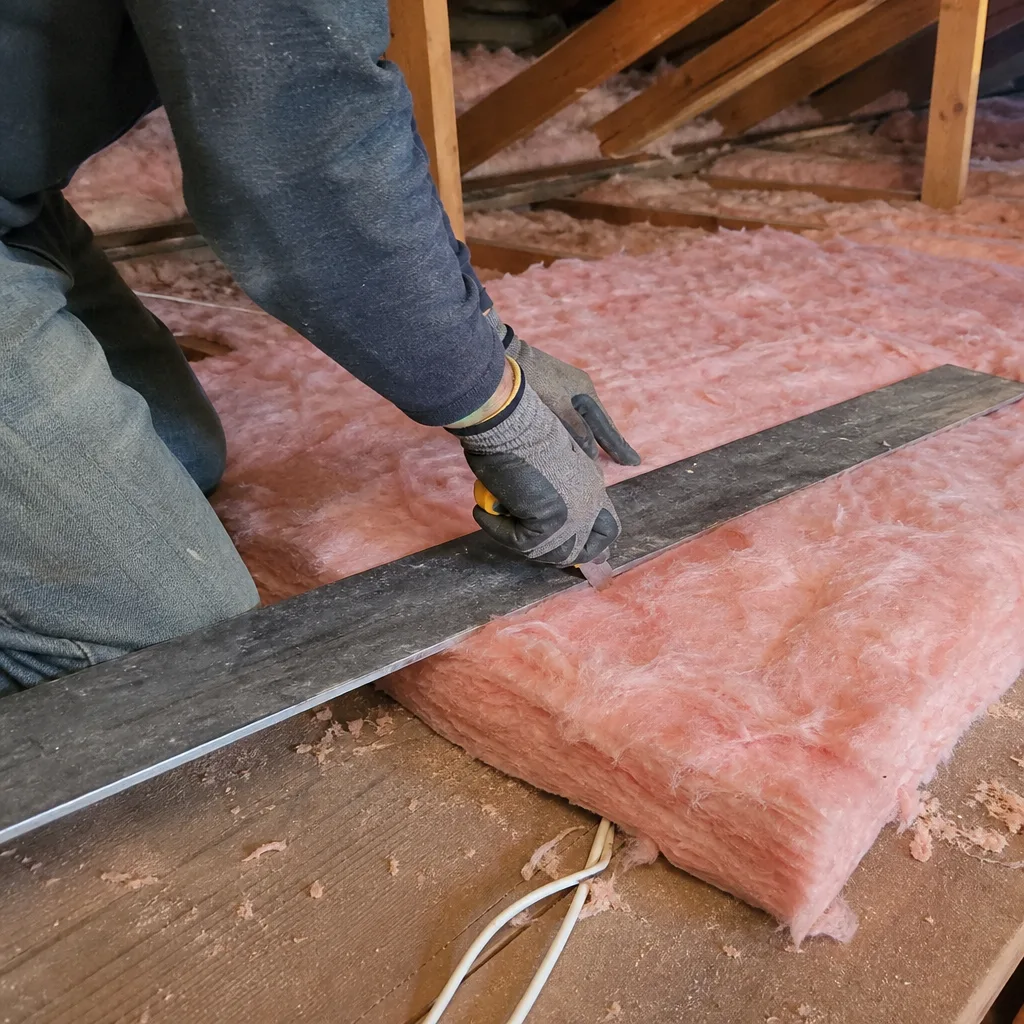
On-site assessment and blower-door test. We arrive with a written appointment time, a named technician, and a blower door - a pressurization rig that shows, in one number, how much air your building envelope is losing. The pre-work reading goes on your proposal. We also walk the attic with a thermal camera to find bypasses the blower door can’t locate.
- 2
Written price and scope before any work starts. Haven Standard Clause 1: flat price, written scope, written warranty, delivered before anyone lifts a tool. No verbal estimates, no “we’ll see how it goes” pricing. You know exactly what product, what thickness, what R-value, and what blower-door target you’re paying for.
- 3
Air sealing - always first, never skipped. We seal top plates with targeted spray foam or acoustical sealant, box out can lights with fire-rated covers, gasket electrical penetrations, and seal duct boots and chase walls. This step typically takes 30-50% of the labor time, and it’s the difference between insulation that performs and insulation that just sits there.
- 4
Spray foam application and real-time quality checks. Our technicians apply foam in lifts - passes of specified thickness - to prevent shrinkage and ensure full cure. We measure pass thickness with a depth gauge and check for complete coverage with a thermal camera before the rig leaves. The crew is background-checked and uniformed; you get a text when they’re en route.
- 5
Post-work blower-door test, documentation, and walkthrough. We run the blower door again and give you the before-and-after numbers in writing. You also receive a Documented Photo Record of the work, the written warranty, and the 365-Day Done Right Promise. If the numbers don’t meet the scope, we make it right - that’s Haven Standard, and it’s been our practice since 2016.
How Much Does Spray Foam Insulation Cost in El Monte?
A typical open-cell attic floor application in an El Monte ranch or bungalow runs $2,800-$4,500 for 1,000-1,500 square feet of deck area at R-38 thickness. Closed-cell roof deck work runs higher - usually $5,500-$7,500 for the same footprint - because the material costs roughly double per board-foot and the application requires more labor control for ignition-barrier compliance. Rim joist sealing and foaming in a full basement or crawl space typically falls between $1,800 and $3,200, depending on linear footage and access.
Several factors move these numbers. Roof deck work with steep pitches or limited attic access adds labor hours. Homes built before 1960 often have knob-and-tube wiring or compromised sheathing that needs addressing before foam can be applied. And any job requiring insulation removal first - common when existing material is contaminated or water-damaged - adds $1.50-$3.00 per square foot for safe extraction and disposal.
What you get in our free estimate: a blower-door reading, thermal imaging, a written scope naming the exact product and thickness, and a flat price with no line-item surprises. We also offer a Free Second Opinion on any written estimate from another contractor - bring us their scope and we’ll review it with you, line by line. Call (626) 415-3454 to schedule.
Spray Foam Insulation Near El Monte - Our Service Area
We cover El Monte and the surrounding San Gabriel Valley with same-day and next-day availability for most spray foam assessments. Our crews are regularly in Temple City working the post-war tract homes near Live Oak Park, in Rosemead addressing the multi-generational conversions on Walnut Grove, and throughout Baldwin Park, Arcadia, San Gabriel, La Puente, Alhambra, Monterey Park, West Covina, Whittier, and Pasadena. Response time to El Monte proper is typically under 90 minutes for scheduled appointments; emergency calls for comfort-critical situations are answered live 24/7.
Serving El Monte, CA - Our Local Coverage Area
We’re based in the El Monte area and know this community well. Use the map below to see our service coverage - if you’re nearby, we can almost certainly help.
Frequently Asked Questions - Spray Foam Insulation in El Monte
Spray foam insulation is a two-component chemical mixture that expands on contact to fill cavities and hardens into a continuous air barrier - unlike fiberglass batts, which leave gaps and don’t stop airflow. In El Monte’s climate, the air-sealing property is often more valuable than the R-value itself; a leaky R-30 fiberglass assembly performs worse than a sealed R-20 foam assembly. We measure this difference with blower-door tests on every job.
Most residential spray foam jobs in El Monte are completed in one to two days, with air sealing consuming the first half-day and foam application the remainder. Occupants typically need to vacate during application and for 24 hours after while the foam off-gasses and cures. We schedule around your availability and coordinate with any HVAC or electrical work that needs to happen in sequence.
Open-cell attic work typically runs $2,800-$4,500, closed-cell roof decks $5,500-$7,500, and rim joist sealing $1,800-$3,200, depending on access and existing conditions. Every estimate we provide is flat-priced, written, and delivered before work starts - no surprises. Call (626) 415-3454 for a free assessment and exact quote for your home.
Yes - we apply Demilec’s low-VOC formulations and Johns Manville’s code-compliant roof-deck assemblies regularly, and we can source Owens Corning, GreenFiber, or other specified products by job. We don’t have exclusive arrangements with any manufacturer, and the written scope names the exact product you’ll receive before anyone starts.
We answer calls live 24/7 and can dispatch for comfort-critical situations - a failed roof deck foam exposing conditioned space, or insulation removal required after water intrusion - with same-day response when needed. Non-urgent assessments are typically scheduled within 24-48 hours. Call (626) 415-3454 anytime; you’ll reach a person, not a voicemail loop.
All completed work is covered by our 365-Day Done Right Promise - if it’s not done right, we make it right, backed by a written warranty delivered before work starts. Foam-specific warranties from the manufacturer (typically 10 years to lifetime, depending on product) are also transferred to you at completion. The documentation is part of your permanent record.
Clear attic storage and provide access to all ceiling penetrations - our crew needs to reach can lights, duct boots, and top plates. Cover or remove sensitive items in living spaces below, as foam overspray can travel through gaps. We’ll give you a specific prep checklist when we deliver the written scope, and we protect floors and finishes with drop cloths as part of our standard setup.
Schedule Your Spray Foam Insulation Service in El Monte Today
Call (626) 415-3454 to speak with a live person and schedule your free assessment. We’ll run a blower-door test, walk your attic with a thermal camera, and deliver a written price before any work starts - that’s Haven Standard, and it’s how we’ve operated since 2016. Whether you’re in a 1950s ranch near Peck Road, a newer build in north El Monte, or need Spray Foam Insulation - El Monte specialists, we’ll show you exactly what your home is losing and exactly what it takes to fix it.
Written by Wes Okafor, Owner at Topside Attic Insulation El Monte, serving El Monte since 2016.