
How Topside Attic Insulation El Monte Was Born in El Monte
Back in 2016, we were still working as a crew lead for a regional insulation outfit, running jobs across the San Gabriel Valley. One afternoon in late October, we got sent to a house in the northern part of El Monte, just off Peck Road. The homeowner, a woman in her sixties who’d lived there since the 1980s, had been quoted twelve hundred dollars to “top off” her attic. Another company had already taken her deposit and blown a thin layer of loose-fill right over every can light and top plate crack in the place. Her energy bills hadn’t dropped a dollar. She was out the money, and now she was calling us because her upstairs bedroom still hit eighty-five degrees by two in the afternoon.
We spent twenty minutes in that attic with a flashlight. The new insulation was doing exactly nothing. Air was streaming up through the wall plates, around the chimney chase, past the bathroom vent. We could feel it on our face. We came back down, sat at her kitchen table, and told her the truth: someone had sold her a blanket for a drafty window. She started to cry. Not dramatic crying, just tired. She’d trusted the process, and the process had failed her.
That was the moment. We called our contact at the Topside Attic Insulation network that same week and asked what it would take to open the El Monte branch. We wanted to bring the Haven Standard here, specifically because El Monte didn’t have it. Too many homes in this city were built in the fifties, sixties, and seventies with just enough insulation to check a box, then topped off by crews who never looked at what was underneath. We promised ourselves, and we promised this city, that we’d never blow insulation over an unsealed attic floor. Sealed first, then insulated. In that order. That was 2016. We’re still doing it that way.
Wes Okafor’s Personal Connection to the Insulation Trade
We didn’t grow up wanting to crawl through attics. What we grew up with was a father who fixed everything himself, badly, and a mother who finally hired a tradesman to redo it properly. We were maybe fourteen, standing in the hallway of our aunt’s house in Baldwin Park, watching a man in canvas pants seal her ductwork with mastic and fiberglass mesh. The smell was sharp, chemical, like wet clay and something else. He worked in silence for two hours. When he finished, he ran a smoke pencil along every joint and showed us where the leaks had been. We could see the smoke get sucked in. It felt like a magic trick that wasn’t a trick, just knowledge and patience.
We started asking for attic jobs when we got into construction work in our early twenties. Everyone wanted the roofing gigs, the visible stuff. We took the crawl spaces, the tight corners, the hundred-and-fifteen-degree August afternoons in San Gabriel Valley attics where the dust sticks to your sweat and you learn to move slow so you don’t kick a can light and start a fire. After a few years, we could feel a top plate leak with the back of our hand. We could smell mouse infestation before we saw the droppings. We knew the difference between old rock wool and vermiculite by the way it compressed under a knee pad.
What gets us out of bed now isn’t the work itself. It’s the documentation. The before-and-after blower-door number. The photo of the sealed can light, the infrared shot showing the temperature difference. Homeowners in El Monte, Temple City, Rosemead, they’re not naive. They know contractors talk. We get to show them something they can hold in their hand: a written scope, a flat price, a photo of what we actually found. If we weren’t doing this, we’d probably be teaching something. Carpentry, maybe. Something where you can see the result of your patience.
The trade has changed since we started. GreenFiber and Johns Manville make better products now. The blower-door equipment is more precise. But the core of it hasn’t changed. You’re still sealing a building envelope against the outside. You’re still working in spaces most people never see. And you’re still either doing it right or you’re not. We’ve been doing it right for over ten years now. Not because someone checks, but because we know what that attic in El Monte looked like, and we know what the homeowner’s face looked like when she realized she’d been sold something useless.
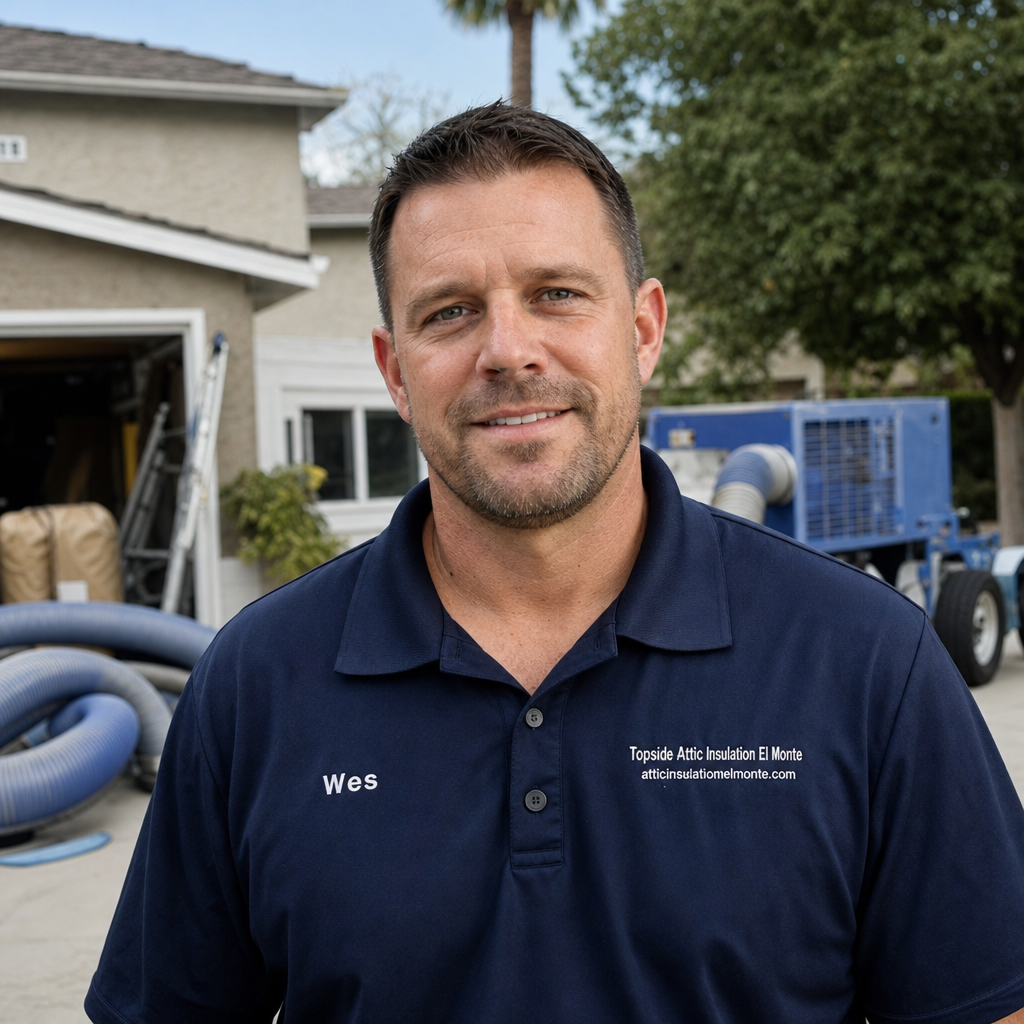
Meet Wes Okafor - The Person Behind Every Job
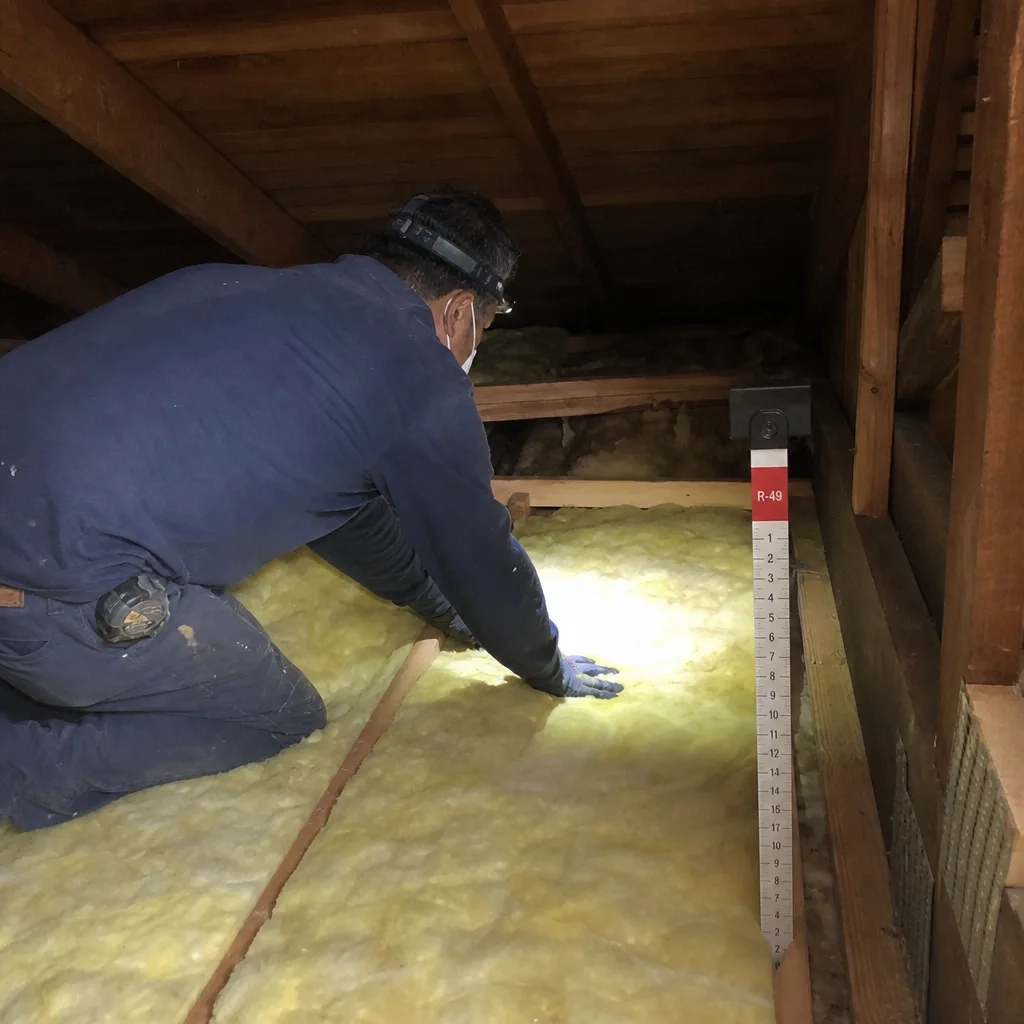
Wes Okafor is the Owner and Founder of Topside Attic Insulation El Monte. He holds the state license for this branch and personally oversees every estimate and final walkthrough. His training came up through residential weatherization crews in the San Gabriel Valley, then through the Topside Attic Insulation certification program on blower-door testing, thermal imaging, and attic air-sealing protocols.
What separates Wes from a corporate technician is simple: he’s the one who answers for the number. Not a dispatcher, not a regional manager. When we publish a blower-door result on your job paperwork, Wes signed off on the protocol that produced it. When we quote a flat price under Haven Clause 1, he’s the one who made sure the scope matches what your attic actually needs.
Outside of work, Wes rebuilds vintage motorcycles, badly and slowly, in a garage in El Monte that is itself poorly insulated. He knows the irony. He also knows exactly what he’d need to fix it, and exactly why he hasn’t had time. His commitment to every customer is direct: we will show you what we found, seal what leaks, insulate what remains, and leave you the proof.
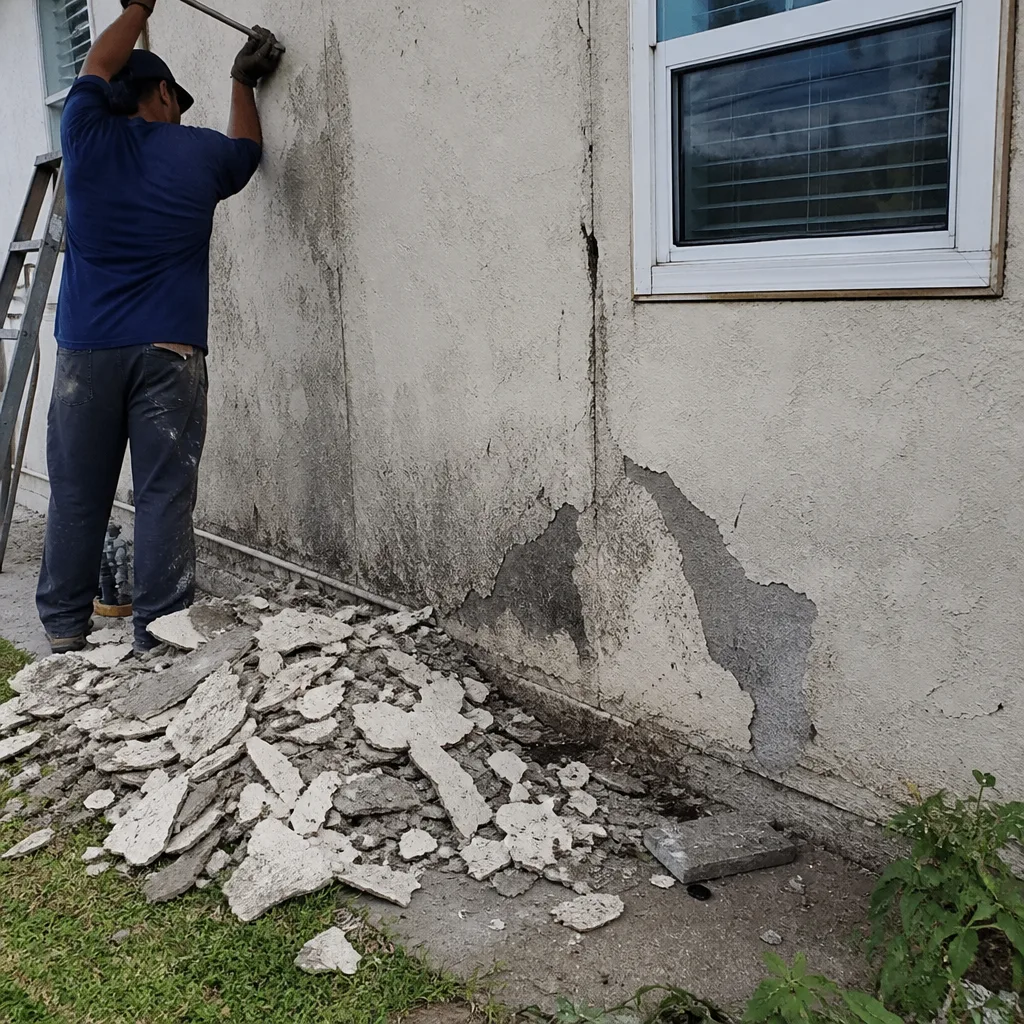 Before
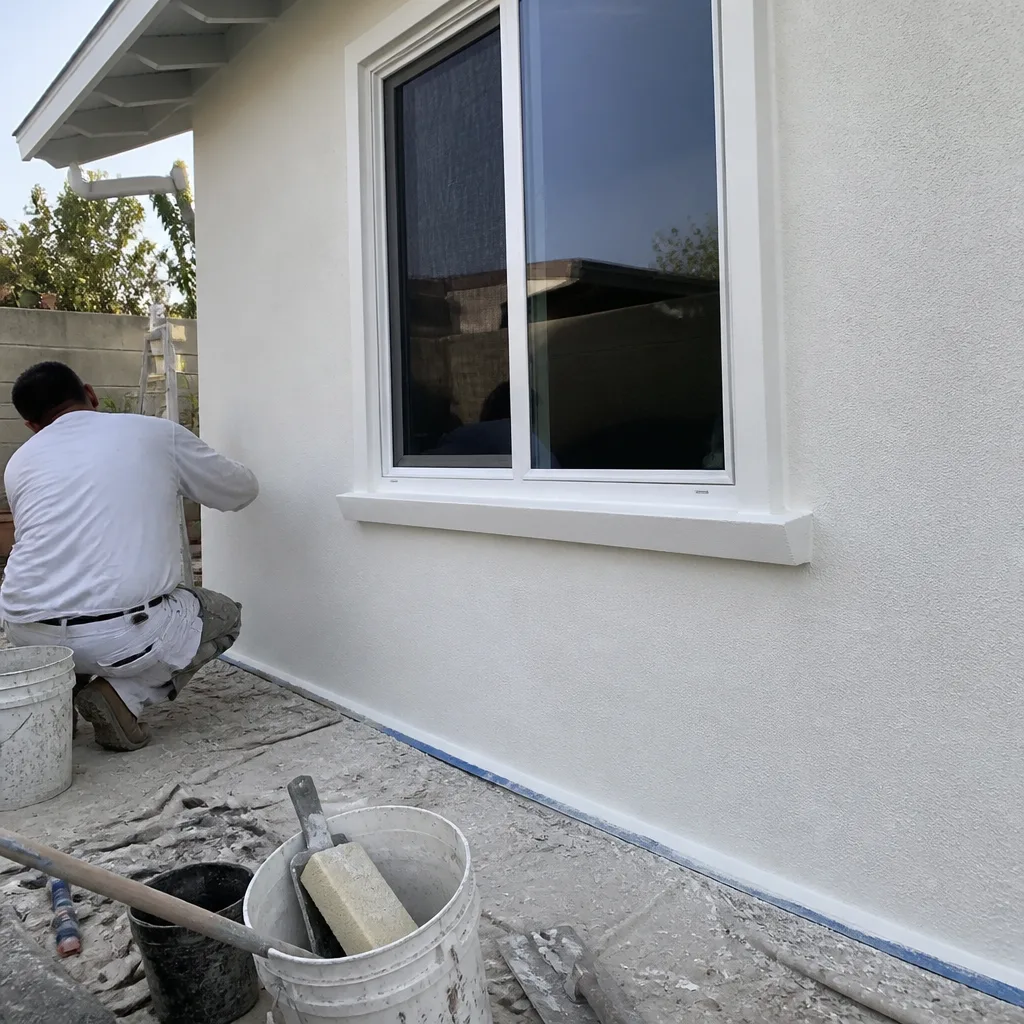 After
AfterOur Promise to El Monte Homeowners
Our values aren’t abstract. They’re policies we’ve had to enforce.
Honest pricing. Haven Clause 1 requires a flat price in writing before anyone starts. We learned this the hard way early in 2017, when a job in Arcadia ran over because we hadn’t accounted for a buried junction box. We ate the cost. Now we account for the junction box in the initial scope, or we tell you it might be there and what that would mean. No surprises.
Quality materials. We specify the manufacturer on every quote. Owens Corning, GreenFiber, Johns Manville, Demilec, we name which product and why it fits your attic. In 2019, a supplier tried to substitute a lower-density cellulose on a La Puente job without telling us. We rejected the load and delayed the job by a day. The homeowner was annoyed until we showed her the spec sheet difference. She still calls us.
Standing behind every job. Our warranty is written, dated, and attached to your invoice. Not a verbal promise, not a website claim. In 2021, a seal we performed in Monterey Park developed a gap around a newly installed bathroom vent, six months after we finished. The homeowner called. We came back, resealed, updated the blower-door number, and left a new documentation packet. No charge. That’s Haven Clause 5: no surprises, even the ones nobody expected.
Our Credentials
Every pro working under our name in El Monte is required to hold the license and insurance their state requires. Our branch maintains current general liability coverage and bonding as required for residential insulation and weatherization work in California. We have been serving the San Gabriel Valley since 2016.
Our local reputation has been built project by project across El Monte, Temple City, Rosemead, Baldwin Park, Arcadia, San Gabriel, La Puente, Alhambra, Monterey Park, West Covina, Whittier, and Pasadena. We do not aggregate review scores or claim ratings we cannot produce on request.
Why this matters to you: insulation work happens inside your home’s envelope, often unsupervised, in spaces you don’t enter yourself. A homeowner hiring someone to work in their attic needs to know that the person who signs the contract is the same person who carries the license, that the insurance is current and sufficient for property damage and injury, and that there’s a documented record of what was done and when. We provide that record on every job. It’s non-negotiable.
Rooted in El Monte
Our office sits just off the 10, and our trucks start their days here, not in a regional depot fifty miles away. We’ve worked in the older neighborhoods north of Ramona Boulevard where the postwar bungalows sit close together and the attics are shallow and hot. We’ve worked in the newer construction near the 605 corridor where builders met code minimum and stopped. We know that El Monte’s summer heat arrives in August and stays through October, that the Santa Ana winds press against ridge vents from the north, and that a sealed attic floor here makes a different kind of difference than it does in a coastal climate. This is where we work. This is where we answer for what we build.
Written by Wes Okafor, Owner at Topside Attic Insulation El Monte, serving the San Gabriel Valley since 2016.