
How Much Does Home Energy Audit Cost in El Monte?
A home energy audit in El Monte, CA typically runs between $250 and $650 for a standard single-family home, with most homeowners in the San Gabriel Valley paying around $350-$450 for a full blower-door test combined with a thermal imaging scan and a written report. Larger homes over 2,500 square feet, or homes with crawl spaces and complex duct systems, can push that number toward $600-$800. Utility rebate programs through Southern California Edison and SoCalGas can reduce your out-of-pocket cost significantly – sometimes to zero – depending on your income bracket and current enrollment period.
Home Energy Audit Cost Breakdown (2026)
A Home Energy Audit in El Monte is not a single service – it is a sequence of diagnostic steps, and each one carries its own cost contribution. The table below shows how a typical audit invoice is structured in this market.
| Audit Component | Typical El Monte Price Range | What It Tells You |
|---|---|---|
| Blower-door test (air leakage measurement) | $150-$300 | A single CFM50 number showing how much conditioned air your building envelope is losing |
| Thermal imaging scan (infrared camera) | $75-$175 | Reveals insulation gaps, moisture intrusion, and hidden air bypasses in walls and ceilings |
| Duct leakage test (duct blaster) | $100-$200 | Measures how much conditioned air your HVAC duct system is losing before it reaches living spaces |
| Visual attic and crawl space inspection | $50-$125 | Checks insulation depth, air sealing status, ventilation, and signs of moisture or pest intrusion |
| Written diagnostic report with priority recommendations | Included or $50-$100 separately | Documents findings and ranks improvements by cost-effectiveness |
| Full bundled audit (all components above) | $250-$650 most homes; $600-$800 large or complex homes | Complete picture of where your home is losing energy and what to do about it first |
A few variables move the needle most. El Monte’s housing stock skews heavily toward post-war construction from the 1950s through the 1970s – single-story stucco homes on slab foundations, typically 1,100-1,800 square feet. Those homes audit quickly because access points are predictable. A 1,600-square-foot home on a slab with a single-zone HVAC system usually lands at the lower end of the range, around $280-$380. Add a raised foundation with an accessible crawl space and a second HVAC zone, and that same audit can run $475-$575 because the technician needs to test and document two distinct sub-systems. Attic access also matters: homes in the Garvey Avenue corridor often have original 24-inch scuttle holes that slow thermal imaging work and add time.
Auditors who use calibrated blower-door equipment and deliver a written diagnostic report – rather than a verbal walk-through – cost more upfront. That documentation is what makes the audit useful when you apply for rebates, pull permits, or hire an insulation contractor. A $99 “visual inspection” with no pressurization testing is not an energy audit in the way that utility programs define the term.
What Affects Home Energy Audit Pricing in El Monte
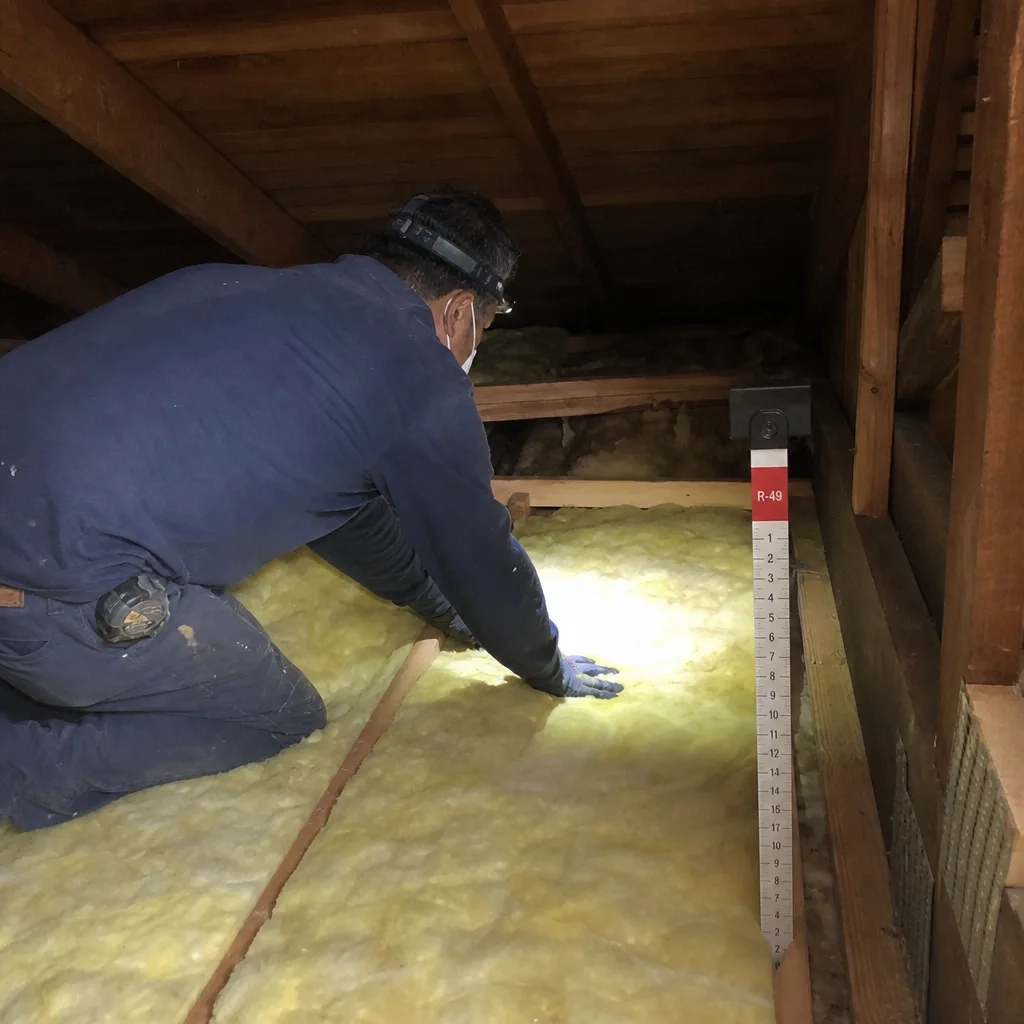
- Home size and square footage. Auditors price by time, and larger homes take longer to pressurize, scan, and document. El Monte homes under 1,500 square feet consistently come in at the lower end of the range. Homes above 2,200 square feet, including the larger ranch-style properties near Tyler Avenue, add $100-$200 to the typical price.
- Foundation type. Slab-on-grade homes skip the crawl space entirely, which shortens the audit. Homes with raised wood-frame foundations common in the Norwood and Rio Vista neighborhoods require a separate crawl space inspection and moisture assessment, which adds both time and cost.
- HVAC system complexity. A single forced-air system with an accessible air handler is straightforward to test. Mini-split systems or homes with two separate central units require additional duct blaster setups and drive cost up. Many homes in El Monte’s older tracts near Valley Boulevard still run original duct systems from the 1960s – those ducts frequently show 25-35% leakage rates, and documenting that thoroughly takes extra time.
- Number of penetrations and can lights. In El Monte’s remodeled homes, especially those updated between 2000 and 2015, recessed can lights are extremely common. Every unsealed can light is an air bypass into the attic. A home with 20-30 recessed fixtures takes longer to document in an audit than one with a clean drywall ceiling. This detail matters because it also affects what the audit recommends – and what the subsequent air sealing job will cost.
- Local climate behavior at the building level. El Monte sits in the San Gabriel Valley inland basin, where summer temperatures regularly reach 95-102°F and the urban heat island effect is measurable. Attic temperatures in unshaded south- and west-facing homes can hit 145-160°F on peak July days. An auditor working in this market who knows those conditions will flag radiant heat load as a distinct line item in the report – not just as an insulation issue but as a reason to test attic ventilation rates separately. That extra diagnostic step is worth paying for.
- Utility rebate eligibility and audit type. Southern California Edison’s Home Energy Efficiency Rebate program and SoCalGas occasionally require audits to meet specific protocols – for example, a Building Performance Institute (BPI) standards-compliant audit – in order to qualify for downstream rebates on insulation or HVAC improvements. Audits conducted to that standard cost $50-$150 more than a basic inspection but unlock rebate eligibility that can outweigh the added cost many times over.
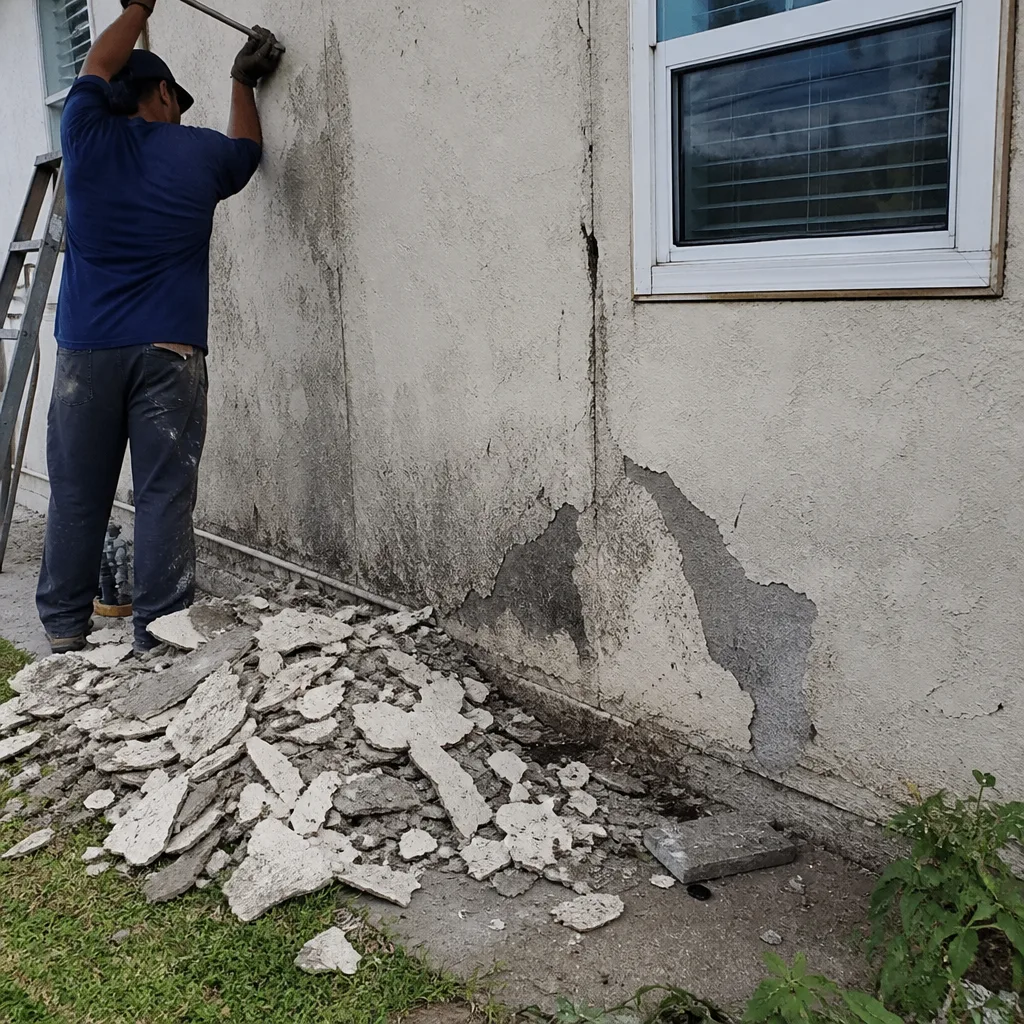 Before
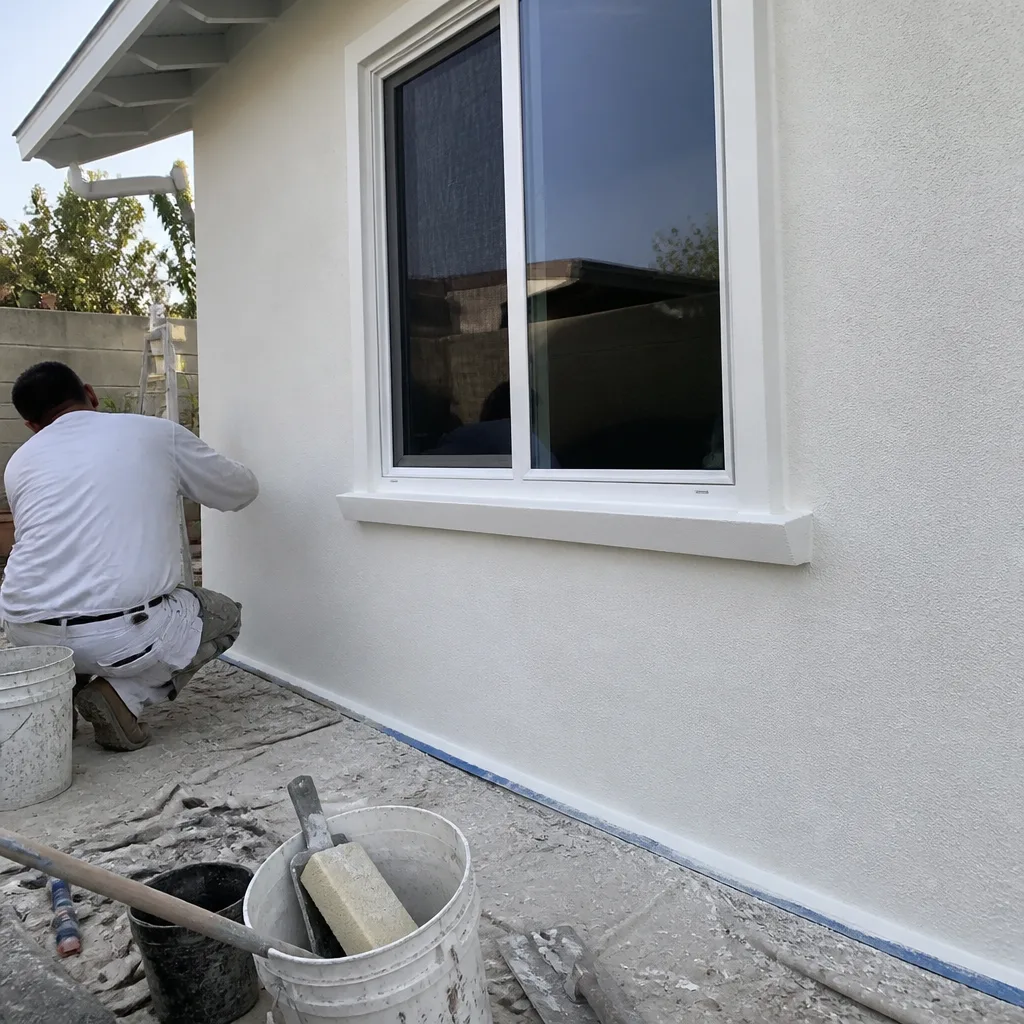 After
AfterWhat Happens During a Home Energy Audit in El Monte
Knowing what the technician actually does during those two to four hours helps you evaluate whether you’re getting what you paid for. Here is how a thorough audit runs from arrival to report.
The blower-door test
The technician mounts a calibrated fan in an exterior doorframe – usually the front door – and depressurizes the house to 50 pascals below outdoor air pressure. The fan measures exactly how much air has to flow to maintain that pressure, expressed as CFM50 (cubic feet per minute at 50 pascals). A well-sealed 1,500-square-foot El Monte home should read somewhere around 1,200-1,800 CFM50. Homes we see in the Durfee Avenue neighborhood that have never had attic air sealing often read 3,500-5,500 CFM50. That number, written into the report, is what lets you verify improvement after air sealing work is done – it is not an estimate or an opinion, it is a measurement.
Thermal imaging
With the house depressurized, the infrared camera picks up temperature differentials at walls, ceilings, and floors. Cold spots in summer (or warm spots in winter) show exactly where insulation is missing or has settled. In El Monte’s older stucco homes, we frequently see the thermal camera reveal original blown-in insulation that has settled to two to three inches in the exterior walls – well below the R-7 it was installed to achieve. That finding drives a different recommendation than a home where the walls are simply uninsulated.
Duct leakage testing
The duct blaster pressurizes the duct system separately from the house and measures how much air escapes before reaching registers. In many El Monte homes built before 1985, duct connections were sealed with cloth tape that dried out decades ago. A system losing 25% of its conditioned air into a 150°F attic is effectively running a smaller, less efficient unit than you’re paying for. The audit quantifies that loss in a number you can take to your HVAC contractor.
The written report
A credible audit closes with a written document – not a verbal summary – that lists findings in order of cost-effectiveness. The best reports include the measured CFM50, the IR images with locations noted, the duct leakage percentage, observed insulation R-values by zone, and a ranked list of recommended improvements with estimated payback periods. That document is what you need when applying for SCE or SoCalGas rebates, when getting competing bids on insulation work, or when selling the home and making efficiency disclosures.
How Audit Findings Translate to Insulation and Air Sealing Work in El Monte
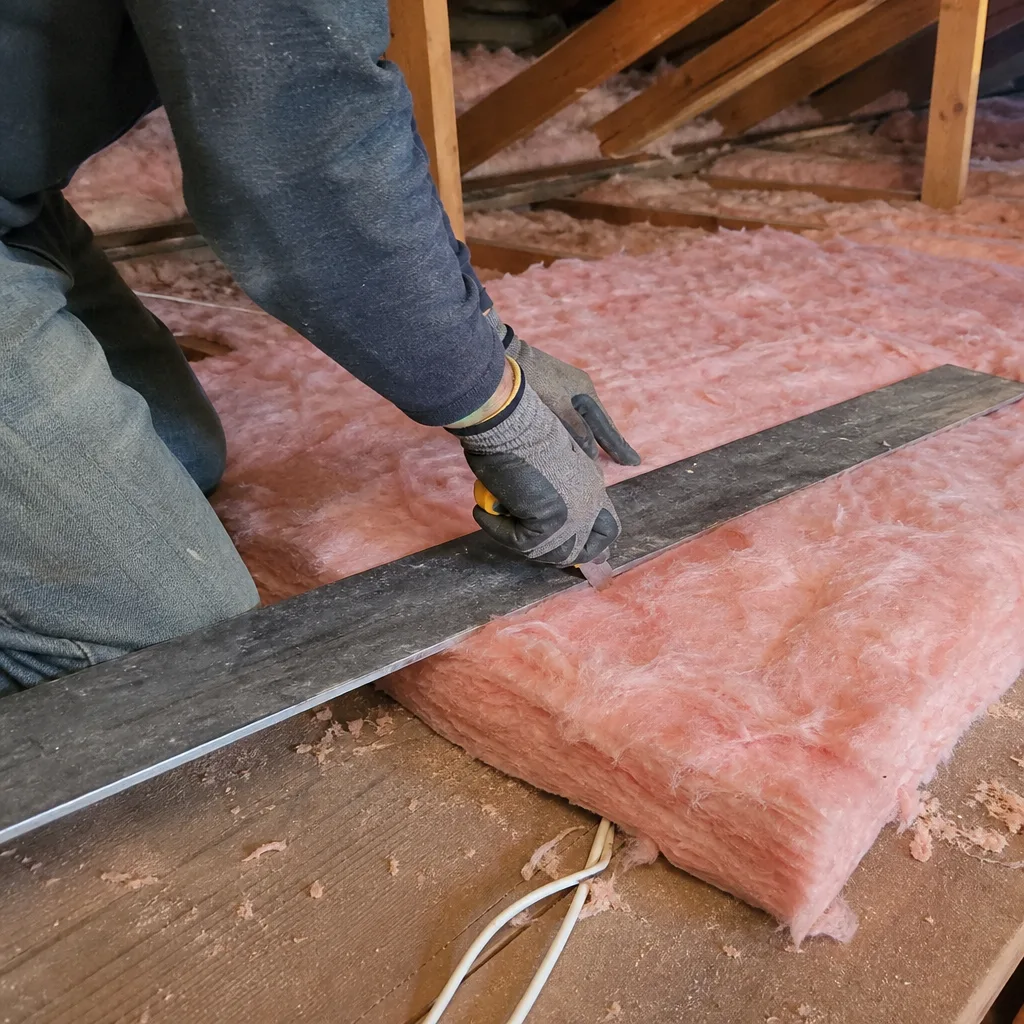
An audit is only useful if it leads somewhere specific. In El Monte’s climate, the findings most commonly point to three priorities.
Attic air sealing before insulation
This is the single most impactful sequence for San Gabriel Valley homes, and it is also the step most often skipped by contractors who want to move quickly to blown-in insulation. Air sealing – closing top plates, sealing around plumbing and electrical penetrations, capping recessed can lights – must be completed before any insulation is added. Blowing R-38 cellulose over an unsealed attic floor is like adding a thick blanket over a screen door. The audit identifies exactly which penetrations are present and how much total leakage they account for, so the scope of the air sealing job is defined before anyone picks up a spray foam gun.
At Envelope Insulation Co., operating as Topside Attic Insulation, we do not add insulation over an unsealed attic floor. That is a hard rule. The before-and-after blower-door numbers on every applicable job document exactly what changed – so the homeowner can see the CFM50 drop in writing, not just take our word for it.
Radiant barrier in high-exposure attics
El Monte’s orientation and inland location mean south- and west-facing attic decks absorb radiant heat load that insulation alone cannot fully address. The audit’s thermal scan shows where radiant heat is entering the thermal envelope most aggressively. Homes in the Glenview and Mountain View neighborhoods, where tree cover is limited and roof pitches are shallow, often benefit from foil radiant barrier installation in combination with attic air sealing – a combination that addresses both conducted and radiant heat transfer.
Duct sealing or replacement
When the duct blaster reads above 15% total leakage, the audit typically recommends duct sealing as a higher priority than adding attic insulation. Sealing ducts that run through an unconditioned attic in El Monte’s climate recovers more energy per dollar than adding R-value to an already adequately insulated attic. The audit puts a number on that leakage so the recommendation is based on measurement, not assumption.
How to Save on a Home Energy Audit in El Monte
Paying less for the audit itself is possible, but the more meaningful savings come from using the audit results correctly.
- Check SCE and SoCalGas rebate programs before scheduling. Southern California Edison periodically offers subsidized or free audits to qualifying residential customers under its energy efficiency programs. SoCalGas runs parallel programs. Eligibility is based on income, utility account status, and current program availability – it changes quarterly. Calling your utility’s energy efficiency line before paying out of pocket is worth 10 minutes of your time. If you qualify, your $350-$450 audit may cost nothing.
- Bundle the audit with insulation or air sealing work. Many contractors, including Envelope Insulation Co., apply the audit cost toward the subsequent project scope when both are booked together. A standalone audit billed at $400 might be credited in full or in part when you move forward with the recommended work – ask for that in writing before you schedule.
- Request a written price before the technician arrives. Under the Haven Standard that Envelope operates by, a written price before any work starts is not optional – it is the baseline. Any auditor who cannot give you a flat price for the diagnostic visit before showing up is leaving you exposed to scope creep on the day.
- Use the audit report to get competitive bids on follow-up work. A written report with measured findings – CFM50, duct leakage percentage, R-value by zone – is an objective specification. Take it to two or three insulation contractors and ask each one to price against the same scope. That is a better purchasing process than getting three different assessments from three different salespeople with three different agendas. Envelope Insulation Co. offers a free second opinion on any written estimate – bring us a competing quote and we will read it with you.
- Don’t skip the audit to save $300 and then spend $2,000 on the wrong fix. In El Monte, we regularly see homeowners who added blown-in insulation to an attic floor that was never air sealed – the blower-door test still reads 4,000+ CFM50 because the insulation did nothing to stop the air movement. The audit tells you what to fix and in what order. Skipping it is where the real money gets wasted.
For a free estimate on a home energy audit in El Monte, call Wes Okafor’s team at (626) 415-3454. A live person answers – no voicemail, no callback window.
FAQs – Home Energy Audit Cost in El Monte
How much does a home energy audit cost in El Monte, CA?
Most El Monte homeowners pay between $250 and $650 for a full audit that includes a blower-door test, thermal imaging scan, duct leakage test, and written report. Smaller slab-foundation homes under 1,500 square feet typically land at $280-$380. Homes with crawl spaces, multiple HVAC zones, or complex duct systems run $500-$750. Utility-subsidized audits through Southern California Edison or SoCalGas can reduce that cost to $0 for qualifying customers – call (626) 415-3454 to find out if a rebate-eligible audit is available for your address.
Is a home energy audit worth it in El Monte’s climate?
For most San Gabriel Valley homes, yes – and the math is measurable. El Monte’s summer cooling season runs roughly May through October, with attic temperatures that regularly exceed 145°F. A blower-door test reading of 4,000 CFM50 in a 1,400-square-foot home means that home is exchanging its entire conditioned air volume with outdoor air roughly every 90 minutes at typical wind conditions. Sealing that leakage – identified precisely by the audit – typically reduces cooling energy use by 15-25% in this climate zone. Against an annual SCE bill in the $1,800-$2,800 range for a home that size, the audit pays for itself within one cooling season when followed by proper air sealing. Call (626) 415-3454 for an estimate.
What is a blower-door test and why does it matter for El Monte homes?
A blower-door test is a pressurization measurement that produces a single number – CFM50, or cubic feet per minute of air leakage at 50 pascals of depressurization – that tells you exactly how much conditioned air your home’s building envelope is losing. It matters because it is objective: a 1955 stucco home in El Monte with original drywall and no attic air sealing typically reads 3,500-5,500 CFM50. After proper top-plate sealing, can light capping, and penetration sealing, that same home might read 1,400-2,000 CFM50. Those two numbers, written into a report, are the documented proof that the air sealing work did what it was supposed to do. Without a blower-door test before and after, you have no way to verify the improvement. Call (626) 415-3454 to schedule a test.
Can I get a free home energy audit in El Monte?
Possibly, through Southern California Edison’s or SoCalGas’s residential energy efficiency programs. Both utilities periodically fund audits for qualifying customers – eligibility is based on income, current enrollment in utility assistance programs, and available program funding, which changes quarterly. Income-qualified homeowners can sometimes receive a fully subsidized audit plus rebates on subsequent insulation or weatherization work. The fastest way to check is to call your utility’s energy efficiency line directly. Separately, Envelope Insulation Co. offers free estimates on all insulation and air sealing work – that is not a reduced-scope audit but it does give you a written price for any recommended improvements before any work begins. Call (626) 415-3454 to get that in writing.
How long does a home energy audit take in El Monte?
Plan on two to four hours for a complete audit on a typical El Monte single-family home. A 1,400-square-foot slab-foundation home with a single HVAC system runs closer to two hours. A 2,200-square-foot home with a raised foundation, two zones, and a complex attic can take three to four hours. The blower-door setup and depressurization sequence alone takes 30-45 minutes; the thermal imaging sweep adds another 30-60 minutes depending on how many anomalies need to be documented; and the technician needs time to photograph findings and structure the written report. Audits rushed into 60 minutes are missing steps. Call (626) 415-3454 if you want to know how long your home’s audit is likely to take before you book.
What’s the difference between a basic inspection and a full energy audit?
A basic inspection is a visual walk-through – someone looks at your attic insulation depth, notes whether your water heater is strapped, and gives you a verbal list of suggestions. It costs less, sometimes as little as $75-$150, and it produces almost nothing useful for rebate applications or contractor bidding. A full energy audit uses calibrated equipment – a blower-door fan, an infrared camera, a duct blaster – to generate measured data. The output is a written report with specific numbers: CFM50, duct leakage percentage, IR images with locations, R-values by zone. That document is what utility rebate programs require and what a competent insulation contractor needs to give you an accurate bid. In El Monte’s rebate environment, the difference between a $150 visual and a $400 measured audit is often the difference between qualifying for $1,500 in upstream rebates or not. Call (626) 415-3454 for specifics on what our audit documents.
Key Takeaways
- Home energy audits in El Monte run $250-$650 for most single-family homes; large or complex homes can reach $750-$800.
- The blower-door test is the core measurement – it produces a CFM50 number that can be verified before and after air sealing work.
- El Monte’s inland basin climate and 1950s-1970s housing stock make attic air sealing the highest-priority finding in most audits.
- SCE and SoCalGas rebate programs can reduce audit cost to zero for qualifying customers – check eligibility before paying out of pocket.
- A written audit report with measured data is what makes downstream rebate applications and competitive contractor bids possible.
- Air sealing must precede insulation – adding blown-in insulation over an unsealed attic floor does not fix the air leakage the blower-door is measuring.
- Wes Okafor and the Envelope Insulation Co. team have been operating under the Haven Standard since 2016 – written price before any work starts, before-and-after blower-door numbers on applicable jobs, and a 365-Day Done Right Promise on all completed work.
Get a Written Estimate for Your El Monte Home
If you’ve read this far, you’re probably ready to find out what your home’s actual air leakage number is – not an estimate, a measurement. Wes Okafor leads the Envelope Insulation Co. team, which has sealed and insulated over 9,000 homes since 2016, every one with a written price before work started and a documented photo record when the crew left.
Call (626) 415-3454 to schedule a free estimate. A live person answers – no voicemail, no callback window measured in business days. We’ll give you a flat, written price for the diagnostic visit before anyone shows up, and if you move forward with any recommended work, you’ll have the before-and-after blower-door numbers in writing when we leave.
Under the Haven Standard, that is not a promise we make because it sounds good. It is how every job runs.
Written by Wes Okafor, Owner at Envelope Insulation Co. (operating as Topside Attic Insulation El Monte), serving El Monte since 2016.
Pricing reflects the El Monte market as of 2026. Topside Attic Insulation El Monte offers free estimates – call (626) 415-3454.
What Our Customers Say
"Turned up on time, protected the hallway, and the written scope matched what was actually done."
- Bruno S."Two other companies quoted to blow more insulation on top of what was there. These were the only ones who said the existing material had to come out first, and explained why."
- Clifford E."They photographed rodent damage in the old insulation that we had no idea about, and priced the exclusion work separately so we could decide."
- Harriet N.