
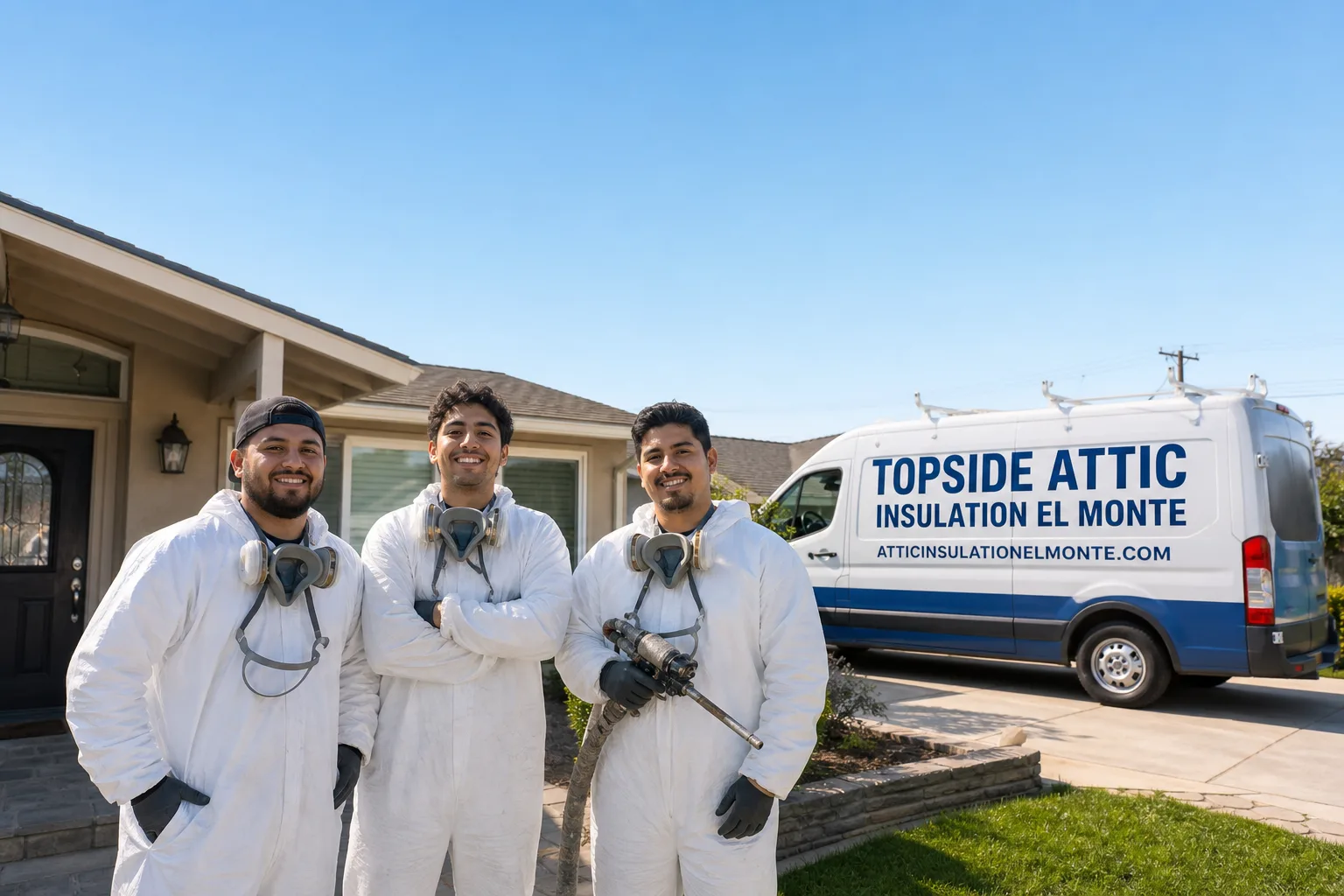
Fast, Reliable Attic Insulation Across El Monte
Most attic insulation jobs in El Monte run $2,200-$4,800 for a full replacement and $900-$1,800 for a top-up, with our crews typically on-site within 24-48 hours of your call. We dispatch from our Los Angeles office and serve El Monte neighborhoods directly - from the older ranch tracts near Rosemead Boulevard to the postwar boxes along Valley Boulevard and the unrenovated homes south of the 10 Freeway. If your attic still has its original 1950s or 1960s batts, they’re almost certainly compressed below code and costing you money every month. Call (626) 415-3454 for a free written estimate.
Why Topside Attic Insulation El Monte Is El Monte’s Preferred Attic Insulation Company
We’ve sealed and insulated more than 9,000 homes since 2016, and a significant share of them sit right here in the San Gabriel Valley. El Monte homeowners find us because they read our three-star reviews as carefully as our five-star ones - and they see that we answer every single one with specifics, not apologies.
Our response time to El Monte is typically same-day or next-day. We know the local permit landscape, the 1950s tract construction that dominates this city, and the particular failure pattern that El Monte’s basin geography creates: extreme heat baking original batts flat, punctuated by episodic salt-air intrusions that corrode fasteners and garage-door hardware faster than inland cities see. That combination is not something a contractor from the Westside understands without doing the work here.
Every job starts with a written price and a written scope under Haven Standard Clause 1. No exceptions. You get a Documented Photo Record when the crew leaves, and on jobs where air sealing is performed, before-and-after blower-door numbers so you can verify the result in a single figure.
Our Attic Insulation Services in El Monte
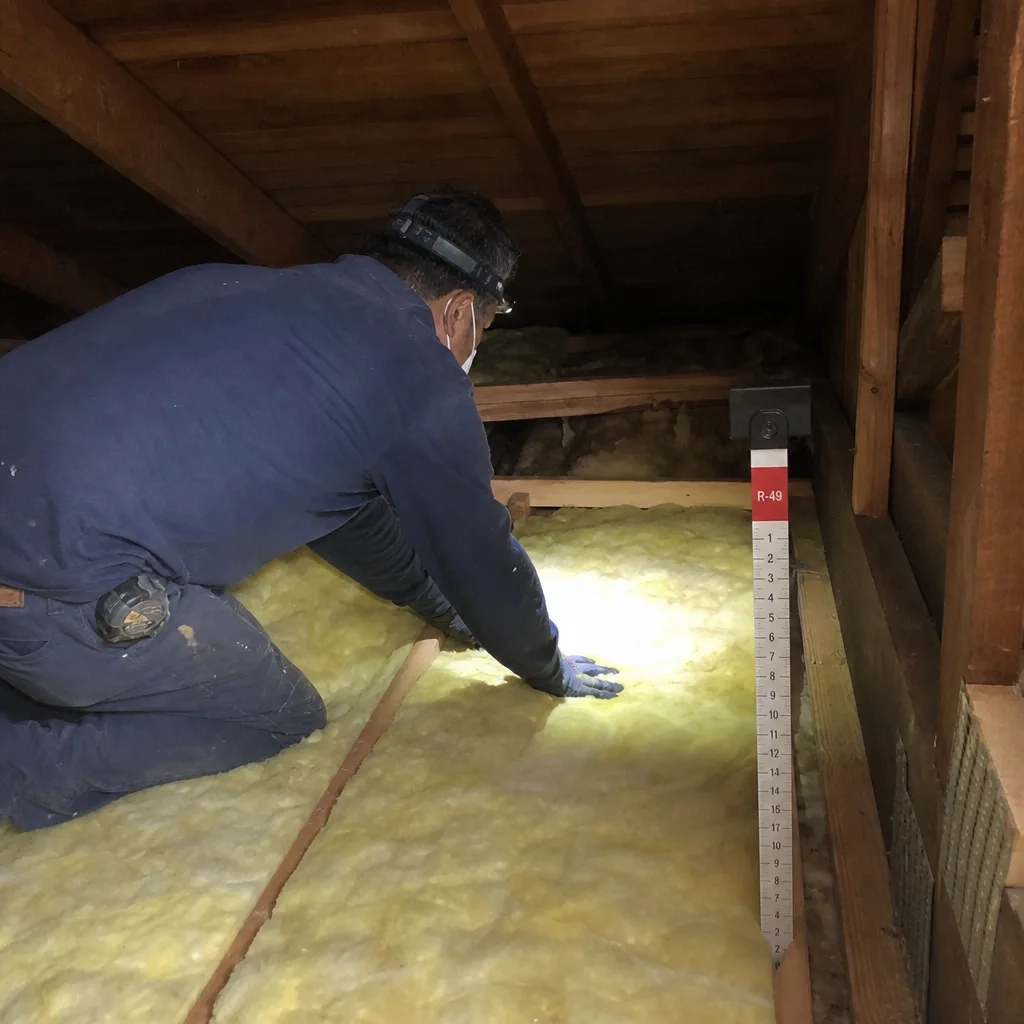
Blown-In Attic Insulation
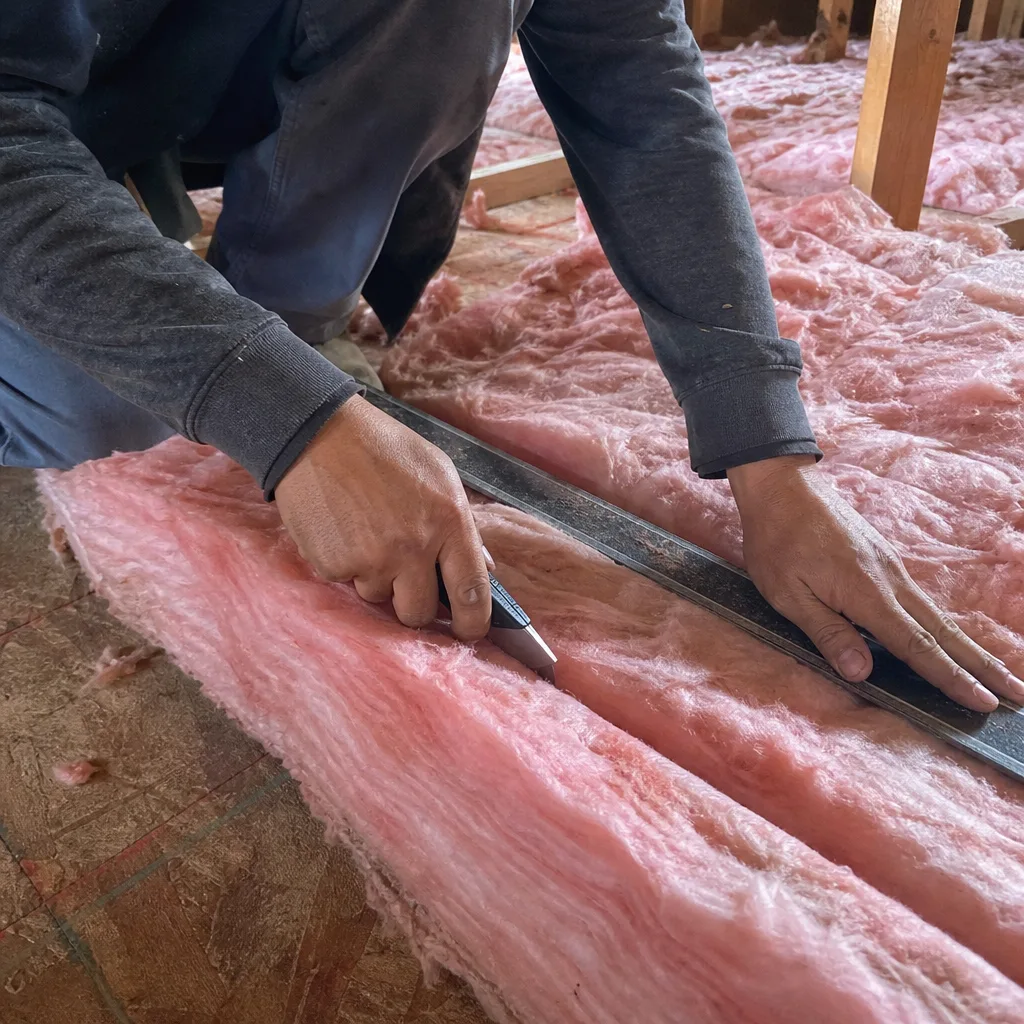
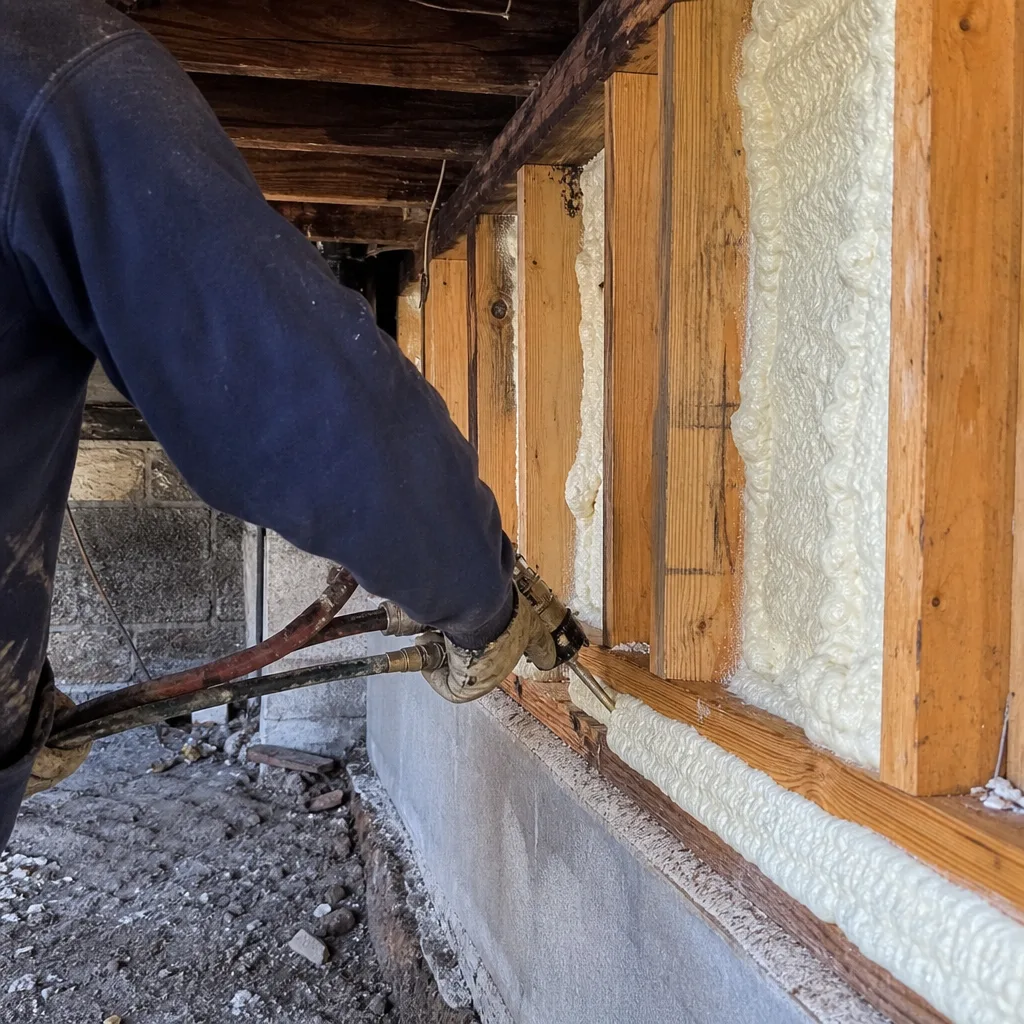
We blow Owens Corning and Johns Manville fiberglass or GreenFiber cellulose over sealed attic floors in El Monte’s ranch-style and box-style tracts, most built between 1945 and 1970. The material fills irregular joist cavities and covers compressed original batts that have settled to a fraction of their rated R-value. We never blow over an unsealed floor - top plates, can lights, and penetrations get sealed first. That’s Haven Standard, not an upsell.
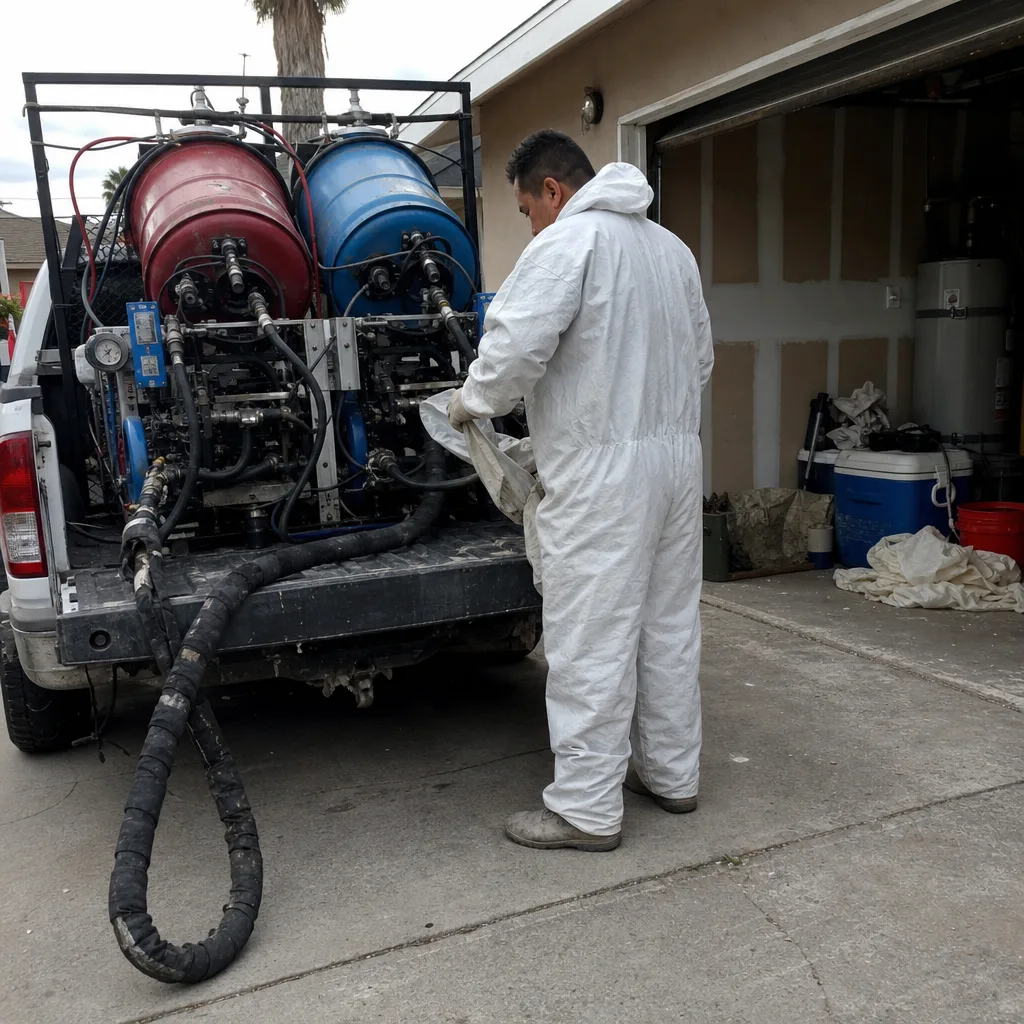
Attic Batt Insulation
For El Monte homes with accessible joist bays and minimal penetrations, we install Knauf or Owens Corning batts to current Title 24 standards. Most El Monte attics need R-38 minimum in this climate zone; we regularly pull out original kraft-faced batts that have compressed to R-6 or less and replace them with properly fitted, unfaced batts that maintain their loft. The old batts go out in our truck, not your driveway.
Attic Insulation Top-Up
This is our most common El Monte service. Homeowners call us because their 1955 or 1962 ranch “already has insulation” - and it does, technically. But decades of 150°F attic summers have compressed those original batts to a thin, ineffective layer. We inspect what’s there, air-seal the floor, then blow new material to achieve the total R-value your home needs. A typical top-up in El Monte runs $900-$1,800 and takes one day.
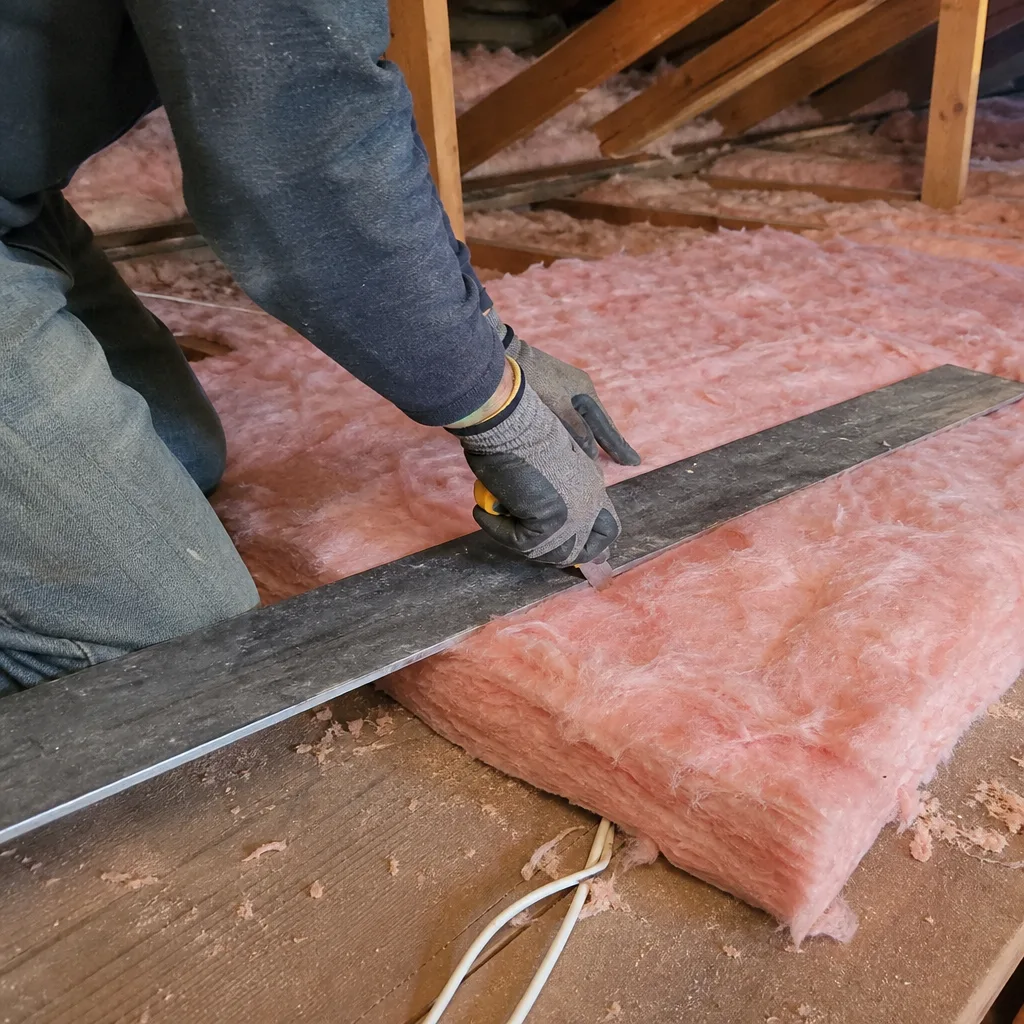
Attic Insulation Replacement
When original batts are water-stained, rodent-compromised, or so compressed they can’t be topped up effectively, we remove everything, seal the envelope, and reinstall to code. Full replacement in El Monte’s 1,000-1,400 square foot attics typically runs $2,200-$4,800. You get photos of the empty cavity, photos of the sealed floor, and photos of the finished installation.
Attic Baffles & Ventilation Prep
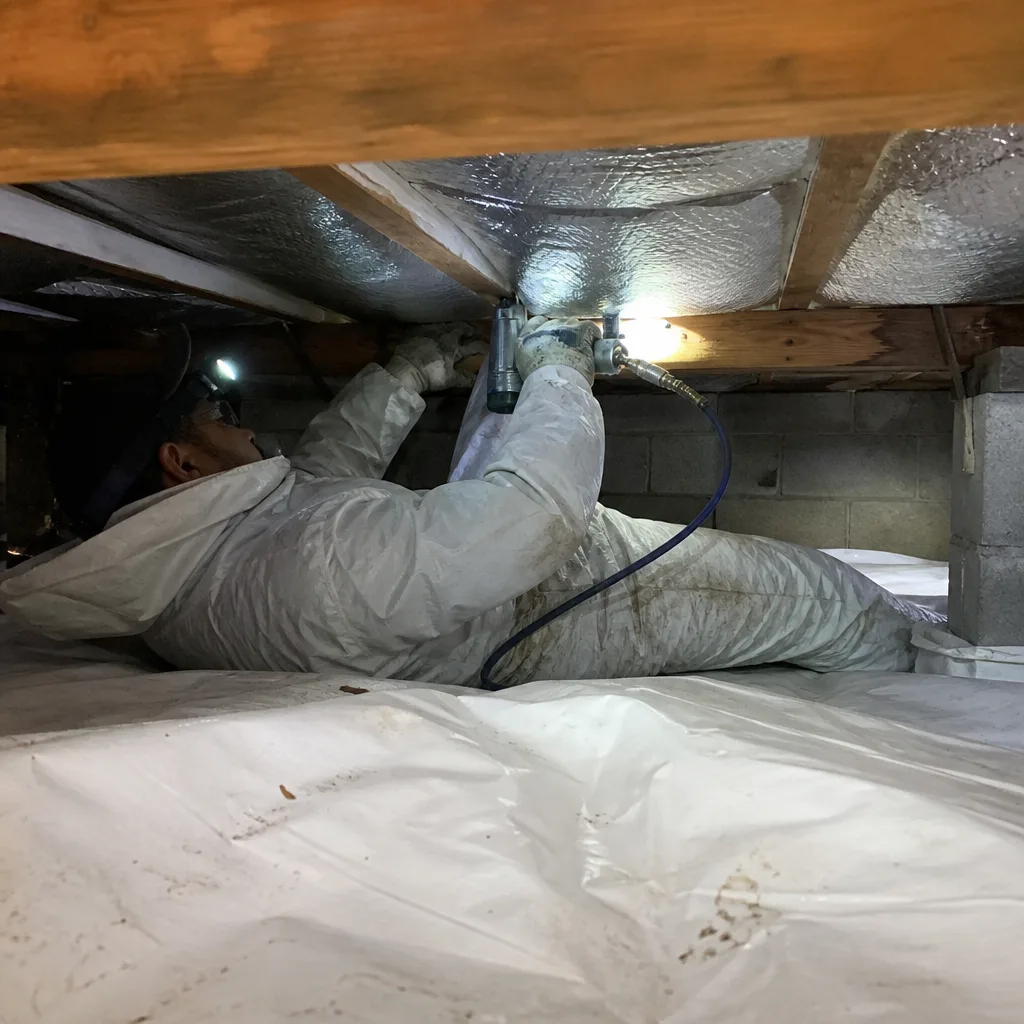
El Monte’s 150°F summer attic temperatures demand airflow. We install baffles - cardboard or foam channels that keep soffit vents clear of insulation - at every eave where we work. Without them, blown-in material blocks intake vents and turns your attic into a stagnant heat box. We check existing ridge and gable venting and tell you straight if it’s inadequate for the insulation depth we’re installing.
What happens when you call
- 1
A real person answersNo phone trees - you reach a local pro.
- 2
You get an upfront price rangeHonest numbers before anyone is dispatched.
- 3
A background-checked tech heads outLicensed & insured, dispatched right away.
- 4
You approve before work beginsNothing starts until you say go.
 Before
 After
AfterTrusted Brands We Service in El Monte
We stock Owens Corning, Johns Manville, and Knauf materials on our El Monte-area trucks, with Rockwool available for fire-rated or high-temperature applications. No proprietary lock-in - we specify what performs for your specific attic condition and budget, and we publish the brand name on your written scope so you know what you’re getting. Local inventory means we don’t stretch your job across multiple delivery days.
Common Attic Insulation Problems We See in El Monte Homes
- Compressed original batts masquerading as adequate insulation. We regularly find 1950s kraft-faced fiberglass in El Monte attics that looks intact until you measure it - 2 inches thick where 12 inches should be, giving an actual R-value of R-6 or less against California’s R-38 minimum. Homeowners see pink material and assume the job is done.
- Salt-air corrosion of fasteners and hardware. El Monte’s basin position means marine air reaches it episodically, depositing chloride-rich condensation on attic staples, fasteners, and garage-door springs that then bakes in 95-105°F heat. The corrosion cycle is faster than inland cities and different from coastal LA’s constant moderate exposure.
- Thermal bridging through uninsulated walls and no radiant barrier. Even a properly insulated attic can’t compensate for 2×4 walls with empty cavities and roof decks radiating 150°F downward. The heat gain overwhelms your cooling system and makes top-floor rooms unusable in July and August.
- Blocked soffit vents from prior insulation work. Previous contractors - or homeowners themselves - have blown or stuffed material deep into eaves, choking off intake airflow. We find this in maybe a third of El Monte homes we inspect.
Pricing for Attic Insulation in El Monte, CA
| Service | Typical Range in El Monte |
|---|---|
| Attic Insulation Top-Up (air seal + blow to R-38) | $900 - $1,800 |
| Attic Batt Insulation Replacement | $1,600 - $3,200 |
| Full Attic Insulation Removal + Replacement | $2,200 - $4,800 |
| Attic Air Sealing (standalone) | $800 - $1,500 |
| Attic Baffles & Ventilation Prep | $400 - $800 |
These ranges reflect El Monte’s typical 1,000-1,400 square foot attics in 1950s-1960s tract construction. Larger homes, vaulted ceilings, or rodent-damaged insulation requiring full removal push toward the higher end. Every quote is a flat written price - not an estimate that grows - and includes the Documented Photo Record. Bring us a competing written estimate and we’ll give you a Free Second Opinion, line by line.
We Also Serve Cities Near El Monte
Our crews work throughout the San Gabriel Valley, including El Monte and neighboring Temple City, Rosemead, Arcadia, and San Gabriel. If you’re near the border - say, a Rosemead address with an El Monte ZIP - we schedule based on crew location that day, not arbitrary territory lines. The same written price, same blower-door documentation, same Haven Standard applies.
Serving El Monte, CA - Our Local Coverage Area
We’re based in the El Monte area and know this community well. Use the map below to see our service coverage - if you’re nearby, we can almost certainly help.
FAQs - Attic Insulation in El Monte
El Monte gets salt-laden marine air only during episodic intrusions, not the constant moderate exposure coastal LA sees - and that intermittent deposition bakes onto fasteners and hardware in 95-105°F heat, accelerating corrosion beyond what Pasadena’s drier climate or coastal LA’s steadier moisture produces. We find rusted staples pulling batts away from joists and corroded garage-door springs failing years early. Our crews inspect for this specifically in El Monte homes and specify galvanized or stainless hardware where standard fasteners would fail. Call (626) 415-3454 and we’ll show you what we’re finding in your neighborhood.
Almost certainly yes. California’s Title 24 energy code did not exist in 1955, and the kraft-faced fiberglass batts installed in El Monte’s postwar tracts were typically R-11 or R-13 when new. After 60-70 years of heat cycling to 150°F, compression and degradation typically reduce actual performance to R-6 or less. Current minimum for El Monte’s climate zone is R-38. We measure what you have and photograph it before touching anything. The written scope shows current R-value, target R-value, and exactly how we get there.
The same episodic salt-air exposure that corrodes attic fasteners attacks garage-door springs, hinges, and rollers - chloride condensation bakes into the metal surface, pitting it far faster than dry inland heat would. We recently worked on a 1955 ranch-style home near Rosemead Boulevard in El Monte, where the homeowner’s original attic batts had compressed to R-6 and the garage-door springs were visibly rusted from salt-air condensation cycles. Our tech installed galvanized springs with stainless steel hinges and nylon rollers, then blew in Owens Corning fiberglass to bring the attic to R-38, which immediately reduced the garage temperature by about 15°F and stopped the seasonal sticking. The homeowner reported that the door no longer jammed during summer heat waves and that their energy bill dropped noticeably. For a free written quote on both issues, call (626) 415-3454.
Compressed original batts that give homeowners a false sense of security. The pink or yellow material is still visible, so it looks like insulation is present - but measure the thickness and it’s often 1.5 to 2 inches where 12 inches of R-38 should be. We bring a ruler to every inspection and show you the photo. The second most common is blocked soffit vents from previous work. Both are fixable in a single day with proper air sealing and material installation.
It helps, but it’s not a substitute for adequate insulation depth. El Monte’s 150°F attic temperatures mean radiant heat off the roof deck is real and significant, especially in south-facing slopes. A radiant barrier - typically a reflective foil stapled to rafters or laid over existing insulation - can reduce attic temperatures by 20-30°F in peak summer. We install them as part of full replacement jobs where the budget allows, or we prioritize getting to R-38 first if funds are limited. The written scope shows both options with separate line items so you decide.
Ready to see what’s actually in your attic? Call (626) 415-3454 for a free written estimate. We’ll inspect, measure, photograph, and deliver a flat price before any work starts - that’s Haven Standard Clause 1, and it’s how we’ve operated since 2016.
Written by Wes Okafor, Owner at Envelope Insulation Co., serving El Monte and the San Gabriel Valley since 2016.