
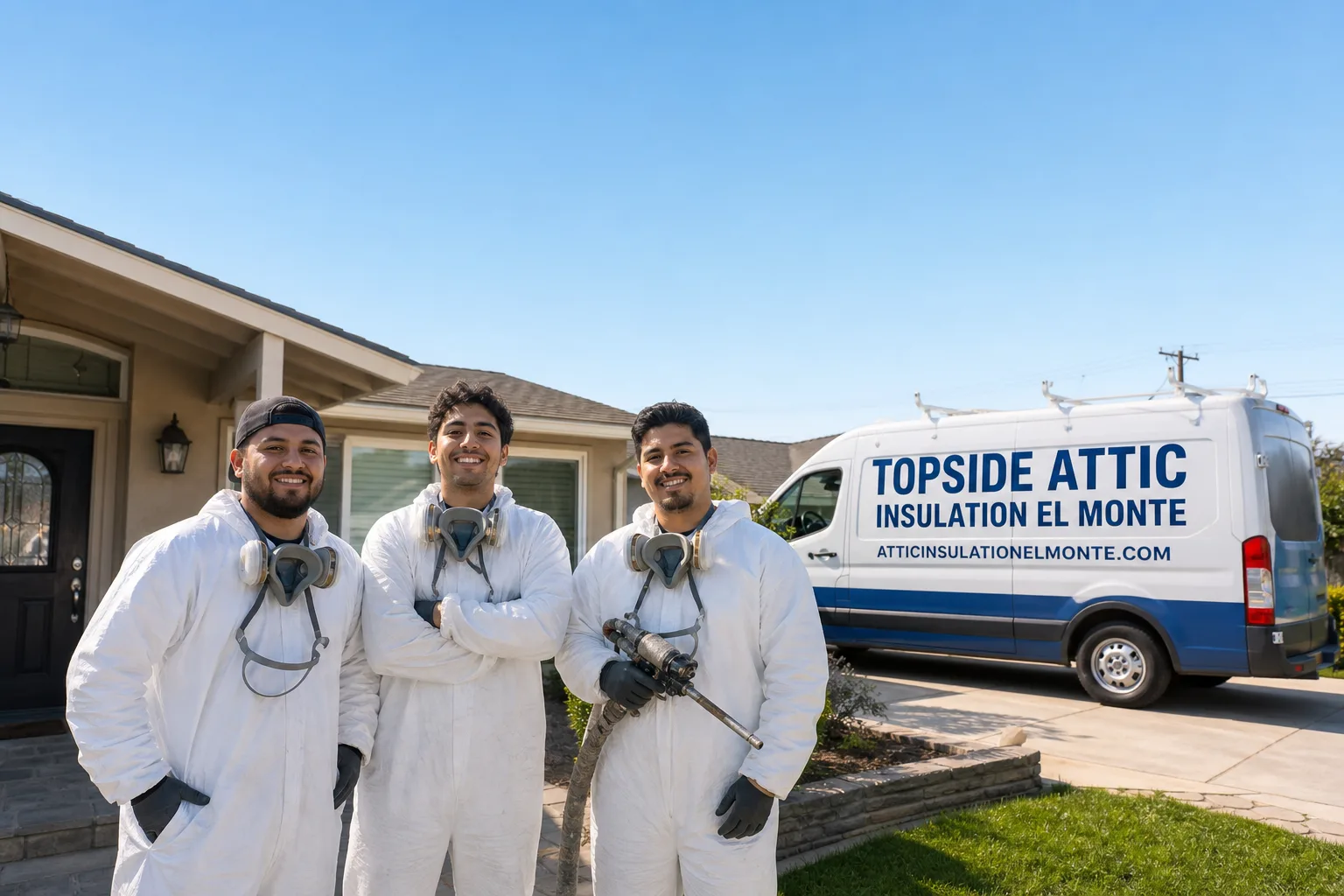
Fast, Reliable Blown-In Insulation Across Alhambra
Blown-in insulation in Alhambra typically costs $1.80-$3.20 per square foot for attic work and $2.50-$4.50 per square foot for dense-pack wall insulation, with most complete bungalow retrofits running $3,800-$7,500. Our crews are dispatched from the Los Angeles office and can usually reach Alhambra properties within 45 minutes. Call (626) 415-3454 for a written price before any work starts.
We’ve worked the pre-war blocks from Emery Park down through Midwick Tract and the original streetcar corridors near Valley Boulevard. Alhambra’s 1920s-1940s housing stock isn’t like newer construction. These are stucco-over-wood-frame bungalows with hollow wall cavities, minimal original attic coverage, and building envelopes that have been patched together through decades of additions. You need a crew that knows the difference between a Craftsman with balloon framing and a Spanish Colonial Revival with dropped soffits before they start drilling.
Our Blown-In Insulation team treats air sealing as a hard prerequisite, not an upsell. We seal top plates, can lights, and penetrations before any material goes in. Then we document everything: photos, written scope, and before-and-after blower-door numbers so you can verify the result.
Why Topside Attic Insulation El Monte Is Alhambra’s Preferred Blown-In Insulation Company
We’ve sealed and insulated over 9,000 homes since 2016, and a significant share of them sit on Alhambra’s original bungalow blocks. The reviews we get from Alhambra homeowners tend to mention the same thing: the crew showed up on time, named the technician in a text, and left documentation behind. Under Haven Standard: Arrive on schedule, you get a named technician and a text when they are on the way.
Response time to Alhambra runs under an hour from dispatch. That’s not a marketing claim; it’s a function of where we stage crews for the San Gabriel Valley basin. When your west-facing bedrooms are hitting 95°F by 4 PM in July, you don’t want a callback window measured in business days.
The local knowledge matters because Alhambra’s building department has specific requirements for insulating older wood-frame structures, particularly around knob-and-tube wiring encounters and fire-blocking in balloon-framed walls. Our technicians have handled these conditions repeatedly on Alhambra’s pre-war stock. We don’t learn your house type on your dime.
Our Blown-In Insulation Services in Alhambra
Blown-In Cellulose
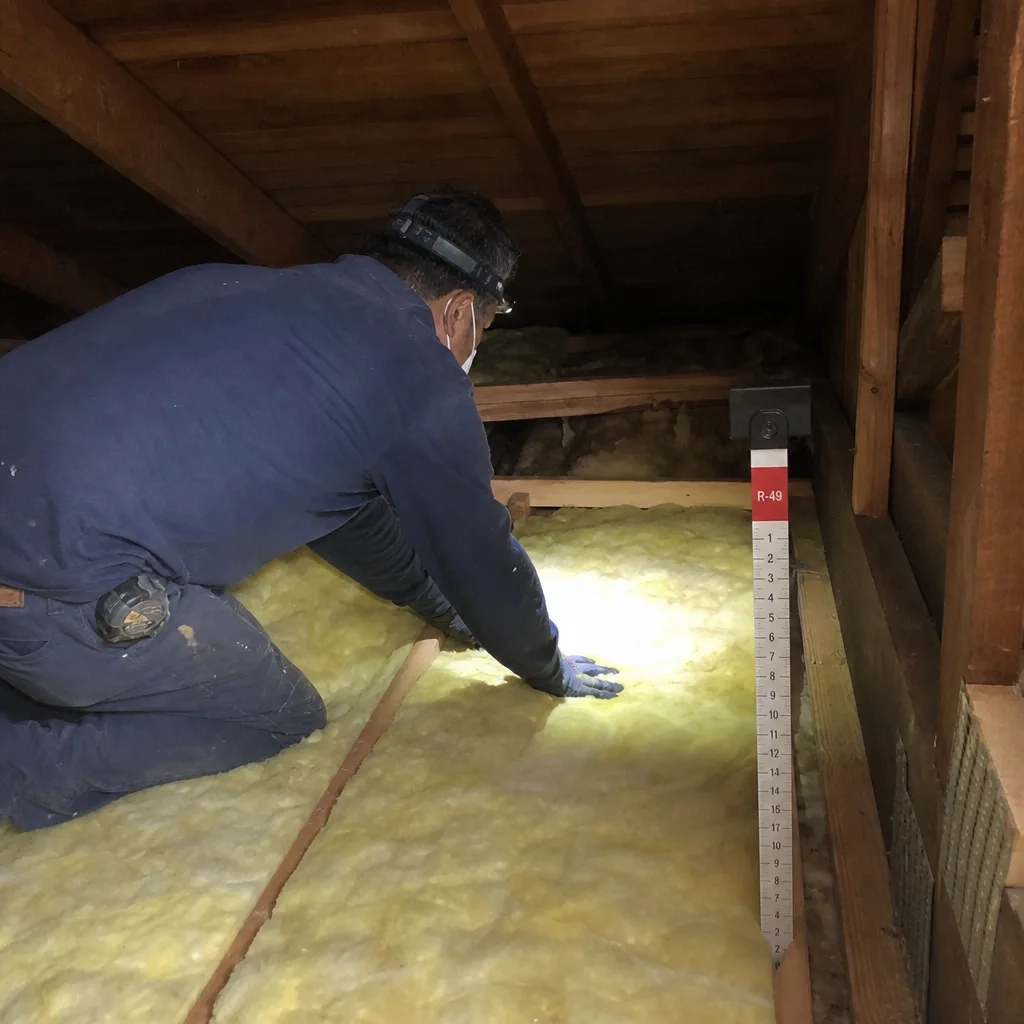
We use GreenFiber cellulose for most Alhambra dense-pack wall applications. Cellulose packs to a higher density than fiberglass, which matters in Alhambra’s stucco-over-wood-frame construction where settling would leave the top of the cavity bare. The material is treated with borate fire retardant, and we verify density with a wall-cavity fill gauge on every job. For attic applications, cellulose works well in irregular older rooflines where batts won’t seat properly.
Blown-In Fiberglass
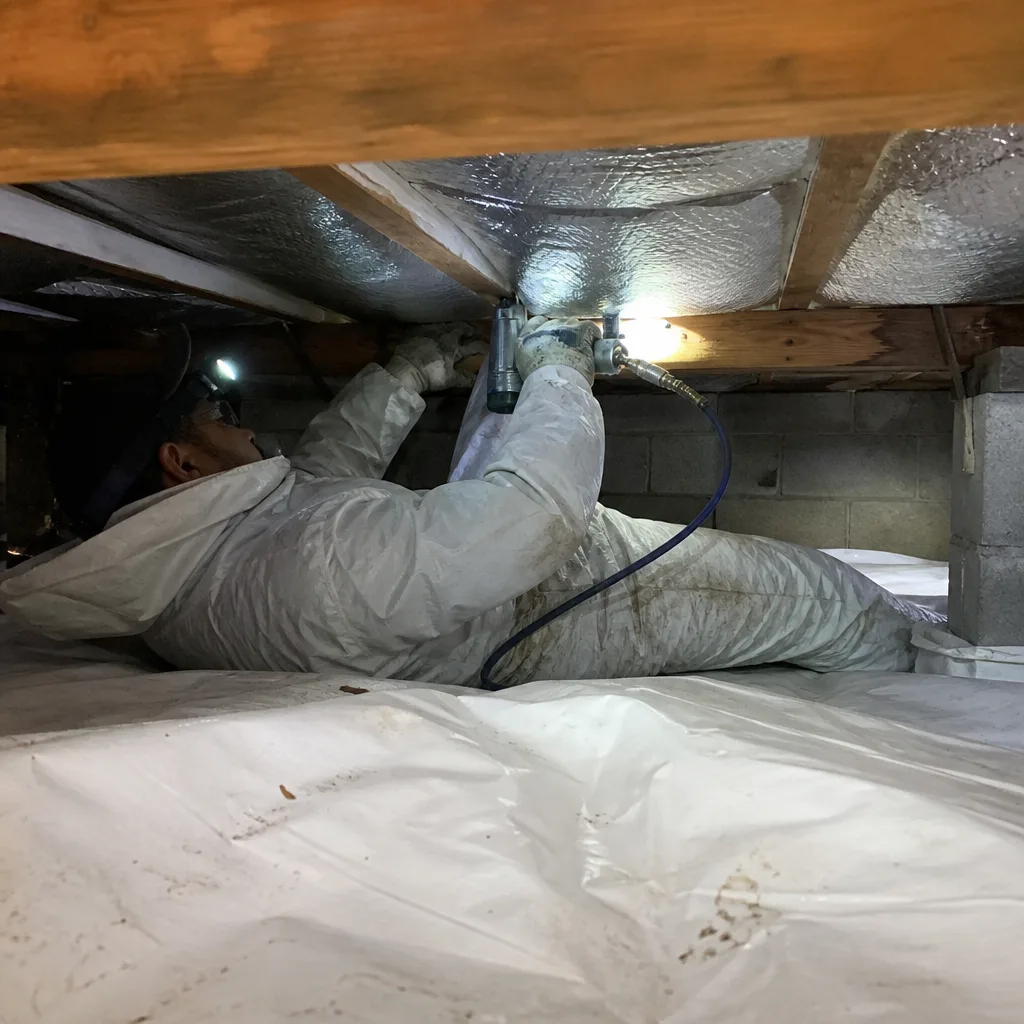
Owens Corning blown-in fiberglass is our standard for Alhambra attic top-ups, particularly in the deeper truss attics found on post-war additions near Alhambra Road. Fiberglass doesn’t absorb moisture, which is relevant in damp San Gabriel Valley winters when condensation can form on the underside of older roof decking. We set depth markers every 100 square feet and photograph them for the Documented Photo Record.
Dense-Pack Wall Insulation
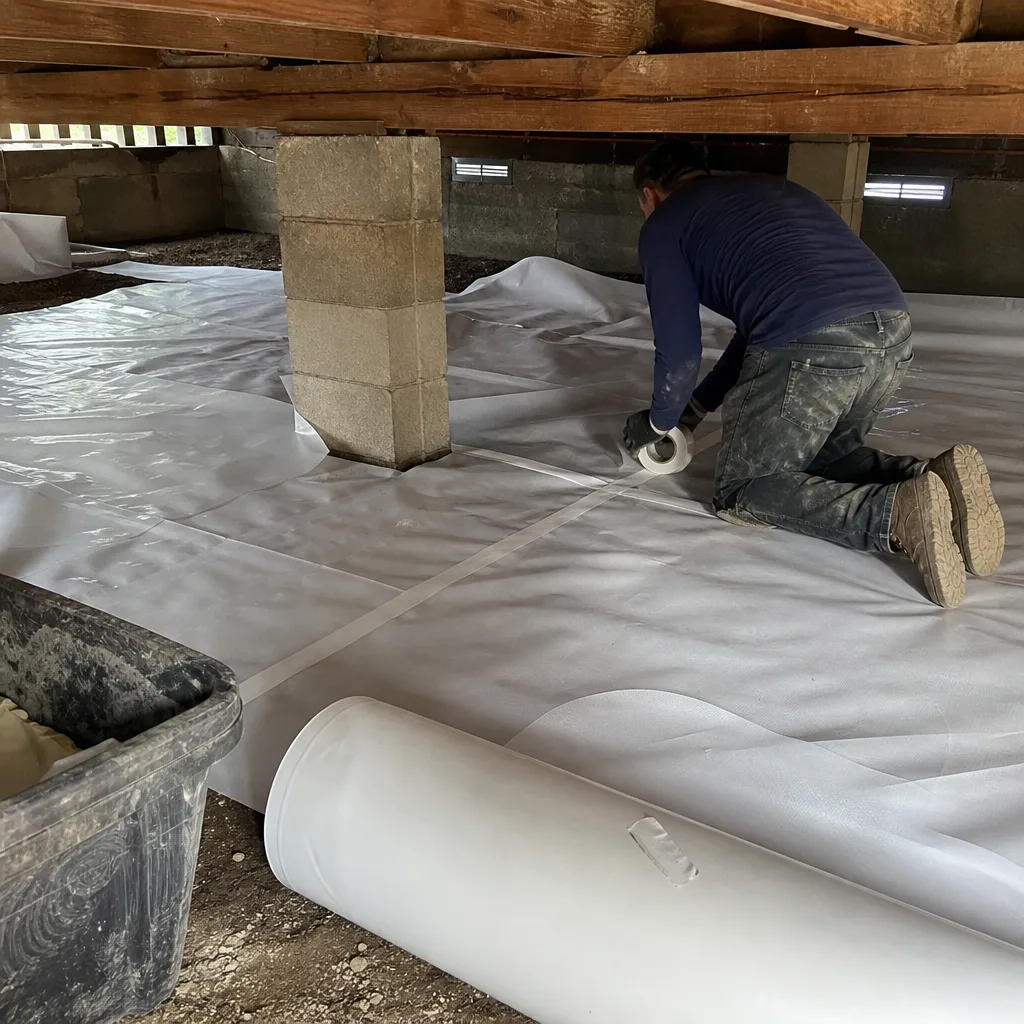
This is where Alhambra’s housing stock demands real expertise. Because Alhambra’s original streetcar-era blocks near Valley Boulevard and Main Street were built from a handful of repeated 1920s-1940s bungalow plans with zero wall-cavity insulation, our crew can measure one floor plan and reuse the exact drill-point map and dense-pack density for a dozen near-identical neighbors on the same block. Alhambra’s inland San Gabriel Valley heat trap also means summer attic temps here run 10-15°F above coastal LA, so dense-pack density and top-up depth have to be set for that higher delta, not a Santa Monica default.
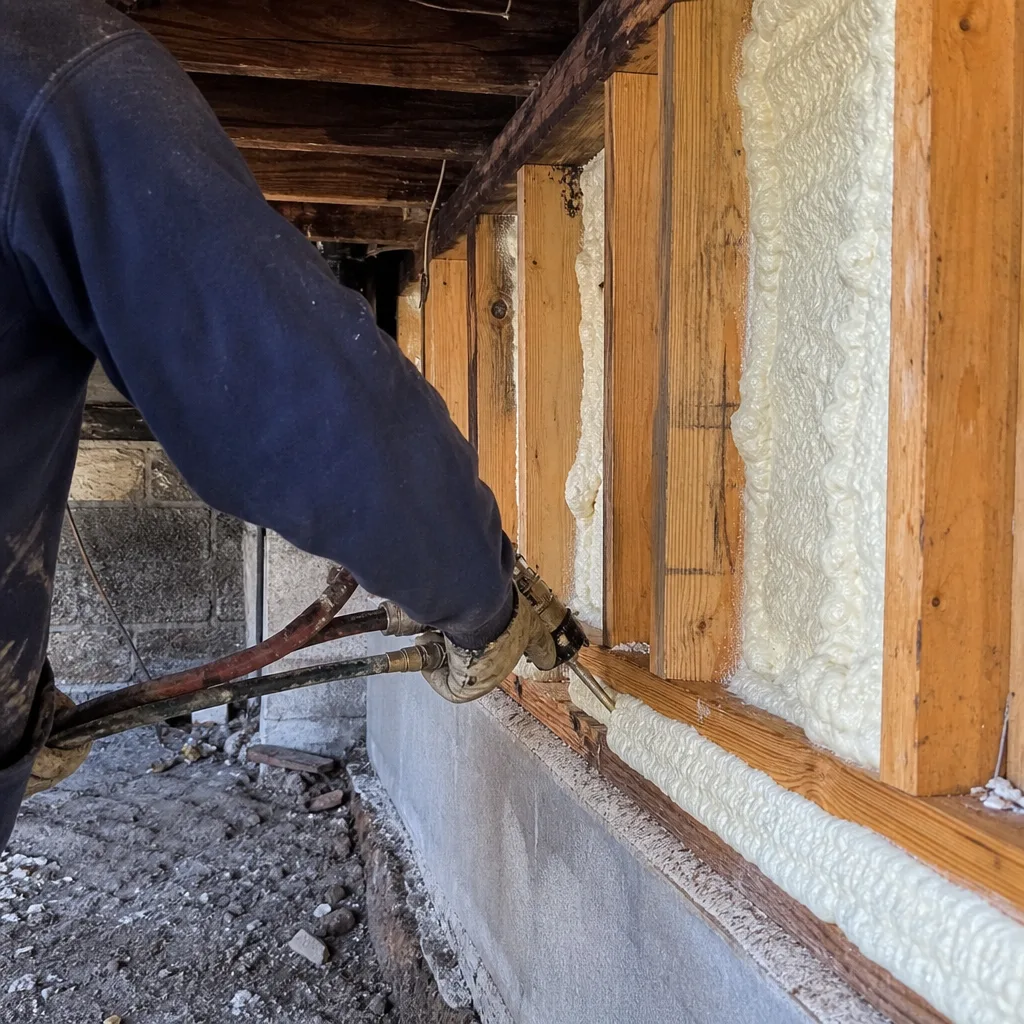
On a 1930s Craftsman bungalow block just off Valley Boulevard near Main Street, we found the original plaster walls completely hollow - a bare cavity behind lath with no insulation and only a thin scatter of old rock wool in the attic. We drilled the exterior stucco on a grid, dense-packed GreenFiber cellulose to spec, and topped the attic to a uniform depth with Owens Corning blown-in fiberglass, patching and re-texturing each stucco plug so the wall read as untouched. The homeowner reported the west-facing rooms, previously unbearable by mid-afternoon, held temperature through the 100°F+ peak.
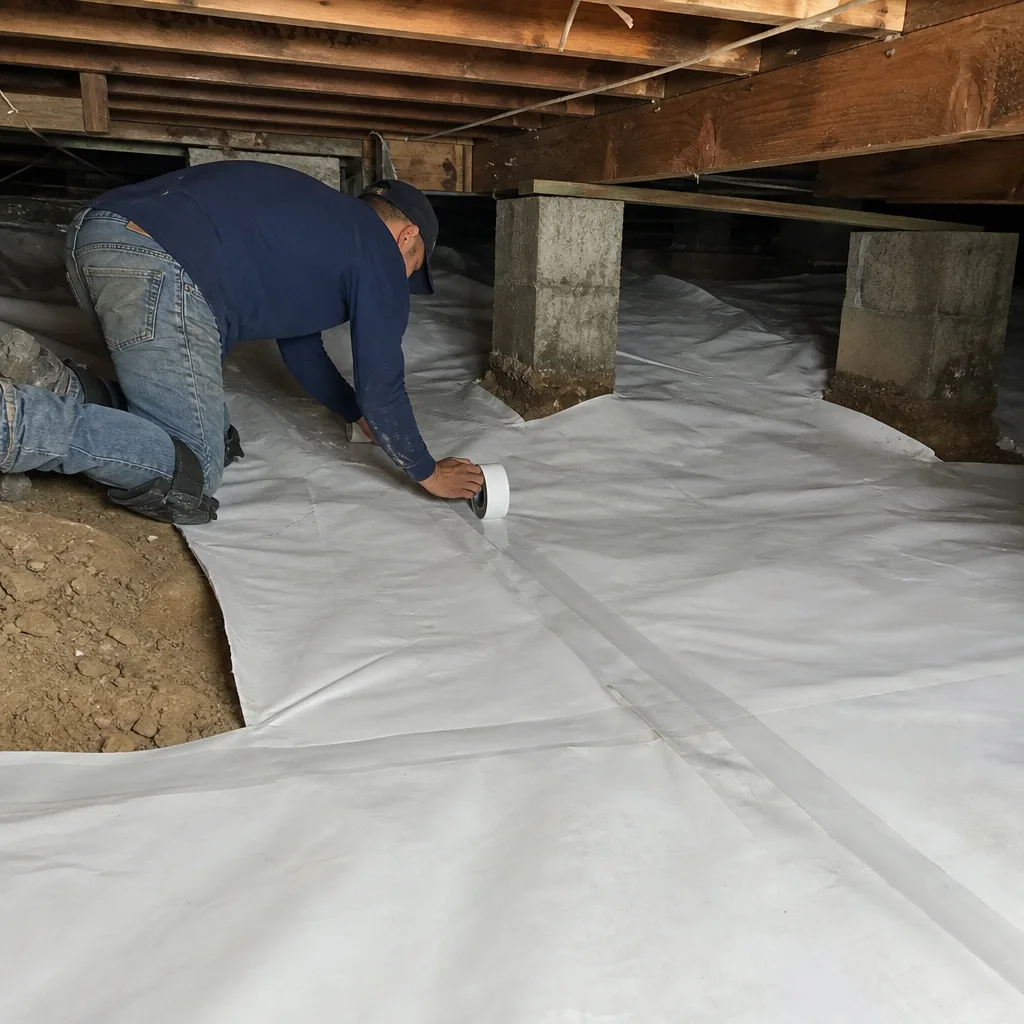
Blown-In Top-Up
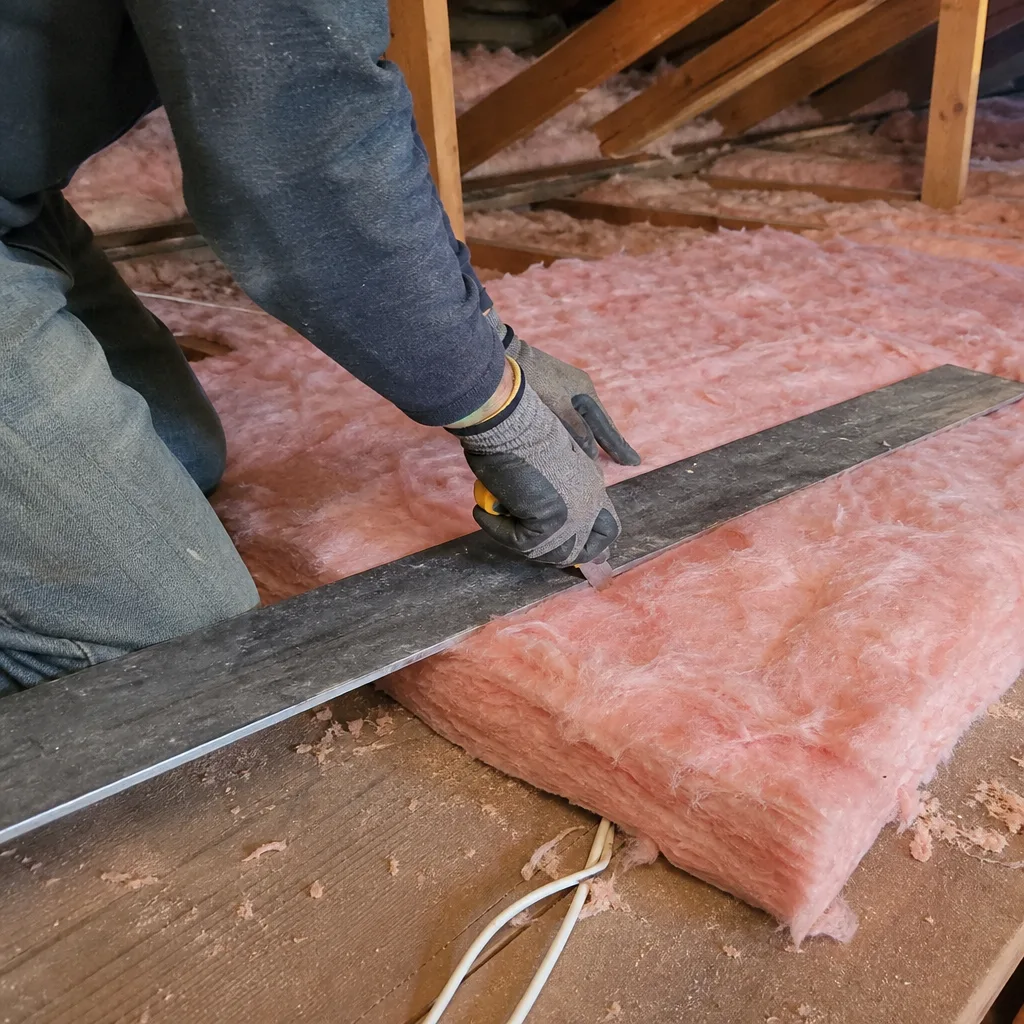
Many Alhambra attics have some existing insulation - usually thin, uneven, and compressed by decades of storage or rodent activity. We remove debris and contaminated material first, seal air leaks at top plates and penetrations, then blow new material to a uniform depth. For Alhambra’s pre-war homes, we typically specify R-38 to R-49 in the attic, which translates to 12-15 inches of fiberglass or 10-12 inches of cellulose, depending on your roof structure’s load capacity.
What happens when you call
- 1
A real person answersNo phone trees - you reach a local pro.
- 2
You get an upfront price rangeHonest numbers before anyone is dispatched.
- 3
A background-checked tech heads outLicensed & insured, dispatched right away.
- 4
You approve before work beginsNothing starts until you say go.
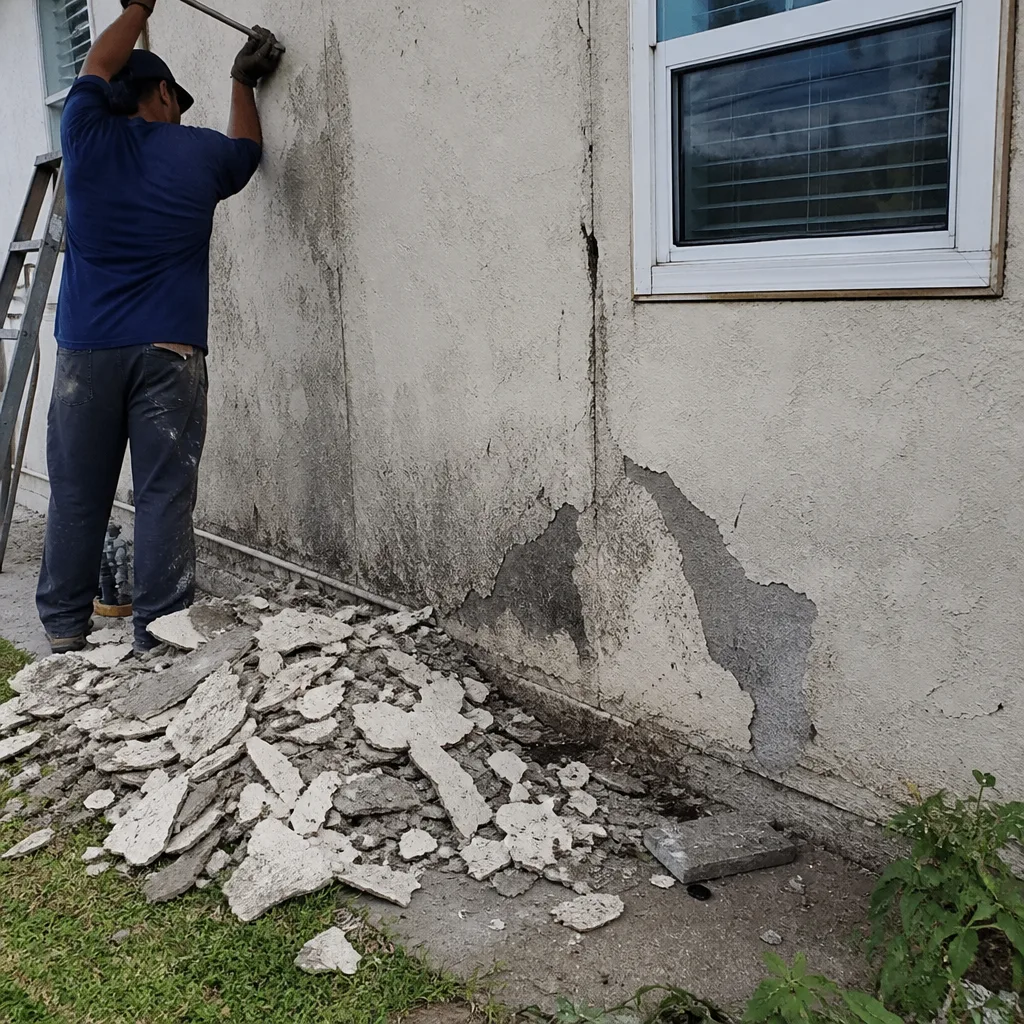 Before
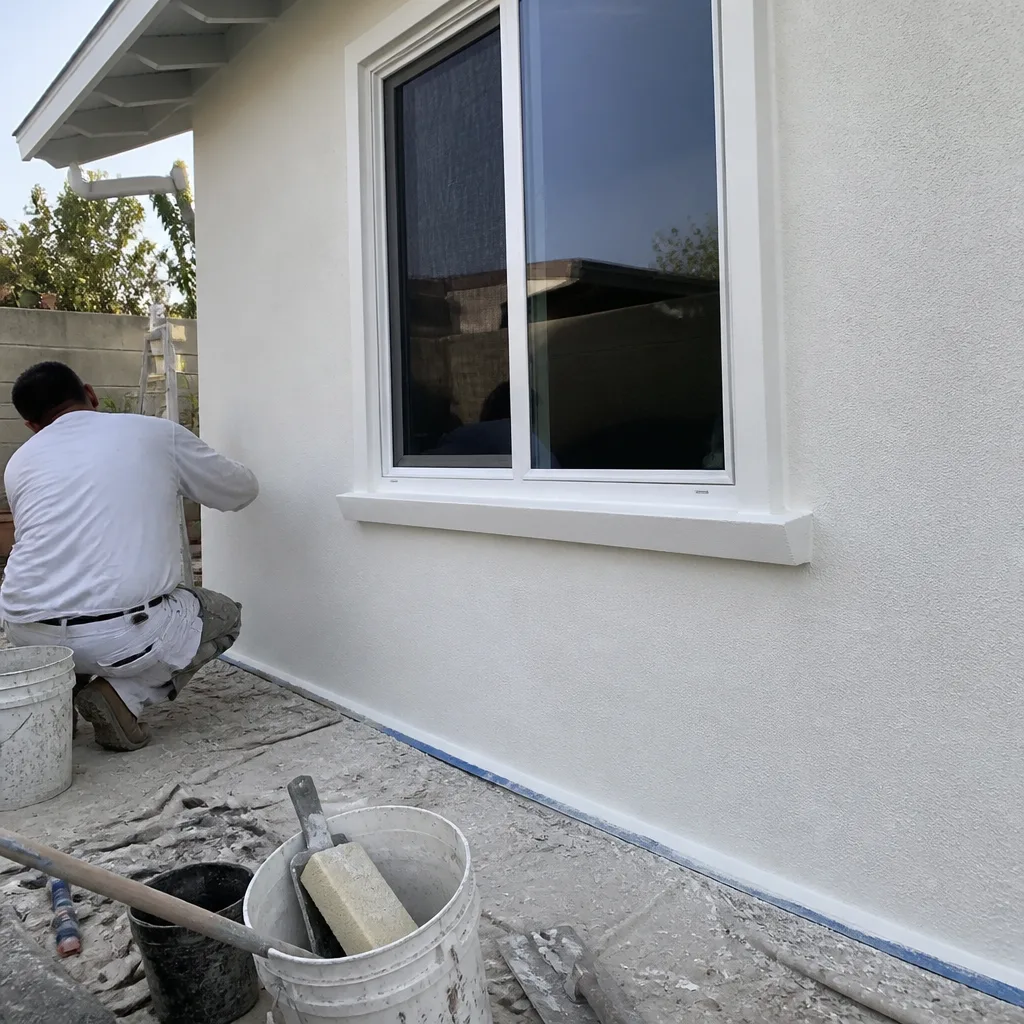 After
AfterTrusted Brands We Service in Alhambra
We source blown-in materials from Owens Corning, Johns Manville, Knauf, and GreenFiber, among others. No proprietary lock-in means we specify what performs for your specific Alhambra home, not what moves a particular product line. Our Los Angeles office stocks common densities and treatments for same-day Alhambra jobs, and we carry matching stucco texture samples for drill-and-patch wall work so the exterior finish reads original, not repaired.
Common Blown-In Insulation Problems We See in Alhambra Homes
- Visible drill grids on stucco facades. Exterior stucco drill-and-patch plugs not color- and texture-matched leave a visible grid on the street-facing wall of the bungalow. This is a common shortcut when crews skip re-texturing. We match texture and tint before we leave, and we photograph the finished wall for your record.
- Settled dense-pack leaving cavities bare. Cellulose dense-packed at too low a density for Alhambra’s stucco-over-wood-frame walls settles over the first hot season, leaving the top of the cavity uninsulated again. We verify density in the field and warranty against settlement under the 365-Day Done Right Promise.
- Moisture-trapped roof structures. Attic top-up installed without addressing the older wood-frame roof’s ventilation traps moisture and feeds condensation problems that damp San Gabriel Valley winters cause in pre-war roof structures. We assess soffit and ridge venting before we blow, and we install baffles where needed to maintain airflow.
- Fire-risk from unbarriered wiring. Blowing fiberglass over legacy knob-and-tube or recessed-can wiring in an uninsulated 1930s attic without first installing dam barriers creates a code and fire-risk issue. We identify wiring type during pre-work inspection and install appropriate barriers or recommend electrical upgrade before insulation proceeds.
Pricing for Blown-In Insulation in Alhambra, CA
A typical blown-in attic top-up for an Alhambra bungalow runs $1,800-$3,400. Dense-pack wall insulation for a 1,200-square-foot home with stucco drill-and-patch runs $4,200-$7,500. Complete envelope work - attic top-up plus dense-pack walls plus air sealing - typically falls between $6,500 and $11,000 for Alhambra’s pre-war stock.
| Service | Typical Range in Alhambra |
|---|---|
| Attic blown-in top-up (R-38 to R-49) | $1,800 - $3,400 |
| Dense-pack wall insulation (stucco drill-and-patch) | $2.50 - $4.50/sq ft |
| Complete bungalow retrofit (attic + walls + air sealing) | $6,500 - $11,000 |
| Garage conversion or ADU insulation | $2,200 - $4,800 |
| Air sealing only (before insulation) | $800 - $1,600 |
Factors that move the price: accessibility of the attic, presence of knob-and-tube wiring requiring barrier work, stucco texture complexity for patch matching, and whether existing insulation needs removal. Every job begins with a written price - flat, itemized, no work starts without it. Bring us a competing quote; we offer a Free Second Opinion on any written estimate. Call (626) 415-3454 to schedule.
We Also Serve Cities Near Alhambra
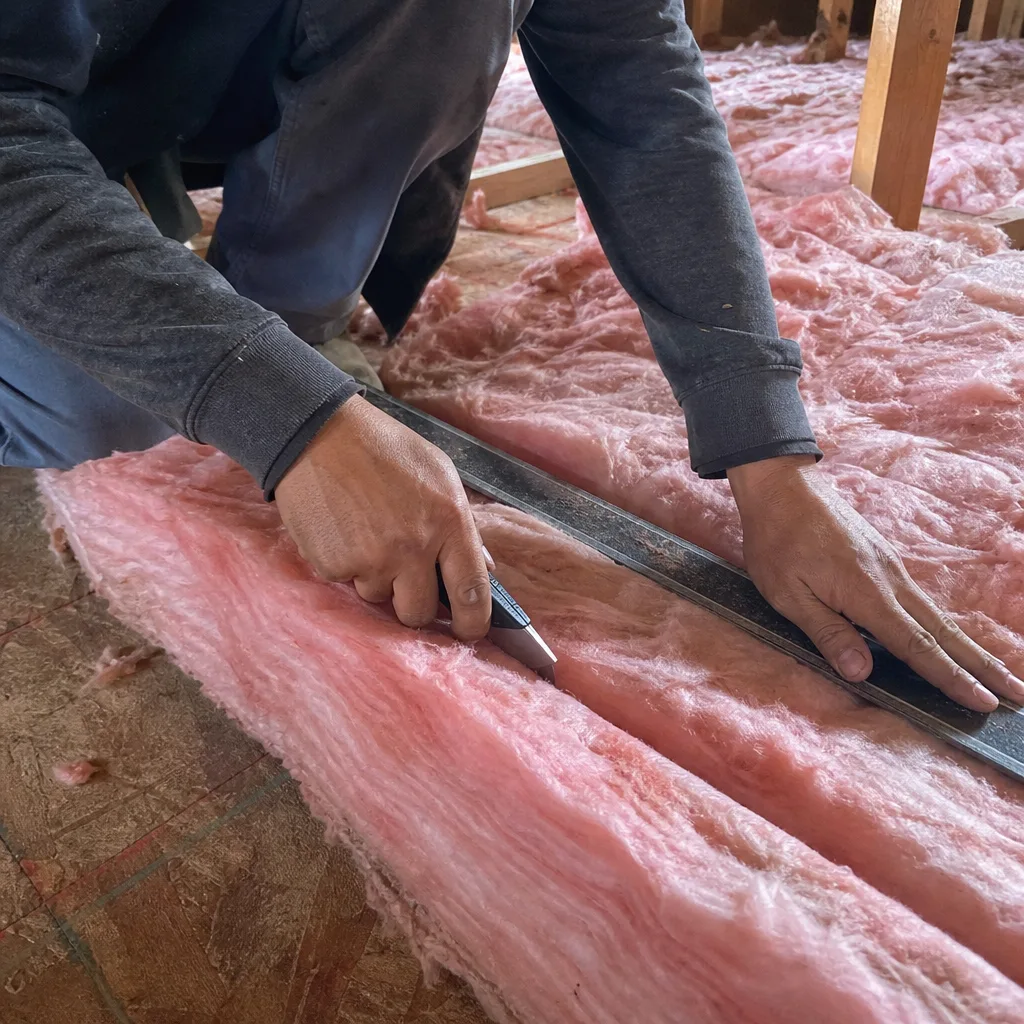
Our crews work throughout the San Gabriel Valley basin, including Alhambra and neighboring Monterey Park, San Gabriel, Rosemead, and Pasadena. The same pre-war housing conditions, inland heat loads, and stucco-over-frame construction patterns appear across these cities, and we apply the same drill-point mapping and density specifications developed on Alhambra’s original bungalow blocks.
Serving Alhambra, CA - Our Local Coverage Area
We’re based in the Alhambra area and know this community well. Use the map below to see our service coverage - if you’re nearby, we can almost certainly help.
FAQs - Blown-In Insulation in Alhambra
Yes. We drill through the exterior stucco on a measured grid, dense-pack the cavity with cellulose, and patch and re-texture each plug to match. The interior plaster stays intact. On Alhambra’s repeated 1930s floor plans near Valley Boulevard, we’ve refined the drill-point map so precisely that neighbors on the same block get identical, predictable coverage. Call (626) 415-3454 for a written price and scope - estimates are free.
Alhambra’s inland San Gabriel Valley position produces summer temperatures 10-15°F hotter than coastal LA on the same day, while the city’s pre-war housing stock was built with zero wall-cavity insulation and minimal attic coverage. The combination of extreme heat load and near-total envelope deficiency makes insulation a major comfort and cost issue here, not a minor efficiency upgrade. A Santa Monica home with milder peaks and some existing insulation simply doesn’t face the same delta.
Yes, and these are common in Alhambra where successive owners have patched additions onto 1920s-1940s originals. The problem is usually a patchwork envelope: the original house has some insulation, the garage conversion has none, and the junction between old and new leaks air continuously. We treat the entire structure as a single envelope, test with a blower door - a pressurization reading that shows, in one number, how much air your building envelope is losing - and specify targeted air sealing and blown-in density for each zone.
Often yes. Alhambra’s damp San Gabriel Valley winters create condensation risk in older wood-frame roof structures, and simply adding insulation without maintaining airflow can trap moisture against the decking. We inspect soffit venting, ridge venting, and any blocked gable vents before we blow. Where needed, we install baffles to keep insulation from choking the air path. The 365-Day Done Right Promise covers any moisture-related failure from our work.
For Alhambra’s heat load, we specify R-38 to R-49 in the attic, which is 12-15 inches of blown fiberglass or 10-12 inches of cellulose. The exact depth depends on your roof structure’s load capacity and whether we’re blowing over existing material or starting fresh. We mark depth gauges across the attic floor and photograph them for your Documented Photo Record. Call (626) 415-3454 and we’ll measure your space for an exact written price.
Ready for a written price before any work starts? Call (626) 415-3454 or text us to schedule your free estimate. We’ll arrive on schedule, name your technician, send a text when they’re on the way, and leave you with a documented record of what we found and what we did. Every job backed by our 365-Day Done Right Promise and Haven Standard: Have it in writing.
Written by Wes Okafor, Owner at Envelope Insulation Co., serving Alhambra since 2016.