
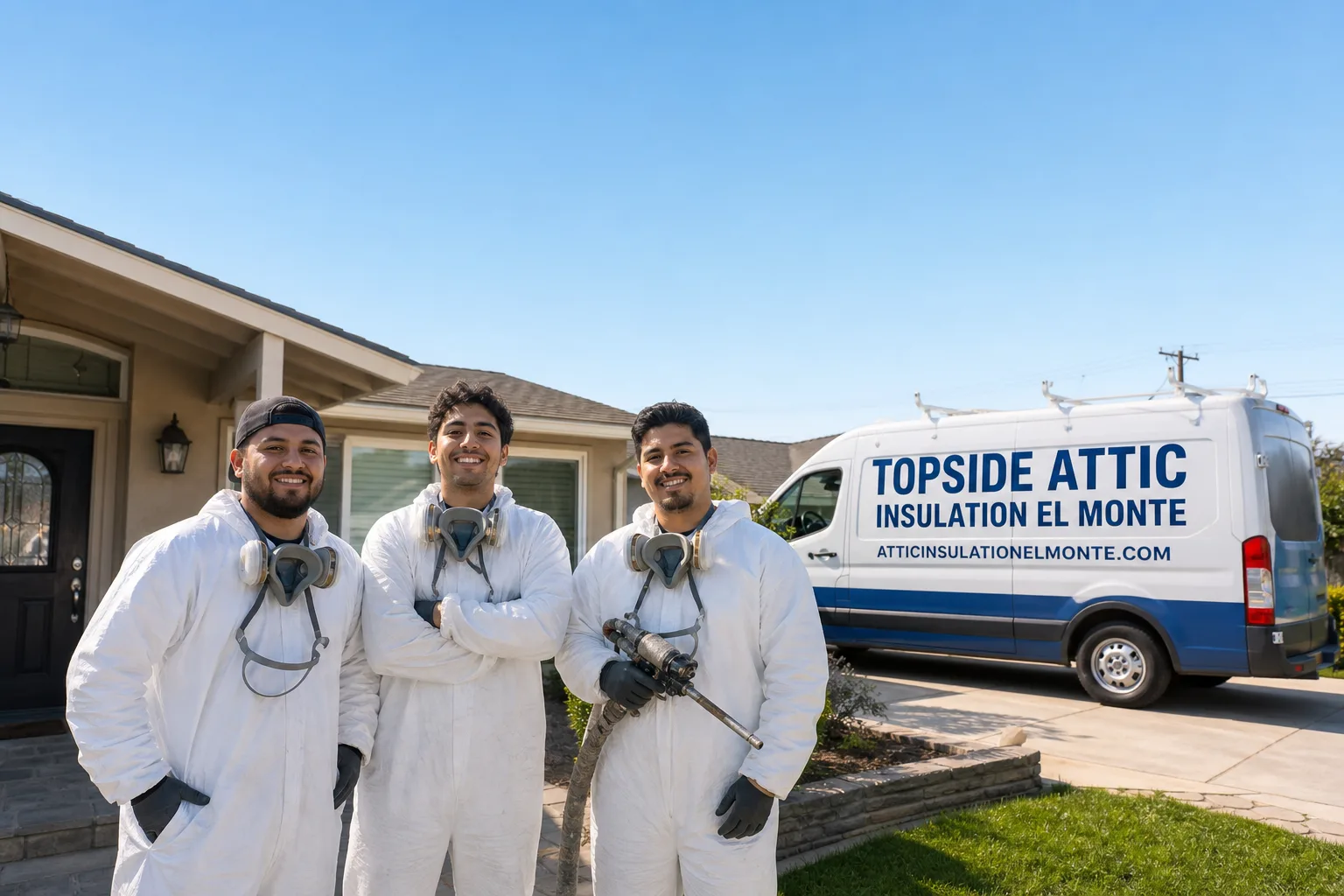
Fast, Reliable Blown-In Insulation Across Norwalk
Most blown-in insulation jobs in Norwalk run $1,800-$4,200 for a typical 1,100-1,600 square foot ranch, and our crews are usually on-site within 24-48 hours of your call. We know the specific headaches these postwar tracts present: the 22×22 hallway hatches, the 6-inch attic depths, the original rock wool that’s turned to dust. Dispatch and scheduling run from our Los Angeles office, but the crews serving Norwalk live in the area and carry the right hose extensions and hand-packing gear for your housing stock. Call (626) 415-3454 and a live person will pick up, 24/7.
Why Topside Attic Insulation El Monte Is Norwalk’s Preferred Blown-In Insulation Company
We’ve sealed and insulated over 9,000 homes since 2016, and a significant share of those have been in the southeast Los Angeles corridor including Norwalk. The reviews that matter most to us are the ones that mention specifics: the photo record we left, the blower-door number before and after, the fact that we showed up when we said we would.
Response time to Norwalk is typically same-day or next-day for standard bookings, and we carry Owens Corning and GreenFiber materials on our local trucks so we’re not waiting on a distributor run. Our technicians are background-checked, uniformed, and named in your appointment text - Haven Standard: Arrive on schedule, you get a named technician and a text when they are on the way.
What separates us in Norwalk specifically is that we don’t treat your 1958 ranch like a 1998 ranch. The hatch size, the roof pitch, the existing degraded insulation - these change the job sequence, the labor estimate, and the equipment we bring. We account for that in the written price we deliver before any work starts.
Our Blown-In Insulation Services in Norwalk
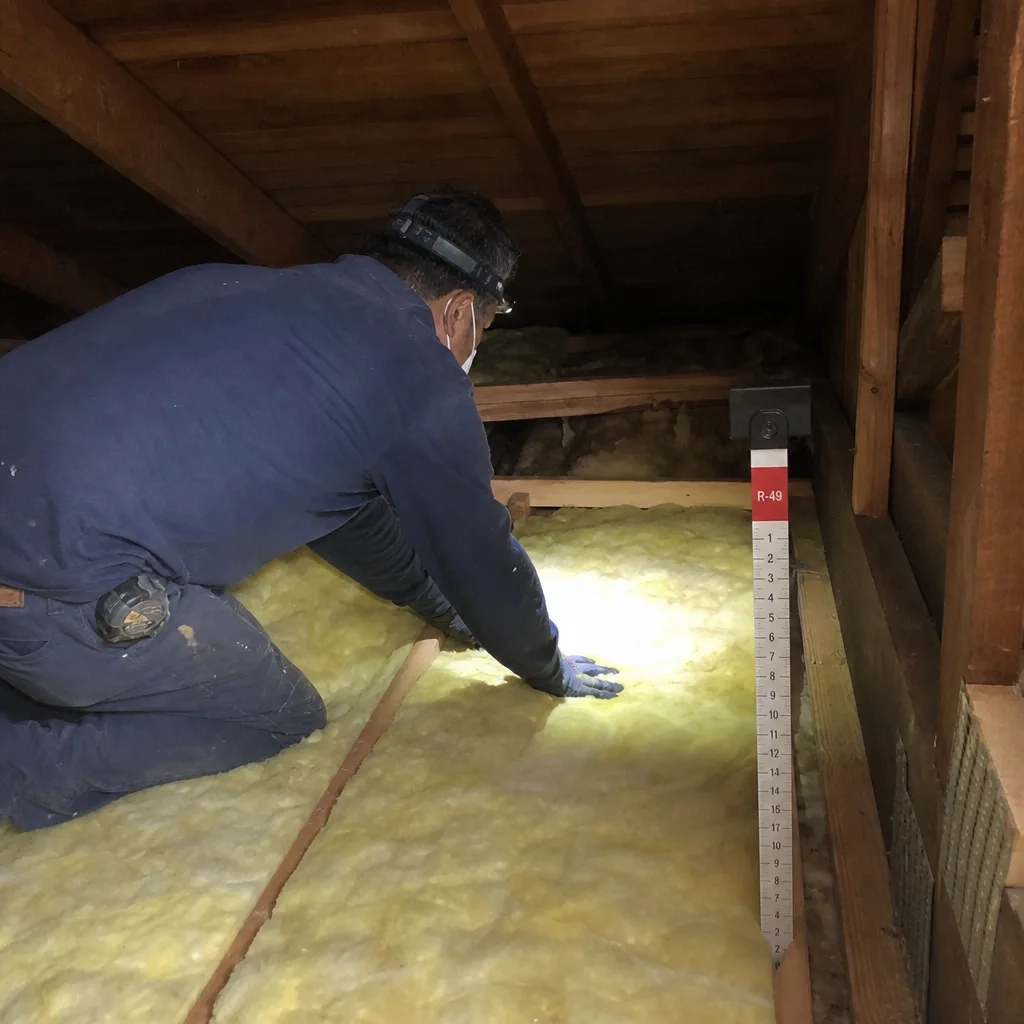
Blown-In Cellulose
Cellulose - ground and treated recycled paper fiber - is our most common recommendation for Norwalk’s original 1950s and 1960s housing stock. It packs tightly into irregular cavities and performs well in the shallow 6-8 inch attics common along Studebaker Road and the neighborhoods south of Alondra Boulevard. On a 1958 ranch on Elaine Avenue, our crew ran into the classic 22×22 hallway hatch and 6-inch attic depth, plus original rock wool that had settled to about R-11. We hand-packed GreenFiber cellulose at the eave baffles first, then blew a top-up to reach R-38, and the homeowner’s July cooling load dropped noticeably the first week. The material we use is treated with borate fire retardant, not the older ammonium sulfate formulations that can corrode fasteners in humid conditions.
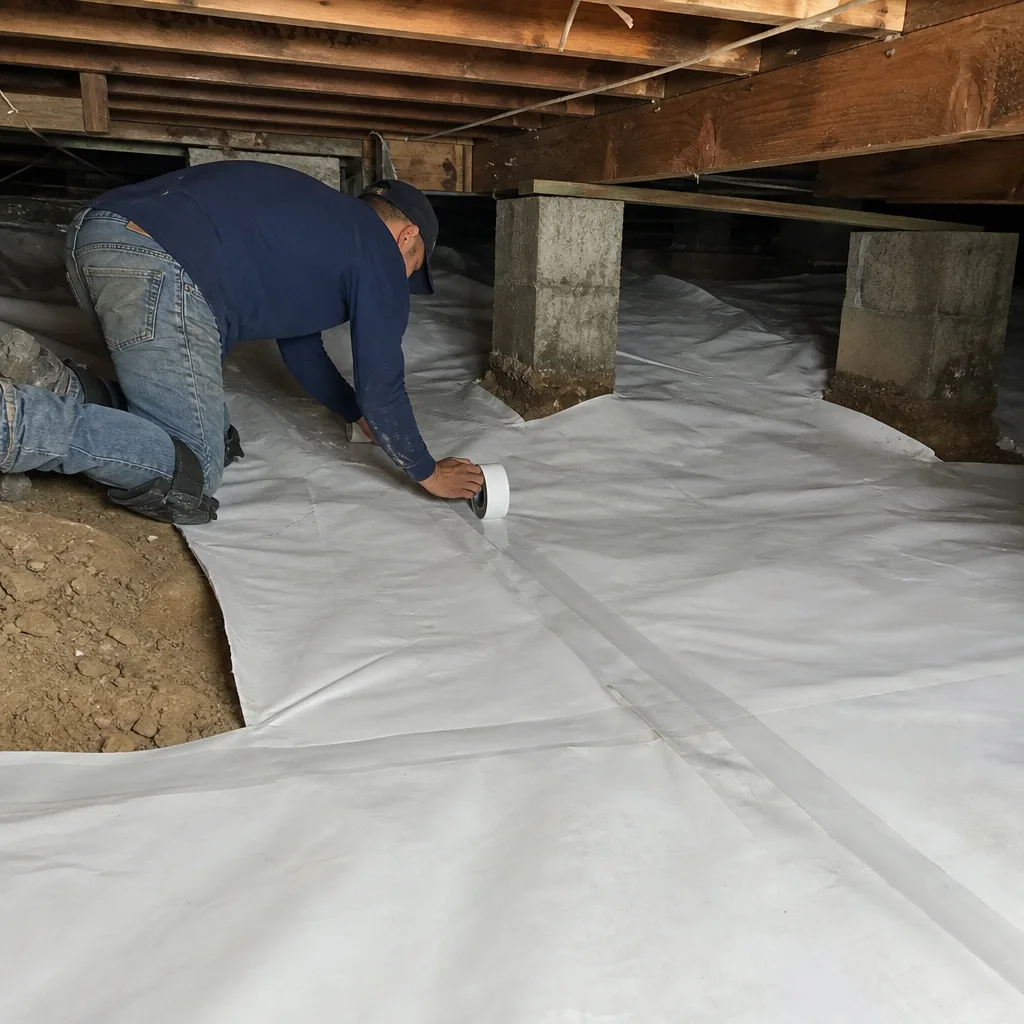
Blown-In Fiberglass
Fiberglass - spun glass fibers - works well in Norwalk attics where moisture management is already solid and the homeowner wants a lighter material that won’t settle as aggressively over decades. We stock Johns Manville blown fiberglass for jobs where the existing substrate is relatively clean and the attic has adequate ventilation paths. It’s less forgiving of the hand-packing sequence than cellulose, so we specify it only after we’ve verified the eave baffles are accessible and the hatch location allows proper hose placement.
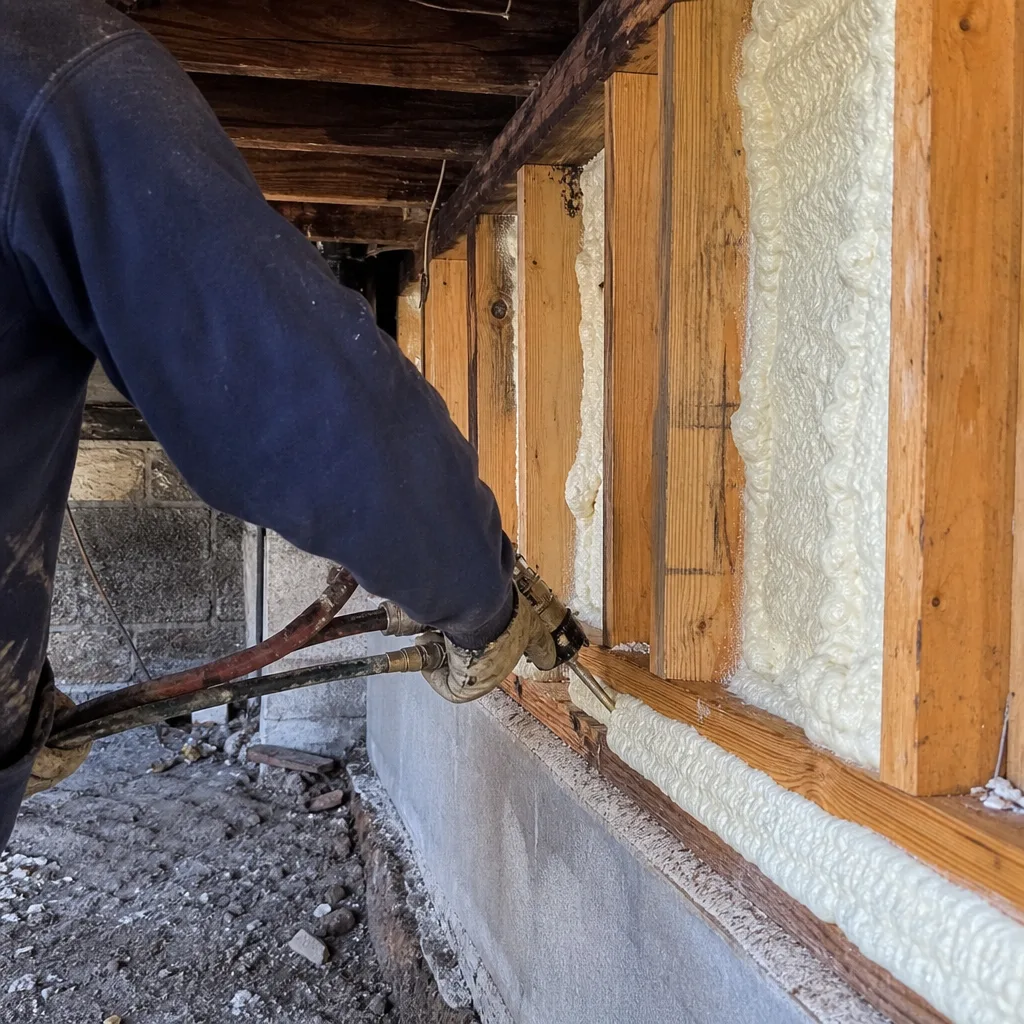
Dense-Pack Wall Insulation
Dense-pack - cellulose or fiberglass blown into closed wall cavities at 3.5 pounds per cubic foot or higher - is the retrofit solution for Norwalk ranches with uninsulated exterior walls, which is most of them built before 1970. We drill discrete access holes, pack the cavity full, and patch with matched texture. The key in Norwalk’s stucco-over-wire-lath construction is controlling the pack pressure so we don’t blow out the keys between lath and plaster. Our crews have done this on hundreds of local homes and carry the specific drill guides for the 16-inch and 24-inch stud spacing common in this era.
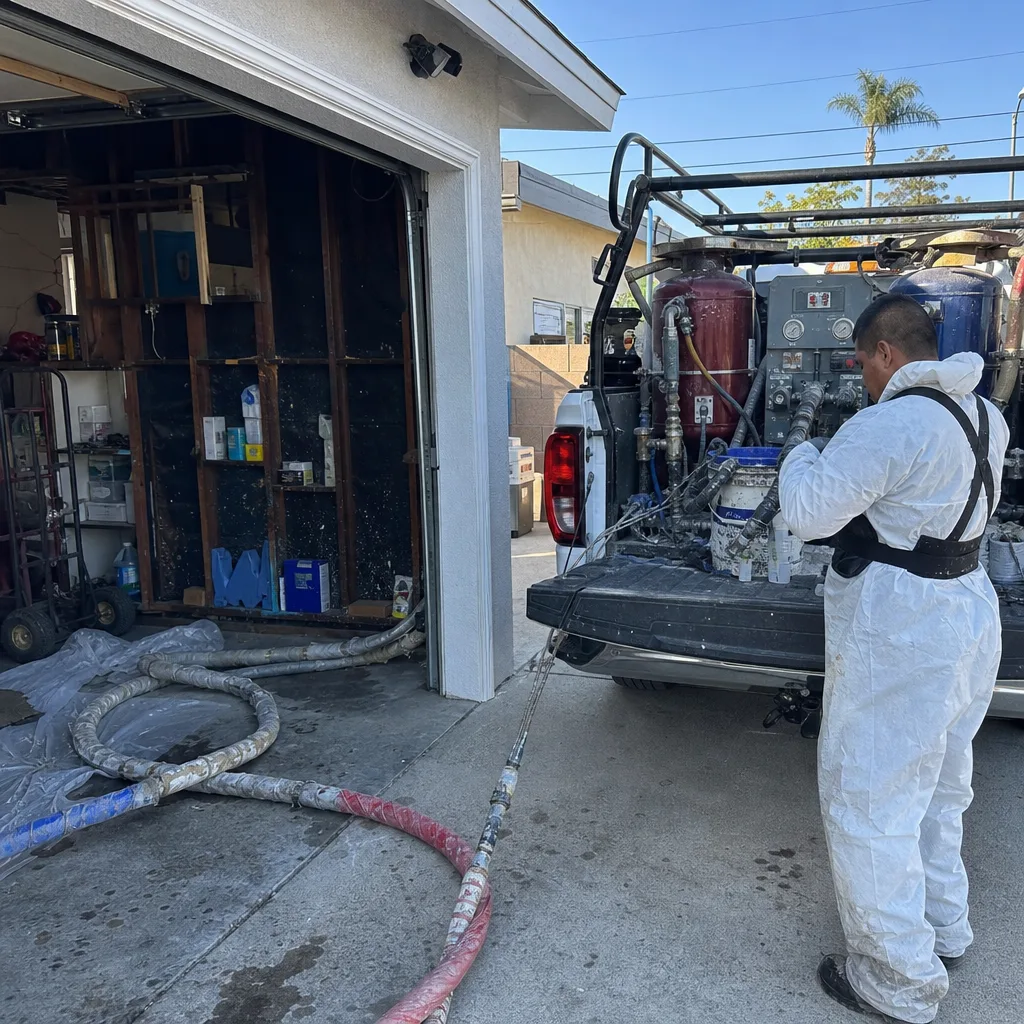
Blown-In Top-Up
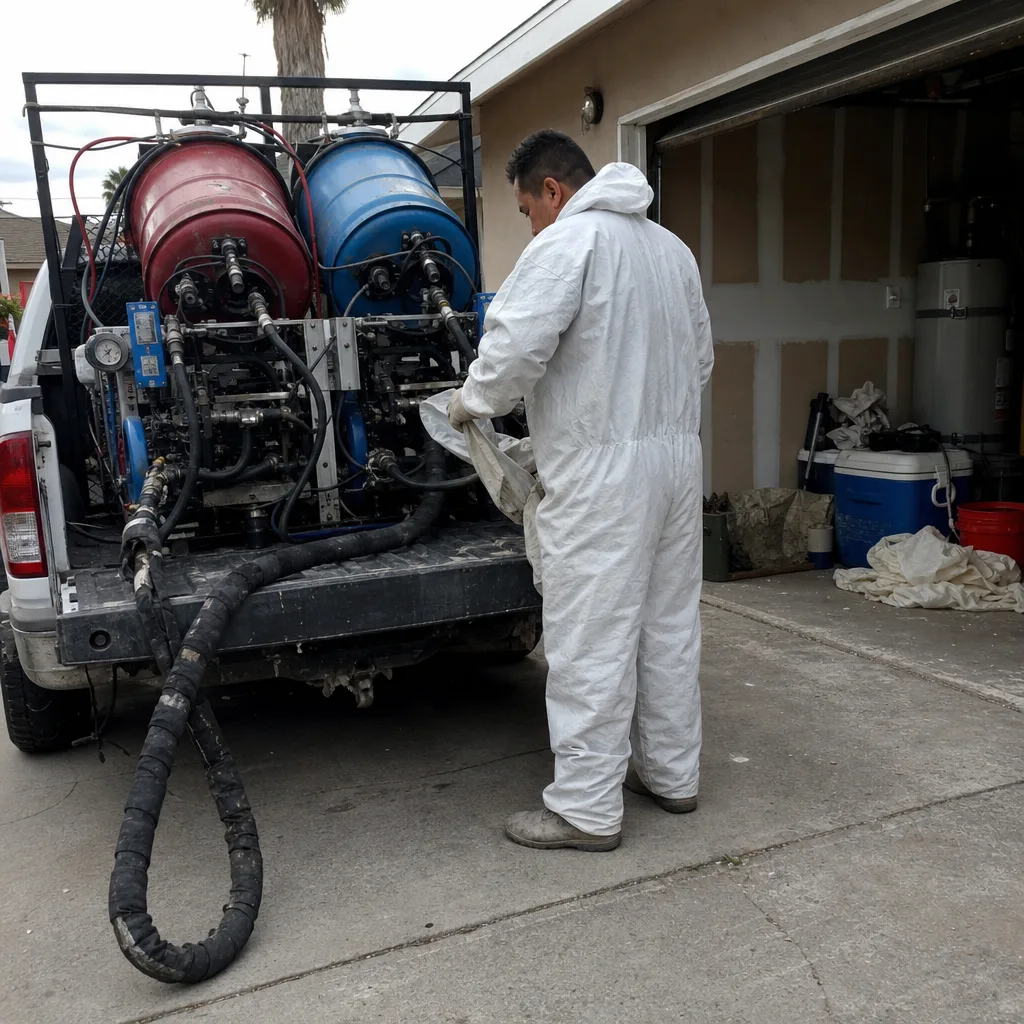
Top-up - adding new blown material over existing insulation - is the most requested service in Norwalk, and the one most often done wrong. If your attic still contains original rock wool or early fiberglass batts that have compressed to R-11 or lower, blowing new material straight over the top leaves air channels, uneven depth, and the exact thermal bypasses that make your second bedroom 8 degrees hotter than the living room in August. We rake and level the existing material first, or remove it if it’s degraded past recovery, then build to the target R-value with a uniform layer. Our written scope specifies which approach we’ll take before anyone climbs into your attic.
Our Blown-In Insulation team handles the full sequence: assessment, air sealing of top plates and penetrations, substrate prep, material installation, and final blower-door verification on applicable jobs.
What happens when you call
- 1
A real person answersNo phone trees - you reach a local pro.
- 2
You get an upfront price rangeHonest numbers before anyone is dispatched.
- 3
A background-checked tech heads outLicensed & insured, dispatched right away.
- 4
You approve before work beginsNothing starts until you say go.
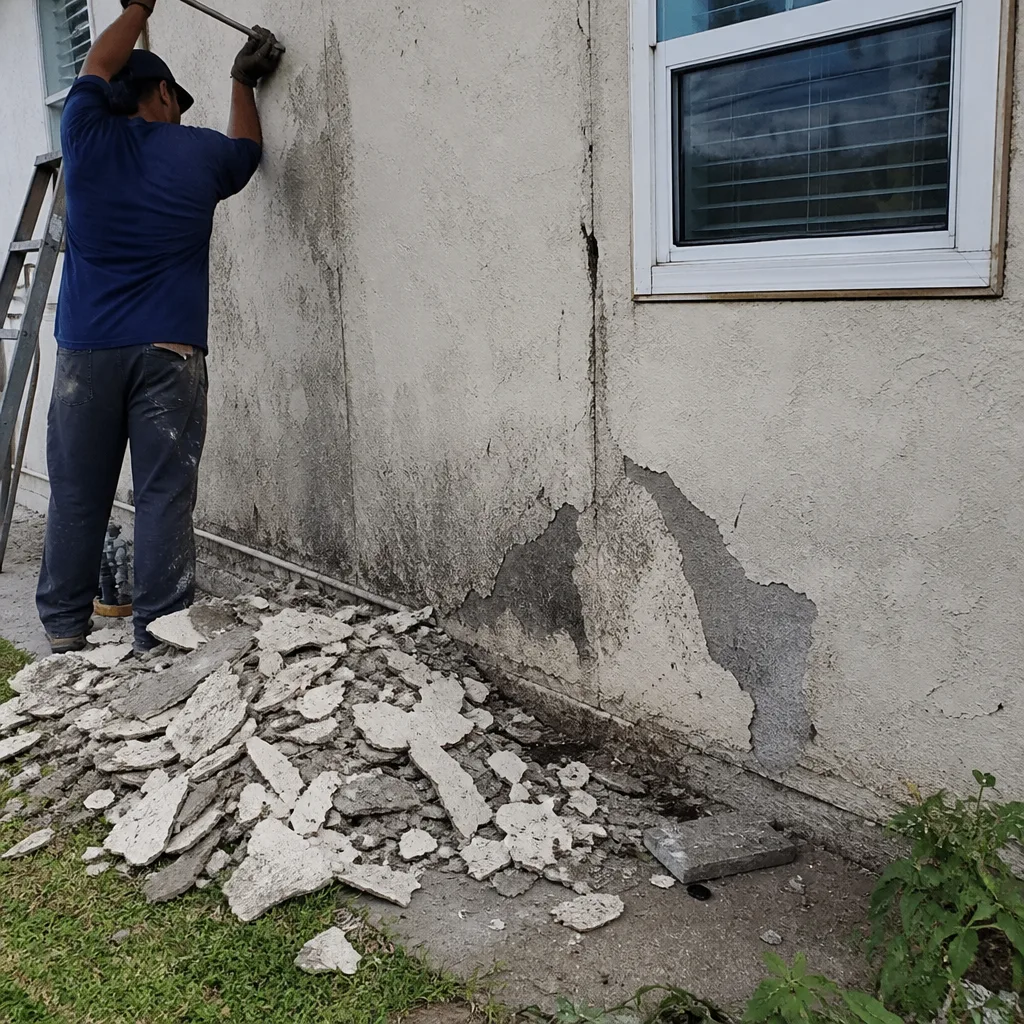 Before
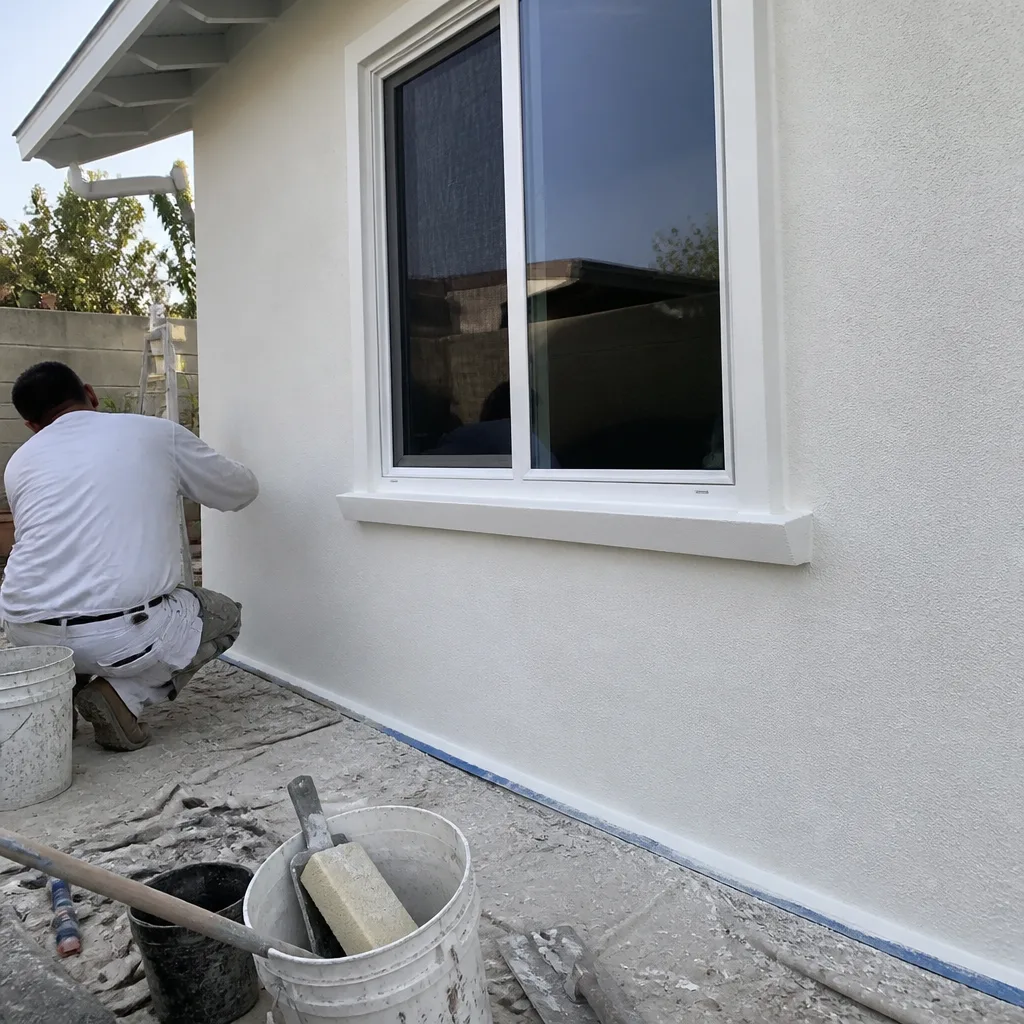 After
AfterTrusted Brands We Service in Norwalk
We source from Owens Corning, Johns Manville, Knauf, Rockwool, and GreenFiber - no proprietary lock-in, no house brand pushed because it’s cheaper for us. For Norwalk’s climate zone and housing stock, we most often specify GreenFiber cellulose for attics and Owens Corning fiberglass where weight or moisture sensitivity matters. We keep both on local trucks, so material availability doesn’t delay your job. Every bag is labeled with its R-value per inch and its settled density, and we show you the math: this many bags, this depth, this final R-value, documented in the photo record you receive at completion.
Common Blown-In Insulation Problems We See in Norwalk Homes
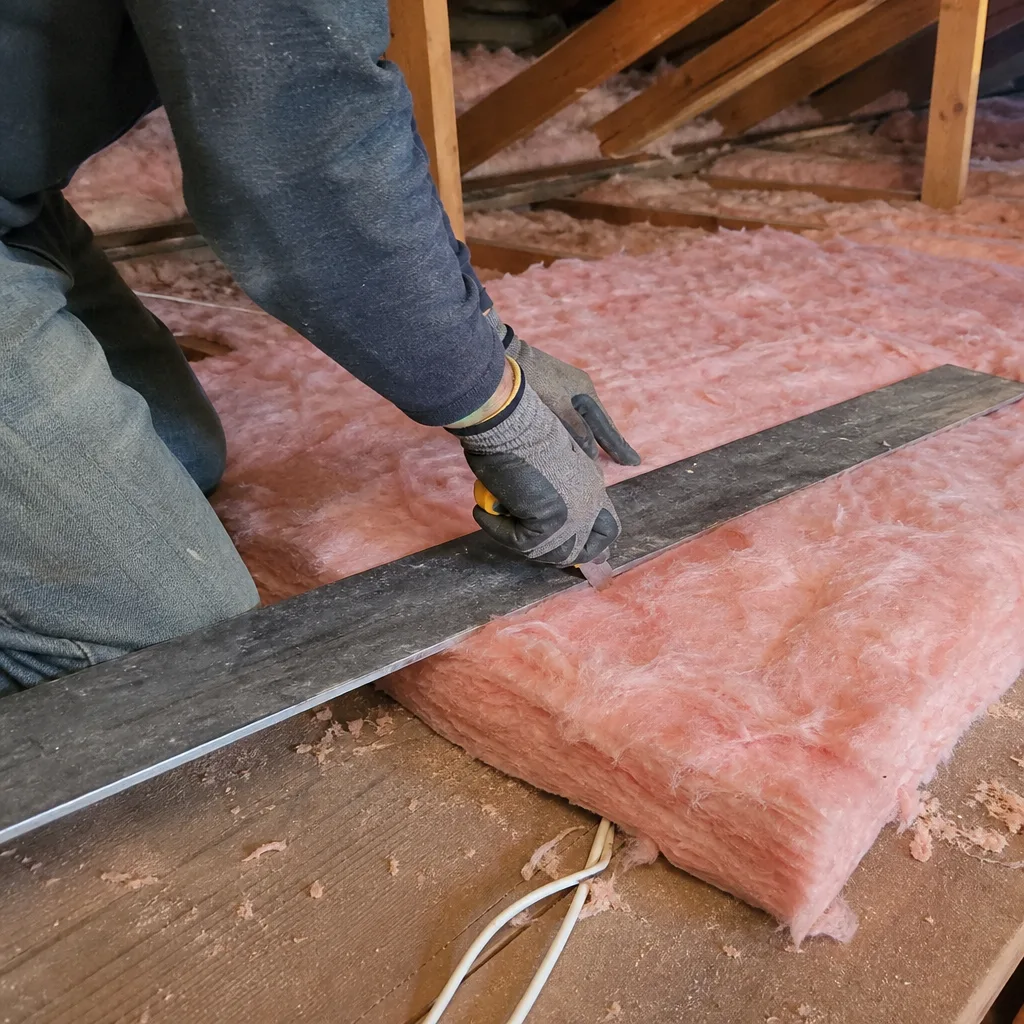
- Settled original rock wool or early fiberglass batts losing R-value. Sixty-plus years of gravity, foot traffic, and rodent activity compress what was once R-19 to something closer to R-11. A simple top-up without raking or removal leaves the new material bridging over low spots, creating air channels that defeat the whole purpose.
- 22×22 hallway hatches forcing inadequate eave coverage. Crews without experience in Norwalk’s 1950s tracts blow material straight down the center of the attic, where the hose reaches easily, and never hand-pack the critical edge zone at the eave baffles. The center of your attic ends up over-full; the edges, where heat actually enters, stay bare.
- Low-slope roofs over-filled at the center, blocking soffit ventilation. With only 6-8 inches of usable depth, there’s no margin for error. Material piled against the roof deck chokes airflow from the soffits, leading to condensation in winter and premature mold. We install proper baffles and measure clearance before we blow.
- Insulation installed over unsealed air leaks. Top plates, can lights, plumbing and electrical penetrations - these are the highways your conditioned air uses to escape. We seal them first, always, under Haven Standard Clause 1. Blowing insulation over an unsealed attic floor is like putting a blanket over a window you left open.
Pricing for Blown-In Insulation in Norwalk, CA
A typical blown-in cellulose attic job in Norwalk runs $1,800-$3,400 for a 1,100-1,400 sq ft ranch, $2,600-$4,200 for 1,400-1,800 sq ft. Dense-pack wall insulation adds $1,200-$2,800 depending on linear footage and access. What moves you within those ranges: attic depth and hatch size (hand-packing adds labor), whether we remove degraded existing material, and the extent of air sealing required before we blow.
We deliver a written price before any work starts - flat, itemized, no escalation clause. Bring us a competing written estimate and we’ll give you a free second opinion, line by line. Every job includes a Documented Photo Record; on applicable jobs, before-and-after blower-door readings show the actual performance change. Call (626) 415-3454 for your written estimate - the price we give is the price you pay.
| Service | Typical Range in Norwalk |
|---|---|
| Blown-In Cellulose Attic (1,100-1,400 sq ft) | $1,800 - $3,400 |
| Blown-In Cellulose Attic (1,400-1,800 sq ft) | $2,600 - $4,200 |
| Blown-In Fiberglass Attic | $2,000 - $3,800 |
| Dense-Pack Wall Insulation | $1,200 - $2,800 |
| Blown-In Top-Up (substrate prep required) | $1,400 - $2,600 |
| Insulation Removal + Replacement | $2,200 - $4,500 |
We Also Serve Cities Near Norwalk
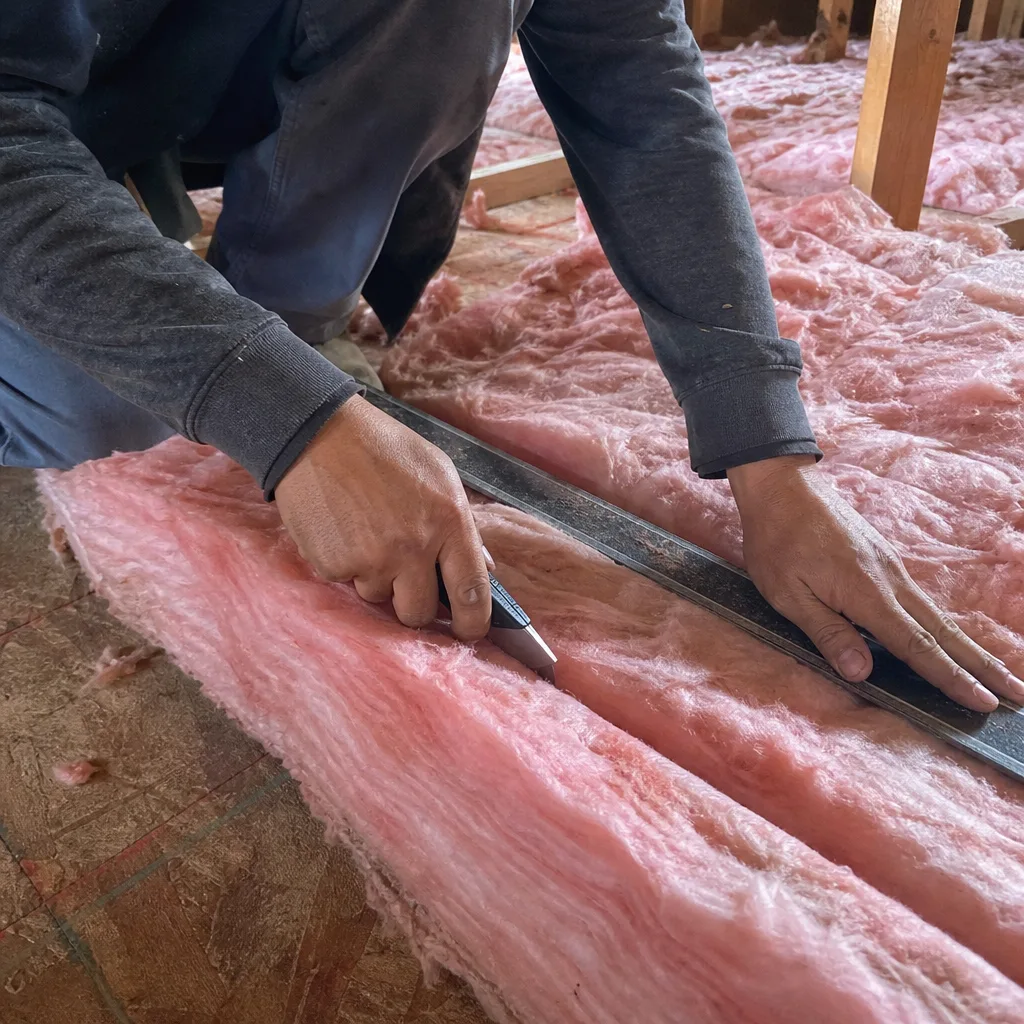
Our crews work throughout the southeast Los Angeles corridor, including Norwalk and neighboring Whittier, Monterey Park, Rosemead, and La Puente. Each city’s housing stock differs - Whittier’s mix includes more 1920s bungalows, Monterey Park has denser multi-family retrofits - and we adjust our scope and equipment accordingly. The written price and documented completion record apply everywhere we work.
Serving Norwalk, CA - Our Local Coverage Area
We’re based in the Norwalk area and know this community well. Use the map below to see our service coverage - if you’re nearby, we can almost certainly help.
FAQs - Blown-In Insulation in Norwalk
Because the 22×22-inch hallway hatches common in 1950s Norwalk tracts won’t pass a standard insulation hose to the eave baffles. Our crew hand-packs the first layers of cellulose or fiberglass at the edges, then extends the hose for the main field. Without this step, the critical edge zone stays bare and your attic center gets over-filled. Call (626) 415-3454 and we’ll show you the exact sequence in your written scope.
Yes, but it requires careful sequencing and the right material density. We rake or remove degraded existing insulation first to recover usable depth, install proper vent baffles to protect airflow, then blow cellulose at the settled density needed to hit R-38 or R-49 without choking the soffits. The low-slope roofs near Imperial Highway and Firestone Boulevard make this a standard part of our Norwalk scopes.
We stock GreenFiber cellulose, Owens Corning fiberglass, and Johns Manville fiberglass on our local trucks, with Knauf and Rockwool available for specific applications. No proprietary lock-in - we specify based on your attic conditions, not our supplier rebates. The brand, bag count, and installed R-value are itemized in your written price.
Norwalk sits in CEC Climate Zone 8, roughly 20 miles inland, where summer highs routinely hit 95-100°F while Long Beach and Torrance stay in the mid-70s to low 80s. The marine layer rarely reaches this far east. That temperature gap means your cooling load is measurably larger, and the minimal original insulation in 1950s-1970s tracts makes the problem worse. Upgrading to R-38 or R-49 delivers larger absolute savings here than in coastal zones.
We remove it if it’s degraded past recovery - compressed, rodent-contaminated, or moisture-damaged. If it’s merely settled, we rake and level it to provide a uniform substrate, which saves you removal cost while achieving the same final performance. The photo record we deliver shows the before condition and our recommended approach, documented before we start. Call (626) 415-3454 for a free estimate - we’ll inspect your attic and tell you which path makes sense.
Written by Wes Okafor, Owner at Envelope Insulation Co., serving Norwalk and the greater Los Angeles area since 2016.