
GreenFiber Vapor Barrier Installation: The El Monte Owner’s Guide
GreenFiber vapor barrier installation in El Monte typically runs $1,800-$3,400 for a standard crawl space or attic floor, and we stock GreenFiber-compatible 6-mil and 10-mil polyethylene sheeting on every truck for same-day starts. Most homeowners notice the problem first as a musty smell rising through floor registers or warping laminate near exterior walls, especially after the winter rains that pool against El Monte’s older concrete foundations along the Rio Hondo wash. We see this most often in homes built between 1955 and 1985 where the original kraft-paper facing has disintegrated or where prior installers laid fiberglass batts directly over bare soil without sealing the ground first.
Which GreenFiber Models This Applies To
GreenFiber does not manufacture vapor barrier film itself - the brand produces loose-fill cellulose insulation, stabilized cellulose for damp-spray application, and dense-pack wall insulation. The “GreenFiber vapor barrier installation” homeowners search for is the ground-sealing polyethylene layer that must be in place before any GreenFiber cellulose goes into a crawl space or over an unconditioned attic floor. We’ve installed GreenFiber cellulose over properly sealed vapor barriers in El Monte homes from the Allgeyer Park neighborhood up to the newer construction near Arroyo High School.
To identify what you need: measure the square footage of your crawl space or attic floor, check the existing mil thickness (6-mil is minimum code; 10-mil lasts longer against El Monte’s alkaline soil), and note whether the space has standing water history - which requires dimple-mat drainage below the barrier. We source virgin polyethylene from our supplier network that meets GreenFiber’s installation specs for moisture control, not the recycled sheeting that pinholes within three years. Topside Attic Insulation El Monte is an independent service provider, not affiliated with GreenFiber. We also stock Reflectix radiant barrier for hybrid assemblies where summer attic heat is the bigger problem than ground moisture.
Signs Your GreenFiber Vapor Barrier Installation Is Failing
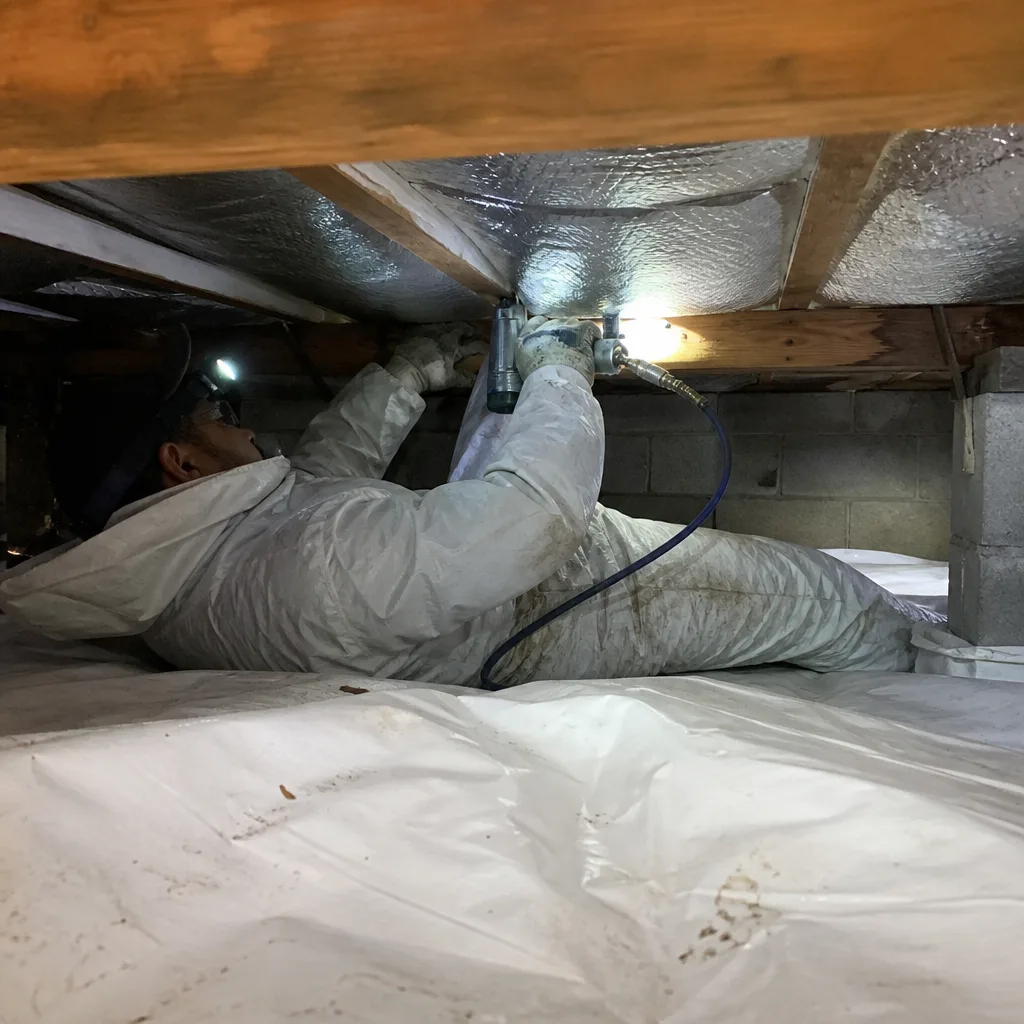
- Musty odors through floor vents. When the polyethylene tears at seams or punctures around plumbing penetrations, soil moisture evaporates directly into the crawl space air. That humid air gets drawn into your HVAC return or rises through subfloor gaps. In El Monte’s clay-heavy soils near Peck Road, we’ve measured 70% relative humidity in crawl spaces where the barrier looked intact from the entry hatch but had separated at the perimeter walls.
- Cupping hardwood or laminate floors. Wood flooring absorbs moisture from below when the vapor barrier fails to block soil evaporation. The boards crown or cup, usually starting along exterior walls where the ground stays wettest. We documented this last March in a home off Santa Anita Avenue where the previous owner’s DIY 3-mil sheeting had shredded at the taped seams.
- White or gray mold on floor joists. Surface mold on the underside of subflooring means sustained humidity above 60% - almost always a failed or missing ground seal. GreenFiber cellulose above a damp crawl space will itself absorb moisture, compress, and lose R-value. We pull compressed, discolored cellulose out of these spaces regularly; it’s a complete loss.
- Insect or rodent activity increase. A torn vapor barrier creates damp, dark pathways. Norway rats in particular follow the moisture gradient. During El Monte’s dry summers, a compromised barrier is often the only water source in a crawl space, concentrating pest pressure where you least want it.
- Condensation on ductwork or pipes. When humid crawl space air contacts cool surfaces, water beads and drips. We’ve found rusted galvanized duct seams and corroded copper lines that traced back to a single gap in the barrier near the HVAC plenum - a $40 patch of polyethylene that would have prevented $2,000 in damage.
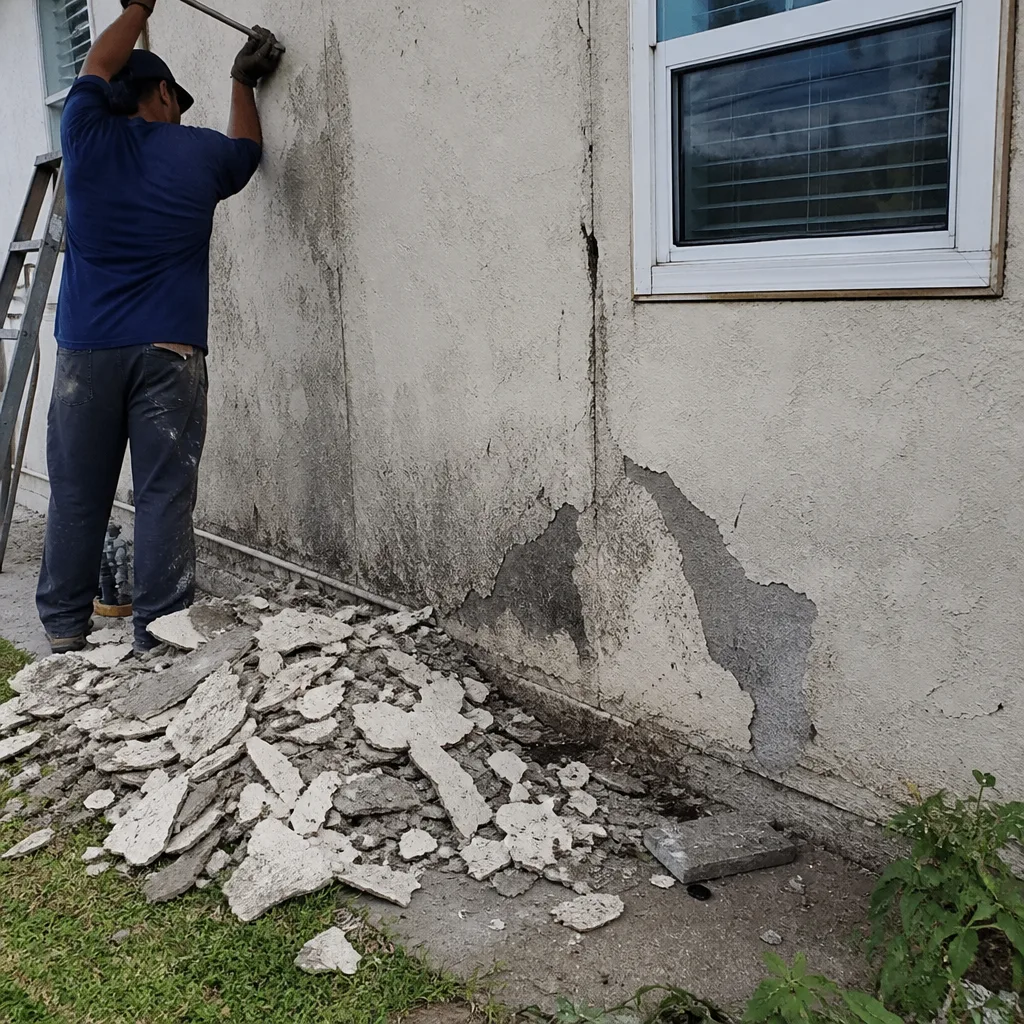 Before
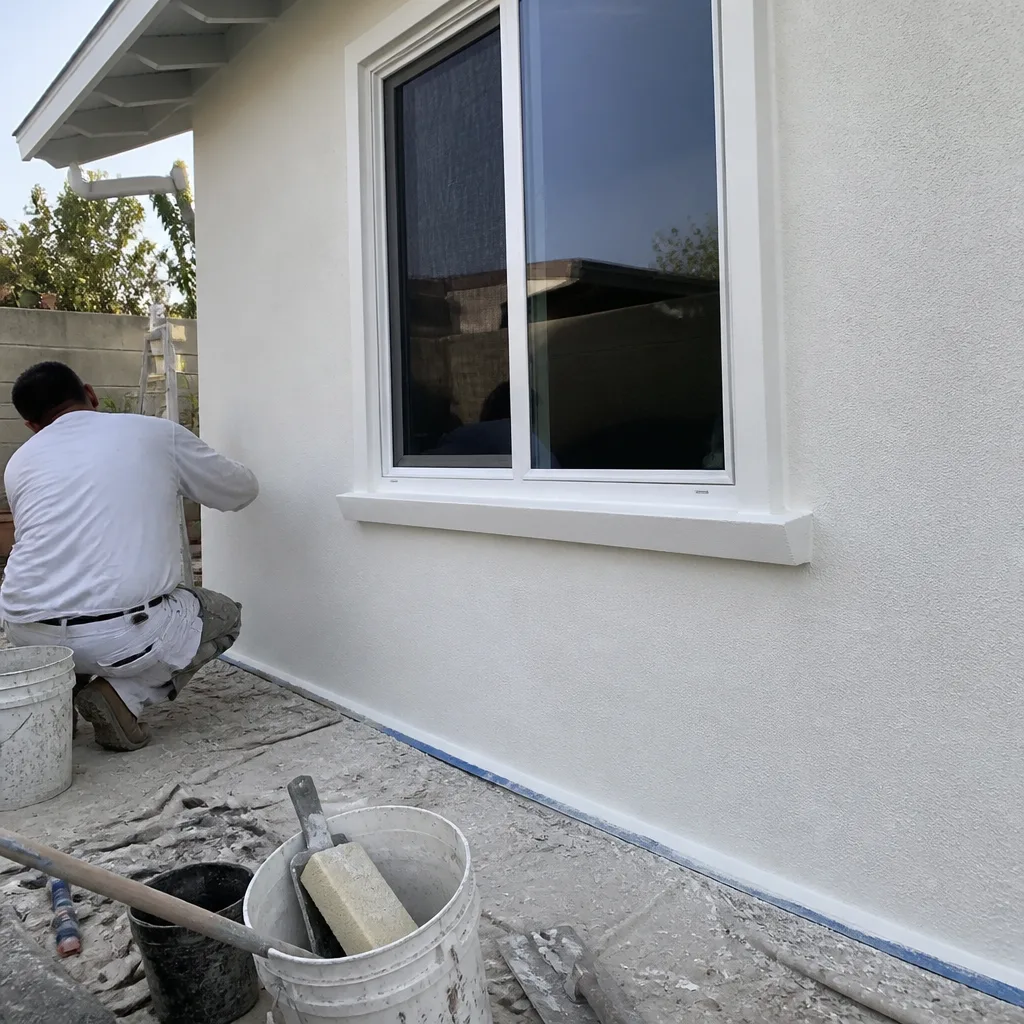 After
AfterReplacement Cost & What’s Included
Most GreenFiber-compatible vapor barrier installations in El Monte run between $1,800 and $3,400. The lower end covers a clean, dry crawl space under 1,000 square feet with 6-mil virgin polyethylene, seam overlap taped with pressure-sensitive acrylic, and mechanical fastening to perimeter walls. The upper end includes 10-mil reinforced polyethylene, dimple-mat drainage board in chronically damp areas, full pest-proofing at vents, and treatment of fungal growth on joists before the new barrier goes down.
What drives the range: square footage, existing debris removal, accessibility (some El Monte crawl spaces off Tyler Avenue have 14-inch clearances), and whether the prior barrier was asbestos-backed felt - common pre-1980, requiring abatement protocol. Every job gets a Written Price Before Any Work Starts under Haven Standard Clause 1. That written scope includes the mil thickness, seam spacing, and whether we’re installing a passive radon vent tie-in (relevant in the alluvial soils south of the 10 Freeway). Work carries our 365-Day Done Right Promise. On applicable jobs, we run a blower-door test - a pressurization reading that shows, in one number, how much air your building envelope is losing - to confirm attic bypasses are sealed before any insulation work follows.
DIY or Call Us?
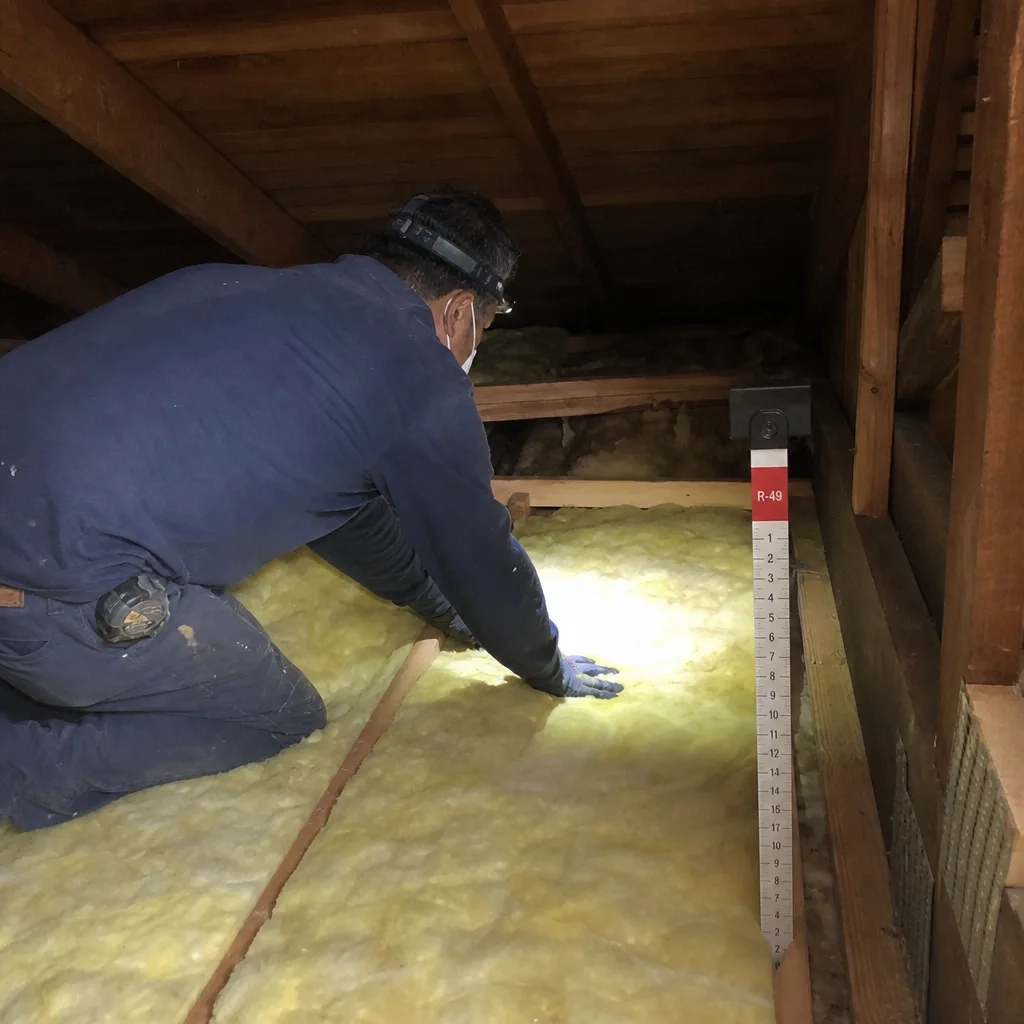
What you can safely check: verify whether ground cover exists at all, photograph any standing water, and measure your crawl space entry dimensions. Do not enter if you smell gas, see exposed wiring, or encounter structural sag - call the appropriate professional first.
Where DIY goes wrong: polyethylene sheeting looks simple, but proper vapor barrier installation requires sealed seams (not just overlapped), mechanical termination at walls, and correct detailing around piers and penetrations. In El Monte’s expansive clay soils, an untaped seam will gape within two seasonal cycles. We’ve been called to redo homeowner installations where the sheeting was laid loose, trapped condensation underneath, and accelerated the very moisture problem it was meant to solve. The work is not high-tension dangerous like electrical or garage spring work, but the consequence of a bad install is years of hidden damage. If you’re not prepared to belly-crawl with a seam roller and butyl tape for several hours, the job is better delegated.
Call (626) 415-3454 for a free estimate. We’ll bring a sample of the polyethylene we use, show you the seam detail, and give you a written price before any work starts.
FAQs
Properly installed 10-mil virgin polyethylene lasts 15-20 years in El Monte’s climate; 6-mil lasts 8-12 years before brittleness appears at seams. The alkali in our local clay soils accelerates degradation of recycled-content sheeting, which is why we specify virgin resin. Call (626) 415-3454 for an exact quote - estimates are free.
Spot repairs work for isolated punctures smaller than a dinner plate with intact surrounding material. If the polyethylene is embrittled, has multiple seam failures, or was installed without proper overlap, full replacement is more cost-effective than chasing leaks. We document the condition with photos and give you both options in writing. Call (626) 415-3454 for an exact quote - estimates are free.
A standard 1,000-square-foot crawl space with good access takes one day; tight clearances, debris removal, or fungal treatment add a second day. We arrive with the material on the truck and do not leave until the seam detail is photographed for your Documented Photo Record. Call (626) 415-3454 for an exact quote - estimates are free.
We stock 6-mil and 10-mil virgin polyethylene, seam tape, and mechanical fasteners on every truck. GreenFiber cellulose insulation is ordered to job spec, but the vapor barrier itself - the ground-sealing layer - is always in inventory. Same-week installation is standard; next-day is often available. Call (626) 415-3454 for an exact quote - estimates are free.
Seal the bypasses first. Then insulate. The certificate tells you what you actually got. That’s the sequence Wes Okafor and our crew have followed since 2016, from the older ranch homes near El Monte’s Peck Road to new construction off the 605 corridor. Every job begins with a written price and ends with a documented record - photos, scope, and on applicable jobs, before-and-after blower-door numbers that show you the air-sealing result in CFM50.
Written by Wes Okafor, Owner, Topside Attic Insulation El Monte at Topside Attic Insulation El Monte, serving El Monte and nearby areas.