
Icynene Attic Insulation: The El Monte Owner’s Guide
Most Icynene open-cell spray foam attic jobs in El Monte run between $2.80 and $4.20 per board foot installed, with a typical 1,200-square-foot attic at R-38 landing between $3,400 and $5,100. We stock Icynene LD-C-50 and MD-R-200 series material on our truck, and we can usually inspect and price same-day. Homeowners usually figure out something’s wrong when their summer PG&E bill spikes $80-$150 over the previous year, or when they walk into a bedroom under the attic and the ceiling feels like a radiator - signs that the foam has separated from the deck, shrunk, or was applied too thin in the first place.
Which Icynene Models This Applies To
Icynene’s residential attic line breaks into two densities you’re likely to encounter in El Monte homes built or re-insulated between 2010 and 2020. LD-C-50 is the open-cell, half-pound density foam - soft, vapor-permeable, and what most homeowners picture when they think “spray foam.” MD-R-200 is the closed-cell, two-pound density, used where roof decks are too tight for the thickness open-cell needs to hit code R-value. Check the job label: Icynene stamps a lot number and density code on the exposed surface of finished foam, usually near the attic access hatch where the installer signed off.
The compatibility gotcha in our market is shrinkage on older LD-C-50 jobs applied before 2016, when Icynene reformulated for better dimensional stability. Pre-2016 foam can pull 3-8% off the substrate in San Gabriel Valley heat cycles, creating gaps at the ridge and eaves that look fine from the hatch but leak like a sieve. We carry both OEM Icynene material and Demilec Sealection 500 for equivalent-density matches - Demilec bonds well to aged Icynene substrate and carries the same R-value per inch, which matters when you’re tying into an existing layer rather than stripping back to deck.
How to identify what you’ve got: LD-C-50 feels like stiff angel food cake and squishes under moderate thumb pressure. MD-R-200 is rigid, like cutting board material, and won’t deform. Measure thickness at the deepest point - open-cell needs 8.5-10 inches for R-38 in California Climate Zone 10, but we’ve found El Monte tract homes from the 2012-2015 boom where installers stopped at 6 inches to save material. That’s not a part failure; it’s an installation defect, but the symptom picture is identical.
Signs Your Icynene Attic Insulation Is Failing
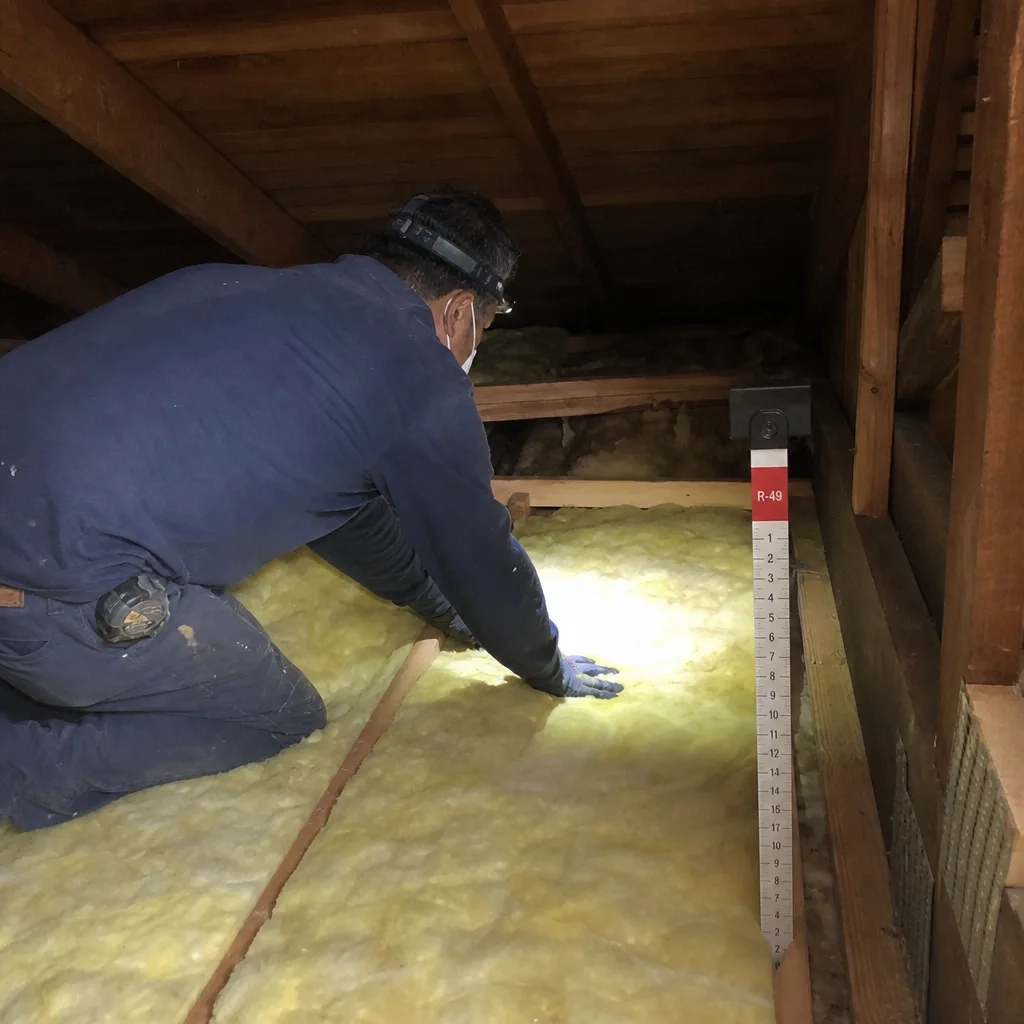
- Hot ceiling patches in summer. The roof deck above reads 140°F on an August afternoon, and that heat radiates through gaps where foam has separated. We find this most often on south-facing pitches in El Monte’s older neighborhoods near Peck Road, where attic ventilation was marginal to begin with.
- Spiking cooling bills with no equipment change. Your AC runtime hasn’t changed, but the kWh jumped. Shrinkage gaps or under-thickness foam let conditioned air escape faster than the equipment can replace it - the blower-door reading tells the story.
- Musty or chemical odor returning. Properly cured Icynene is inert, but if the original installer missed the 2-inch pass limit and trapped uncured iso, you’ll get a sick-sweet smell that worsens with humidity. El Monte’s Santa Ana wind cycles push attic air downward through ceiling penetrations when pressure drops.
- Visible cracking or yellowing at foam edges. UV degradation isn’t the issue - attics are dark - but thermal cycling stresses the foam-to-deck bond. Yellowing often indicates the original catalyst ratio was off, a batch problem we see in spec-built homes where speed trumped setup time.
- Ice damming or condensation stains in winter. Even in El Monte’s mild winters, a cold snap with rain can reveal where open-cell foam was used without proper air sealing beneath. The foam itself isn’t the failure; the bypasses around it are.
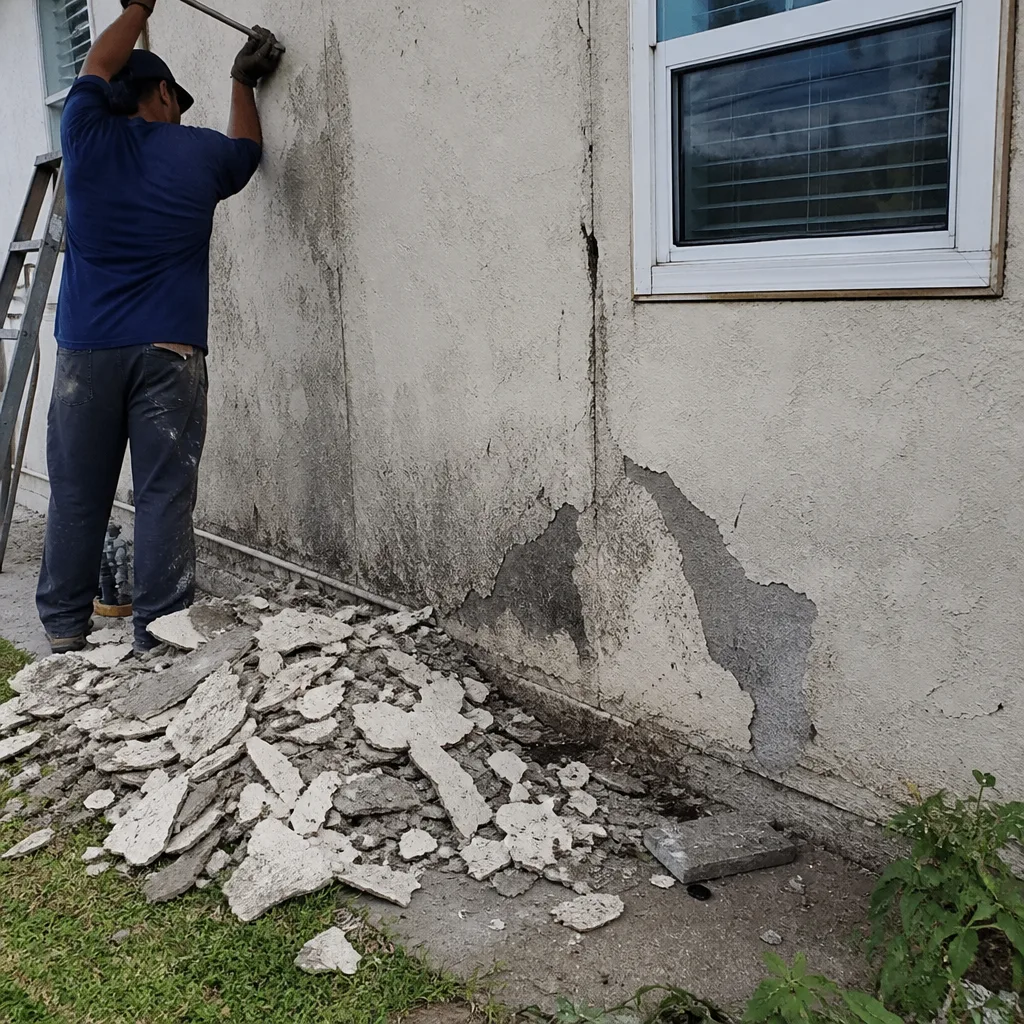 Before
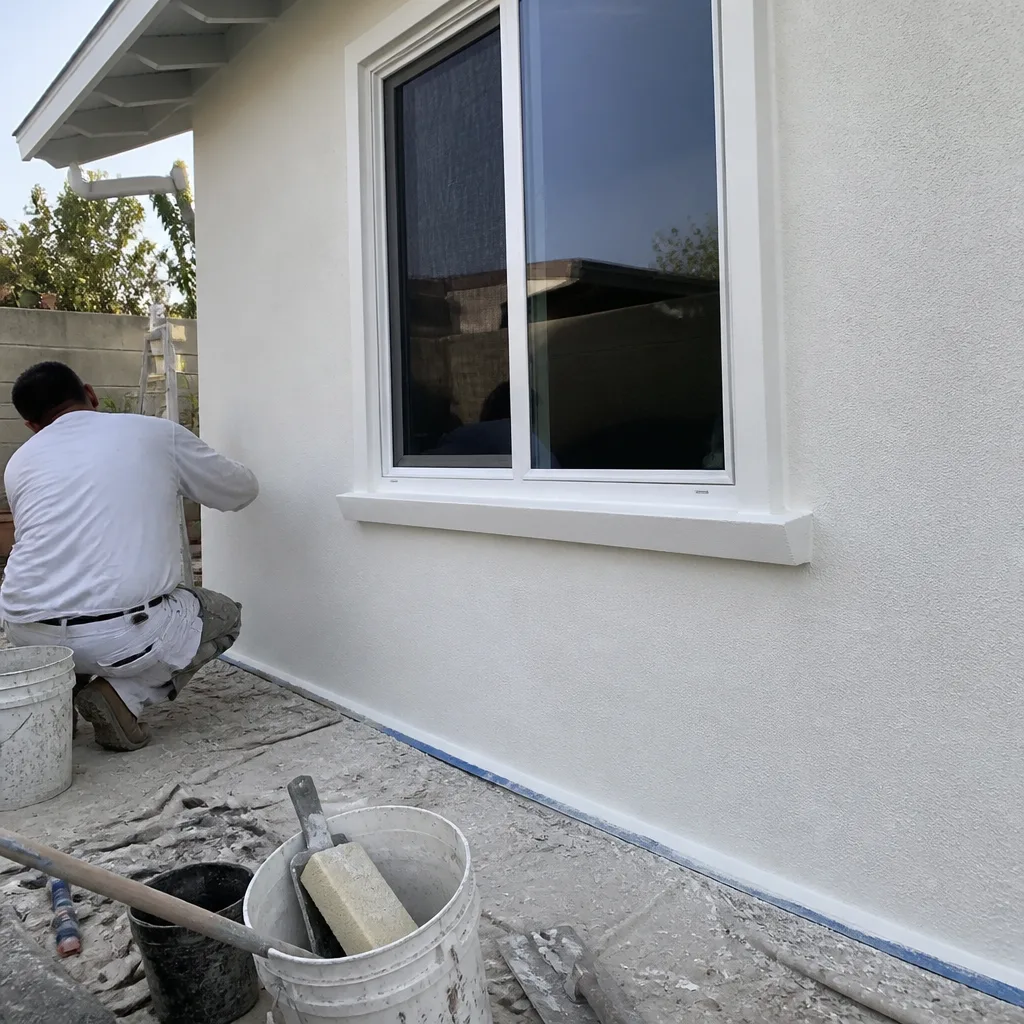 After
AfterReplacement Cost & What’s Included
| Scope | Price Range | Notes |
|---|---|---|
| Spot repair, 50-150 sq ft | $1,200 - $2,400 | Scarify old foam, tie in new, verify with thermal camera |
| Partial re-spray, 300-600 sq ft | $3,400 - $5,800 | Typical for one slope or addition tie-in |
| Full attic strip and re-apply | $6,500 - $11,000 | Includes disposal, deck prep, new foam to R-38 |
What drives the range: deck condition (stripping failed foam adds labor), access difficulty (El Monte’s low-slope ranches near Garvey Avenue are easier than steep pitches above Maxson Road), and whether we’re tying into existing foam or starting clean. Every job gets a Written Price Before Any Work Starts - Haven Standard Clause 1 - and the price includes our before-and-after blower-door test, a documented photo record, and an R-value certificate left on-site. The 365-Day Done Right Promise covers workmanship and material adhesion. We don’t charge to read a competitor’s written estimate - bring it in for our Free Second Opinion.
DIY or Call Us?
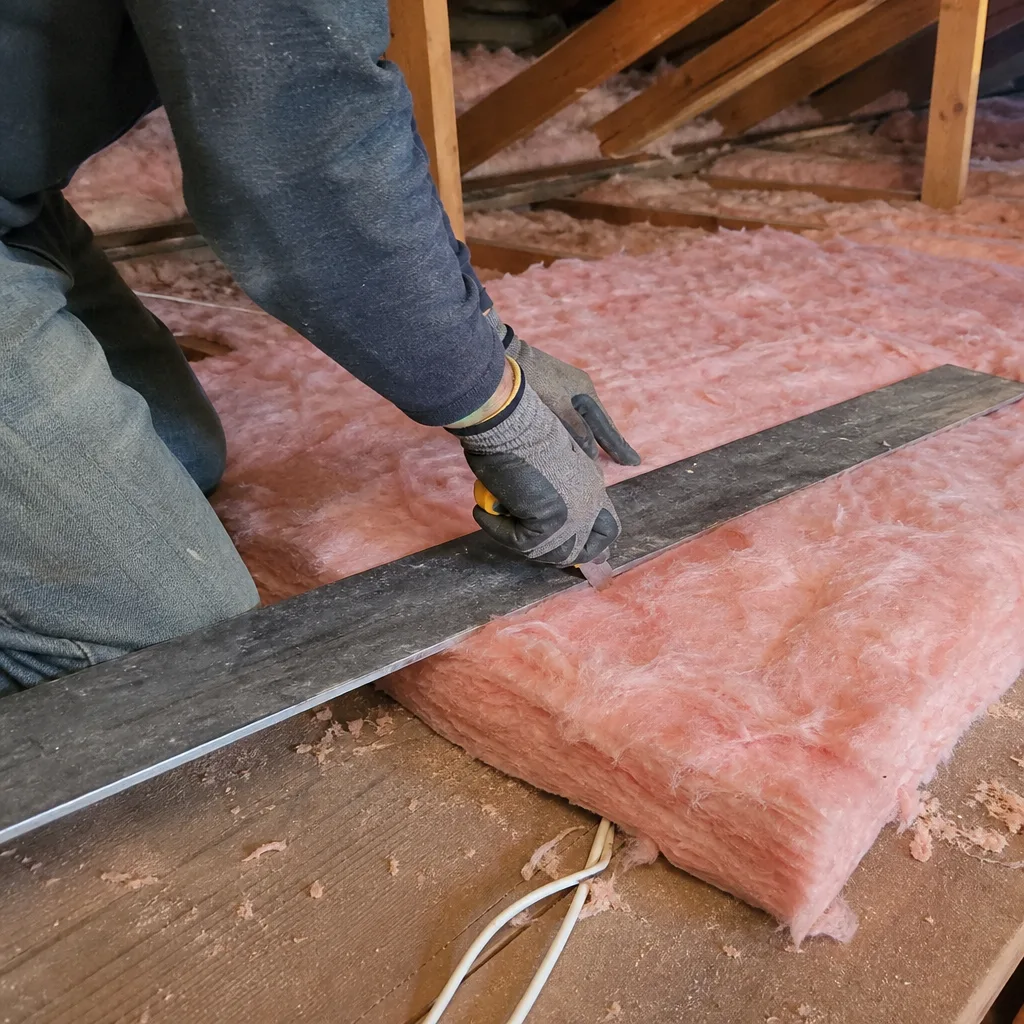
Here’s what you can safely check yourself: confirm the foam type using the squeeze test above, measure thickness with a yardstick at three points per slope, and photograph any visible gaps or discoloration for reference. What you should not do: cut into or remove spray foam without a respirator rated for isocyanates (P100 with organic vapor cartridge minimum), and never apply new foam over old without scarifying the surface - the chemical bond won’t form, and you’ll be back in two years.
The real risk isn’t the foam; it’s the sequencing. We’ve been called to El Monte jobs where a homeowner sprayed new Icynene over unsealed top plates and can-light penetrations, then wondered why the blower-door reading barely moved. Seal the bypasses first. Then insulate. The certificate tells you what you actually got. If you want the number before anyone lifts a tool, call (626) 415-3454 - we answer live, 24/7, and we’ll schedule a free inspection with written pricing.
FAQs
Properly applied Icynene open-cell foam should perform for the life of the building - 50+ years - but in El Monte’s climate, shrinkage or adhesion failures on pre-2016 LD-C-50 jobs typically show up in 8-15 years. Closed-cell MD-R-200 is more dimensionally stable; we’ve seen 2009 installations still reading tight on blower-door. Call (626) 415-3454 and we’ll test what you’ve got - estimates are free.
Spot repair is viable if the failure is localized shrinkage or thin application on less than 30% of the deck. We scarify the old surface, apply new foam to match density and thickness, and verify the tie-in with thermal imaging. Widespread degradation or chemical odor means full removal - no exceptions, because new foam won’t bond to compromised substrate. We stock both OEM Icynene and Demilec equivalent for repairs; we’ll show you the match before we spray.
Spot repairs run one day. A full attic strip-and-replace in a typical El Monte 1,400-square-foot home takes two to three days: one day for removal and deck prep, one for spray and cure, plus a half-day for blower-door verification and documentation. We don’t rush cure time - LD-C-50 needs 24 hours before we can verify R-value with depth rods and thermal camera. You’ll get the photo record and certificate before we leave.
We keep LD-C-50 and MD-R-200 sets on the truck, along with Demilec Sealection 500 for compatible-density matches. For El Monte calls placed before noon, we can usually inspect same-day and start within 48 hours if the job books. We also stock Reflectix radiant barrier for hybrid assemblies where the roof deck needs both foam and reflective surface to meet Title 24. Call (626) 415-3454 to confirm current availability - we answer live.
Written by Wes Okafor, Owner, Topside Attic Insulation El Monte at Topside Attic Insulation El Monte, serving El Monte and nearby areas.