
Icynene Radiant Barrier Installation: The El Monte Owner’s Guide
Most Icynene radiant barrier installations in El Monte run between $1,800 and $3,400 for a typical 1,200-2,000 square foot attic, including material, labor, and air-sealing prep. We stock Icynene-compatible radiant barrier rolls and fastening systems on every truck, and most El Monte jobs are started same-day once the attic inspection confirms the existing insulation layer can accept the retrofit. Homeowners usually discover the need when summer cooling bills spike 20-40% above prior years, or when they notice the original foil has delaminated, torn at the rafter staples, or been disturbed by prior rodent activity in the attic.
Which Icynene Models This Applies To
Icynene doesn’t manufacture a standalone radiant barrier product; instead, their open-cell and closed-cell spray foam systems - LD-C-50, MD-C-200, and the H2Foam Lite series - are often paired with radiant barrier foil as a hybrid attic assembly. The critical match isn’t the foam itself but the substrate you’re attaching to: Icynene open-cell on the roof deck leaves a narrow cavity where double-sided radiant barrier must be stapled to the underside of the rafters without compressing the foam surface.
Check your attic for the Icynene lot label, usually spray-painted or stickered near the attic access hatch. The label shows the product series and install date. If the foam was applied before 2018, odds are it was paired with a lighter-weight perforated aluminum foil, 0.003-0.005 mil, that degrades faster in El Monte’s heat. We stock both the heavier 0.008 mil replacement and the proper stainless-cap staples that won’t corrode in the humidity swings between your attic and the San Gabriel Valley’s winter marine layer. OEM Icynene foil isn’t sold retail; we source equivalent ASTM C1313-rated barrier from the same mills that supply their distributor network.
One compatibility gotcha: Icynene’s newer H2Foam Lite expands tighter to the roof deck, leaving less than 3/4 inch clearance in some El Monte tract homes built 2015-2020. That tight gap requires a perforated product, not solid, or you’ll trap moisture against the foam and void any remaining warranty. We measure the cavity depth before quoting.
Signs Your Icynene Radiant Barrier Installation Is Failing
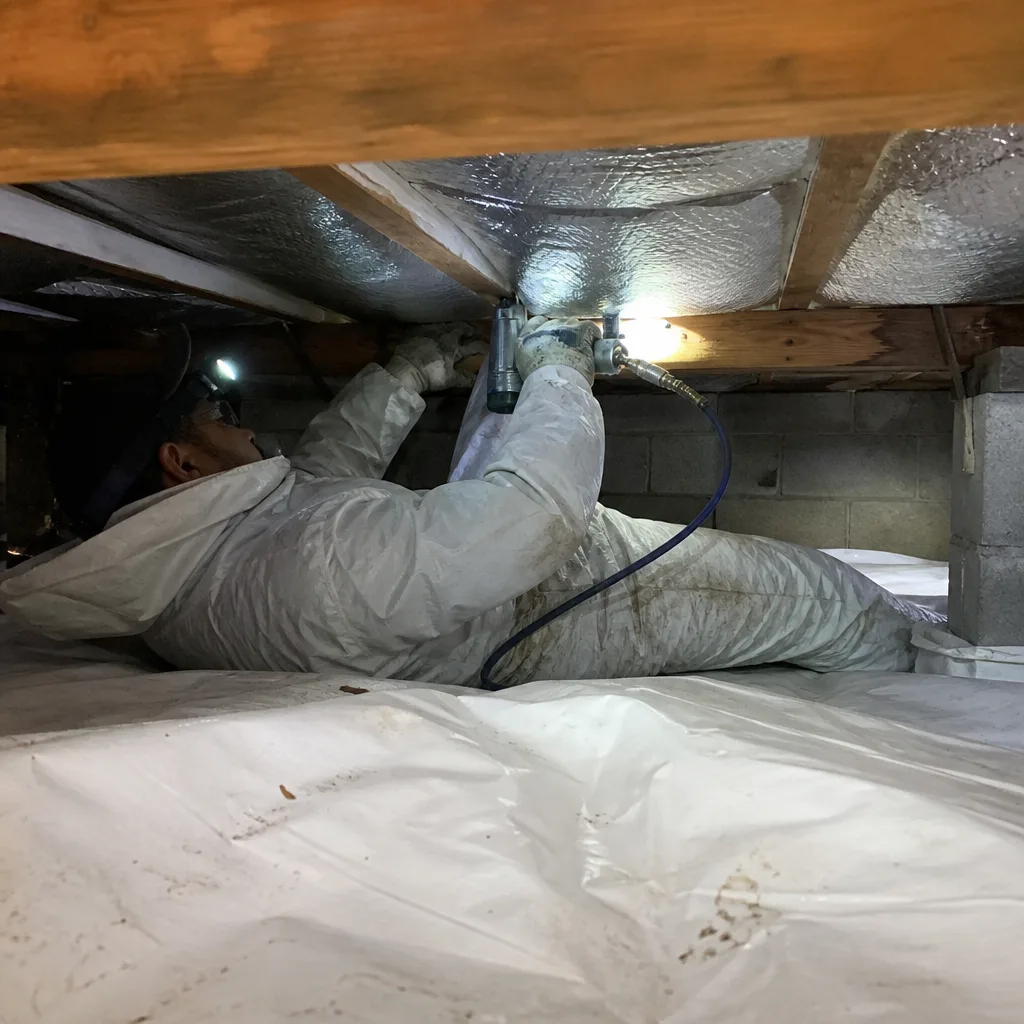
- Spiking summer cooling costs with no rate change. The radiant barrier’s emissivity has degraded, meaning it’s no longer reflecting infrared heat back toward the roof deck. Your AC runs longer to maintain setpoint, especially in El Monte’s August-September heat when attic temperatures can hit 150°F.
- Visible tears, sagging, or missing sections near the attic access. Original installers often used short staples or skipped blocking at the ridge line. Gravity and thermal cycling do the rest. We find this most often in the older ranch homes north of Valley Boulevard where the original work was done as a quick retrofit.
- Water staining on the foil’s top surface. This indicates a roof leak or, more commonly, condensation from an unvented bath fan dumping into the attic. The foil traps moisture against the Icynene foam, which can absorb it over time and lose R-value.
- Rodent trails or nesting material on top of the barrier. Squirrels and roof rats in El Monte’s tree-canopied neighborhoods - especially south of the 10 Freeway near the Rio Hondo - tear foil to access nesting cavities. The barrier is compromised once punctured; patching never restores full reflectivity.
- Hot ceiling patches in rooms directly below the attic. Use an infrared thermometer on a sunny afternoon. More than a 5°F differential between ceiling areas usually means the barrier above is missing, sagging, or was never installed in that bay.
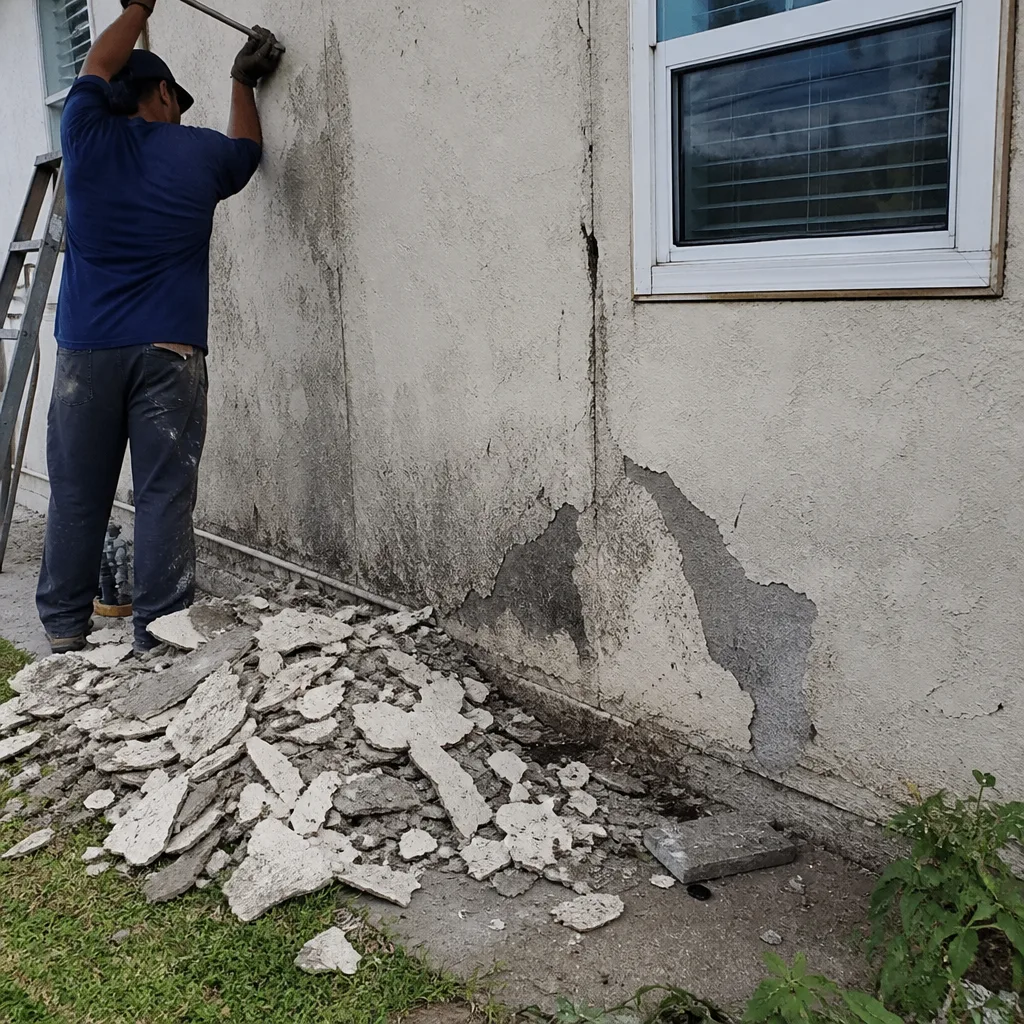 Before
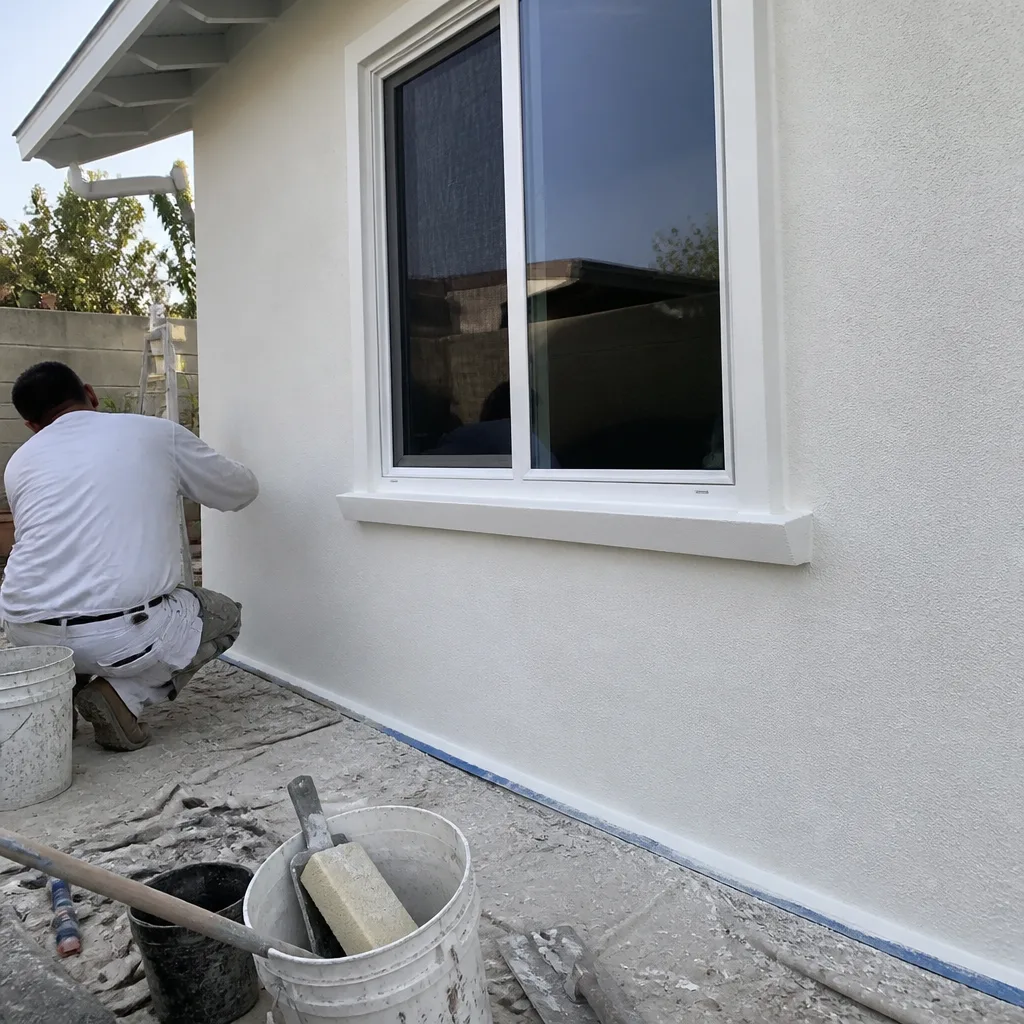 After
AfterReplacement Cost & What’s Included
| Component | Price Range (El Monte) |
|---|---|
| Perforated radiant barrier material, 1,200-1,500 sq ft attic | $680-$1,100 |
| Stainless-cap staples and blocking hardware | $120-$180 |
| Attic air sealing (top plates, can lights, penetrations) | $340-$580 |
| Labor: removal, prep, install, cleanup | $540-$920 |
| Before-and-after blower-door test (if applicable) | Included |
| Typical total installed | $1,800-$3,400 |
The range depends on three things: attic square footage, whether the old barrier needs full removal or can be overlaid, and how much air sealing the top plates and penetrations need before the new barrier goes in. We won’t install over unsealed bypasses - that’s Haven Standard Clause 1, and it’s non-negotiable. Every quote is a written price before any work starts, with the scope itemized line by line. The 365-Day Done Right Promise covers the installation and the air-sealing work. On jobs where we can run a blower-door test, you’ll get the before-and-after CFM50 reading in writing.
DIY or Call Us?
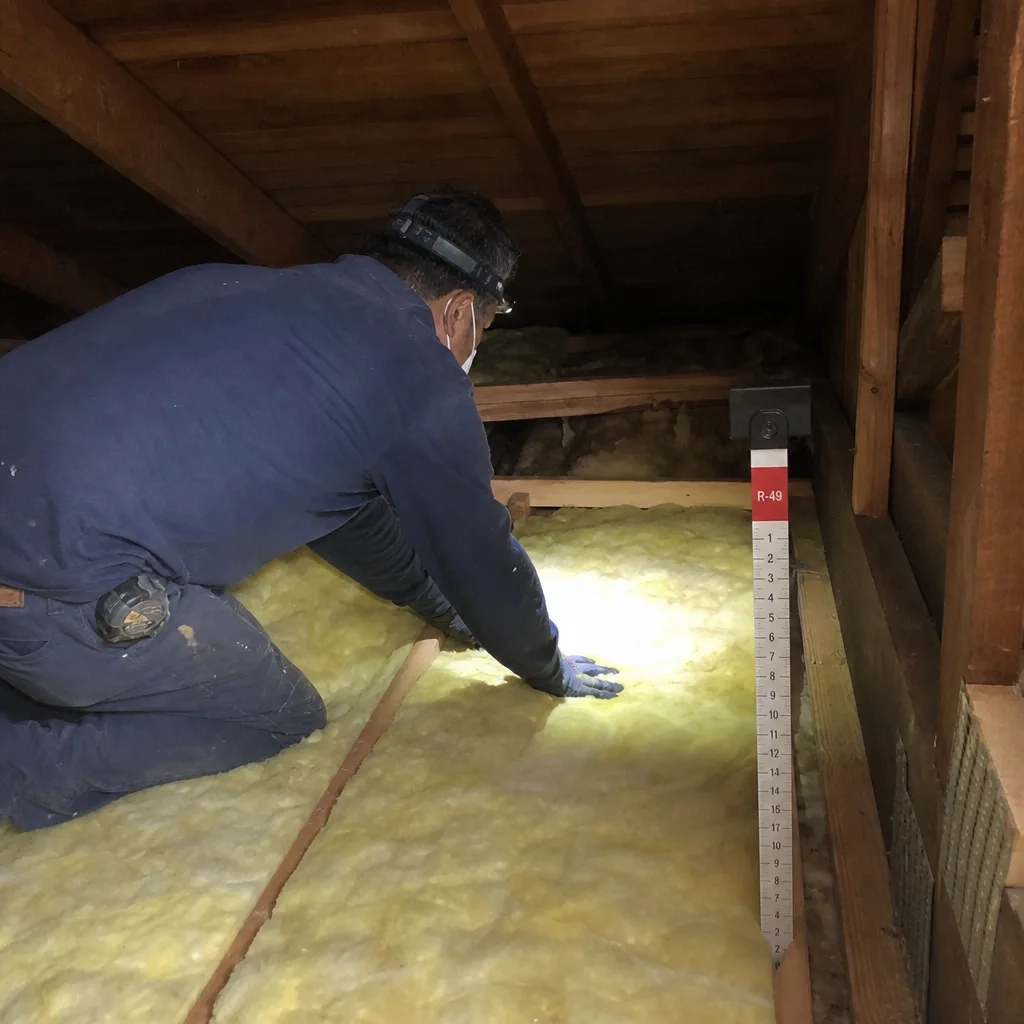
There’s no high-tension danger here, but there are two honest limits to what a homeowner should attempt. First, walking an Icynene-sprayed roof deck is different from walking joists over a blown-in attic; the foam obscures your footing, and a misstep through drywall costs more than our service call. Second, the air sealing that must precede barrier replacement - the top plates, the can light housings, the plumbing chase gaps - requires a blower-door to verify. Without that number, you’re guessing.
What you can safely check: the attic access hatch seal, the bath fan termination (should be ducted outside, not into the attic), and whether your existing barrier is perforated or solid. Take photos. Then call us at (626) 415-3454. We’ll review what you’ve found and schedule an inspection, usually within 24 hours in El Monte.
FAQs
How long does a radiant barrier last in El Monte’s climate?
Quality perforated aluminum barrier properly installed should perform 15-20 years in the San Gabriel Valley, though we’ve replaced foil after 8-10 years in attics with poor ventilation or rodent pressure. The 0.003 mil product used in many 2010s retrofits degrades faster; we specify 0.008 mil minimum. Call (626) 415-3454 and we’ll check what you have.
Can the barrier be repaired instead of replaced?
Patching small tears is possible, but reflectivity never fully recovers at the seam, and the labor to patch properly approaches the cost of replacement in most El Monte attics. We recommend replacement once more than 15% of the surface is compromised. We stock both full rolls and the tools to do it right.
How long does the swap take?
A typical El Monte home, 1,400-1,800 square feet, takes one crew day: morning for air sealing and blower-door verification, afternoon for barrier installation and final documentation. Larger homes or those requiring full removal of degraded foam may run into a second day. We confirm the schedule in your written scope before anyone lifts a tool.
Do you stock Icynene-compatible radiant barrier on the truck?
Yes - perforated and solid options, 48-inch and 60-inch widths, plus the stainless staples and ridge blocking we know hold up in this climate. We also stock Reflectix equivalent for homeowners who prefer that product line. We’re an independent service provider, not affiliated with Icynene, and we source from multiple mills to avoid lock-in.
Seal the bypasses first. Then insulate. The certificate tells you what you actually got.
Ready to get your attic performance back? Call (626) 415-3454 for a free inspection and written price. We’ll bring the blower door, the stock, and the documentation. No work starts until you have both the scope and the number in writing.
Written by Wes Okafor, Owner, Topside Attic Insulation El Monte at Topside Attic Insulation El Monte, serving El Monte and nearby areas.