
Icynene Vapor Barrier Installation: The El Monte Owner’s Guide
Most Icynene vapor barrier installations in El Monte run between $1,800 and $3,400 for a typical single-story crawl space or basement perimeter, and we can usually get a crew out same day if you call before noon. The price moves with the square footage, the condition of what’s underneath, and whether the existing barrier has been compromised by moisture or rodent damage. Homeowners usually figure out something’s wrong when they notice a musty smell climbing up from below, or their floors feel cold against bare feet even with the heater running - signs that the vapor barrier has torn, pulled away from the walls, or was never sealed to the Icynene foam in the first place.
Which Icynene Models This Applies To
Icynene doesn’t manufacture a standalone vapor barrier product - their open-cell and closed-cell spray foam systems (LC-50, MD-R-200, and the newer Icynene ProSeal LE series) are often paired with a polyethylene or reinforced poly vapor barrier in crawl spaces and basement rim joist areas where foam alone isn’t the right detail. The compatibility issue isn’t with the foam chemistry; it’s with the substrate and the tape system used to marry the barrier to the Icynene surface. If your job was done with Icynene closed-cell in a band joist application, the vapor barrier likely needs to be a 10-mil minimum reinforced polyethylene with a butyl-backed seam tape rated for foam contact - standard duct tape or even some “vapor barrier tapes” will off-gas and delaminate within 18 months in El Monte’s warm-season humidity swings.
To identify what you’ve got, look for the Icynene lot number sticker on the foam itself - usually on a rim joist or access hatch edge - which will tell us the density and whether the original installer used a Class I or Class II vapor retarder strategy. We stock both the 6-mil and 10-mil reinforced barriers on our trucks, plus the 3M 8067 or Nashua 357 butyl tapes that actually hold to Icynene’s surface texture. Aftermarket equivalents from Stego or Polyguard perform identically to anything labeled “OEM” for Icynene - the spec that matters is ASTM E1745 Class A, not the brand on the roll.
Signs Your Icynene Vapor Barrier Installation Is Failing
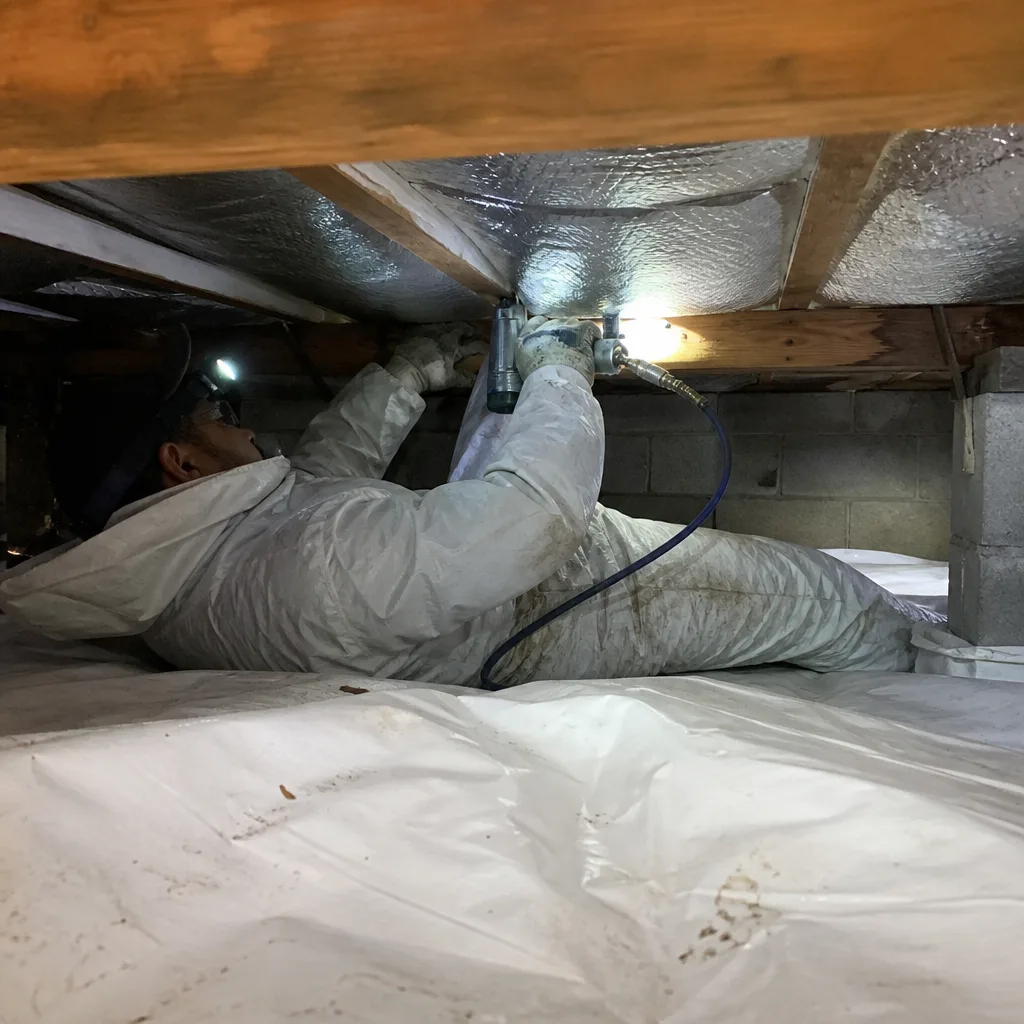
- Musty odors rising from crawl space or basement. When the vapor barrier separates from the Icynene foam at the wall junction, ground moisture migrates upward through the gap and loads the air in your floor cavity. In El Monte’s Alhambra Valley-adjacent neighborhoods with higher water tables, we see this within 3-5 years of a sloppy original install.
- Cold floors in winter despite adequate attic insulation. A failed vapor barrier lets evaporative cooling happen at the soil interface - the same way sweat cools skin. Your thermostat reads 72 but your feet know better because the assembly is no longer blocking that moisture-driven heat loss.
- Visible condensation on the barrier’s underside. If you peek into your crawl space and see water beading on the poly surface, the barrier is doing half its job - it’s stopping moisture from reaching your floor - but the condensation means warm, humid air is hitting a cold surface, usually because the Icynene foam wasn’t thick enough at the rim joist to keep that surface above dew point.
- Tears, sagging, or rodent damage along seams. Reinforced 10-mil poly holds up to casual traffic, but rats and mice will chew through any vapor barrier if they want in. More common is sagging where the original installer used landscape staples instead of mechanical fastening to the sill plate - gravity wins eventually.
- Mold spotting on floor joists or subfloor. This is late-stage failure. By the time you see fungal growth, the vapor barrier has been compromised long enough that the wood moisture content has sat above 20% through multiple seasons. The fix isn’t just a new barrier - it’s a new barrier plus remediation of what grew while nobody was looking.
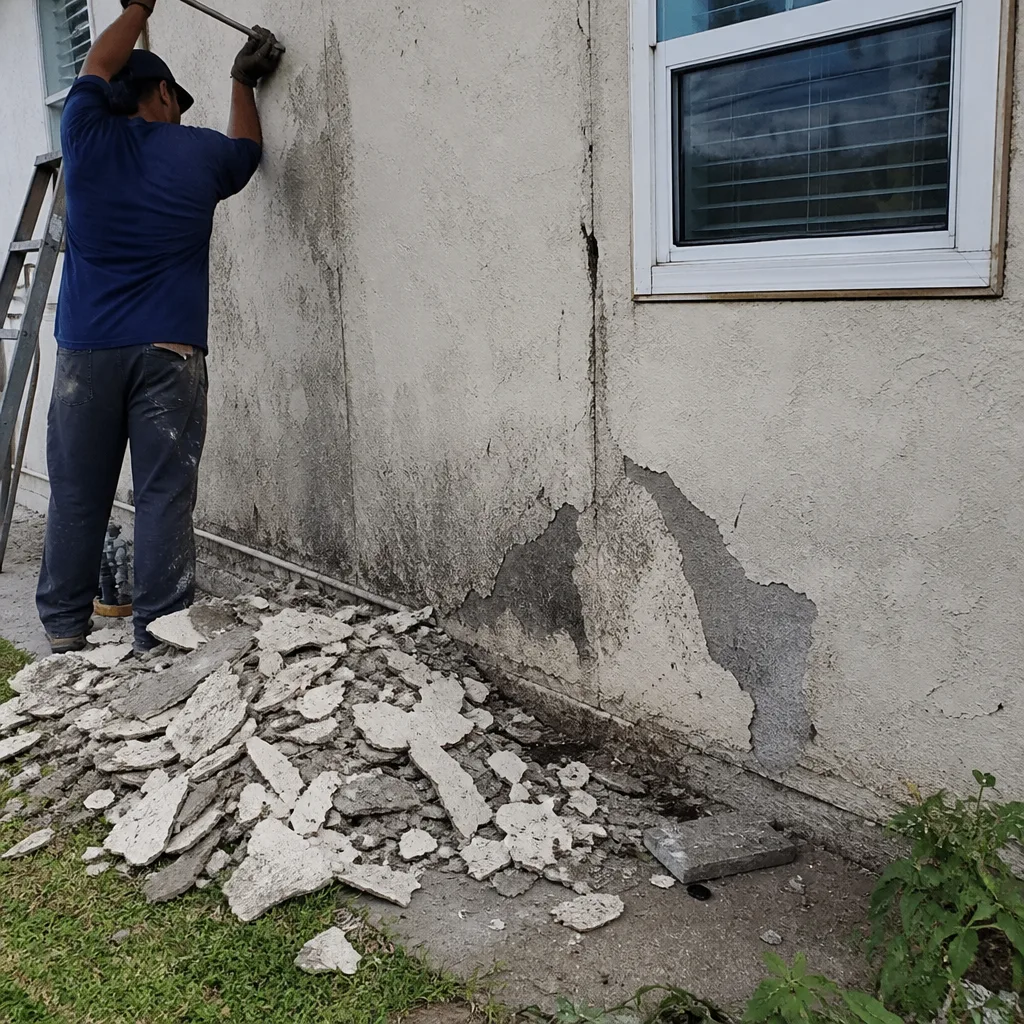 Before
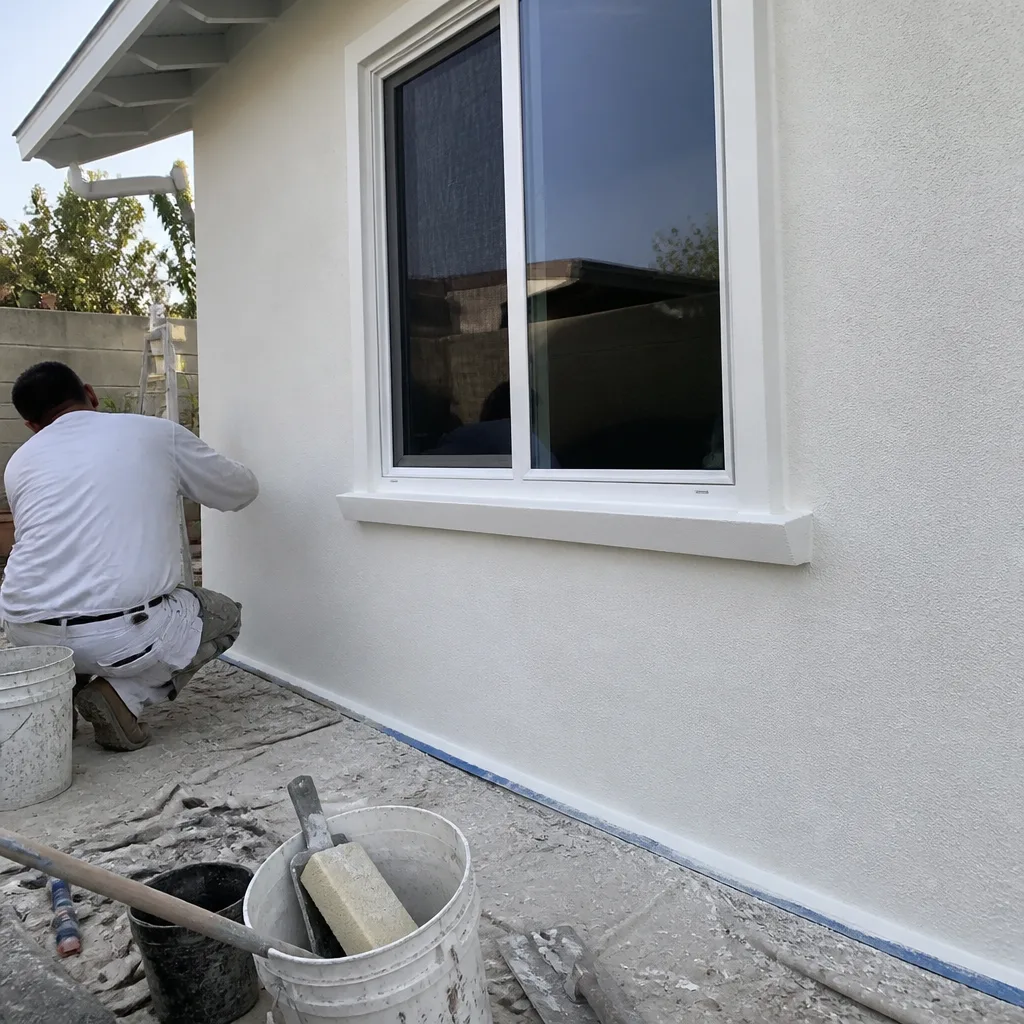 After
AfterReplacement Cost & What’s Included
For a typical El Monte crawl space between 1,000 and 1,800 square feet, you’re looking at $1,800 to $2,800 if we’re removing old poly and installing new 10-mil reinforced barrier with proper seam overlap and mechanical fastening. Jobs that need the Icynene foam interface re-taped, or that have active rodent damage requiring cleanup first, run toward the $3,000-$3,400 end. We break it out: material by the square foot, labor by crew-hour, disposal as a line item. No lump-sum mystery.
What drives the range is access height (anything under 18 inches means our guys are working on their backs), soil condition (mud requires a prep layer), and whether the original Icynene foam needs spot repair before the new barrier goes on. Every job gets a written price before anyone starts - Haven Standard Clause 1 - and the 365-Day Done Right Promise covers the installation workmanship. The barrier material itself carries the manufacturer’s 10-year warranty against degradation.
DIY or Call Us?
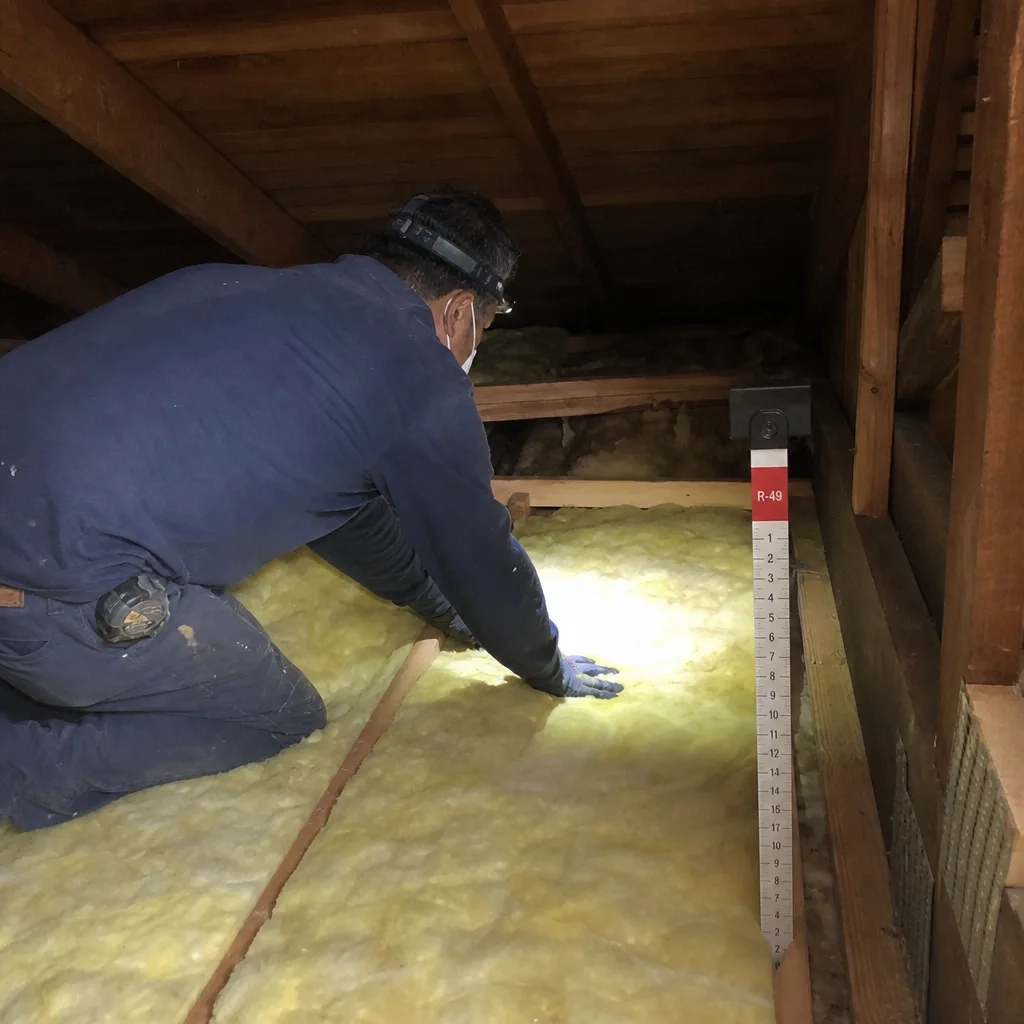
You can safely check what you’ve got: measure your crawl space, photograph any lot numbers on the Icynene foam, and look for the obvious - tears, sagging, water pooling. What you shouldn’t do is crawl around down there with a box cutter and a roll of hardware-store poly. Vapor barrier installation looks simple until you’re trying to get a 10-mil sheet to lie flat in a 24-inch space with a soil nail poking through every third foot, and the seam tape that actually sticks to Icynene foam isn’t sold at the big-box stores in El Monte.
More importantly, if your Icynene foam shows discoloration or the subfloor above has mold, disturbing that assembly without containment spreads spores into your HVAC return paths. We’ve found jobs where a homeowner’s weekend project turned a localized 4-foot tear into a whole-crawl remediation because they didn’t know what they were walking through. Call (626) 415-3454 and we’ll read what you’ve got with you - free second opinion on any written estimate you’ve already collected.
FAQs
In El Monte’s climate, a properly installed 10-mil reinforced poly vapor barrier with correct seam taping to Icynene foam should last 15-20 years. The failure mode we see most often isn’t material degradation - it’s installation error, like insufficient overlap at seams or wrong tape selection, that shows up in years 3-7. Call (626) 415-3454 for an exact quote - estimates are free.
Patching works for isolated punctures smaller than a dinner plate if you use the same 10-mil reinforced material and butyl tape rated for the substrate. If you’re seeing multiple tears, sagging, or any mold on adjacent surfaces, replacement is the honest call - patches in a compromised system are just buying time until the next failure. Call (626) 415-3454 for an exact quote - estimates are free.
Most residential crawl spaces in El Monte take one day, start to finish, assuming clear access and no active remediation needed. Tight spaces (under 24 inches), extensive old-barrier removal, or coordination with pest control add a second day. We schedule so you’re not living with an open crawl overnight. Call (626) 415-3454 for an exact quote - estimates are free.
Yes - we carry 10-mil and 6-mil reinforced polyethylene rolls, plus the butyl seam tapes that actually adhere to Icynene’s surface texture. For larger jobs or specific ASTM E1745 Class A requirements, we can have material on-site next morning. We also stock Reflectix radiant barrier products for hybrid assemblies where that detail makes sense. Call (626) 415-3454 for an exact quote - estimates are free.
Topside Attic Insulation El Monte is an independent service provider - we’re not affiliated with Icynene or Demilec, though we source materials from both and install to their published specs every day.
We’ve sealed and insulated more than 9,000 homes since 2016, and every one started with a written price and ended with a documented record. In El Monte specifically, we’ve run jobs from the newer construction off the 10 Freeway corridor to the 1950s ranch homes north of Valley Boulevard where the attic bypasses - those gaps around plumbing chases and top plates - had never been touched before we arrived. Wes Okafor, our owner, trained in building systems technology at Olive-Harvey College and keeps a photo of his grandmother’s drafty two-flat on Chicago’s South Side taped inside his clipboard. It’s a reminder of what a cold ceiling actually costs a household over a winter.
Seal the bypasses first. Then insulate. The certificate tells you what you actually got.
Written by Wes Okafor, Owner, Topside Attic Insulation El Monte at Topside Attic Insulation El Monte, serving El Monte and nearby areas.