
Knauf Vapor Barrier Installation: The El Monte Owner’s Guide
Knauf vapor barrier installation in El Monte typically runs $1,800-$3,400 for a full crawl space or attic application, depending on square footage and whether we’re sealing over bare soil or replacing degraded material. We stock Knauf Insulation’s Faced Batt and EcoSeal-compatible vapor retarder systems on our El Monte trucks, and most residential jobs are completed in a single day. Homeowners usually discover the problem first as a musty smell rising through floor registers, or when their energy bill jumps $80-$150 during San Gabriel Valley summer months despite the AC running constantly.
Which Knauf Models This Applies To
Knauf manufactures vapor retarder products across several lines, and matching the right membrane to your existing insulation matters for warranty compatibility and building code compliance in Los Angeles County. We work with Knauf Insulation’s kraft-faced fiberglass batts (R-13 through R-38, with the facing serving as the vapor retarder), their unfaced batts paired with separate poly sheeting, and the EcoSeal System’s integrated air-and-vapor barrier approach. The critical identifier is the facing label: kraft-faced batts will show “Knauf Insulation” and an ASTM C665 type stamp, while separate vapor barrier installs use 6-mil polyethylene specified for crawl space or attic use per California Title 24.
Here’s where owners get tripped up. Knauf’s kraft facing is a Class II vapor retarder (0.1 perm or lower when dry), adequate for most El Monte attic applications. But in crawl spaces with soil contact or seasonal moisture from the Rio Hondo watershed’s high water table, we often spec a standalone Class I barrier (0.1 perm or less, tested per ASTM E96) rather than relying on facing alone. OEM Knauf poly sheeting runs 6-mil minimum; the aftermarket equivalent we carry is a reinforced 8-mil cross-laminated polyethylene that outperforms in puncture resistance during installation over rocky or debris-laden crawl spaces. We are an independent service provider with no affiliation to Knauf, but we source their materials through authorized regional distributors and can match spec-for-spec.
Signs Your Knauf Vapor Barrier Installation Is Failing
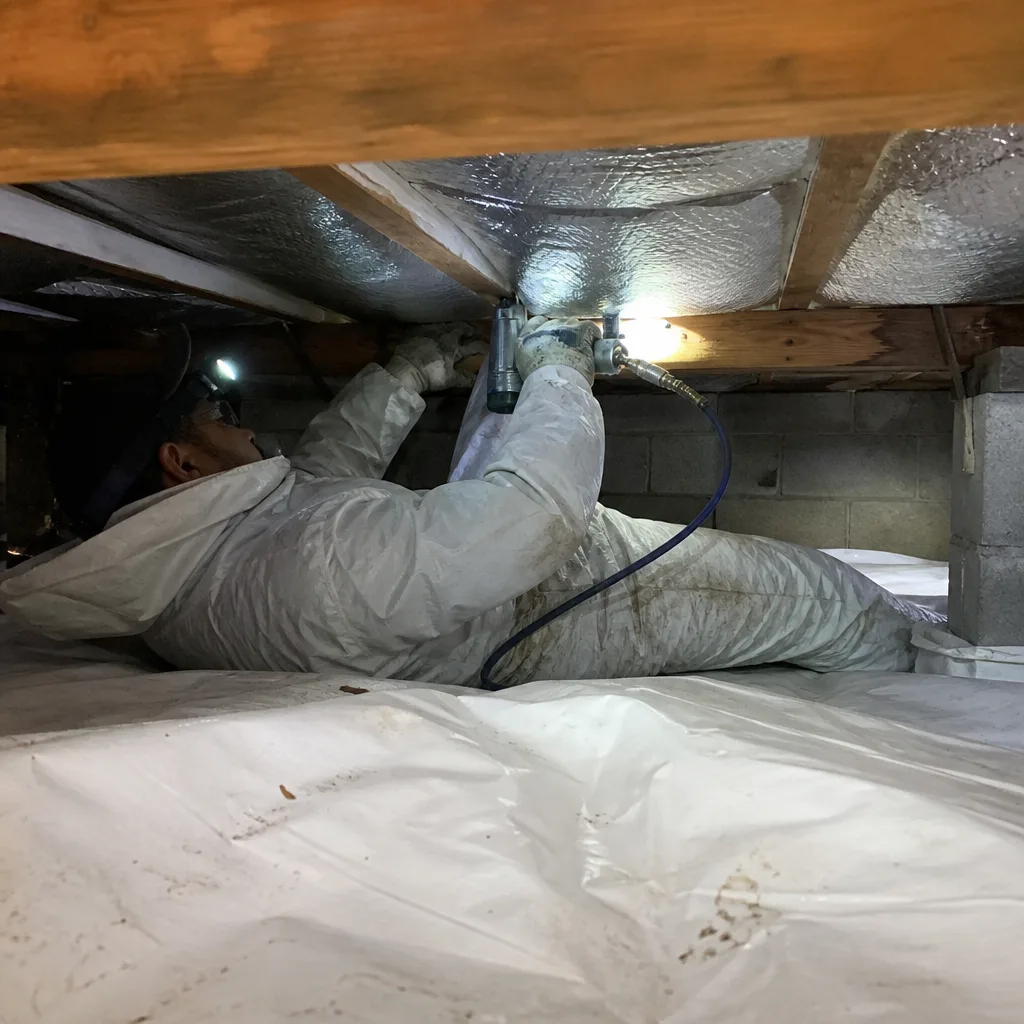
- Condensation pooling on the barrier’s underside. This means warm, moist interior air is reaching the cold surface and the retarder’s perm rating has degraded, or more commonly, air bypasses around the barrier’s perimeter were never sealed. In El Monte’s spring when marine layer moisture pushes inland, we see this most in homes north of the 10 Freeway where overnight lows drop below the dew point while slab mass stays cool.
- Mold spotting on wooden floor joists or subfloor. Once the vapor barrier tears or pulls away from sill plates, soil moisture evaporates directly into the crawl space. We find this concentrated near bathroom and kitchen wet walls where plumbing chases were never sealed to the barrier.
- Insulation sagging or falling from between joists. Saturated batts lose R-value and structural integrity; the vapor barrier failed upstream, letting moisture attack the insulation it was meant to protect. On a job near Lower Azusa Road last year, we pulled down R-19 batts that weighed triple their dry weight from absorbed condensation.
- Dusty, dry soil visible through gaps or tears. A proper vapor barrier should present a continuous surface; any break exceeding the size of a quarter creates a convection path. In older El Monte homes with raised foundations, we’ve found original 4-mil poly degraded to brittle fragments after 15-20 years of UV exposure through foundation vents.
- Musty odor that intensifies when HVAC runs. The return side of your duct system, if located in the crawl space, pulls air through every gap. A failed vapor barrier becomes a mold spore distribution platform. We verify this with a smoke pencil at registers during our initial assessment.
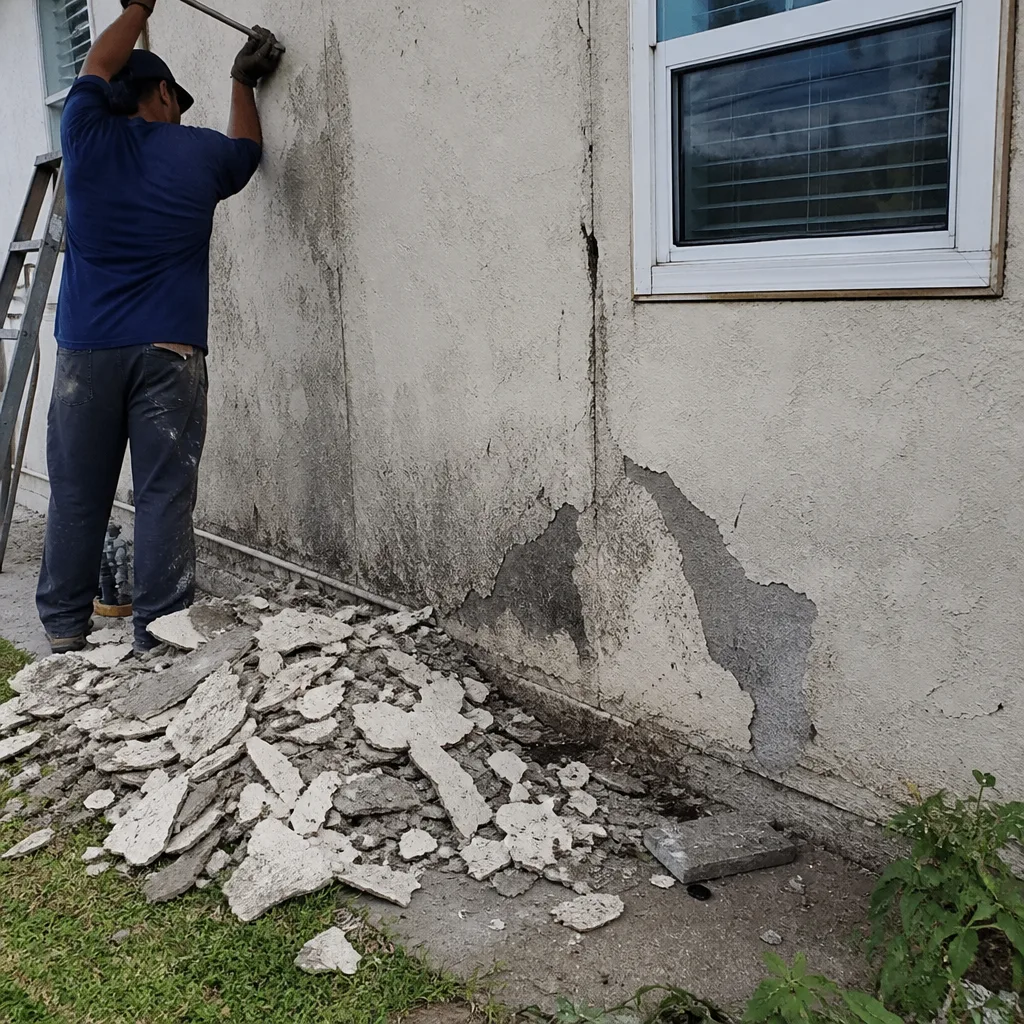 Before
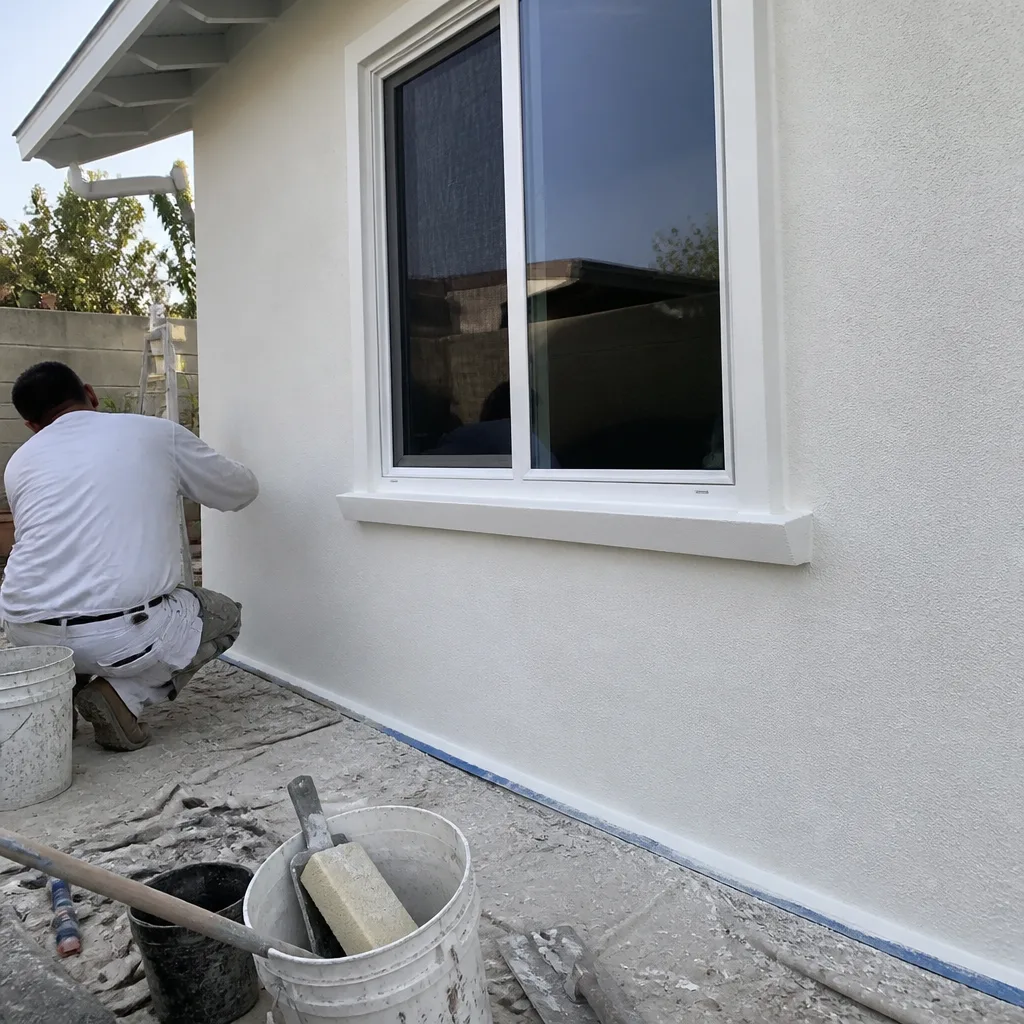 After
AfterReplacement Cost & What’s Included
Most full crawl space vapor barrier replacements in El Monte run $2,200-$3,400 for 1,000-1,500 square feet, including removal of degraded material, soil prep, and new 6-mil or 8-mil poly installation with mechanical fastening to sill plates and piers. Attic vapor retarder work, typically involving kraft-faced batt replacement or supplemental poly sheeting beneath existing insulation, ranges $1,800-$2,800 depending on access difficulty and whether we need to move stored items.
The price spread reflects three factors: square footage, soil condition (level and debris-free versus requiring grading and rodent dropping remediation), and whether we’re integrating with new air sealing. Under Haven Standard Clause 1, you get a written price before any work starts - no exceptions. That scope specifies mil thickness, seam overlap (12 inches minimum, taped with pressure-sensitive vapor barrier tape), and mechanical fastening pattern. Our 365-Day Done Right Promise covers material and installation; the Documented Photo Record shows overlap details and sealed penetrations before we close the access. On jobs where we’re also air sealing, you’ll receive before-and-after blower-door numbers showing the actual reduction in envelope leakage.
DIY or Call Us?
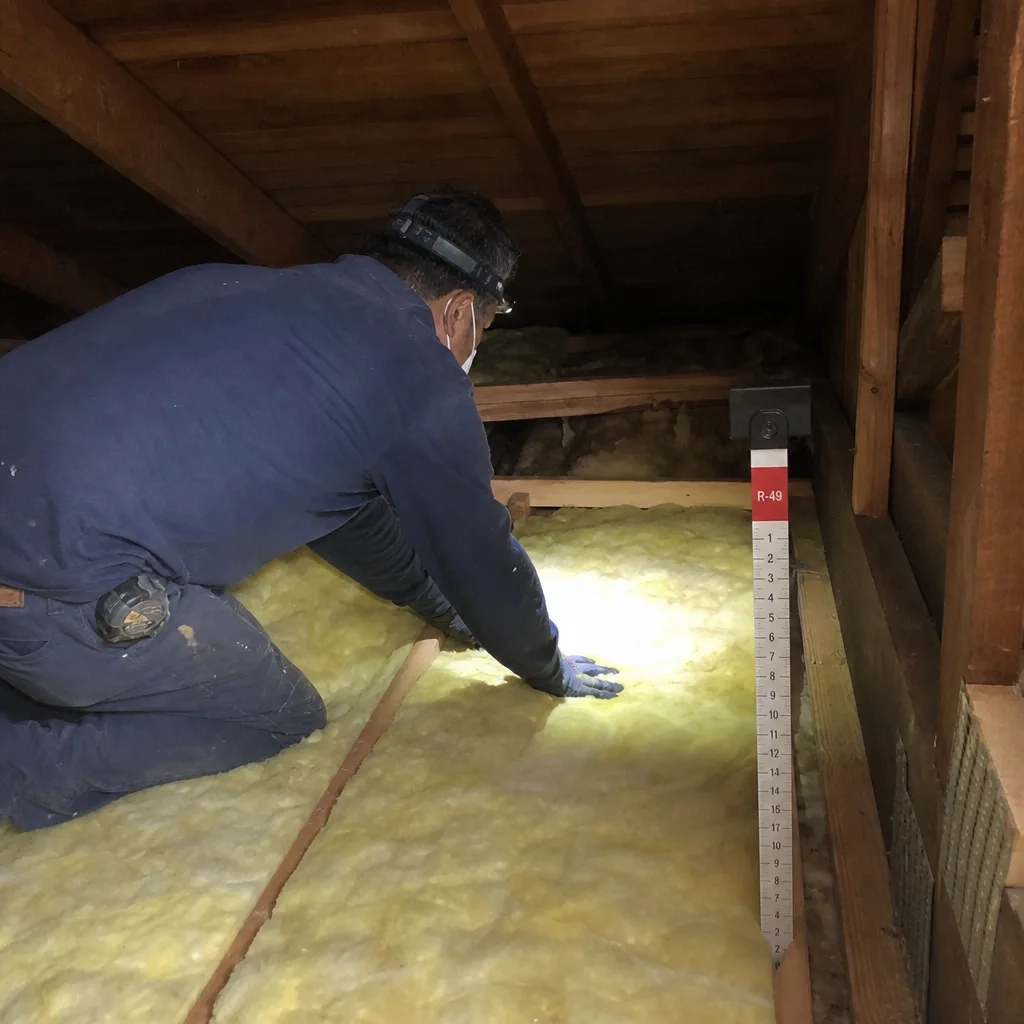
There’s honest work a homeowner can do and work that wastes material. You can safely inspect your own crawl space with a headlamp and respirator - look for the five symptoms above, measure tears, and photograph the existing barrier’s condition. What you cannot safely or effectively do is install a vapor barrier that actually performs. The common DIY failure is laying poly loosely over soil without sealing to the foundation walls; this creates a moisture trap, not a barrier, and can accelerate joist rot. In El Monte’s expansive clay soils, we also see DIYers puncture poly on sharp aggregate or fail to accommodate pier posts with proper flashing.
Respiratory protection matters too - disturbed soil in older crawl spaces often contains rodent droppings, and disturbed spore loads from moldy joists are not a weekend project risk worth taking. If your inspection shows gaps at sill plates, torn sections larger than a foot, or any mold on wood, call (626) 415-3454. We’ll read your photos with you and give you a written price, no charge for the assessment.
FAQs
In the San Gabriel Valley’s dry-winter, warm-summer climate, properly installed 6-mil poly lasts 15-20 years in a vented crawl space; 8-mil reinforced product extends that to 20-25 years. UV exposure through unscreened foundation vents is the primary accelerator of degradation, followed by rodent activity. We install vent screens as standard practice. Call (626) 415-3454 if you’re unsure of your install date - we can age the material by its ASTM stamp and brittleness during a free assessment.
Small punctures under two inches can be patched with vapor barrier tape if the surrounding material is still supple. But if the poly has gone chalky, torn at seams, or pulled away from perimeter walls, patching is false economy - you’re sealing individual holes in a failing system. We see this most in El Monte homes where original 4-mil builder-grade poly was installed in the 1980s and 1990s. A written price for replacement versus patch repair is something we’ll give you honestly; call (626) 415-3454.
Most residential crawl spaces in El Monte are completed in one day, six to eight hours for a crew of two. Attic vapor retarder work runs four to six hours unless we’re moving significant stored material. We sequence the work: access prep, existing material removal and disposal, soil or deck surface prep, barrier installation with documented overlap and fastening, then final photo record before we close up. You’ll get a text when the crew is en route and a named technician - Haven Standard: Arrive on schedule.
Yes - we carry 6-mil and 8-mil reinforced polyethylene rolls, vapor barrier tape, mechanical fasteners, and sill plate seal gasket on every El Monte-based truck. For Knauf kraft-faced batt replacement, we stock R-19 and R-30 unfaced batts with separate poly sheeting; faced batt orders are pulled from our South El Monte supplier for next-morning delivery if not on hand. We also stock Reflectix radiant barrier products where attic conditions call for combined vapor and radiant control. Call (626) 415-3454 - we can confirm material match to your existing installation before we arrive.
Seal the bypasses first. Then insulate. The certificate tells you what you actually got. That’s how we run every job in El Monte, from the ranch homes near Peck Road to the newer construction off Santa Anita Avenue. If your vapor barrier is failing, we’ll give you a written price, show you the photo record you’ll receive, and get it handled.
Call (626) 415-3454 for a free estimate. A live person answers, 24/7.
Written by Wes Okafor, Owner, Topside Attic Insulation El Monte at Topside Attic Insulation El Monte, serving El Monte and nearby areas.