
Rockwool Crawl Space Encapsulation: The El Monte Owner’s Guide
Rockwool crawl space encapsulation in El Monte typically runs $3,200-$5,800 for a complete install, depending on square footage and whether the foundation walls need rigid board or just the floor joist bays get batts. We stock Rockwool Comfortboard 80, Comfortboard 110, and Safe’n’Sound batts on our trucks, and most El Monte jobs we can start within 48 hours of the site visit. Most homeowners figure out something’s wrong when they notice musty odors migrating up through the floor registers, or their hardwood starts cupping from below-grade moisture that the existing vapor barrier never stopped.
Which Rockwool Models This Applies To
Rockwool doesn’t sell a branded “encapsulation system” the way some manufacturers do. What we mean by Rockwool crawl space encapsulation is the pairing of Rockwool stone wool insulation with a proper 6-mil or thicker polyethylene vapor barrier and sealed seams - the full envelope treatment. The batts we use are Comfortboard 80 (2-inch and 3-inch rigid board for foundation walls), Comfortboard 110 (higher density for semi-conditioned crawl spaces), and Safe’n’Sound (3.5-inch batts for floor joist bays, though we prefer the denser Comfortboard against rim joists).
Here’s the compatibility gotcha: Comfortboard 80 is 2.5 pounds per cubic foot density, which means it won’t compress to fit a 2×8 joist bay without leaving gaps at the edges. We’ve seen El Monte homeowners buy it thinking “rigid board is rigid board,” then watch it bridge across the bay instead of filling it. The right move is measuring the actual joist depth - many 1960s El Monte ranch homes have 2×8s that measure a true 7.25 inches, not the nominal 8 - and cutting the board 0.5 inch oversized so it friction-fits.
OEM Rockwool versus aftermarket: for stone wool, there really isn’t a quality aftermarket equivalent that matches the hydrophobic properties. Rockwool is literally spun basalt and steel slag; the off-brand mineral wool boards we’ve tested in the San Gabriel Valley absorb more moisture over a wet season. We source direct from Rockwool’s distribution in City of Industry, not because we’re affiliated with them - we’re not - but because the alternative is replacing it again in seven years instead of fifteen.
Signs Your Rockwool Crawl Space Encapsulation Is Failing
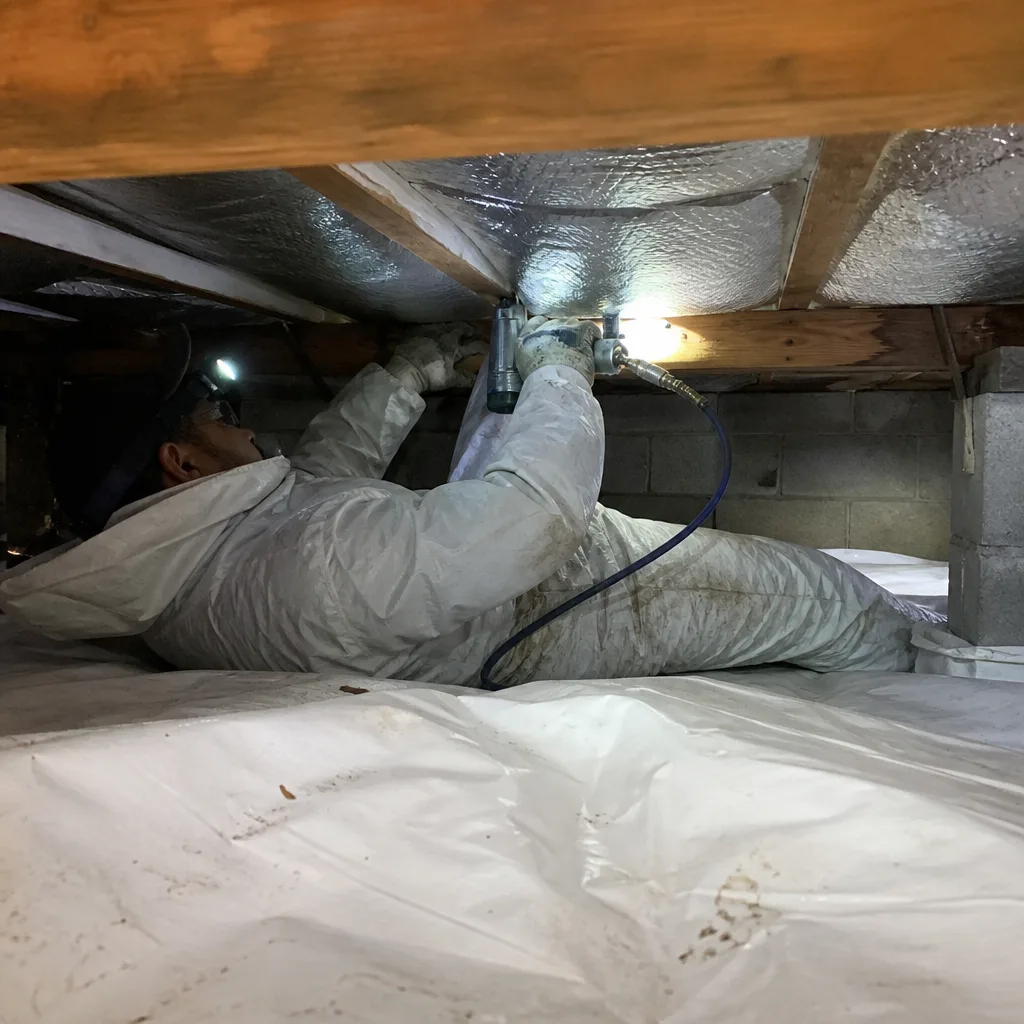
- Fiberglass or old batt insulation sagging below the joists. Gravity plus moisture weight pulls it down. If you can see pink or yellow hanging below the floor, the air barrier above it has failed and the insulation is now a moisture wick, not a thermal block.
- White or gray fuzz on wooden joist ends. That’s mold eating the cellulose in the wood. Rockwool itself won’t mold - it’s inorganic - but if it was installed over an unsealed dirt floor or without a vapor barrier, the humidity that got in is now condensing on the coldest surface, which is usually the rim joist behind the insulation.
- Musty smell that gets worse when the HVAC runs. Your ductwork probably runs through the crawl space, and if the encapsulation failed, the return side is pulling that air straight into your living space. We find this constantly in El Monte’s older neighborhoods near Peck Road, where the original 1950s vapor barriers have degraded to brittle plastic shards.
- Energy bill climbing without thermostat changes. A properly encapsulated crawl space with R-19 to R-30 in the floor joists should keep the floor above within 3-5 degrees of room temperature. When the encapsulation fails, that delta widens and your furnace works harder to compensate.
- Pest activity concentrated at the foundation perimeter. Gaps in the vapor barrier or missing seam tape create access highways. Rockwool doesn’t appeal to rodents the way fiberglass does, but they’ll tunnel through it if the barrier behind it has holes.
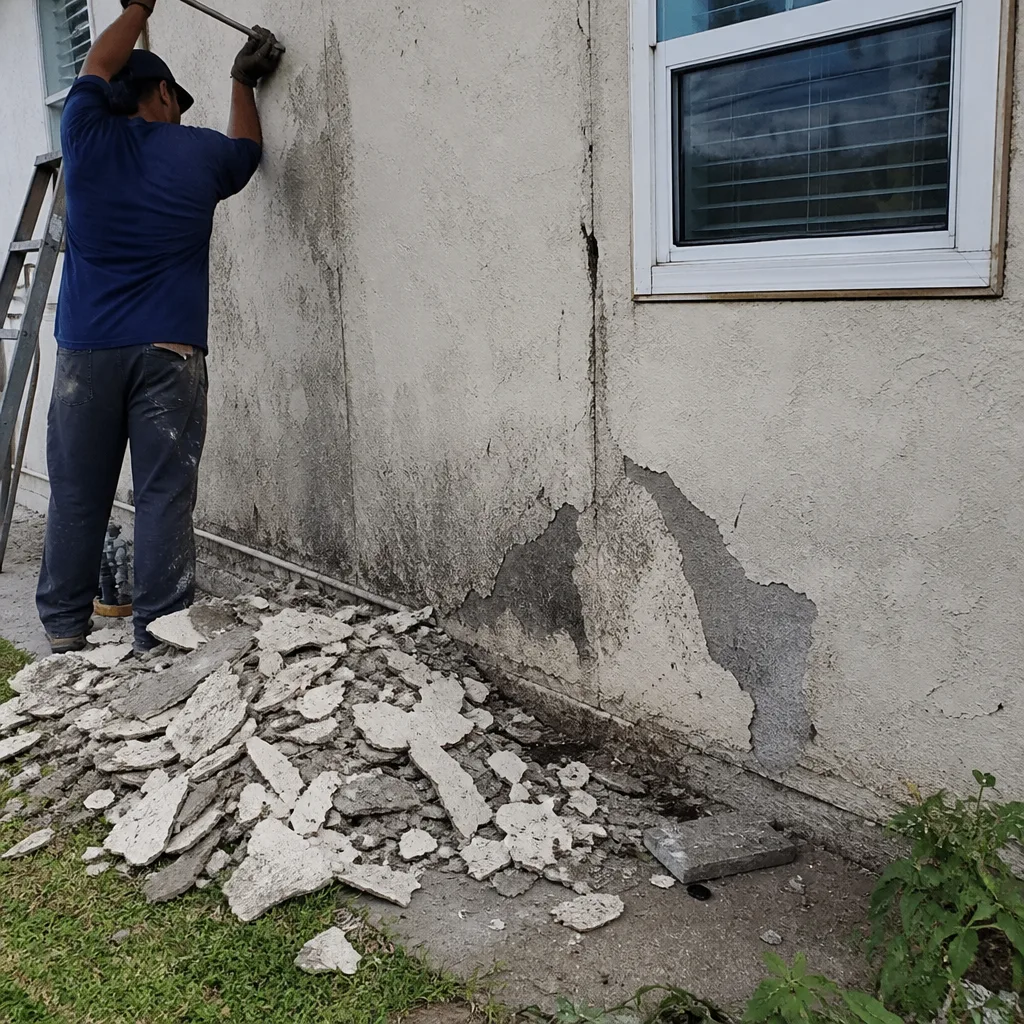 Before
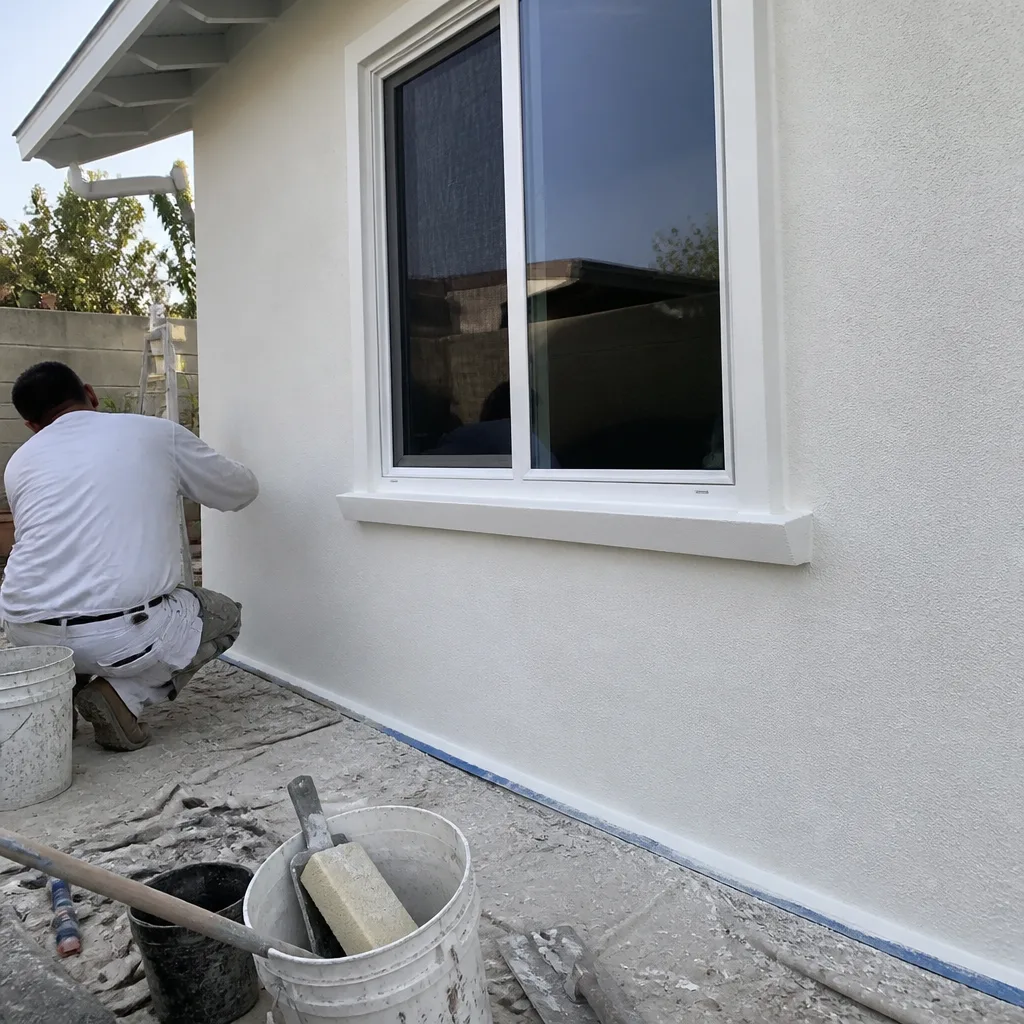 After
AfterReplacement Cost & What’s Included
Most complete Rockwool crawl space encapsulations in El Monte fall between $3,200 and $5,800. The low end covers a 600-800 square foot crawl with existing decent access, new 6-mil vapor barrier over the dirt floor, taped seams, and R-23 Comfortboard 80 in the floor joists. The high end gets you 1,200+ square feet, 10-mil reinforced barrier with mechanical fastening to walls, R-30 in joists, Comfortboard 110 on foundation walls, and a sealed access door with weatherstripping.
What drives the range: access height (less than 18 inches means we work on our backs, which adds labor), existing debris removal, whether the rim joists need dedicated air sealing with acoustic sealant, and if the HVAC ducts need to be temporarily relocated to get behind them. Every job gets a written price before any work starts - Haven Standard Clause 1 - and that price includes parts, labor, the Documented Photo Record, and the before-and-after documentation. We don’t charge extra for the photo record; it’s included on every visit.
The 365-Day Done Right Promise covers the workmanship. Material defects go to Rockwool’s own warranty, which is 10 years on Comfortboard products when installed to spec.
DIY or Call Us?
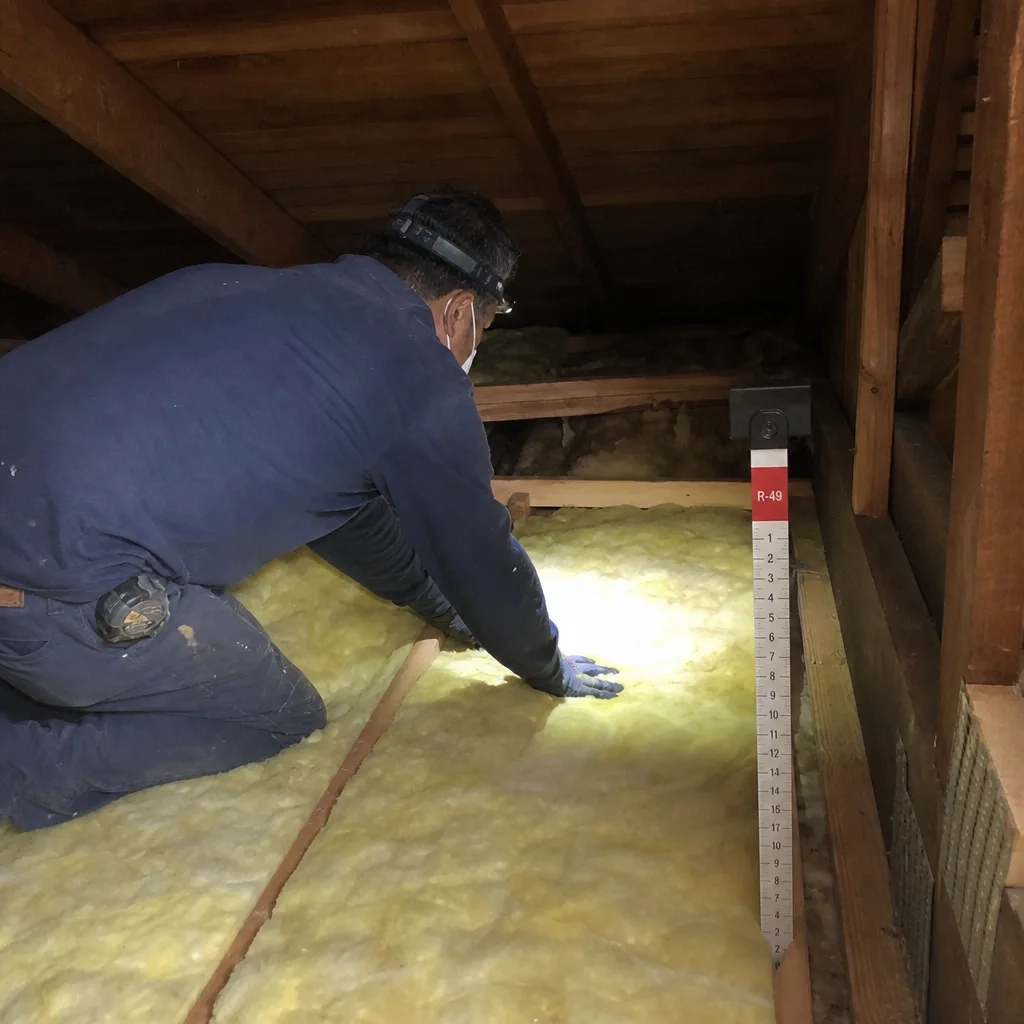
What you can safely check yourself: measure your crawl space access opening (if it’s smaller than 16×24 inches, we need to cut a new one), look for standing water (indicates a drainage problem, not just an encapsulation problem), and verify whether your existing vapor barrier is taped at the seams or just overlapped. Take photos of any labels on existing insulation - we can identify it from the printing.
Where DIY goes wrong: stone wool cuts require a long serrated knife or a board saw with dust collection; the fibers are skin irritants and you need a P100 respirator, not a dust mask. More critically, if you install Rockwool against a rim joist without first sealing the joint between the sill plate and the foundation with acoustic sealant or closed-cell foam, you’ve built a perfect filter that catches every airborne particle but stops almost no air leakage. The blower-door test we run before and after - a pressurization reading that shows, in one number, how much air your building envelope is losing - is the only way to know if the air sealing actually worked. Without it, you’re guessing.
We’re not affiliated with Rockwool. We’re an independent service provider, and we also stock Reflectix and other brands if stone wool isn’t the right fit for your assembly. Call (626) 415-3454 for a free estimate with a written price before any work starts.
FAQs
Properly installed Rockwool with a sealed vapor barrier lasts 15-20 years in El Monte’s climate, which is drier than coastal LA but still sees enough winter groundwater rise to stress unprotected systems. The Comfortboard products don’t degrade from UV or moisture cycling the way organic insulations do; what fails first is almost always the vapor barrier tape or the access door seal, not the stone wool itself. Call (626) 415-3454 if you’re unsure whether yours needs replacement - estimates are free.
Partial repair works if the Rockwool itself is still dry and reasonably positioned, but only if the failure is isolated - a torn vapor barrier section, a single failed seam, or a missing access door seal. If moisture has reached the batts, or if the original install skipped air sealing the rim joists, repair is false economy; you’ll be back in two years. We offer free second opinions on any written estimate if you want us to compare repair versus full replacement. Call (626) 415-3454.
Most El Monte crawl spaces take one to two days: half a day for removal and prep, half a day for air sealing and insulation, and a final half day if we’re doing the vapor barrier and access door. Jobs with restricted access or duct relocation can run into a third day. We don’t bill by the hour; the written price is the written price. Call (626) 415-3454 to schedule a site visit.
We stock Comfortboard 80 in 2-inch and 3-inch thicknesses, Comfortboard 110 in 1.5-inch and 2-inch, and Safe’n’Sound batts in standard widths on every truck serving El Monte. For odd sizes or large square footage, we pull from Rockwool’s City of Industry warehouse with next-day availability. We don’t markup materials; the price in your written scope reflects our actual cost plus standard labor. Call (626) 415-3454 to confirm availability for your specific dimensions.
Seal the bypasses first. Then insulate. The certificate tells you what you actually got.
Written by Wes Okafor, Owner, Topside Attic Insulation El Monte at Topside Attic Insulation El Monte, serving El Monte and nearby areas.