
How Much Does Spray Foam Insulation Cost in El Monte?
Our Spray Foam Insulation services in El Monte, CA typically cost between $1,800 and $6,500 for a residential job, depending on the area being insulated, the foam type, and the thickness required. Most homeowners in El Monte spend around $2,800 to $4,200 for a standard attic or crawl space application using closed-cell foam. At Envelope Insulation Co., every job starts with a written price before any work begins – that number does not change once the scope is agreed on.
Spray Foam Insulation Cost Breakdown (2026)
The table below reflects actual pricing ranges we see in the El Monte market as of 2026. These are flat-job estimates, not per-square-foot teaser rates that balloon once a crew shows up.
| Application Area | Foam Type | Typical Job Cost (El Monte) |
|---|---|---|
| Attic floor (1,000-1,200 sq ft) | Open-cell | $1,800 - $2,800 |
| Attic floor (1,000-1,200 sq ft) | Closed-cell | $2,600 - $4,000 |
| Attic roof deck / spray-to-underside | Closed-cell | $3,400 - $6,500 |
| Rim joists (crawl space perimeter) | Closed-cell | $600 - $1,400 |
| Crawl space walls and floor | Closed-cell | $2,200 - $4,800 |
| Garage ceiling (attached, 400-600 sq ft) | Open-cell or closed-cell | $900 - $2,200 |
| Exterior wall cavity (new construction or open wall) | Closed-cell | $3,000 - $7,000+ |
| Air sealing only (top plates, penetrations, can lights) | Two-component foam kit | $400 - $900 |
A few things drive that range in El Monte specifically. Many homes in the city were built between the late 1940s and early 1980s, which means attic framing often has irregular joist spacing and decades of layered materials that have to be assessed before a crew can quote accurately. Homes near the San Gabriel River corridor and along Garvey Avenue also tend to have older crawl spaces with limited access, which adds labor time. Homes in the North El Monte and Arcadia border areas sometimes have steeper roof pitches, which affects how much surface area needs to be sprayed when doing an underside-of-roof-deck application.
Closed-cell foam – which cures to roughly R-6.5 per inch and functions as both an air barrier and a modest vapor retarder – costs more per board foot than open-cell foam. Open-cell foam runs about R-3.7 per inch, expands aggressively, and costs less per square foot, but it is not the right choice for every application. We specify which type makes sense for your situation in the written scope, not after the fact.
Under Haven Standard Clause 1: you receive a flat price and a written scope before anyone on our crew lifts a tool. The number on that document is the number on your invoice.
What Affects Spray Foam Insulation Pricing in El Monte
- Foam type – open-cell vs. closed-cell: Closed-cell foam uses more material per board foot and requires higher-pressure equipment, so it costs roughly 40 to 60 percent more per square foot than open-cell. For El Monte’s climate – hot summers that routinely push above 95°F in July and August – closed-cell is frequently the right call for roof decks and exterior walls because it also resists moisture vapor, which can be an issue in older homes with inadequate eave ventilation.
- Application area and access difficulty: A clean, open attic with standard 24-inch joist spacing is straightforward. A crawl space under a 1950s El Monte bungalow with 18 inches of clearance, existing fiberglass batt debris, and a vapor barrier that needs to come out first adds labor hours and material handling that push the price up. We photograph access conditions on every visit so the written scope reflects the actual site, not a generic floor plan.
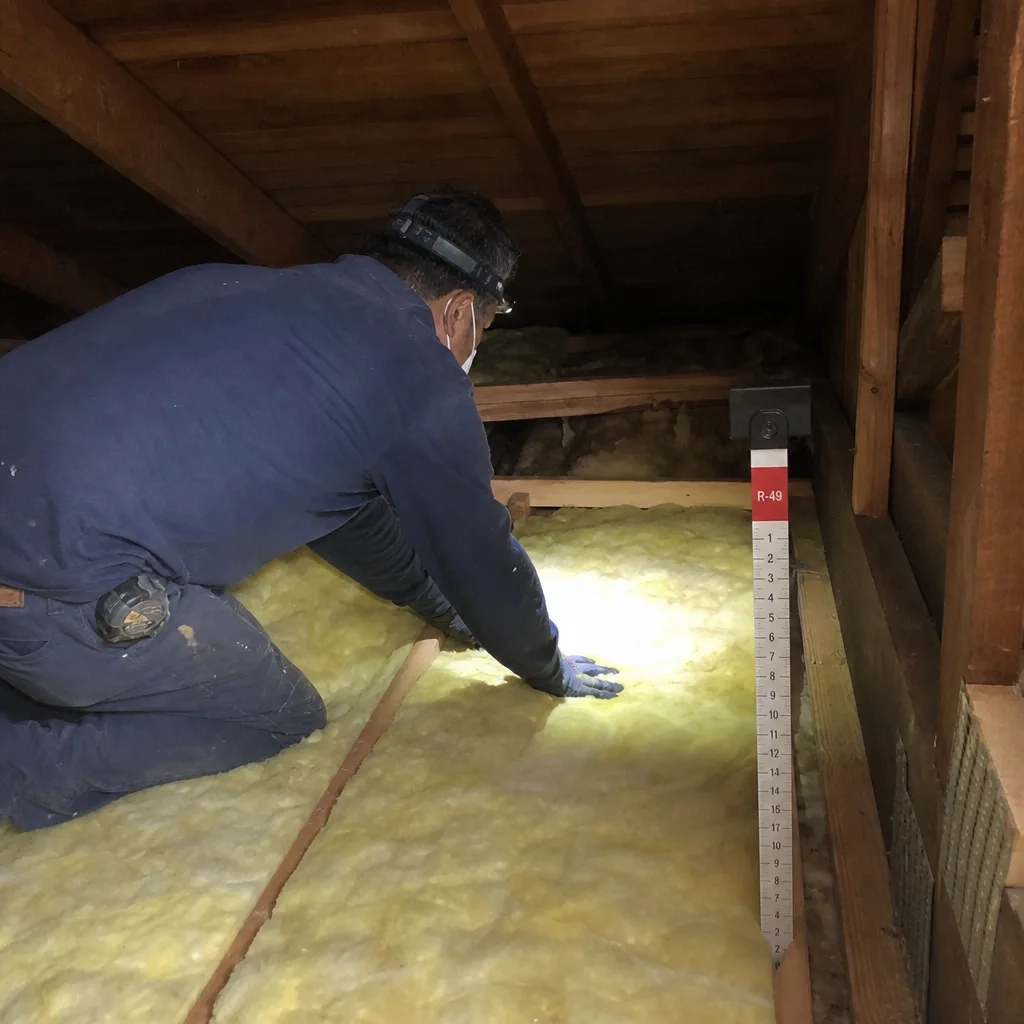
- Existing insulation removal: If there is deteriorated fiberglass, cellulose, or rodent-contaminated material in the attic or crawl space, it has to come out before spray foam goes in. Insulation removal in El Monte typically adds $600 to $1,800 to a job depending on depth and contamination. Spraying over compromised material is not something we do – it traps the problem and reduces the foam’s performance.
- Thickness required to meet California Title 24 or target R-value: California’s Title 24 energy code sets minimum R-values for conditioned space. In Climate Zone 9, which covers El Monte, attic insulation must reach at least R-38. Getting to R-38 with closed-cell foam means roughly six inches of material; open-cell needs closer to ten inches. More thickness means more product and more spray time, which raises the line-item cost.
- Air sealing scope before foam: At Envelope Insulation Co., air sealing is not an upsell – it is a prerequisite. We seal top plates, recessed can lights, plumbing and electrical penetrations, and attic hatch gaps before any foam or blown-in material goes down. That work adds time, but it is what the blower-door numbers reflect afterward. A home that skips air sealing and goes straight to insulation is still losing conditioned air; it just has a thicker blanket over the leak. We measure before and after with a blower-door test – a pressurization reading that shows, in one number, how much air your building envelope was losing – so you can see the actual change.
- Material brand and formulation: We source foam products from manufacturers including Icynene and Demilec, both of which have low-GWP (global warming potential) formulations that meet California’s stricter environmental requirements. Specialty low-GWP formulas can cost five to twelve percent more than standard HFC-blown foams. We note the specific product in your written scope so you know exactly what is going into your home.
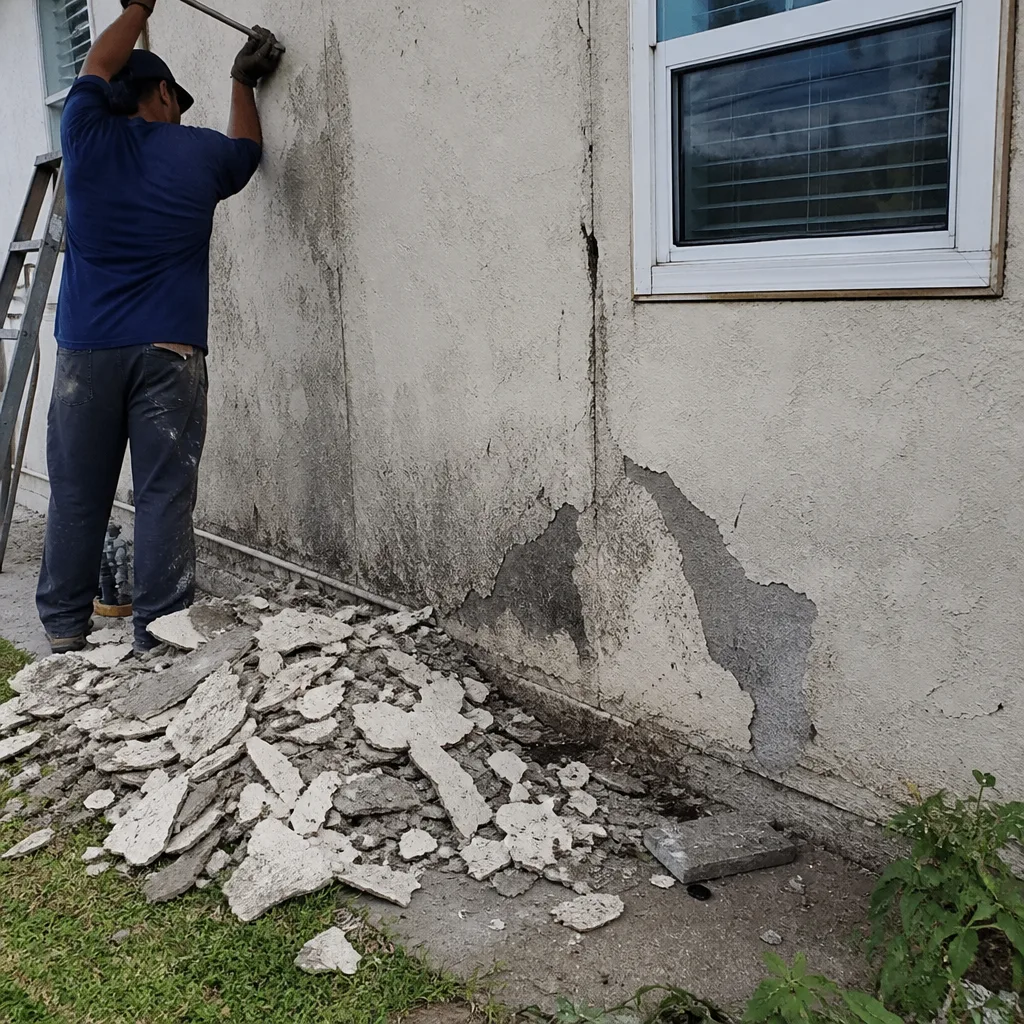 Before
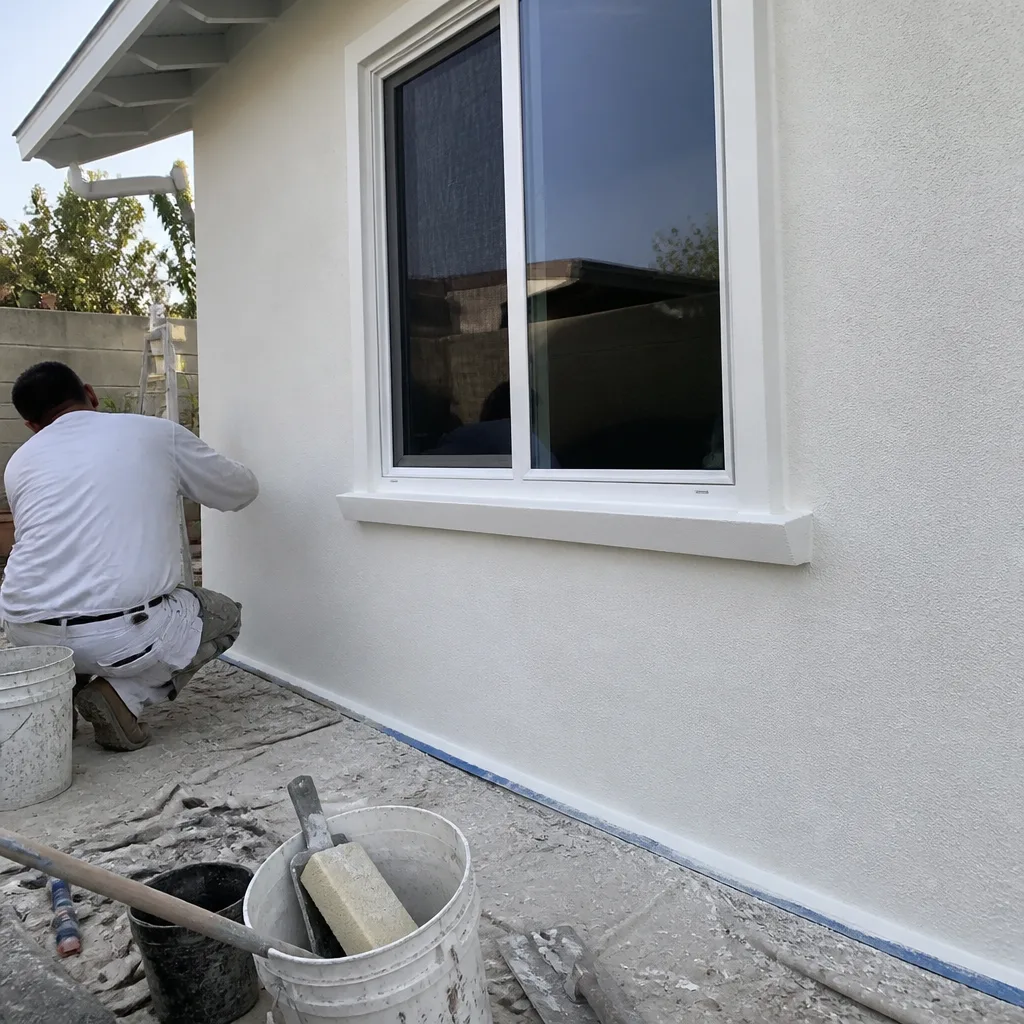 After
AfterOpen-Cell vs. Closed-Cell Spray Foam: Which One Do El Monte Homes Need?
This question comes up on almost every job we run in El Monte, and the answer is not the same for every situation – which is why we include the specification in writing before any material is ordered.
Open-Cell spray foam
Open-cell foam expands dramatically – roughly 100 times its liquid volume – and cures soft and spongy. It achieves about R-3.7 per inch and is excellent at filling irregular cavities and muffling sound. It is vapor-permeable, meaning moisture can pass through it, so it is not typically the right choice for crawl space encapsulation in older El Monte homes where ground moisture is a factor. For interior applications like attic floors where vapor drive is not a concern, open-cell can be a cost-effective option.
Closed-cell spray foam
Closed-cell foam expands to about 30 times its volume and cures hard and rigid. At roughly R-6.5 per inch, you reach code minimum R-values in fewer inches, which matters in low-clearance crawl spaces and cathedral ceilings where physical space is limited. It also provides a meaningful vapor retarder – important in El Monte homes that see temperature swings between hot dry summer days and cooler nights that can create condensation potential inside wall cavities. Most of our Spray Foam Insulation in El Monte jobs use closed-cell in the crawl space and on roof decks, and open-cell or blown-in cellulose on attic floors where the budget allows for the trade-off.
Spray Foam vs. Other Insulation Types: Cost Comparison for El Monte
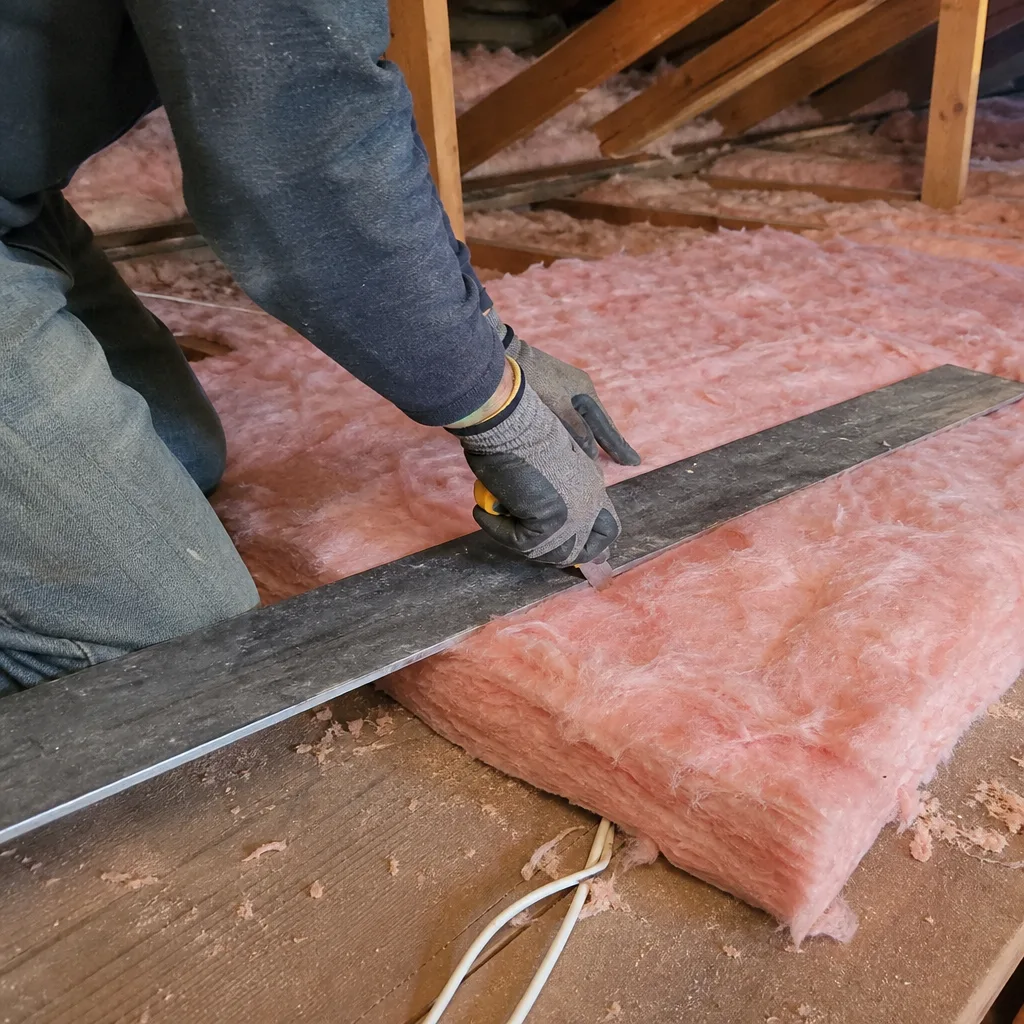
Spray foam is not always the right material for every part of the home. Here is a side-by-side of what we typically see on El Monte jobs in 2026.
- Blown-in fiberglass or cellulose (attic floor): $1,200 to $2,400 for a 1,000-1,200 sq ft attic. Lower upfront cost than spray foam, excellent thermal performance per dollar, but it does not function as an air barrier on its own. This is why air sealing has to happen first – and why skipping it undermines the investment.
- Fiberglass batts (walls): $800 to $2,000 for standard wall cavity work in open walls. Cheapest per square foot, but batts have to fit the cavity precisely or they underperform. Common in new construction; less practical for retrofit work in El Monte’s older housing stock.
- Spray foam (closed-cell, attic or crawl space): $2,600 to $6,500 depending on area and thickness. Higher upfront cost, but it is the only common insulation material that simultaneously insulates, air-seals, and adds structural rigidity to a roof deck or crawl space wall.
- Rigid foam board (crawl space or basement walls): $900 to $2,500 for a typical El Monte crawl space. A good middle option where spray foam access is limited, but it requires careful detailing at seams to function as an air barrier.
On jobs where the blower-door reading is the target outcome – where a homeowner wants to see a documented air-change-per-hour improvement – spray foam combined with targeted air sealing is typically the approach that moves the number the most. We publish before-and-after blower-door readings on every applicable job. That is not a marketing claim; it is a documented number you can compare to your utility bills.
Does Spray Foam Insulation Require a Permit in El Monte?
In most cases, spray foam insulation applied in an attic or crawl space on an existing residential structure in El Monte does not require a building permit if the work is limited to insulation and air sealing of the existing envelope. However, if the project involves changing the thermal boundary – for example, converting a vented attic to an unvented conditioned attic by spraying the underside of the roof deck – the City of El Monte Building and Safety Division may require a permit and inspection to verify California Title 24 compliance.
We pull permits when the scope requires one, and we include that in the written price before work starts. You will not receive a bill for permit costs that weren’t disclosed upfront. If you’re unsure whether your project needs one, ask us during the estimate walkthrough – we do a lot of work in El Monte and know which project types the city requires documentation for.
How California’s Title 24 Affects Your Spray Foam Cost in El Monte
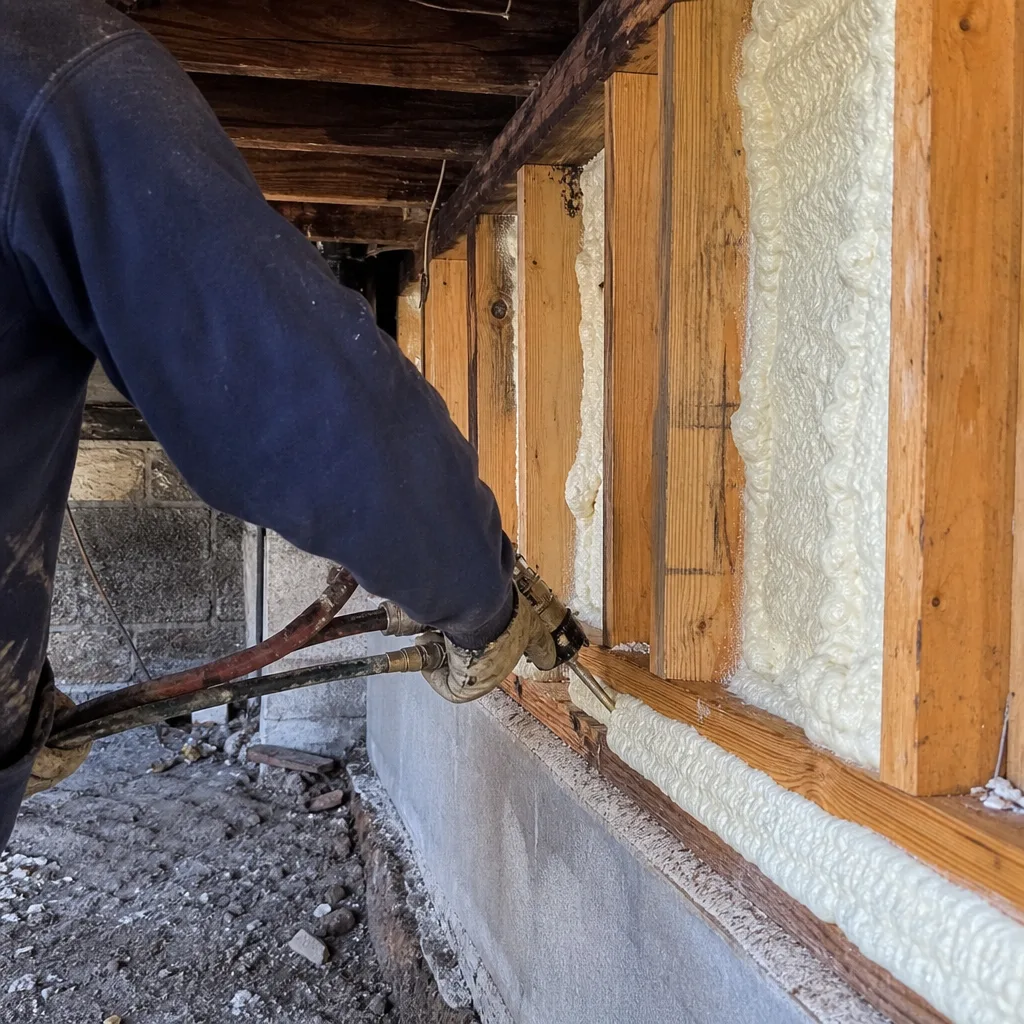
El Monte falls in California Climate Zone 9, which sets specific minimum R-values for residential insulation under Title 24. These requirements affect how much foam needs to be installed – and by extension, what you pay.
- Attic insulation (Climate Zone 9): Minimum R-38. With closed-cell foam at R-6.5 per inch, that requires roughly six inches. With open-cell at R-3.7 per inch, closer to ten to eleven inches.
- Exterior walls: Minimum R-13 in wood-framed cavities. A 2×4 stud cavity filled with closed-cell foam reaches approximately R-24 – well above code minimum, which is one reason closed-cell is often specified for wall retrofits when the wall is open.
- Floors over unconditioned space (crawl spaces): Minimum R-19. Closed-cell foam on crawl space walls, combined with a vapor barrier on the ground, is one common approach that satisfies this while also reducing moisture intrusion.
Meeting Title 24 minimum values is the floor, not the goal. In our experience on El Monte homes, especially those built before 1980 that were never energy-modeled, going above minimum code delivers the best return on the material cost – the marginal cost of an extra inch of foam is small compared to the performance gain.
How to Save on Spray Foam Insulation in El Monte
There is a meaningful difference between spending less money and getting a worse result, and spending less money while getting the same result. Here are ways to do the second one.
- Use foam where it does the most work, blown-in cellulose where it doesn’t: Closed-cell foam on the crawl space walls and rim joists combined with blown-in cellulose on the attic floor is a hybrid approach we use frequently on El Monte homes. You get the air barrier and moisture resistance where it matters most, and the lower-cost material where vapor drive is not a concern. This combination often runs $1,000 to $1,800 less than full spray foam throughout.
- Get the air sealing done correctly the first time: Skipping air sealing and just adding insulation is a cost that compounds over time – you keep paying to cool or heat air that leaks back out. The blower-door number is the proof. A home that reads 3,800 CFM50 before sealing and 1,900 CFM50 after has genuinely halved its air leakage. That change shows up on utility bills month after month.
- Ask about utility rebates before the job starts: Southern California Edison and SoCalGas both offer residential energy efficiency rebates that can apply to qualifying insulation and air sealing work. The specific rebate amounts and eligibility criteria change annually, so check current program details directly with the utility. We can identify whether your project scope is likely to qualify during the estimate walkthrough.
- Combine work into a single mobilization: Spray foam equipment setup has a fixed cost regardless of how much foam gets applied. If you are also considering crawl space encapsulation, attic cleaning, or a radiant barrier installation, doing the work in a single visit reduces the mobilization overhead spread across the project total. We see this save homeowners $300 to $700 on combined-scope jobs in El Monte.
- Bring us a competing written estimate for a free second opinion: Under the Haven Standard, we offer a free second opinion on any written estimate. Bring us a quote from another contractor and we will read it with you – line by line – and tell you what it includes, what it leaves out, and what the numbers actually reflect. There is no obligation and no pressure. Call (626) 415-3454 to schedule.
- Don’t pay for removal you don’t need: Not every existing insulation job requires full removal before spray foam goes in. In some cases – particularly attic floors with clean, properly installed fiberglass batts that have simply lost R-value over time – adding spray foam over existing material is appropriate. We assess this during the walkthrough and specify it in the written scope. If removal isn’t necessary, we won’t charge for it.
What the Job Looks Like From Start to Finish
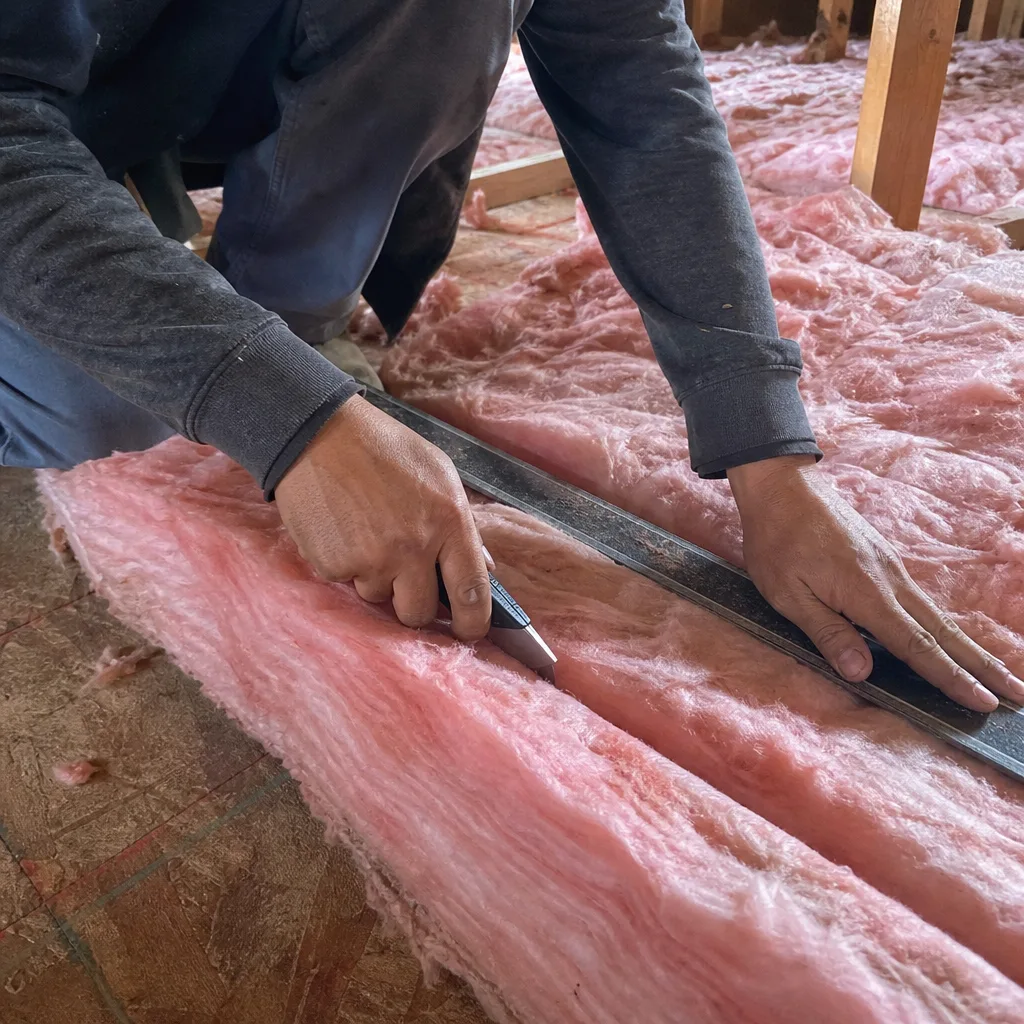
A lot of homeowners in El Monte have had the experience of a contractor who shows up, does the work, and leaves a receipt – with no real documentation of what was done or whether it worked. Here is what a job with Envelope Insulation Co. looks like instead.
Before the work starts: We walk the home – attic, crawl space, garage, wherever the scope requires – and take photographs of existing conditions. If the job includes air sealing, we run a blower-door test and record the baseline number. You receive a written scope and a flat price before anyone puts on a respirator. That document includes the specific materials being used, the target R-values, any areas being excluded from scope and why, and the warranty terms under the 365-Day Done Right Promise.
During the work: Air sealing is completed first – top plates, recessed can light housings, plumbing and electrical penetrations through the attic floor, attic hatch weatherstripping. Then spray foam or other specified insulation is applied. The crew wears appropriate respiratory protection; spray foam off-gasses during cure and requires the home to be vacated for a period specified by the manufacturer – typically two to four hours for most residential formulations, sometimes up to 24 hours for larger closed-cell applications. We communicate this timeline clearly before the crew arrives.
After the work: We run a second blower-door test on applicable jobs and record the post-sealing number. You receive a Documented Photo Record of the completed work and the before-and-after blower-door readings. The written warranty is included in your job file. On every applicable job, those two numbers – before and after – are the proof that the work did what it was supposed to do.
Spray Foam Safety: What Homeowners Should Know
Spray foam insulation involves chemicals under pressure – specifically isocyanate and polyol components that react exothermically on contact. Installed correctly by trained technicians with the right equipment and respiratory protection, it is a safe and durable building material. Installed incorrectly – wrong mixing ratios, insufficient cure time, poor ventilation – it can off-gas compounds that cause respiratory irritation.
This is not a project to DIY with a two-component kit if you are doing anything beyond sealing a small penetration. Two-component foam kits sold at hardware stores are appropriate for air-sealing gaps at top plates or around pipes; they are not a substitute for professionally applied spray foam in attic or crawl space applications. We recommend against DIY spray foam application for anything beyond small spot-sealing, and we are happy to explain why during a walkthrough if you are weighing the options.
Our technicians are background-checked, uniformed, and trained in chemical handling procedures. A live person answers our phone 24/7 – not a voicemail that routes to a callback window measured in business days.
FAQs – Spray Foam Insulation Cost in El Monte
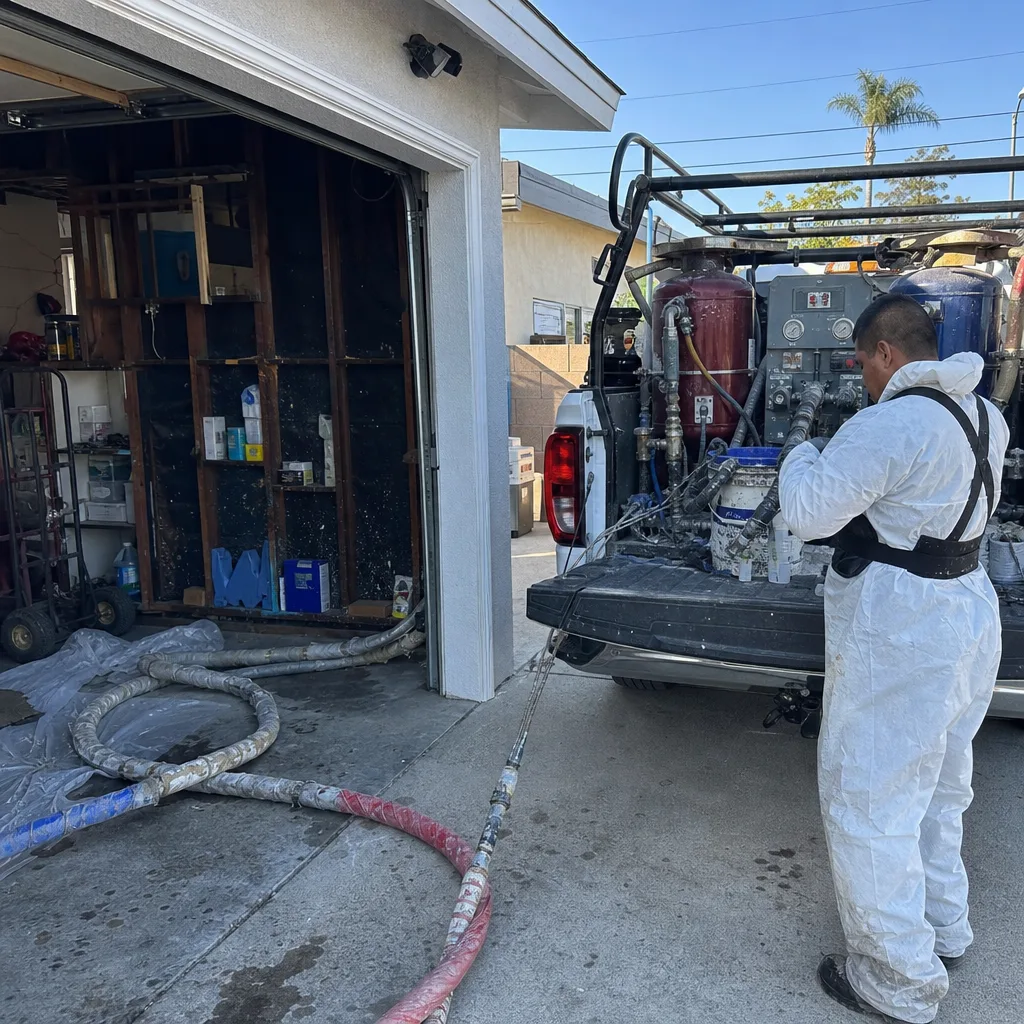
How much does spray foam insulation cost per square foot in El Monte?
Closed-cell spray foam in El Monte runs approximately $1.75 to $3.50 per square foot at two inches of thickness, and $3.00 to $6.00 per square foot at the four-to-six inch range needed to hit California’s Climate Zone 9 R-value minimums. Open-cell foam runs $0.90 to $1.80 per square foot at equivalent thicknesses. Per-square-foot rates can be misleading, though, because access difficulty, prep work, and air sealing scope affect the total cost more than raw square footage does. The number that matters is the flat job price in writing before work starts. Call (626) 415-3454 and we will walk the home and give you exactly that.
Is spray foam insulation worth the cost in El Monte’s climate?
For El Monte specifically, closed-cell spray foam in the crawl space and on the underside of a roof deck typically delivers the strongest documented performance return of any single insulation intervention – primarily because it functions as an air barrier, a vapor retarder, and insulation simultaneously. The before-and-after blower-door numbers on our jobs in the San Gabriel Valley routinely show 40 to 55 percent reductions in air leakage when spray foam is combined with targeted air sealing. Whether that translates to “worth it” depends on your current utility bills, your comfort issues, and how long you plan to stay in the home – all things we can talk through during a free estimate walkthrough.
How long does spray foam insulation last in El Monte homes?
Properly installed closed-cell spray foam has an expected service life of 80 years or more under normal residential conditions. It does not sag, settle, or absorb moisture the way fiberglass batts do, and it does not provide nesting material for rodents the way cellulose can in an unsealed attic. Open-cell foam is similarly long-lived in interior applications, though it is more susceptible to damage from prolonged moisture exposure, which is why we do not specify it for crawl spaces. The material itself does not expire; what degrades the investment is poor installation – off-ratio mixing, insufficient thickness, or application over unsealed air leaks.
Can spray foam insulation be installed in one day?
Most residential spray foam jobs in El Monte are completed in one day – typically four to seven hours of on-site time depending on scope. Attic or crawl space applications on a 1,200-to-1,800 square foot home are usually finished within a single visit. Larger whole-home projects, or jobs that include insulation removal, attic cleaning, or crawl space encapsulation in the same scope, may run two days. We confirm the timeline in writing before the job starts – you will know when to plan for the re-entry window after spray foam cure.
Does spray foam insulation add value to a home in El Monte?
Documented building performance improvements – particularly a measurable reduction in air leakage shown by blower-door numbers – are increasingly referenced in real estate transactions in the San Gabriel Valley. While there is no fixed dollar figure we can promise for resale value, a home with documented R-value compliance, a sealed envelope, and a before-and-after air-leakage record is a different product in a buyer’s due diligence process than one without that documentation. Every job we complete comes with a Documented Photo Record and, on applicable jobs, before-and-after blower-door readings – paperwork that stays with the home and can be disclosed to a future buyer.
How does Envelope Insulation Co. price spray foam jobs in El Monte?
Every estimate starts with a physical walkthrough of the home – attic, crawl space, or whichever area is in scope. We photograph existing conditions, assess access difficulty, note any prep work required, and specify the exact foam product and target thickness. The result is a flat written price and a written scope. That number does not change after the work starts. Under Haven Standard Clause 1, no work begins without your signature on that document. If you have a competing written estimate from another contractor, bring it – we offer a free second opinion and will read it with you line by line. Call (626) 415-3454 to schedule a walkthrough.
Why El Monte Homeowners Choose Envelope Insulation Co.
Since 2016, Envelope Insulation Co. has completed spray foam and air sealing work on more than 9,000 homes – every one with a written price before work started and a Documented Photo Record when the crew left. Wes Okafor leads the team and built the Haven Standard around a single observation: most insulation complaints come from jobs where the customer didn’t know what they were paying for, or where the air leaks were never sealed before the insulation went in.
In El Monte specifically, we see the same patterns on older homes: attic floors with can lights that have never been sealed, crawl spaces with failing vapor barriers and rim joists that were never insulated, and wall cavities filled with settled fiberglass that stopped performing years ago. Those are solvable problems. The solution starts with a blower-door test to establish a baseline, a written scope that names the work and the materials, and spray foam or blown-in insulation applied after the air sealing is done – in that order, always.
Explore our full range of building-envelope services on the home page, or read more about what’s included in a full spray foam project on our Spray Foam Insulation in El Monte page.
Get a Written Price for Spray Foam Insulation in El Monte
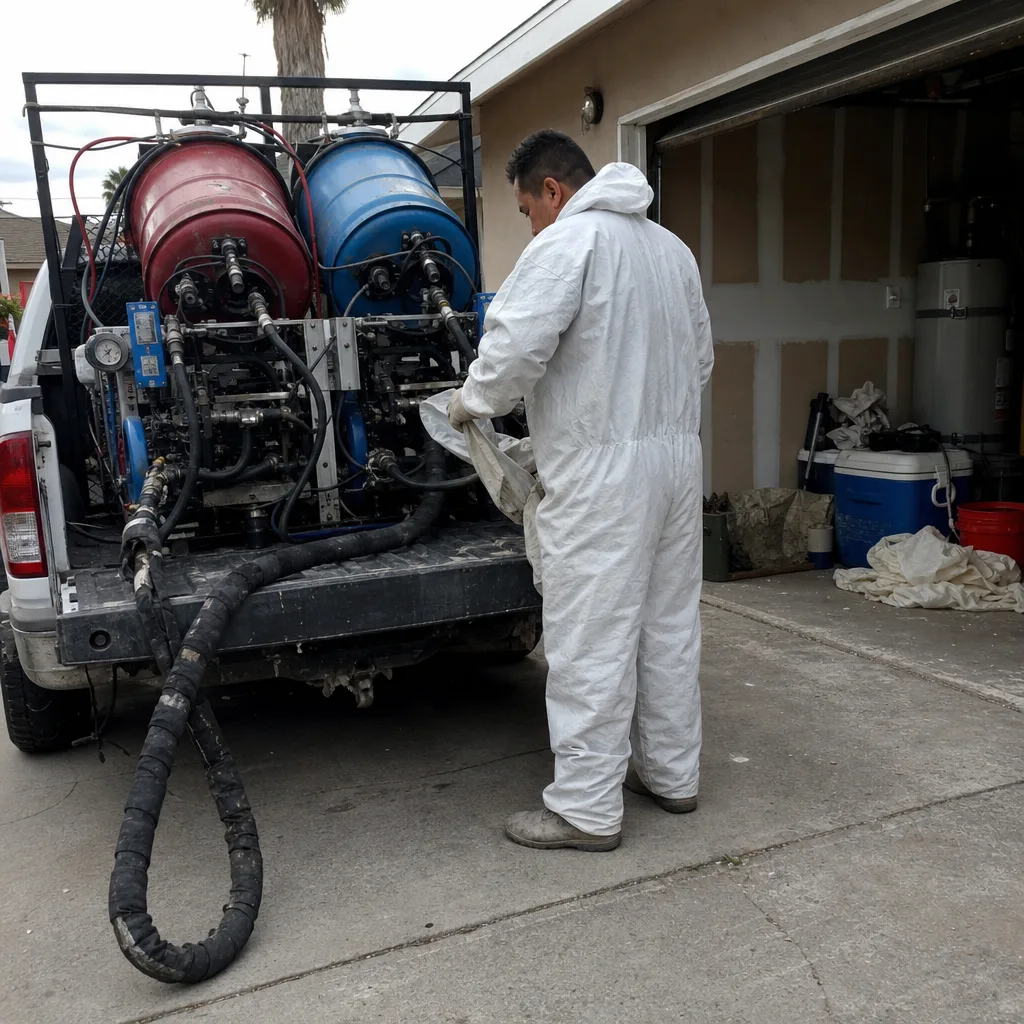
If you want a flat number – not a range, not a “call for a quote,” not a price that changes once the crew arrives – call (626) 415-3454. We schedule a walkthrough, photograph the site, assess the air sealing scope, and deliver a written price and written scope before any work is scheduled. The 365-Day Done Right Promise applies to everything we do. If it’s not right, we make it right – and you have that in writing before anyone starts.
Estimates are free. The written price is yours to keep regardless of whether you hire us. And if you have a competing estimate already, bring it – we will read it with you.
Written by Wes Okafor, Owner at Envelope Insulation Co., serving El Monte since 2016.
Pricing reflects the El Monte market as of 2026. Topside Attic Insulation El Monte offers free estimates – call (626) 415-3454.
What Our Customers Say
"Turned up on time, protected the hallway, and the written scope matched what was actually done."
- Bruno S."Two other companies quoted to blow more insulation on top of what was there. These were the only ones who said the existing material had to come out first, and explained why."
- Clifford E."They photographed rodent damage in the old insulation that we had no idea about, and priced the exclusion work separately so we could decide."
- Harriet N.