
How Much Does Wall Insulation Cost in El Monte?
Wall insulation in El Monte, CA typically costs between $1,800 and $6,500 for a whole-home retrofit, depending on square footage, wall type, and the insulation material installed. Most single-story homes in the 1,200-1,600 sq ft range – common in El Monte’s older residential neighborhoods like North El Monte and Garvey Avenue corridor – land between $2,200 and $3,800 when blown-in fiberglass or cellulose is used. Jobs that require spray foam or involve removing existing degraded insulation run higher, and we’ll break those numbers down below.
At Envelope Insulation Co., every estimate is written before any work starts – that’s not a policy we bend. Wes Okafor built the business that way in 2016, and it hasn’t changed. If you want a number for your specific home, call (626) 415-3454 and we’ll schedule a no-obligation estimate.
Wall Insulation Cost Breakdown (2026)
Our Wall Insulation services pricing in El Monte breaks down by material first, then by method. Retrofit work – adding insulation to existing walls without tearing out drywall – is the most common project we see in this market, and it uses different materials than new construction. The table below reflects labor and materials for a typical El Monte home:
| Material / Method | Typical R-Value | Cost Per Sq Ft (Installed) | Whole-Home Estimate (1,400 sq ft home) |
|---|---|---|---|
| Blown-in fiberglass (retrofit) | R-13 to R-15 | $1.80 – $2.60 | $2,000 – $3,200 |
| Dense-pack cellulose (retrofit) | R-13 to R-15 | $2.00 – $2.90 | $2,200 – $3,600 |
| Fiberglass batt (open wall) | R-11 to R-21 | $1.20 – $1.80 | $1,400 – $2,400 |
| Mineral wool / Rockwool batt (open wall) | R-15 to R-23 | $1.80 – $2.70 | $2,000 – $3,400 |
| Open-cell spray foam | R-13 to R-19 | $2.50 – $4.00 | $3,000 – $5,200 |
| Closed-cell spray foam | R-21 to R-28 | $4.00 – $6.50 | $4,800 – $8,500 |
| Old insulation removal + replacement | Varies | Add $0.80 – $1.50/sq ft | Add $900 – $1,800 to base |
A few things worth knowing about these ranges. First, “whole-home estimate” above assumes a standard single-story wood-frame home with 8-foot ceilings and accessible wall cavities. El Monte has a high percentage of homes built between 1945 and 1975 – stucco exteriors over wood framing are typical – and retrofit blown-in is almost always the right call for those homes because it avoids drywall demolition. Second, homes with plaster walls (more common in older sections near Valley Boulevard) add complexity: plaster is harder to drill cleanly, and patching takes more time, which adds roughly $300-$600 to the labor estimate depending on the wall count.
Dense-pack cellulose, sourced from GreenFiber and similar manufacturers, gets installed at a higher density than standard blown-in – typically 3.5 lbs per cubic foot versus 1.5 lbs – which gives it better resistance to settling and a slight edge on air resistance. That density is why the cost per square foot runs a bit higher than loose-fill fiberglass, even though the R-value ends up similar. Both are solid choices for El Monte’s climate; the difference usually comes down to whether the homeowner wants the higher air-resistance profile of cellulose or is working within a tighter budget.
What These Numbers Don’t Include
- Drywall repair or patching: If the installer drills from the exterior (common in stucco homes), the plugs are blended into the stucco finish. Interior drill-and-patch to drywall adds $400-$900 depending on wall count and patch size.
- Electrical or plumbing reroutes: Walls with active knob-and-tube wiring need an electrician before insulation can go in. We note this in the written scope before any work starts, not after.
- Air sealing at wall penetrations: This is a separate line item and, for us, a non-negotiable prerequisite. More on that below.
- Permit fees: Los Angeles County does not universally require a permit for insulation-only retrofit work, but homes under active renovation permits may require inspection. We confirm this for each job before writing the scope.
What Affects Wall Insulation Pricing in El Monte
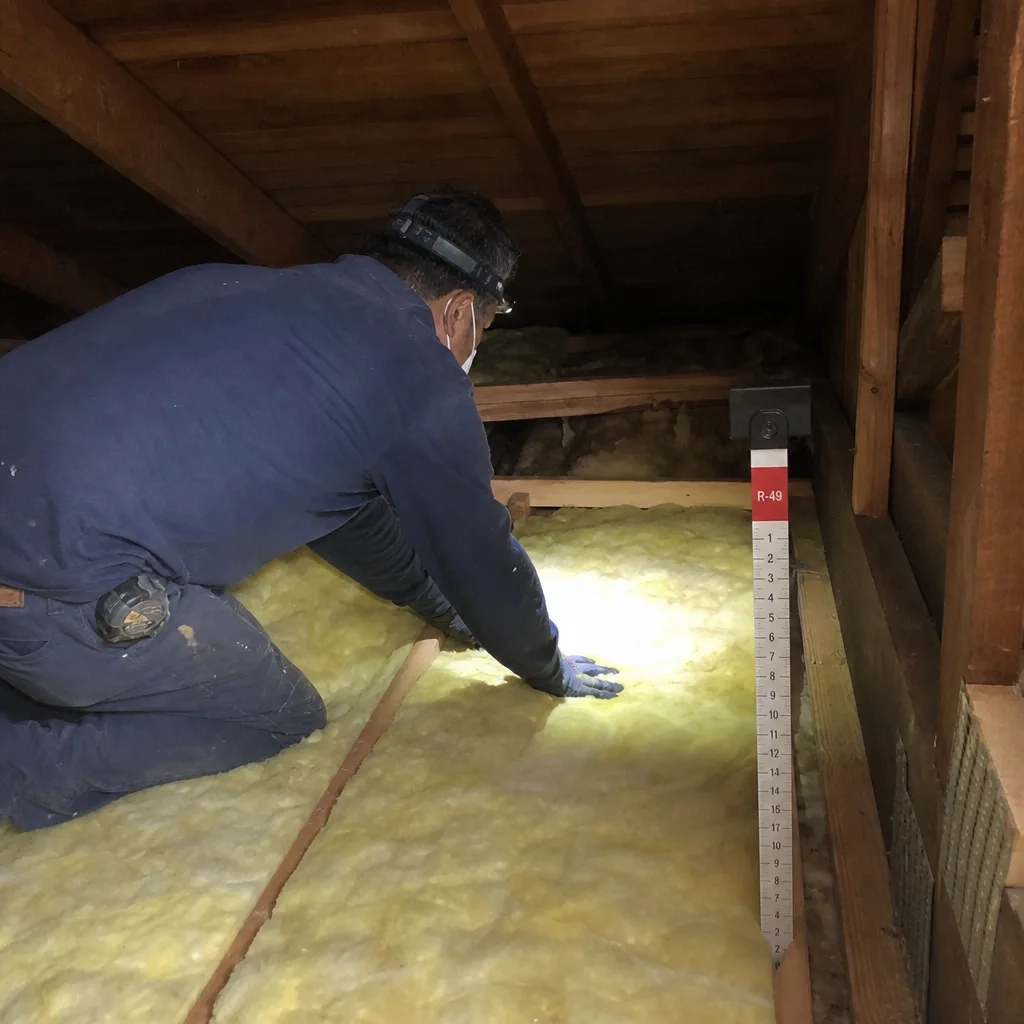
The same square footage can produce quotes that are $1,500 apart depending on the five factors below. Understanding them before you compare estimates will save you the frustration of wondering why two contractors are so far off from each other.
- Home age and wall construction type: El Monte’s housing stock skews older. Homes built before 1980 on streets like Ramona Boulevard or Santa Anita Avenue often have no existing wall insulation at all, which is actually ideal for retrofit work – empty cavities fill cleanly. Homes built in the 1980s and 1990s sometimes have thin fiberglass batts already present, which complicates dense-pack installation and may require partial removal before new material goes in.
- Access method – exterior drill vs. interior drill vs. open wall: For retrofit work, crews either drill small holes through the exterior stucco/sheathing, drill from inside through the drywall, or access the cavity through an open wall during a remodel. Exterior drilling and patching into stucco is the least disruptive to the homeowner and the most common method in El Monte, but it requires an experienced crew to patch cleanly. Interior drilling is faster but leaves finished patches visible. Open-wall access during a remodel is the cheapest per square foot because there’s no patching at all.
- El Monte’s climate and the case for higher R-values: The San Gabriel Valley sits inland from the coast, which means El Monte sees summer highs that regularly push past 95-100°F – noticeably hotter than coastal Los Angeles. That thermal load means the standard R-13 batt that’s code-minimum for new construction may underperform for homeowners who are trying to meaningfully cut cooling costs. We often recommend dense-pack to R-15 or a spray foam approach on sun-facing west and south walls specifically, which adds cost but produces a measurable difference on the utility bill.
- Wall height and cavity depth: Standard 2×4 framing allows for roughly 3.5 inches of cavity depth, which limits batt insulation to R-13 to R-15. Homes with 2×6 framing (less common in El Monte but found in some 1990s construction near the 10 freeway corridor) can accommodate R-19 to R-21 batts or higher-density spray foam, which costs more but performs better. Two-story homes cost more to complete simply because upper-floor walls require more staging and time.
- Air sealing requirements: This is the factor most homeowners don’t see coming. A blower-door test – a pressurization measurement that shows, in a single number, how much conditioned air the home is losing – often reveals significant leakage at wall outlets, switch plates, and top-plate penetrations. At Envelope Insulation Co., we treat air sealing as a hard prerequisite, not an optional add-on. Insulating over unsealed walls doesn’t fix air movement; it just adds thermal resistance while conditioned air keeps escaping. Air sealing at wall penetrations typically adds $400-$900 to a wall insulation project, but it’s the part that makes the blower-door number actually change.
- Material availability and fuel surcharges in the LA market: Material pricing in the greater Los Angeles supply chain has remained elevated since 2022. Spray foam in particular – Icynene and Demilec are two of the lines we use – has seen periodic pricing swings tied to chemical feedstock costs. The ranges on this page reflect early 2026 pricing in the El Monte market, but jobs quoted 60 or more days out may see slight adjustments if raw material costs shift. That’s why getting a written price before work starts matters: it locks the number.
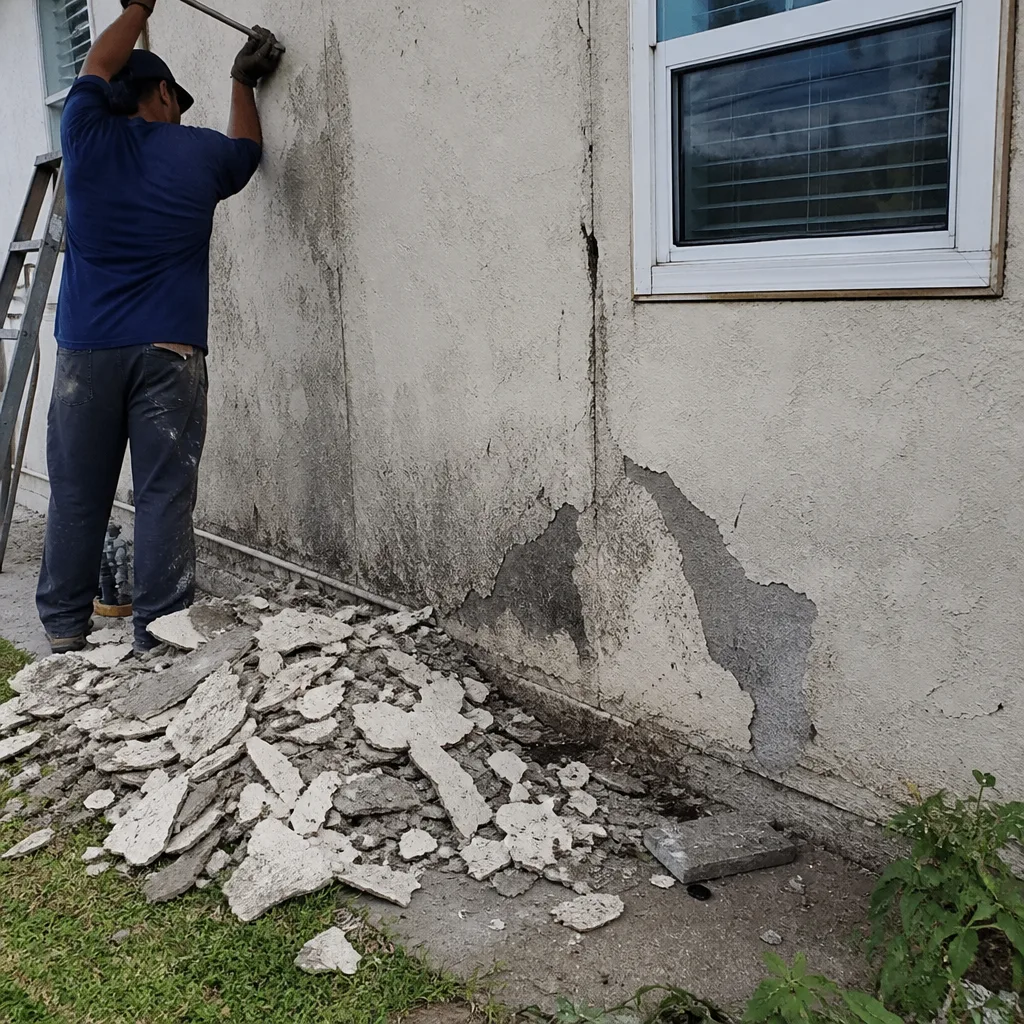 Before
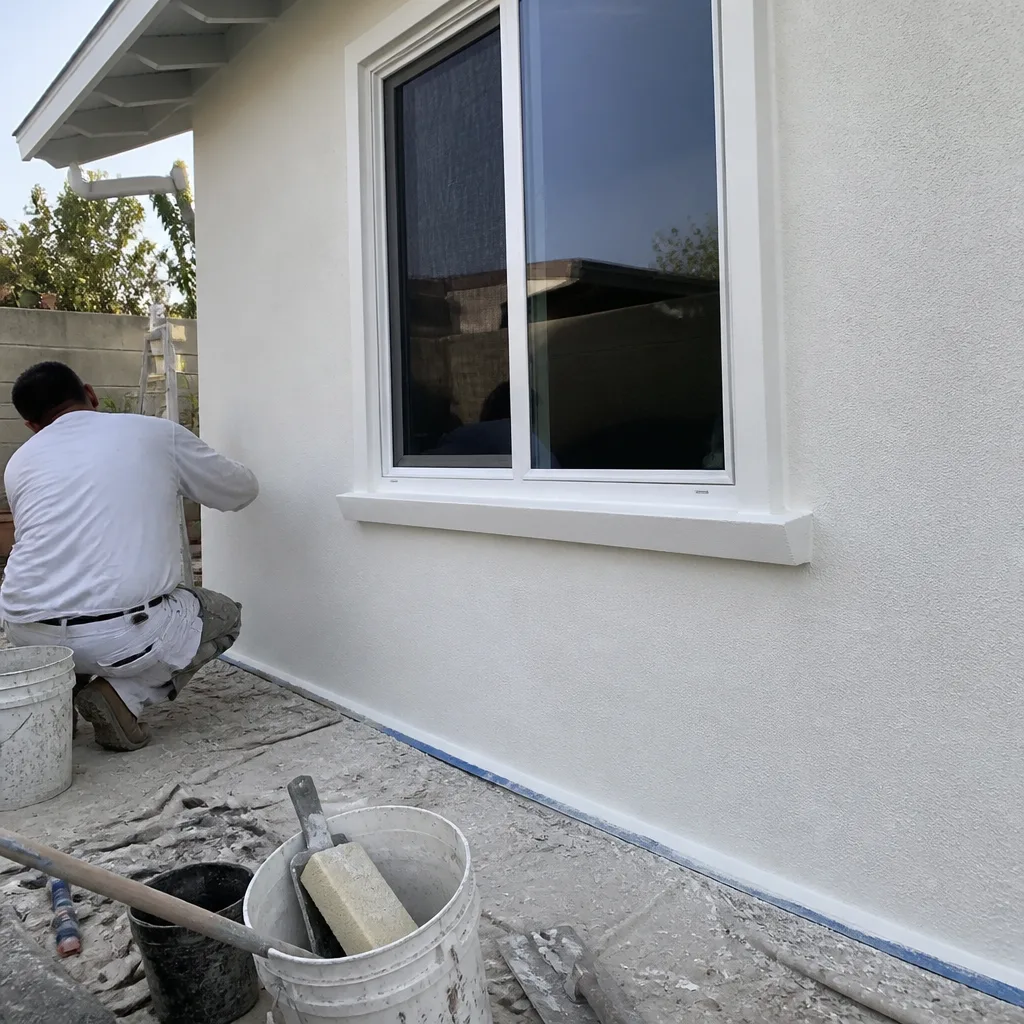 After
AfterWall Insulation and Air Sealing: Why the Order Matters
This section exists because we see the same pattern on re-inspection jobs in El Monte: a homeowner paid for wall insulation five or six years ago, the utility bills barely moved, and when we run a blower-door test – measuring the home’s air leakage in CFM50, or cubic feet per minute at 50 pascals of pressure – the number is nearly identical to what an unsealed home would show. The insulation is there. The air sealing wasn’t done first.
Blown-in cellulose and fiberglass both slow conductive heat transfer through the wall assembly. Neither one stops air movement through gaps at outlet boxes, plumbing penetrations, or poorly fitted top plates. When warm outside air in El Monte’s summer heat finds a gap, it doesn’t politely diffuse through the insulation – it channels through the path of least resistance. The insulation does almost nothing to stop that convective bypass.
The right sequence is: identify and seal the air leakage points first, verify with a blower-door reading, then install insulation over a sealed assembly. That’s the only order that produces a documented result. We publish before-and-after blower-door numbers on every applicable job – not because it’s a selling point, but because it’s the only honest way to show whether the work performed as intended. If you received an insulation quote that didn’t mention air sealing, that’s worth asking about before signing anything.
For more on the full scope of what Wall Insulation in El Monte includes at Envelope Insulation Co., that page covers the complete process from initial blower-door baseline through written scope to final documentation.
How to Save on Wall Insulation in El Monte
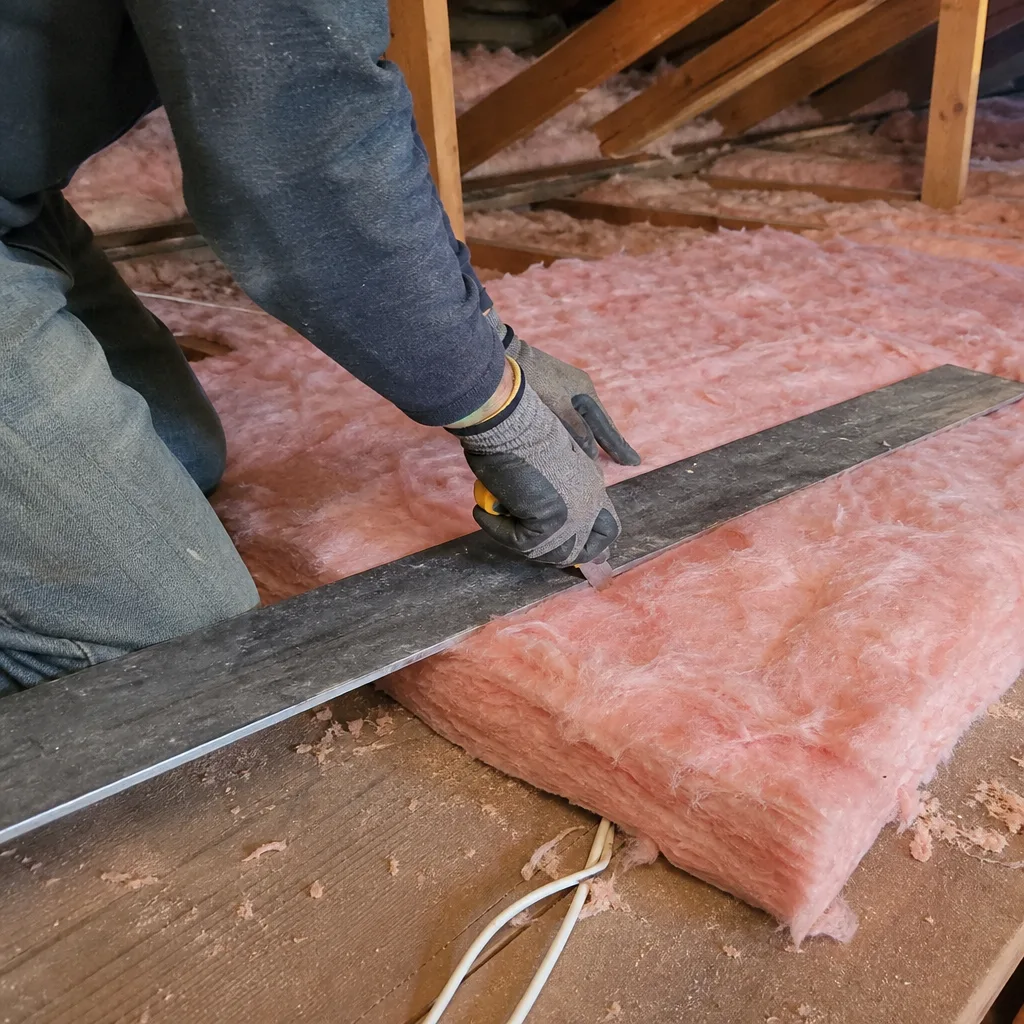
Saving money on wall insulation doesn’t mean shopping for the lowest number. It means making sure you’re comparing the same scope of work and taking advantage of programs that are specifically available in El Monte and the broader LA County market. Here’s how to do that.
1. Use California’s Energy Upgrade CA Rebates
Southern California Edison and Southern California Gas both administer rebate programs for insulation upgrades in single-family homes. The amounts shift annually, but in early 2026, SCE customers in El Monte have been able to access rebates of $200-$600 on qualifying wall insulation projects, with additional incentives for air sealing completed at the same time. The rebate is paid after the work is completed and verified, so it doesn’t reduce the upfront cost, but it reduces the net cost meaningfully. We document the project in a way that supports rebate applications, and we’ll tell you exactly what paperwork you need before we start.
2. Bundle Wall Insulation with Attic Work
Mobilization – getting a crew, a truck, and the blowing equipment to your address – is a fixed cost regardless of how much work gets done that day. Homeowners in El Monte who bundle attic insulation and wall insulation into a single project typically save $400-$700 compared to scheduling them separately. If your attic insulation is also underperforming (which we’ll see on the same blower-door test), scheduling both at once is the more cost-effective call. Our home page has the full list of services we offer so you can see what makes sense to combine.
3. Time the Project Around a Remodel
If you’re already planning to open walls for a kitchen renovation, bathroom remodel, or electrical panel upgrade, that’s the cheapest moment to insulate those wall cavities. Open-wall access eliminates the drilling, patching, and drying time that make retrofit work more expensive. A conversation with your contractor before drywall goes back up costs nothing. We’re available to coordinate with general contractors in El Monte and can give a firm written price on short notice.
4. Get the Air Sealing Done at the Same Time
We know this sounds like an upsell. It isn’t. Air sealing and wall insulation scheduled together share the same mobilization, the same written scope, and the same blower-door visit. Doing them separately means paying twice for those fixed costs. More to the point, insulation installed over unsealed penetrations performs worse – and a homeowner who paid for insulation and didn’t see a meaningful change in their utility bills has essentially paid for an incomplete job.
5. Bring Us a Competing Written Estimate
We offer a Free Second Opinion on any written estimate. This isn’t a sales tactic. It’s a line-by-line read of what you’ve been quoted, what’s included, what’s not, and whether the scope addresses air sealing. We’ve reviewed estimates in El Monte that quoted wall insulation without mentioning air sealing at all, or that listed R-13 batt for south-facing walls on homes that would benefit from R-21 or higher. Knowing what you’re actually buying protects you. Call (626) 415-3454 to schedule that review – there’s no charge and no obligation attached to it.
6. Ask About Financing
Some insulation projects, particularly whole-home jobs that include air sealing, attic work, and walls, run $5,000-$9,000. Spreading that over 12-24 months at a reasonable rate is often more practical than waiting. We’ll let you know what’s available when we provide the written estimate.
What El Monte Homes Specifically Need: A Few Observations from the Field
El Monte sits roughly 13 miles east of downtown Los Angeles in the San Gabriel Valley floor, at an elevation of about 285 feet. It doesn’t get the marine layer that buffers coastal neighborhoods. Summers run hot – triple digits in July and August aren’t unusual along the 605 corridor – and winters drop enough at night that heating costs are real, not negligible. That thermal range matters when choosing insulation because you’re solving for two seasons, not one.
The majority of the housing stock we work on in El Monte was built between 1950 and 1975. These homes were constructed to whatever code existed at the time, which did not require wall insulation at all for most of that period. A 1962 ranch house on Garvey Avenue with original walls almost certainly has empty stud cavities. That’s not a criticism of the home – it’s just the reality of that construction era, and it means the thermal envelope is essentially uninsulated on the sides. An attic that’s been upgraded to R-38 and walls that are still R-0 is a common mismatch we find in this neighborhood.
In North El Monte, particularly in the blocks west of Peck Road, we’ve seen a recurring issue with homes that were insulated in the mid-2000s using kraft-faced fiberglass batts that weren’t installed correctly – facing direction reversed, batts compressed into cavities smaller than the batt’s rated width, or gaps left at top and bottom plates. Those jobs usually test poorly on blower-door even with insulation present, and in some cases the compressed batts have degraded to the point where replacement is the more cost-effective answer rather than working around them.
Stucco homes, which are essentially universal in El Monte, require specific drilling and patching technique for retrofit work. Stucco over wire lath over wood sheathing is the most common assembly. Drill holes are typically 2 inches in diameter, positioned between each stud bay, and the plugs are filled with matching stucco mix and textured to blend. When done correctly, the patches are nearly invisible within a season of weathering. When done by crews who don’t specialize in stucco repair, the patches stand out for years. It’s worth asking, before anyone starts, whether the crew has stucco patching experience specifically.
FAQs – Wall Insulation Cost in El Monte
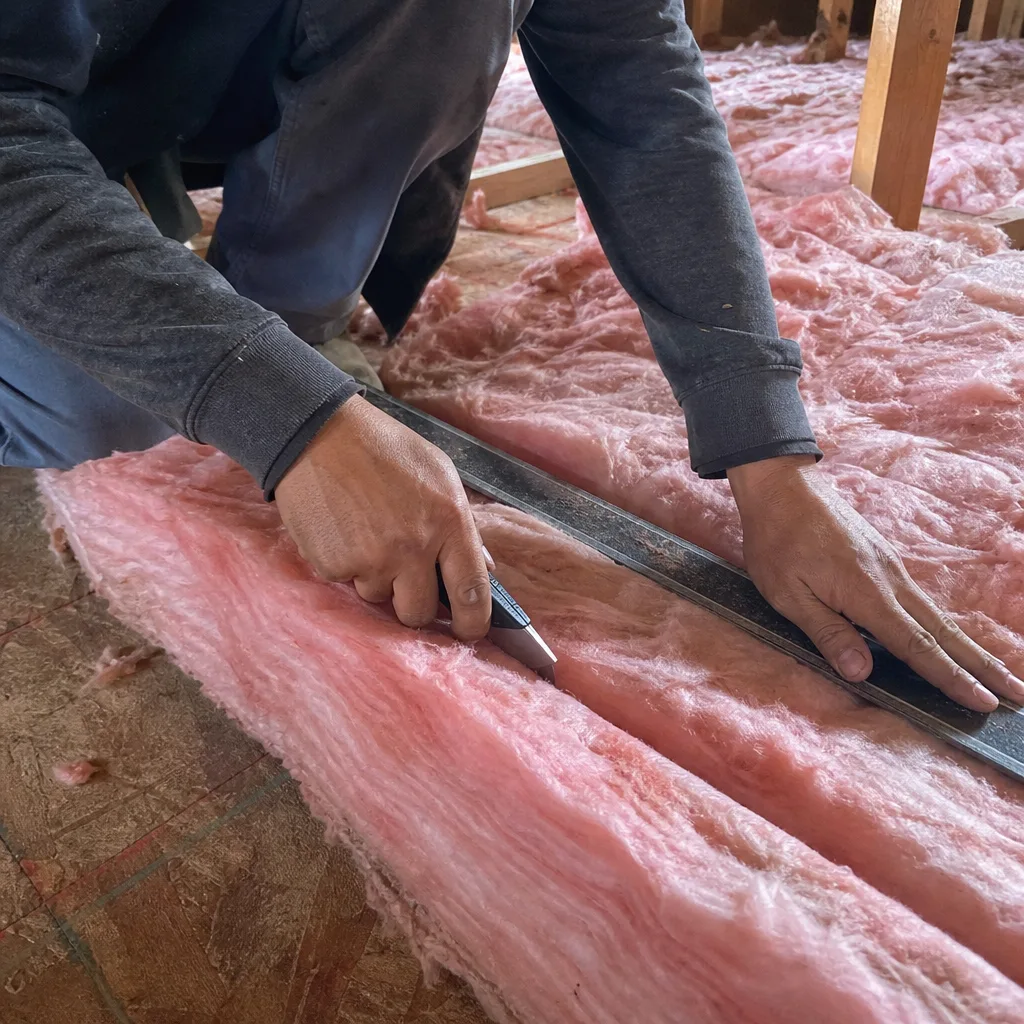
How much does it cost to insulate walls in El Monte, CA in 2026?
Most wall insulation projects in El Monte run between $1,800 and $6,500 for a whole home, with the most common range for a 1,200-1,500 sq ft single-story home landing between $2,200 and $3,800 using blown-in fiberglass or dense-pack cellulose. Spray foam jobs run higher – typically $4,800 to $8,500 for the same home size using closed-cell. The biggest variable is access method: retrofit through stucco costs more than open-wall installation during a remodel, but it avoids the disruption of interior demolition. Call (626) 415-3454 for a written estimate specific to your home – we’ll give you a flat number before any work starts.
Is blown-in or spray foam better for older El Monte homes?
For most pre-1980 stucco homes in El Monte with empty wall cavities, blown-in cellulose or dense-pack fiberglass is the better starting point – it’s less expensive, fills irregular cavities well, and can be installed without opening the walls. Dense-pack cellulose runs $2.00-$2.90 per square foot installed and reaches R-13 to R-15, which is sufficient for standard 2×4 framing. Spray foam becomes the better call when there’s a moisture management concern, when the homeowner wants a higher R-value than blown-in can achieve in a 3.5-inch cavity, or when the wall assembly has structural gaps that blown-in won’t fully address. On south- and west-facing walls in El Monte, where the afternoon heat load is highest, closed-cell spray foam at R-21 or higher makes a measurable difference – but the cost difference is real, so it’s worth running the numbers.
Do El Monte homes need permits for wall insulation?
In most cases, a standalone wall insulation retrofit in El Monte does not require a building permit under Los Angeles County code. However, if the insulation work is part of a larger remodel that already has an open permit, the insulation may need to be inspected before drywall closes the wall. Homes with knob-and-tube wiring present a separate issue: most insulation contractors, including us, will not insulate a wall with active knob-and-tube wiring without an electrician’s clearance first, because covering that wiring creates a fire and code compliance problem. We confirm permit status for each job in the written scope before any work starts, so there are no surprises on inspection day.
How long does wall insulation installation take?
A typical retrofit wall insulation job in a 1,400 sq ft single-story El Monte home takes one full day for a two-person crew – drilling, blowing, and stucco patching included. Homes with more complex framing, multiple stories, or walls that require interior access rather than exterior drilling may take a day and a half. Open-wall jobs during a remodel go faster, sometimes in half a day for the insulation portion alone. Air sealing, if scheduled at the same time, adds two to four hours depending on how many penetrations need to be addressed. We’ll give you a realistic time estimate in the written scope so you can plan accordingly.
Is wall insulation worth it in El Monte’s climate?
Yes, and the payback period is shorter than most homeowners expect. An uninsulated wall in El Monte loses a significant amount of conditioned air and allows radiant heat gain to transfer directly into the living space during the summer months when temperatures regularly exceed 95-100°F. In homes where the attic has already been upgraded, walls are often the single largest remaining gap in the thermal envelope. Most homeowners who complete wall insulation in El Monte report noticeably more consistent indoor temperatures within the first summer, and the utility bill changes are typically visible within two to three billing cycles. We can’t promise a specific dollar figure on savings because those depend on usage habits, HVAC efficiency, and thermostat settings – but we can show you the before-and-after blower-door numbers that document what the air sealing accomplished, which is an objective measure of envelope improvement.
What’s the difference between R-13 and R-21 for wall insulation?
R-value measures thermal resistance – the higher the number, the more slowly heat moves through the material. In a standard 2×4 wall cavity (3.5 inches deep), you can fit R-13 to R-15 with fiberglass or cellulose, or up to roughly R-19 with open-cell spray foam. To reach R-21 or higher in the same cavity, you need closed-cell spray foam, which is denser and more expensive. In El Monte’s climate, the jump from R-13 to R-21 on south- and west-facing walls reduces afternoon heat gain noticeably, but it comes at a cost premium of roughly $1,000-$2,500 on a typical home. Whether that’s worth it depends on how long you plan to stay in the home and how aggressively you want to reduce cooling load. We’ll walk through the numbers with you during the estimate.
Why Documented Results Matter More Than a Low Quote
Wes Okafor started Envelope Insulation Co. in 2016 on a specific premise: most homeowners who paid for insulation had no way to verify whether it worked. A contractor installs material, the homeowner writes a check, and six months later they’re still running the AC at full blast wondering why the bill didn’t change. There’s no measurement, no record, no baseline to compare against.
The blower-door test – a pressurization reading that shows, in a single number, how much conditioned air the home is losing – is how you get that baseline. A reading before the work starts, and another after, tells you in objective terms whether the air sealing accomplished anything. We publish those numbers on every applicable job. Not as a marketing exercise, but because they’re the only honest answer to “did this work?”
The 9,000+ homes we’ve completed since 2016 all started with a written price and closed with a documented record. That’s not a differentiator we perform for the website. It’s the actual operating procedure for every job, including the next one.
Under the Haven Standard: Written Price Before Any Work Starts – the flat price, written scope, and written warranty are delivered before anyone lifts a tool. The 365-Day Done Right Promise applies after: if it’s not right, we make it right. Those aren’t phrases we use loosely.
If you have a written estimate from another contractor and want a second read on it, call us. We’ll go through it line by line at no charge. And if you’re starting from scratch and want a written price for wall insulation in El Monte, (626) 415-3454) is the number.
Key Takeaways
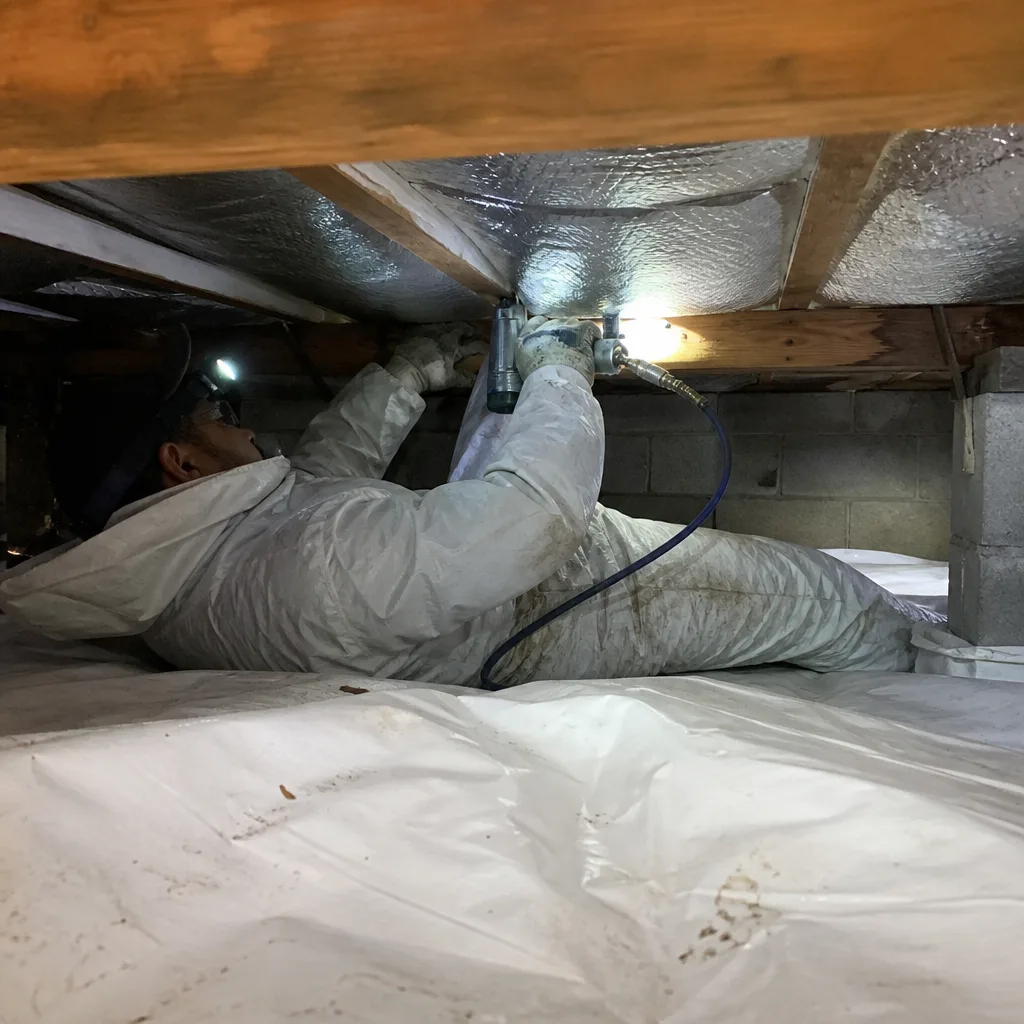
- Wall insulation in El Monte runs $1,800-$6,500 for a whole home; most single-story retrofit jobs land between $2,200 and $3,800.
- Dense-pack cellulose and blown-in fiberglass are the most practical retrofit options for El Monte’s older stucco homes. Spray foam costs more but reaches higher R-values in the same cavity depth.
- Air sealing before insulation is not optional if you want the blower-door number to change. Insulation alone doesn’t stop air movement through gaps.
- SCE and SoCal Gas rebates are available for qualifying insulation projects in El Monte and reduce net cost by $200-$600 in most cases.
- Bundling wall and attic work in one visit saves $400-$700 in mobilization costs compared to separate projects.
- Every estimate from Envelope Insulation Co. is written before any work starts. No exceptions, no surprises.
Get a Written Estimate for Wall Insulation in El Monte
If you’re ready to get a number for your specific home, call (626) 415-3454. We’ll schedule a time to walk the home, run a blower-door baseline if applicable, and deliver a written price with a flat scope and written warranty before anyone starts work. No estimate fees, no vague price ranges, no “call for a quote.” Just a written number you can compare against whatever else you’ve received.
Free Second Opinion on any written estimate – bring us what you have and we’ll read it with you. That offer doesn’t expire and doesn’t require you to book a job with us afterward.
Pricing reflects the El Monte market as of 2026. Topside Attic Insulation El Monte offers free estimates – call (626) 415-3454.
Written by Wes Okafor, Owner at Envelope Insulation Co., serving El Monte since 2016.
What Our Customers Say
"Turned up on time, protected the hallway, and the written scope matched what was actually done."
- Bruno S."Two other companies quoted to blow more insulation on top of what was there. These were the only ones who said the existing material had to come out first, and explained why."
- Clifford E."They photographed rodent damage in the old insulation that we had no idea about, and priced the exclusion work separately so we could decide."
- Harriet N.