
Blown-In Attic Insulation in El Monte, CA
Blown-in attic insulation is loose-fill material – cellulose, fiberglass, or mineral wool – mechanically blown through a hose to fill an attic floor to a target depth and R-value. Most El Monte homes built before 1990 are running R-11 to R-19 in the attic; current California Title 24 recommendations call for R-38 to R-60 in our climate zone. Reaching that target in a single visit, without tearing out walls, is exactly what our Attic Insulation services do well.
At Topside Attic Insulation El Monte, we don’t start the blower until the attic floor is sealed. Top plates, can-light penetrations, plumbing chases, wiring holes – every gap gets closed with foam or caulk before a single bag of material is touched. That sequence matters because blown-in insulation over an unsealed floor is essentially a very expensive filter: it slows air but it doesn’t stop it, and your cooling system keeps working overtime through every summer in the San Gabriel Valley. Call us at (626) 415-3454 to schedule a free estimate, or read through the full Attic Insulation in El Monte overview to understand how blown-in fits into the broader service.
Wes Okafor has led Topside Attic Insulation El Monte under The Haven Standard since 2016, and the rule is simple: a written price before any work starts, a documented photo record when the crew leaves, and before-and-after blower-door numbers on every applicable job so you can verify the result yourself.
When You Need Blown-In Attic Insulation
- Your cooling bills spike every June and stay high through October. El Monte sits in the eastern San Gabriel Valley, where summer afternoons regularly push past 95°F. If your attic has less than R-30 of effective insulation – meaning actual settled depth, not what the builder’s spec sheet said – radiant heat is moving through your ceiling faster than your HVAC can compensate.
- The existing insulation is old, compressed, or contaminated. Fiberglass batts from the 1970s and 1980s settle and lose R-value over time. If what’s up there looks gray, matted, or smells musty, it isn’t performing at its rated value. In those cases we remove it first, seal the floor, and then blow in fresh material – the sequence doesn’t change.
- You have recessed can lights that aren’t IC-rated. Older El Monte homes – particularly the tract builds in the Norwood and South El Monte corridors – often have non-IC cans punched through the ceiling. These are open air channels. We seal them with rated covers before any insulation goes in. Covering an unsealed can with blown-in material is a fire and performance problem we won’t create for you.
- You’re adding a room or converting a garage and want the rest of the house to match. Spot-adding insulation to a newly conditioned space while the rest of the attic is thin is a common El Monte upgrade. Blown-in fills around existing framing, ductwork, and obstructions that batts can’t reach cleanly.
- Your home inspection flagged insufficient attic insulation. Real estate transactions in El Monte frequently surface attic insulation deficiencies on inspection reports. A pre-close or post-close blown-in job is one of the faster ways to resolve that line item with documentation the buyer or lender can actually read.
- You can hear your neighbors, street traffic, or aircraft overhead. El Monte is about two miles from El Monte Airport, and sound transmission through a thin ceiling is real. Dense-pack cellulose adds meaningful acoustic damping – not a soundproofing system, but a noticeable reduction in mid-frequency noise transfer through the ceiling plane.
Our Blown-In Attic Insulation Process
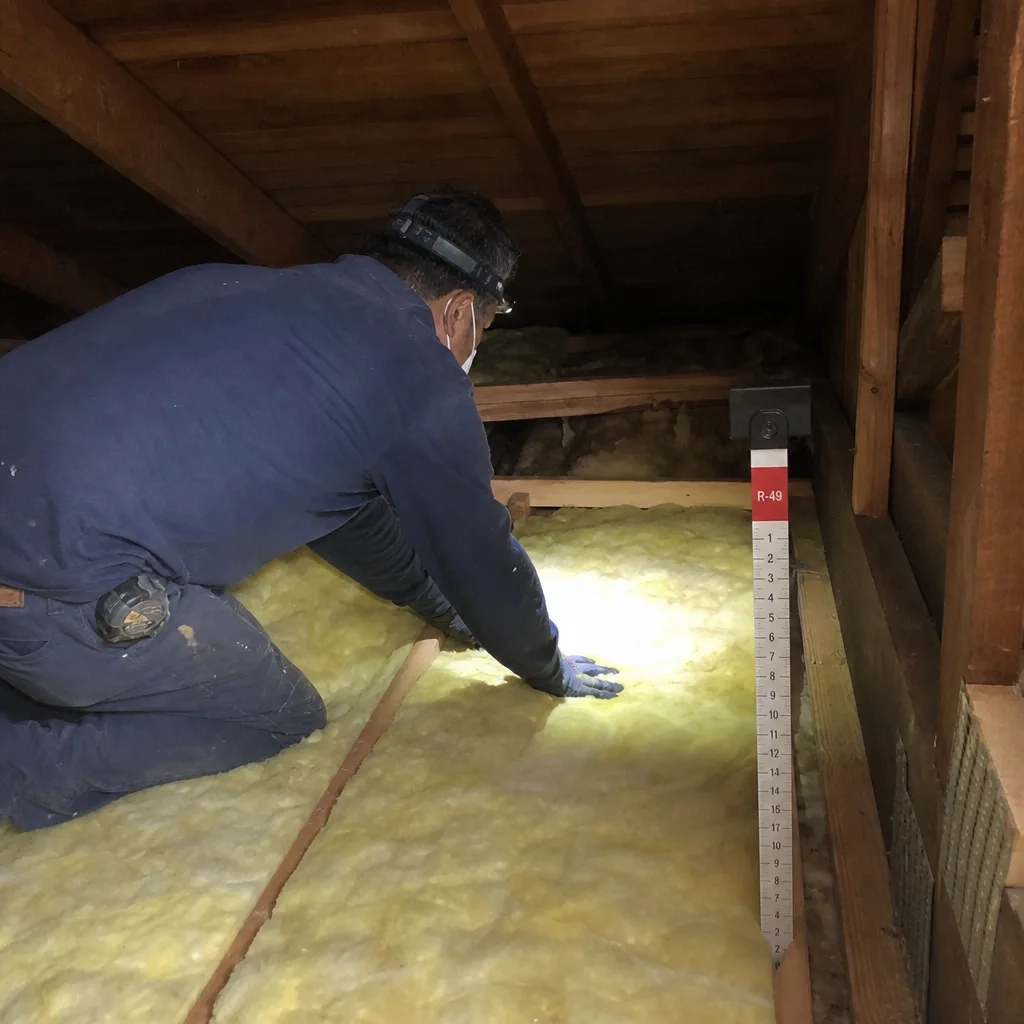
- Free estimate and attic assessment. We come out, access the attic, measure the existing depth and material type with a calibrated depth probe, and run a visual inspection of the floor for air-leak locations. You get a written price before we schedule anything. Under Haven Standard Clause 1, no work starts without it – no exceptions.
- Blower-door baseline reading. On applicable jobs, we run a blower-door test – a pressurization measurement that produces a single CFM50 figure showing exactly how much conditioned air the home’s envelope is losing – before we touch anything. That number is your before. We publish it on the job record.
- Air sealing the attic floor. This is the step most contractors skip or upsell. We don’t. Top plates get sealed with two-component spray foam. Recessed light penetrations get rated covers and foam. Plumbing and wiring chases get stuffed and sealed. Every gap that connects conditioned space to the attic gets closed before the blower starts. In a typical El Monte single-family home from the 1960s to 1980s, this step alone can account for 30 to 50 percent of the total air-sealing result.
- Depth marking and material staging. We place calibrated depth rulers across the attic floor at regular intervals – these become reference points in the photo record and verify that the finished depth matches the R-value on your written scope. Material selection (GreenFiber cellulose and Owens Corning fiberglass are the two we pull from most often for El Monte attics) is confirmed with you in writing before installation.
- Blown-in installation to specified depth. The blower hose is staged from the attic hatch or, on larger jobs, through a gable vent to minimize disruption to living areas. We fill to the marked depth, working methodically from the far end of the attic toward the access point. Settled depth is checked against each ruler. If any section reads short, we come back over it before the hose is broken down.
- Post-installation documentation and blower-door close-out. The crew photographs the finished attic floor, every depth ruler in frame, and the sealed penetrations. On applicable jobs, we run the post-installation blower-door test. You receive the before number, the after number, the photo record, the written scope, and the written warranty before we leave the driveway. That’s the Haven Standard. That’s what leaving looks like on every job we do in El Monte.
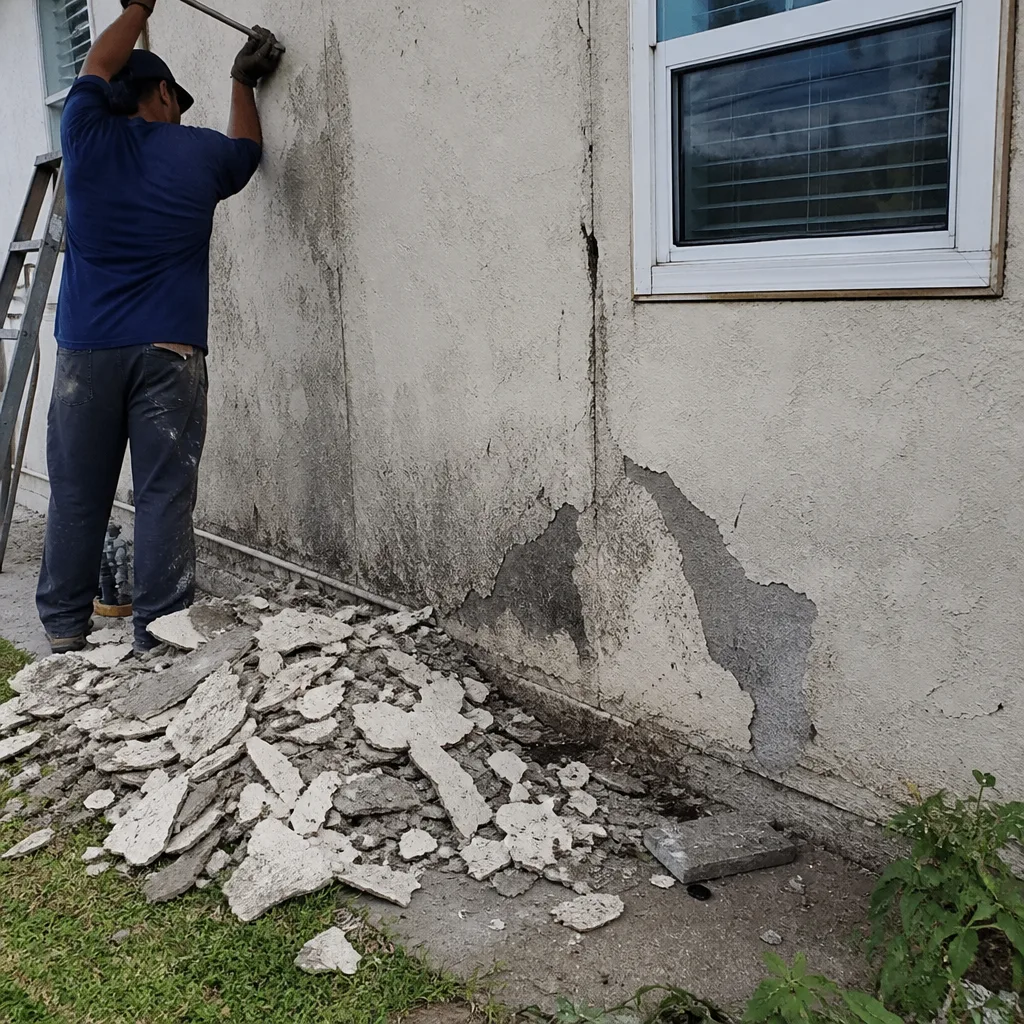 Before
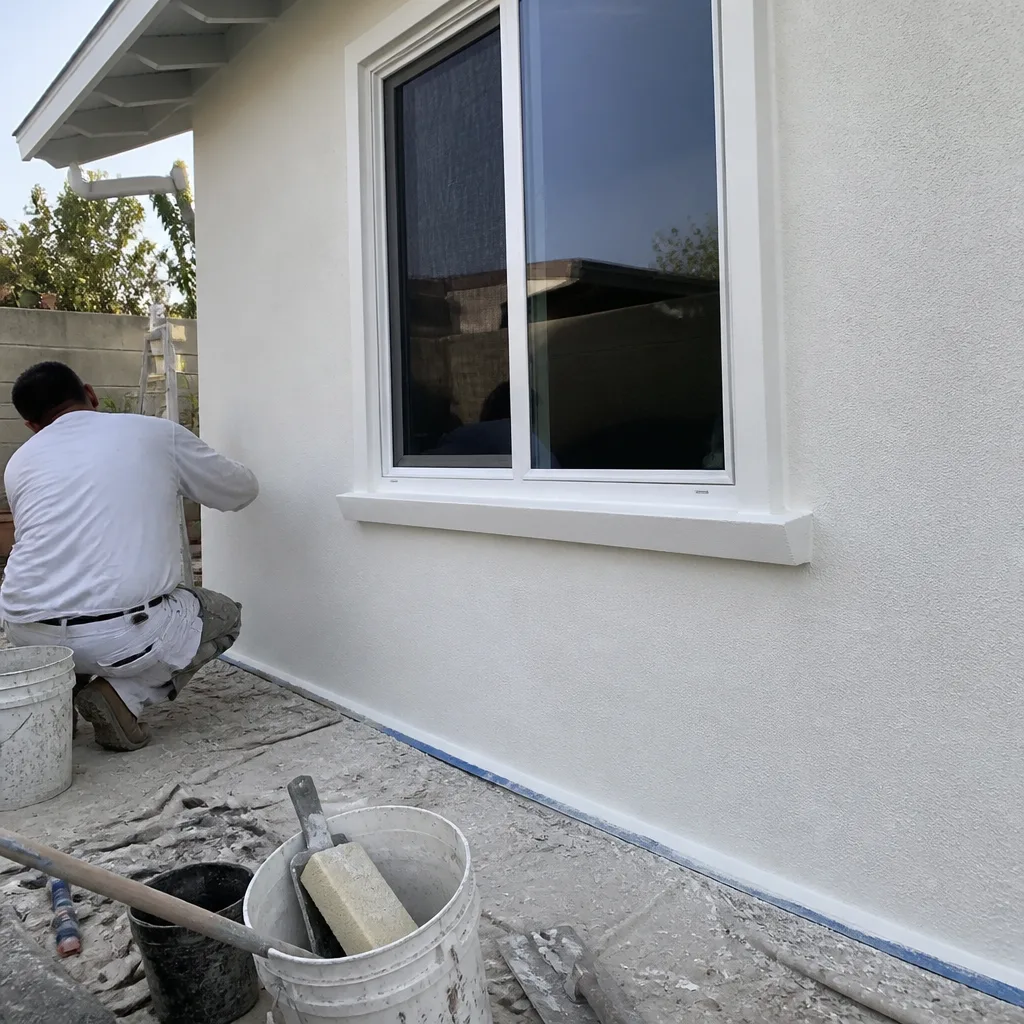 After
AfterBlown-In Attic Insulation Pricing in El Monte
Most blown-in attic insulation jobs in El Monte run between $1,200 and $3,800 for a single-family home. The range is wide because the variables are real: existing depth, attic square footage, access conditions, and whether air sealing is being done at the same time (it should be, and with us it always is).
Here’s how the numbers break down by the factors that actually move the price:
| Factor | Typical Range / Impact |
|---|---|
| Attic square footage (800-1,200 sq ft, common in El Monte) | $1,200 – $2,000 for blown-in material and labor |
| Attic square footage (1,200-2,000 sq ft) | $1,800 – $3,200 |
| Air sealing (always included before we blow) | $300 – $700 depending on penetration count |
| Existing insulation removal (if required) | $800 – $1,800 added cost |
| R-value target upgrade (R-19 to R-49 vs. R-30 to R-49) | $200 – $500 material cost difference |
| Access difficulty (low-pitch roof, tight eave clearance) | $150 – $400 labor adjustment |
A few things worth knowing about El Monte pricing specifically: homes in the older sections near Tyler Avenue and Ramona Boulevard tend to have lower pitch roofs and tighter eave clearances than newer builds near the Peck Road corridor. That affects staging time. It doesn’t change the R-value you need – it changes how long it takes to get there. We price for the actual attic, not an average.
California’s Energy Upgrade CA program and TECH Clean California rebates have at various points covered portions of blown-in insulation costs for qualifying homes – eligibility depends on utility provider and current program funding, so we walk through what’s available at the estimate. The written price you receive reflects every cost before work starts. Nothing is added after.
We also offer a free second opinion on any written estimate you’ve already received. Bring us the other contractor’s quote; we’ll read it with you and tell you exactly what it includes and what it doesn’t.
FAQs – Blown-In Attic Insulation
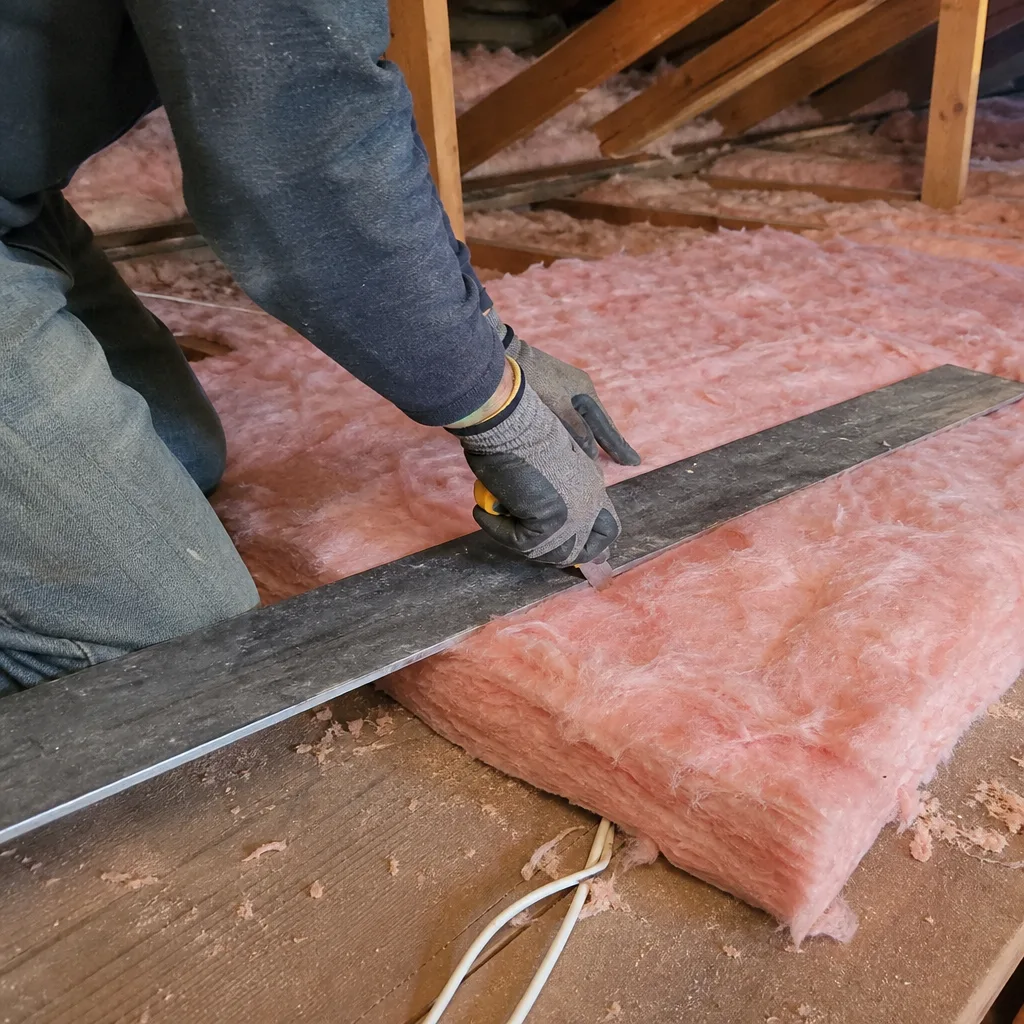
How long does blown-in attic insulation last in El Monte’s climate?
Blown-in cellulose and fiberglass both hold their rated R-value for 20 to 30 years under normal conditions, assuming the attic is dry and free of rodent activity. El Monte’s dry summers don’t accelerate degradation, but the occasional heavy rain event – and the associated roof leak risk – is the more common culprit when we find prematurely degraded material. We photograph the existing condition at every visit, so if moisture damage is present, it shows up in the job record before Attic Baffles & Ventilation Prep or any new material goes in. If rodent damage is present, we note it and can refer the appropriate remediation before insulation goes in. Blowing over a contaminated attic floor isn’t something we do. Call (626) 415-3454 if you want us to assess what’s currently up there.
What R-value do I need for my El Monte home?
California Title 24 targets R-38 to R-49 for Climate Zone 10, which covers most of El Monte and the surrounding San Gabriel Valley. If your home is currently at R-11 or R-19 – which is common in pre-1990 builds – you’re losing a measurable amount of conditioned air through the ceiling every day the system runs. The blower-door test gives us the before number; the post-installation test gives us the after. You see the delta in CFM50, not just an R-value on a spec sheet. That’s a real performance measurement, not a marketing claim. We’ll tell you the target R-value for your specific attic at the estimate, in writing, before any work is scheduled.
Is blown-in insulation better than batts for my attic?
Blown-in outperforms batts in most El Monte attics for one practical reason: coverage. Attic floors in this region are full of obstructions – old ductwork, cross-bracing, wiring runs, and framing that doesn’t follow any obvious grid. Batts leave gaps around every obstruction; blown-in fills around them. Those gaps are where thermal bridging and air movement happen. The only case where we’d recommend Attic Batt Insulation over blown-in is a deep, open attic with clean framing and no existing insulation – and even then, blown-in is often faster and produces a better result at the eaves. We’ll tell you which material suits your specific attic after we’ve seen it, and the recommendation comes with a written price so you can compare.
Do I need to leave my house during the installation?
For most blown-in jobs in El Monte, you don’t need to vacate. The blower equipment is staged outside or through the attic hatch, and settled dust from the installation stays in the attic rather than drifting into living areas. The exception is when old insulation is being removed first – that process generates more particulates, and we recommend you and any household members with respiratory sensitivities plan to be out during removal. We’ll tell you exactly what to expect at the estimate, in writing, so there are no surprises on install day. If your job requires removal, we confirm the scope and timing before any crew arrives.
What You Walk Away With
Every blown-in attic insulation job in El Monte closes with the same documented record: the written scope, the written warranty under the 365-Day Done Right Promise, the dated photo record showing finished depth at every ruler position, and – on applicable jobs – the before-and-after blower-door numbers in CFM50. That’s not a folder we hand you because it looks professional. It’s the only way you can actually verify that what was scoped got done, and that the air-sealing step produced a measurable result.
We’ve completed this process on more than 9,000 homes since 2016, every one with a written price before work started. Wes Okafor built the company on the premise that documentation isn’t a courtesy – it’s the job. If the numbers don’t show up in the record, the job isn’t done.
Topside Attic Insulation El Monte is part of the broader Envelope Insulation Co. family of building-envelope services. If you’re comparing blown-in attic insulation against other insulation approaches, the Attic Insulation in El Monte page covers the full picture. For any questions about what’s in your attic, what it should be, and what a documented upgrade looks like from estimate to close-out, call us at (626) 415-3454. A live person picks up, and the first step is always a free estimate with a written price – no work starts without it.
Written by Wes Okafor, Owner at Topside Attic Insulation El Monte, serving El Monte.