
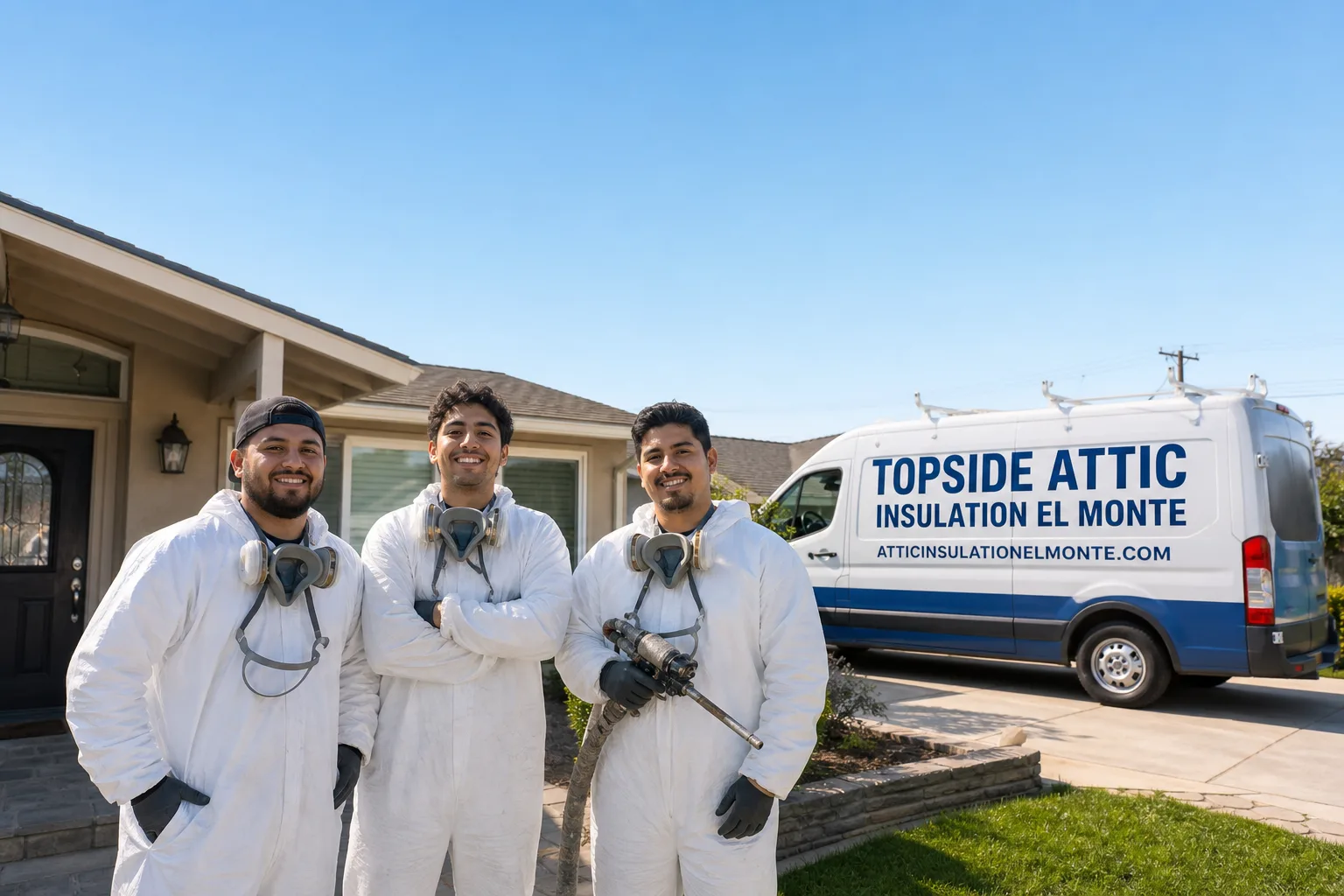
How Much Does Crawl Space Encapsulation & Vapor Barrier Cost in El Monte?
Crawl Space Encapsulation & Vapor Barrier services in El Monte, CA typically run between $3,800 and $8,500 for a standard single-family home, with most jobs landing around $5,200 to $6,400 when you factor in the vapor barrier, seam tape, and perimeter sealing. A standalone vapor barrier installation – without full encapsulation – usually falls between $1,200 and $2,800 depending on square footage and accessibility. At Envelope Insulation Co., every project starts with a written price before any work begins, so these ranges translate into a flat figure in writing before anyone touches your crawl space.
Crawl Space Encapsulation & Vapor Barrier Cost Breakdown (2026)
Below are the line-item price ranges we see in the El Monte market as of 2026. These reflect local labor rates, material costs, and the specific conditions that appear frequently in the San Gabriel Valley – older pier-and-beam foundations, narrow access hatches in homes built before 1975, and soils that hold moisture longer due to clay content in some neighborhoods near the Rio Hondo.
| Service Component | Typical Cost Range (El Monte, 2026) |
|---|---|
| Vapor barrier only (6-mil poly, up to 1,000 sq ft) | $1,200 – $1,900 |
| Vapor barrier only (6-mil poly, 1,000 – 2,000 sq ft) | $1,800 – $2,800 |
| Full encapsulation – liner, seams, perimeter seal (up to 1,000 sq ft) | $3,800 – $5,200 |
| Full encapsulation (1,000 – 2,000 sq ft) | $5,000 – $7,500 |
| Full encapsulation (2,000+ sq ft) | $7,000 – $8,500+ |
| Heavy-duty liner upgrade (12-mil or 20-mil reinforced) | +$600 – $1,400 |
| Crawl space vent sealing (per vent) | $35 – $90 |
| Drainage matting or dimple board | $400 – $1,100 |
| Dehumidifier installation (Santa Ynez Valley-rated unit) | $900 – $2,200 |
| Old vapor barrier removal and disposal | $300 – $750 |
| Mold remediation prep (if found during inspection) | $500 – $2,500 (separate specialist) |
What moves a job toward the higher end of these ranges? Mostly access and condition. Crawl spaces in El Monte’s older Norwood and South El Monte-adjacent neighborhoods tend to be low – sometimes under 18 inches of clearance – which slows every part of the process. When a technician has to drag materials on their back across a dirt floor, labor hours climb. Standing water, deteriorated existing poly sheeting that has to be hauled out, or evidence of rodent activity that needs to be addressed before the liner goes down – each of those conditions adds real cost. On the lower end, you have a clean, dry, accessible crawl space in a home with a clear access door and roughly 30 inches of working height.
Liner thickness matters, too. A basic 6-mil polyethylene sheet meets code minimums, but in a crawl space that sees foot traffic for HVAC maintenance or has rougher soil, a 12-mil or 20-mil reinforced liner holds up significantly longer. The cost difference over a 2,000-square-foot crawl space runs about $700 to $1,100 – usually worth it when the alternative is replacing a punctured liner in five years.
What Affects Crawl Space Encapsulation & Vapor Barrier Pricing in El Monte
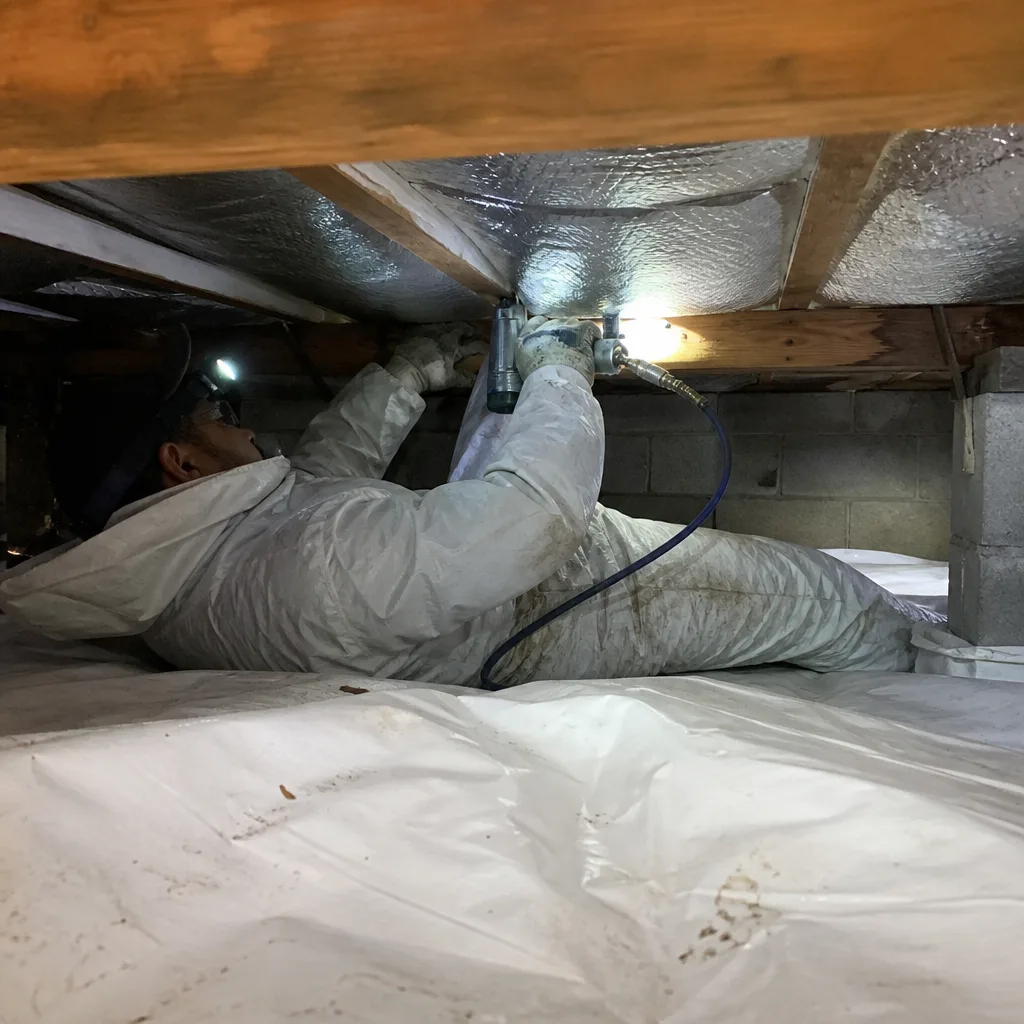
- Crawl space height and accessibility. Homes built in the 1940s and 1950s near Valley Boulevard and Peck Road often have crawl spaces under 24 inches tall. Lower clearance means slower installation – materials can’t be unrolled normally, and sealing around posts and piers takes longer. Tight access hatches sometimes require widening before work can begin, which adds a separate carpentry cost of $150 to $400.
- Square footage of the footprint. This is the single biggest driver of material cost. Liner, tape, vent covers, and perimeter seal are all priced per square foot. A 900-square-foot bungalow and a 2,400-square-foot ranch-style home in El Monte are not in the same price category, and anyone quoting you the same number for both without measuring first is guessing.
- Soil moisture and existing conditions. El Monte sits on the eastern edge of the Los Angeles Basin, and some parcels – particularly those within a few blocks of the San Gabriel River channel – have soil moisture levels that are higher than average for Southern California. A dry, sandy substrate is easier to seal over than wet, clay-heavy soil. Existing moisture intrusion may require drainage board or a dehumidifier, each of which is a separate line item.
- Old vapor barrier removal. Many El Monte homes have existing 4-mil or 6-mil poly sheeting that was installed decades ago and has since degraded – torn, bunched, or partially covered in mold. That material has to come out before new liner goes down. Removal and disposal typically adds $300 to $750 depending on how much there is and how badly it has deteriorated.
- Liner thickness and material grade. Standard 6-mil poly, heavier 12-mil, and reinforced 20-mil liners carry different price points. For a crawl space that HVAC technicians access regularly, or one where the soil is uneven and sharp, stepping up to 12-mil or 20-mil is the more durable choice. We source liner materials from manufacturers with documented performance specs – no proprietary product lock-in.
- Vent sealing versus vent leaving open. Building science has shifted on crawl space venting. Current best practice in most California climates, including El Monte’s semi-arid conditions, leans toward sealing foundation vents as part of a full encapsulation – which creates a conditioned or semi-conditioned crawl space. Sealing typically adds $35 to $90 per vent and requires coordination with your HVAC setup. A conditioned crawl space may require a small supply register or a dehumidifier; your written scope will spell out which applies to your home.
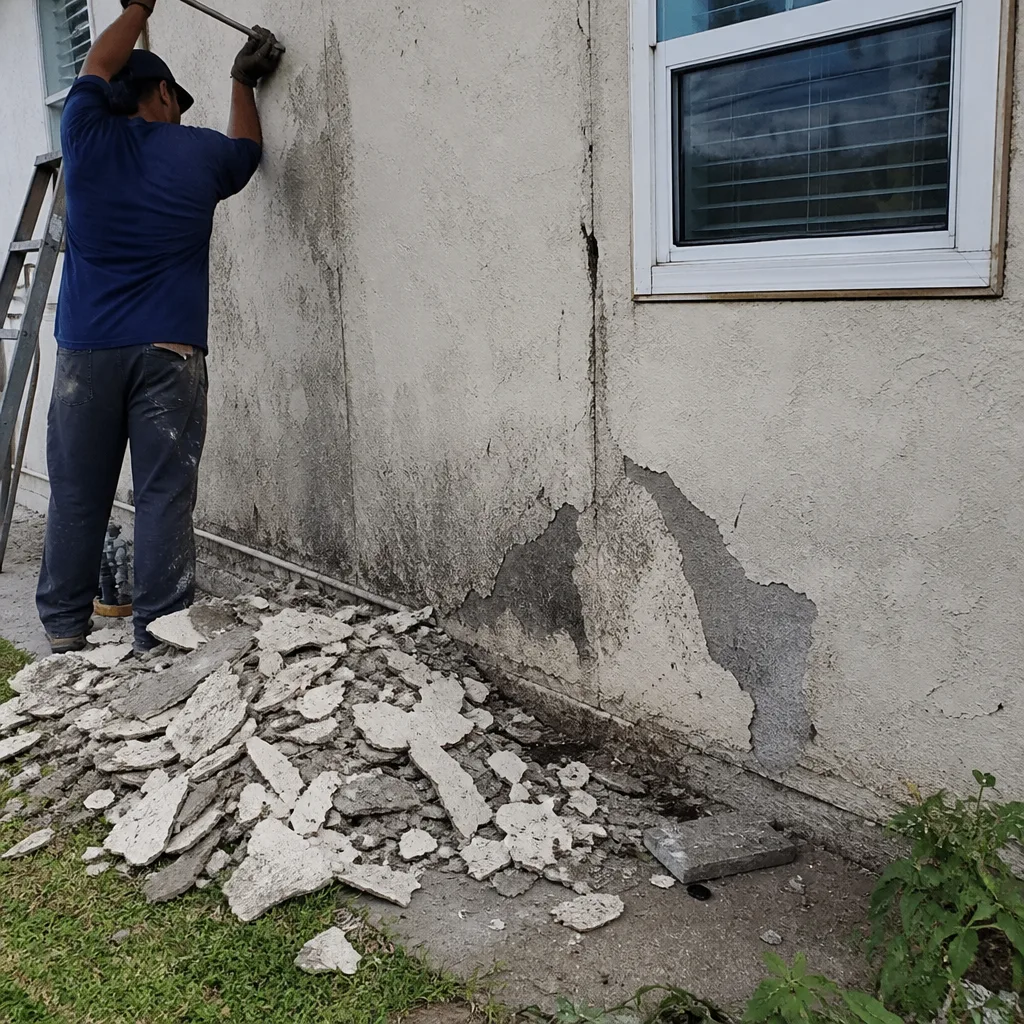 Before
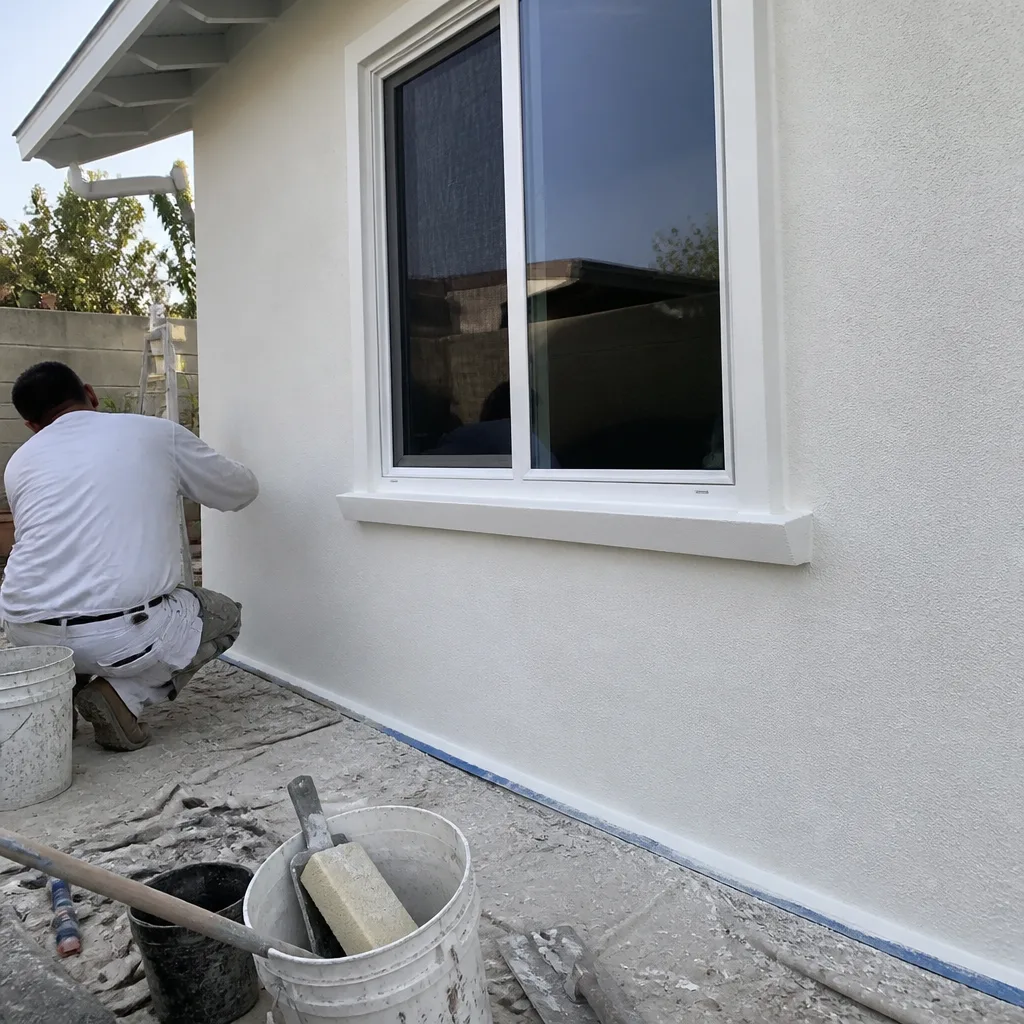 After
AfterFull Encapsulation vs. Vapor Barrier Only: Which Does Your El Monte Home Actually Need?
This question comes up on nearly every job in El Monte, and the honest answer depends on what your crawl space is doing. A vapor barrier – typically a single layer of polyethylene sheeting laid across the dirt floor with minimal sealing at seams and walls – is the baseline. It slows ground moisture from evaporating upward into your floor framing. It is not airtight, and it does not address the moisture that enters through foundation vents.
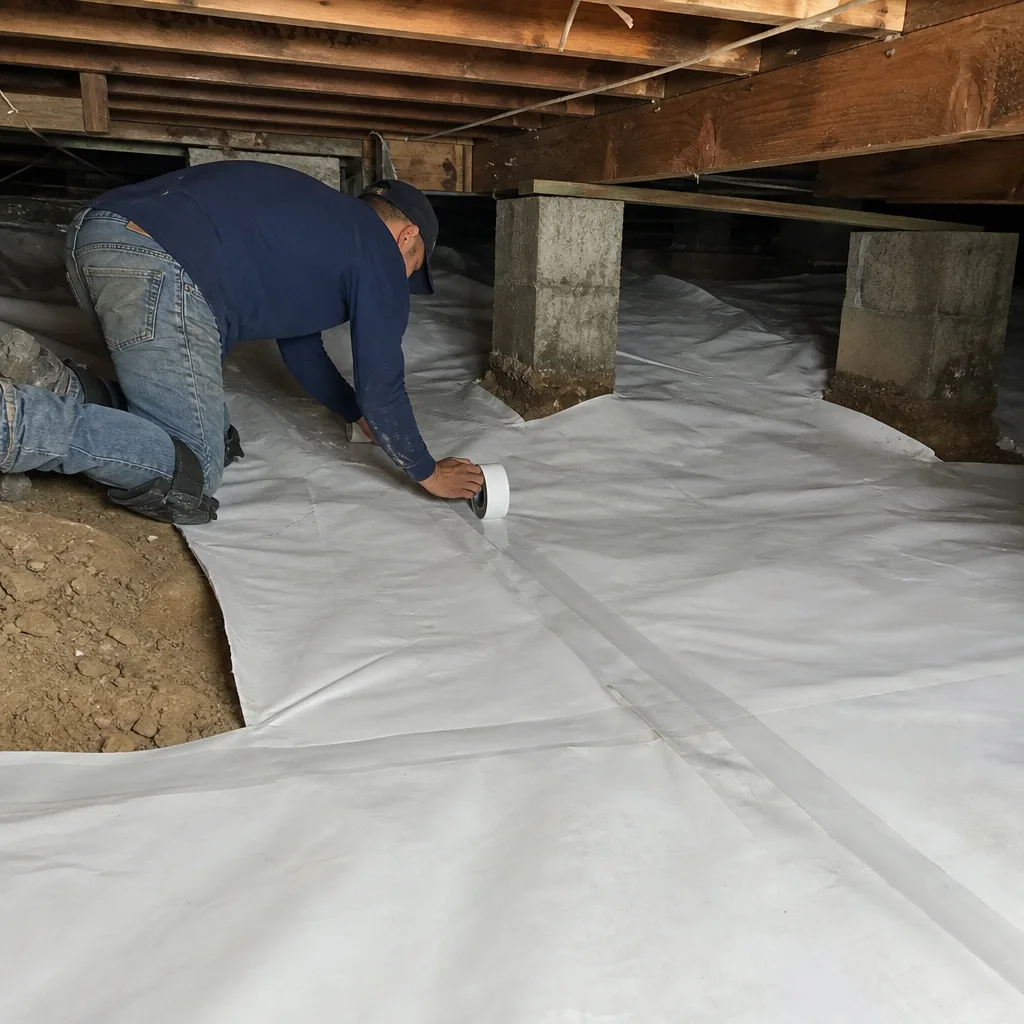
Full encapsulation goes further. The liner is sealed at the seams with tape rated for the application, run up the perimeter walls to the sill plate, and secured there. Foundation vents are sealed or fitted with conditioned-space covers. The goal is to make the crawl space a controlled environment – one that doesn’t swing between dry summer air and wet winter ground conditions depending on what week it is. In El Monte, where January nights can drop into the upper 30s and summer days push above 100 degrees, that temperature differential drives condensation inside unencapsulated crawl spaces that stay perpetually damp at the floor level even when the weather seems dry.
The practical test: if your floor feels cold in winter, your hardwood floors cup or gap seasonally, you notice musty odors near registers, or your subfloor insulation is falling down – those are signs that moisture is moving through your crawl space, not just sitting at the surface. A vapor barrier slows that process. Encapsulation stops it more effectively. We document what we find with photos before we make a recommendation, so you’re looking at the same evidence we are.
What the Job Looks Like at Envelope Insulation Co.
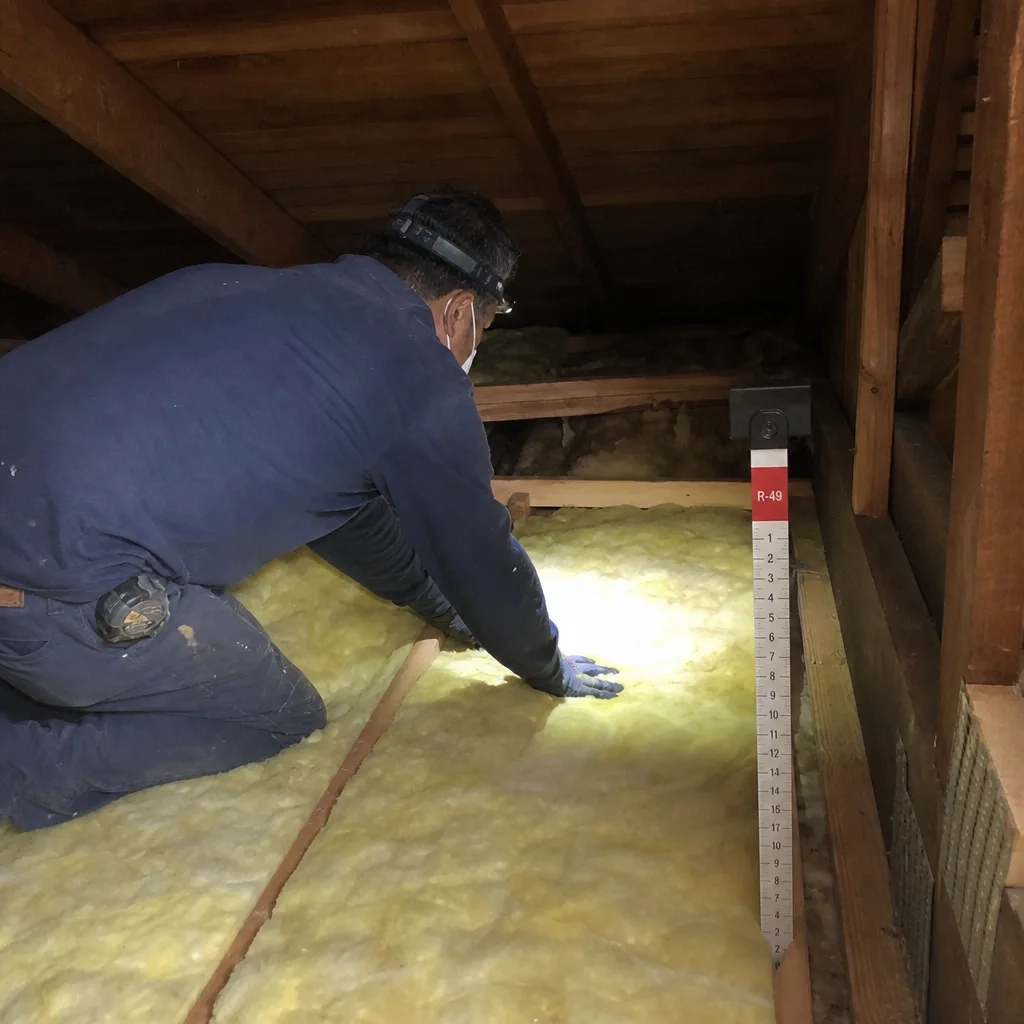
Under Envelope Insulation Co.‘s Haven Standard, the process follows the same sequence on every job in El Monte. First, a technician inspects the crawl space, documents conditions with photos, measures the footprint, notes the access height, and identifies any existing material that needs to come out. That inspection produces a written scope with a flat price – not a range, a number. You review it, ask questions, and either approve it or don’t. No work begins without that written price in hand.
On job day, Wes Okafor’s team arrives in uniform. You get a text when they’re on the way. The crew removes any old poly sheeting, clears debris, and prepares the substrate before any new liner goes down. Seams are taped, perimeter edges are run up the wall and mechanically fastened or adhered, and vent covers are installed per the agreed scope. When the crew leaves, you receive a Documented Photo Record of the completed work – the same documentation standard we apply to every job, whether it’s a $1,400 vapor barrier or a $7,000 full encapsulation.
On applicable jobs, we also provide before-and-after blower-door readings – a pressurization measurement that shows, in one number, how much conditioned air the building envelope was losing before and after sealing. Not every crawl space encapsulation triggers a full blower-door test, but when Crawl Space Insulation and air sealing of the crawl space ceiling (your home’s subfloor assembly) is part of the scope, we document the result. That’s what “sealed first, then insulated” looks like in practice – and it’s why we won’t install batt insulation between floor joists over an unsealed crawl space floor assembly. The sequence matters.
How to Save on Crawl Space Encapsulation & Vapor Barrier in El Monte
The single best way to save on this project is to get a written scope from more than one contractor before committing. Not a verbal estimate – a written one, with line items. Verbal quotes in this category can vary by $1,500 or more on the same job, and without a written breakdown, you have no way to compare what’s actually included.
Envelope Insulation Co. offers a Free Second Opinion on any written estimate. Bring us a competing quote – we’ll read it with you and tell you what’s in it, what’s missing, and what the differences actually mean for your crawl space. That’s Haven Standard: written prices, documented work, no surprises after the crew leaves.
- Combine work when possible. If your crawl space encapsulation is being done at the same time as attic air sealing or insulation replacement, coordinating the jobs into one mobilization usually reduces total cost by $300 to $600 compared to two separate visits.
- Address moisture before it escalates. A vapor barrier installed now on a dry crawl space costs considerably less than encapsulation plus mold remediation plus subfloor repair on a crawl space that’s been wet for two seasons. In El Monte’s older housing stock, we regularly see small moisture problems that were ignored for years become structural ones.
- Don’t over-spec the liner if the conditions don’t require it. A 6-mil liner is adequate for a clean, dry, low-traffic crawl space. If you’re paying for 20-mil but your crawl space has smooth concrete walls and nobody ever goes in there, that’s money that didn’t need to be spent. We’ll tell you which liner grade actually fits your conditions.
- Check for California utility rebates. Southern California Gas Company and some local utility programs have offered rebates on moisture control improvements when paired with qualifying insulation upgrades. These programs change annually – ask during your estimate whether any current incentives apply to your project scope.
- Get the written price first. A contractor who won’t give you a flat written price before starting is one who reserves the right to change the number after you’ve committed. Haven Standard Clause 1 exists precisely because that scenario is common in this trade.
To get a written price for your El Monte crawl space, call (626) 415-3454. Estimates are free and produce a written scope with a flat number – not a range – before anyone schedules a crew.
El Monte Crawl Space Conditions: What We See on the Ground
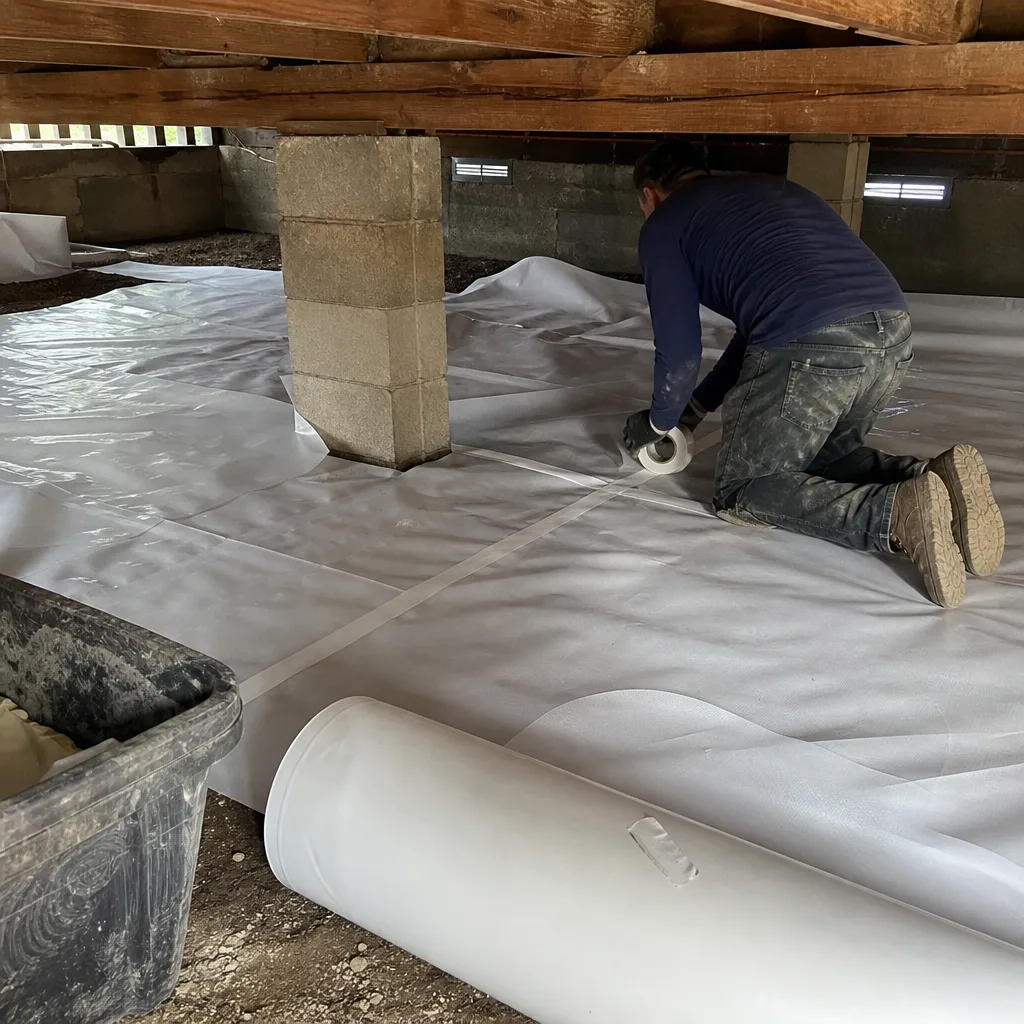
El Monte’s housing stock skews older. A large share of the single-family homes in the city were built between 1945 and 1975, which means pier-and-beam foundations are common – and so are crawl spaces that were never properly sealed. The original construction standard in that era was to leave foundation vents open and lay, at most, a thin sheet of 4-mil poly on the dirt. By 2026, that poly is often shredded, partially buried in debris, and providing almost no moisture protection.
In the Garvey Avenue corridor and near Tyler Avenue, we frequently find crawl spaces where old fiberglass batts have fallen from between the floor joists because the paper facing deteriorated from sustained moisture contact. That falling insulation isn’t just a performance problem – it creates a habitat for rodents and accelerates subfloor decay. The right sequence in that situation is: remove the fallen batts, encapsulate the crawl space floor, address any active moisture source, then re-insulate the floor assembly. Putting new batts up first – before the moisture issue is corrected – just repeats the cycle.
Near the north end of El Monte, closer to the 10 Freeway corridor and the Ramona Boulevard area, crawl space heights are more variable. Some homes have usable 36-inch clearances; others have 14-inch clearances that require specialized equipment and add labor time. We document the height at the access hatch and at the lowest point of the crawl space in the pre-job photos, so the written scope reflects actual conditions rather than a rough guess made from a standing position outside the access hatch.
For a detailed look at how we approach the full scope of Crawl Space Encapsulation & Vapor Barrier in El Monte, that page covers the process, materials, and what to expect from start to finish.
Key Takeaways
- Full crawl space encapsulation in El Monte runs $3,800 to $8,500 for most single-family homes; vapor barrier only runs $1,200 to $2,800.
- The biggest cost drivers are crawl space height, square footage, soil moisture, and whether old material needs to come out first.
- Older El Monte homes near the Rio Hondo and Garvey corridor frequently have soil moisture and access conditions that push projects toward the mid-to-upper range.
- Full encapsulation outperforms vapor barrier only when vents are also sealed and moisture entry from multiple paths is present.
- Every Envelope Insulation Co. job starts with a written price and ends with a Documented Photo Record – no verbal ballparks, no surprise add-ons after work begins.
- A Free Second Opinion on any written estimate is available if you already have a competing quote.
FAQs – Crawl Space Encapsulation & Vapor Barrier Cost in El Monte
How much does crawl space encapsulation cost in El Monte, CA in 2026?
Most full crawl space encapsulation jobs in El Monte fall between $3,800 and $8,500, with the majority of standard single-family homes landing in the $5,000 to $6,800 range. That figure includes a reinforced liner, seam taping, perimeter wall sealing, and foundation vent covers. Jobs at the lower end have clean, accessible crawl spaces with no existing material removal; jobs at the upper end involve tight clearances, wet soil, old poly removal, or dehumidifier installation. Call (626) 415-3454 for a written price specific to your home’s actual measurements.
Is a vapor barrier the same thing as full encapsulation?
No – a vapor barrier is a component of encapsulation, not the same thing. A Crawl Space Vapor Barrier is typically a sheet of polyethylene laid across the crawl space floor with minimal sealing at edges and seams. Full encapsulation means the liner is sealed at every seam with rated tape, run up the perimeter walls to the sill plate, and the foundation vents are sealed or covered. The result is a controlled environment rather than a surface covering. In El Monte’s older housing stock, a vapor barrier alone often slows moisture intrusion; encapsulation stops it more completely. The right choice depends on your crawl space conditions, which a pre-job photo inspection will document before you commit to a scope.
How long does crawl space encapsulation take in El Monte?
Most jobs in El Monte take one to two days. A straightforward encapsulation on a clean 1,200-square-foot crawl space with good access usually wraps in a single day. Add old material removal, low clearances, or a dehumidifier installation and you’re typically looking at two days. We give you the timeline in writing as part of the job scope – not a window of “one to three days depending on conditions,” a specific schedule.
Does crawl space encapsulation require a permit in El Monte?
In most cases, installing a vapor barrier or encapsulation liner does not require a building permit in El Monte under California building code as it currently stands. However, if the scope includes modifying foundation vents in a way that changes the crawl space from a vented to a conditioned space – which can affect HVAC load calculations and mechanical ventilation requirements – a permit may apply depending on how the work is classified. We identify permit requirements during the inspection and include that information in the written scope before you approve anything.
Is it worth paying more for a thicker liner?
For most El Monte crawl spaces that see occasional HVAC access, a 12-mil liner is the practical minimum worth installing in 2026 – the cost difference over 6-mil on a 1,500-square-foot crawl space is typically $500 to $800, and the 12-mil holds up meaningfully better against punctures from foot traffic and rough soil. A 20-mil reinforced liner makes sense when the crawl space sees regular access or has uneven terrain. For a storage-only or sealed crawl space that nobody enters, 6-mil meets code and performs adequately. We’ll show you the soil conditions and access frequency picture in the pre-job documentation and let you decide with full information.
Can I get a written estimate before committing to the work?
Yes – that’s how every job at Envelope Insulation Co. starts. Under Haven Standard Clause 1, a written price with a flat scope is produced before any work is scheduled. There is no version of this process where work begins on a verbal agreement. The estimate is free, includes a documented inspection with photos, and you’re under no obligation until you sign the scope. If you have a competing written estimate, we offer a Free Second Opinion – we’ll read it with you and explain what you’re comparing. Call (626) 415-3454 to schedule your inspection.
Written by Wes Okafor, Owner at Envelope Insulation Co., serving El Monte since 2016. Pricing reflects the El Monte market as of 2026. Topside Attic Insulation El Monte offers free estimates – call (626) 415-3454.
What Our Customers Say
"Turned up on time, protected the hallway, and the written scope matched what was actually done."
- Bruno S."Two other companies quoted to blow more insulation on top of what was there. These were the only ones who said the existing material had to come out first, and explained why."
- Clifford E."They photographed rodent damage in the old insulation that we had no idea about, and priced the exclusion work separately so we could decide."
- Harriet N.