
Last updated September 24, 2026
The Complete Guide to Insulation in El Monte
El Monte sits in California Climate Zone 10 under Title 24, but most online insulation guides are written for Climate Zone 4 or 5 - meaning the R-value targets, material choices, and ventilation strategies they recommend are calibrated for a different state entirely. We’ve measured attic temperatures of 145°F in July on Peck Road homes where the ceiling below was barely insulated, and we’ve found condensation on radiant barriers in South El Monte garages where vapor drive was running the wrong direction for the season. This guide - alongside our more guides & resources - maps every major insulation decision to El Monte’s actual climate data: marine layer mornings that push humidity above 70% before noon, afternoon radiant heat gain through roof decks that mass insulation alone cannot stop, and wildfire smoke events where a tight building envelope is the difference between indoor air quality and a respirator indoors.
Quick Answer
Insulation in El Monte requires R-38 minimum in attics, R-19 in walls, and R-13 in floors under Title 24 - but the real performance gap is air sealing. Most homes we test in El Monte leak 3,000 to 6,000 CFM50 before work starts, meaning conditioned air escapes faster than insulation can retain it. The correct sequence is seal first, then insulate, with a blower-door test to verify the envelope before and after.
Table of Contents
- Why National Insulation Advice Fails in El Monte
- Title 24 Requirements vs. What National Guides Recommend
- Marine Layer Humidity and Vapor Drive in El Monte
- Radiant Heat Gain vs. Conductive Loss: Two Different Problems
- Wildfire Smoke and Building Envelope Tightness
- What a Blower-Door Test Actually Measures
- Insulation Materials That Work in El Monte
- Common Mistakes to Avoid
- When to Call a Professional
- Frequently Asked Questions
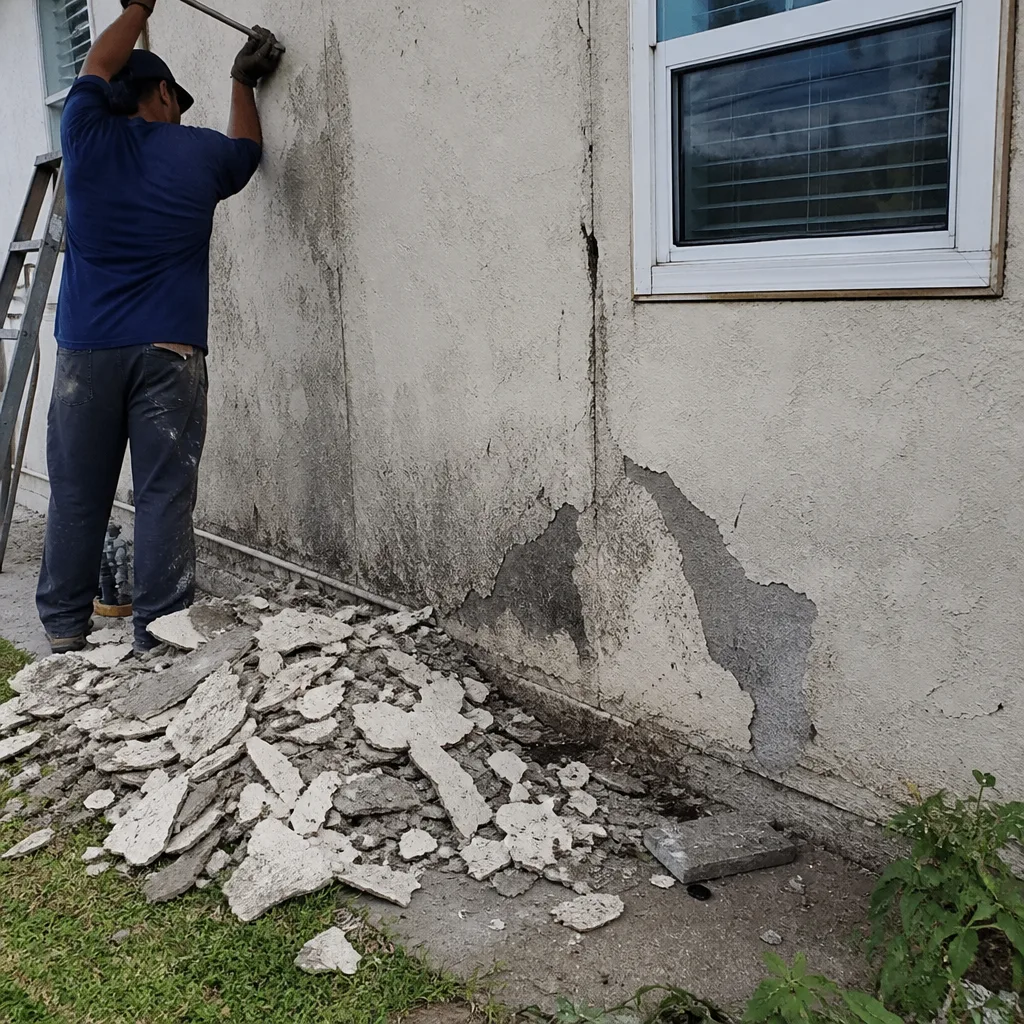 Before
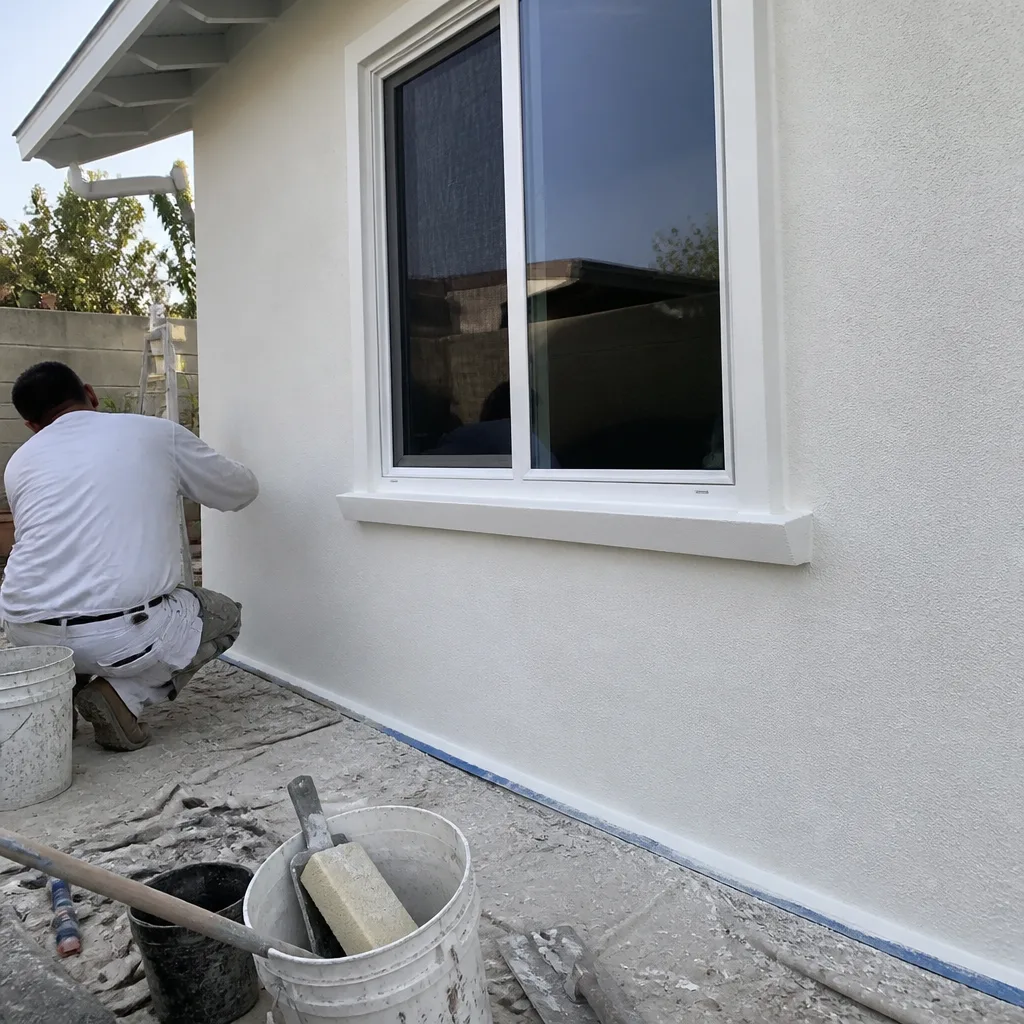 After
AfterWhy National Insulation Advice Fails in El Monte
Search “attic insulation R-value” and you’ll find the Department of Energy recommending R-30 to R-60 for most of the country. What you won’t find is the California-specific table. El Monte falls under Title 24’s Climate Zone 10, which covers the inland valleys and coastal plains of Southern California where heating degree days are low but cooling degree days are substantial. The prescriptive minimum here is R-38 for attics, R-19 for wood-framed walls, and R-13 for floors - lower than cold-climate zones but calibrated for a house that rarely sees freezing temperatures and instead fights heat gain eight months of the year.
The problem isn’t just the numbers. National guides written for Kansas or Ohio assume winter heat loss as the primary driver. They recommend dense-packed cellulose in walls and emphasize thermal bridging at studs. In El Monte, we’ve found the bigger issue is summer afternoon radiant heat blasting through roof decking, then re-radiating into living spaces hours after sunset. A guide written for Minneapolis won’t mention radiant barriers because they don’t need them. In El Monte, on a south-facing roof in August, they’re often the difference between a second-floor bedroom that’s usable and one that isn’t.
We’ve also seen national guides recommend attic ventilation strategies that actively hurt El Monte homes. The “1:300 rule” for vent area gets repeated everywhere, but it doesn’t account for El Monte’s specific wind patterns or the Santa Ana events that can pressurize attics and drive dust through every penetration. Our crews in the Mountain View area have found original 1950s venting that was technically code-compliant but functionally useless because prevailing winds never hit the vents.
What this means practically: before you trust any insulation advice, check which climate zone it was written for. If it doesn’t specify Zone 10 or reference Title 24, it’s not written for your house.
Title 24 Requirements vs. What National Guides Recommend
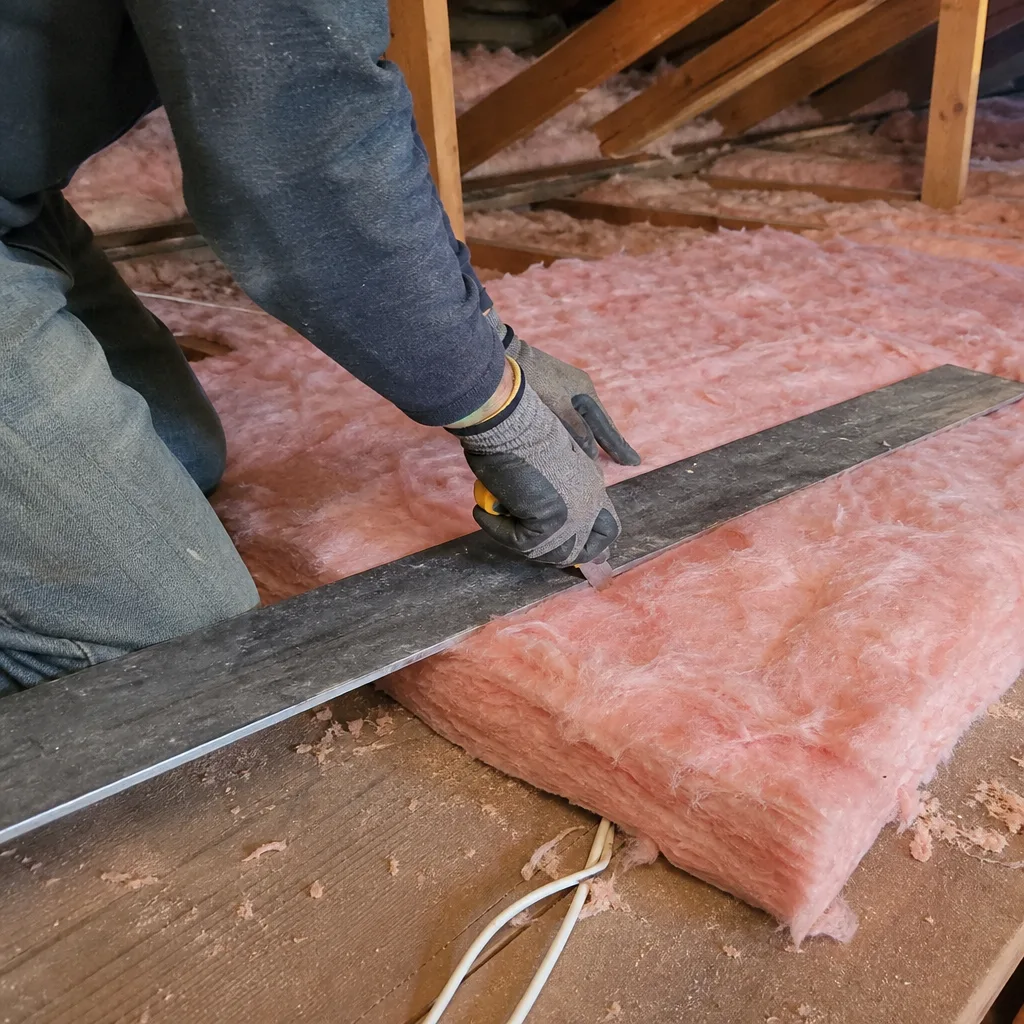
California’s Title 24, Part 6 sets the floor for energy efficiency in new construction and major alterations. For existing homes in El Monte, these numbers become the benchmark for any work that triggers a permit - which includes most insulation removals, additions, or changes to attic ventilation. See our Insulation Cost Breakdown: The El Monte Homeowner’s Reference for 2026 for typical project pricing.
| Assembly | Title 24 Zone 10 Minimum | Common National Recommendation | Gap and Why It Matters |
|---|---|---|---|
| Attic (ceiling) | R-38 | R-49 to R-60 | National guides assume heavy heating loads; El Monte’s cooling-dominated profile means diminishing returns above R-38 without air sealing |
| Wood-framed wall | R-19 | R-13 to R-21 | National range is wide; Title 24’s R-19 assumes 2×6 construction, which many El Monte homes lack without furring |
| Floor over unconditioned space | R-13 | R-25 to R-30 | National assumes cold crawl spaces; El Monte’s mild winters reduce floor heat loss dramatically |
| Slab edge | R-5 minimum vertical insulation | Often omitted entirely | Title 24 recognizes thermal mass coupling in mild climates; national guides may miss this entirely |
The gap that actually matters isn’t the R-value number. It’s what’s behind it. A national guide recommending R-49 in an El Monte attic assumes the homeowner will also air seal - because at R-49, convective losses through leaks become the dominant heat flow path. But the guide doesn’t always say this explicitly. We’ve tested homes in the Garvey neighborhood with R-44 blown fiberglass and blower-door readings over 5,000 CFM50. The insulation was performing; the envelope was not.
Under Haven Standard Clause 1, we publish the written price, scope, and warranty before any work starts. For a typical El Monte attic, that scope includes the R-value target and the air-sealing package as a single item - not an upsell, not optional. Sealed first, then insulated. In that order.
Permit reality in El Monte: the city requires compliance with current Title 24 for any attic insulation project that involves removal and replacement, or any work that alters the thermal envelope. We’ve pulled permits on Durfee Avenue jobs where the previous contractor skipped this step, and the homeowner faced a stop-work order mid-project. Our How to Hire a Insulation Contractor in El Monte: A Step-by-Step Guide explains how to verify this before signing. The written scope we deliver includes permit handling as standard, not a surprise add-on.
Marine Layer Humidity and Vapor Drive in El Monte
El Monte’s mornings belong to the marine layer. From roughly May through October, overnight and early morning relative humidity regularly exceeds 70%, sometimes pushing 85% before the sun burns it off by 10 or 11 a.m. This creates a vapor drive pattern that national insulation guides almost never address: moisture moving from outside to inside during morning hours, then reversing direction as the attic heats and interior air conditioning creates a drying gradient.
Vapor drive is the force that pushes water vapor through building materials. In cold climates, it’s simple: warm, moist interior air pushes outward through the envelope. In El Monte, the direction flips seasonally and even diurnally. A south-facing roof deck at 140°F creates strong outward drive in July. That same roof deck at 65°F with 80% humidity outside creates inward drive at 7 a.m.
What this means for material selection:
- Fiberglass batts without facing can tolerate some moisture cycling if the attic ventilates adequately, but they lose R-value when compressed by condensation events. We’ve removed batts in the Five Points area that had settled to half thickness from repeated wet-dry cycles.
- Dense-pack cellulose handles moisture better than fiberglass by absorbing and releasing it without structural damage, but it requires a vapor-smart assembly. In El Monte, we specify borate-treated cellulose with a Class III vapor retarder on the interior side of walls - not a full vapor barrier, which would trap morning moisture.
- Spray foam (open-cell Icynene or closed-cell Demilec) creates its own air barrier and, in closed-cell form, a vapor barrier. In El Monte attics with complex geometry or limited ventilation, closed-cell at the roof deck can manage vapor drive while eliminating the need for traditional venting. We’ve used this approach on several Peck Road homes with sealed attics - unvented conditioned attics, in code terms - where the roof deck itself becomes the thermal boundary.
- Mineral wool (Rockwool) is hydrophobic and doesn’t absorb liquid water, making it forgiving in El Monte’s humidity swings. Its higher density also provides better sound attenuation for homes under LAX flight paths or near the 10 Freeway.
The mistake we see most often: installing a polyethylene vapor barrier on the warm side of an El Monte attic. This is correct for Minnesota. In El Monte, it traps morning moisture against the drywall, promoting mold in the winter months when interior humidity rises and outward drive meets an impermeable sheet. We use vapor-retarding primer or smart membranes that adapt to humidity levels - permeable when drying is needed, resistant when blocking is needed.
Radiant Heat Gain vs. Conductive Loss: Two Different Problems
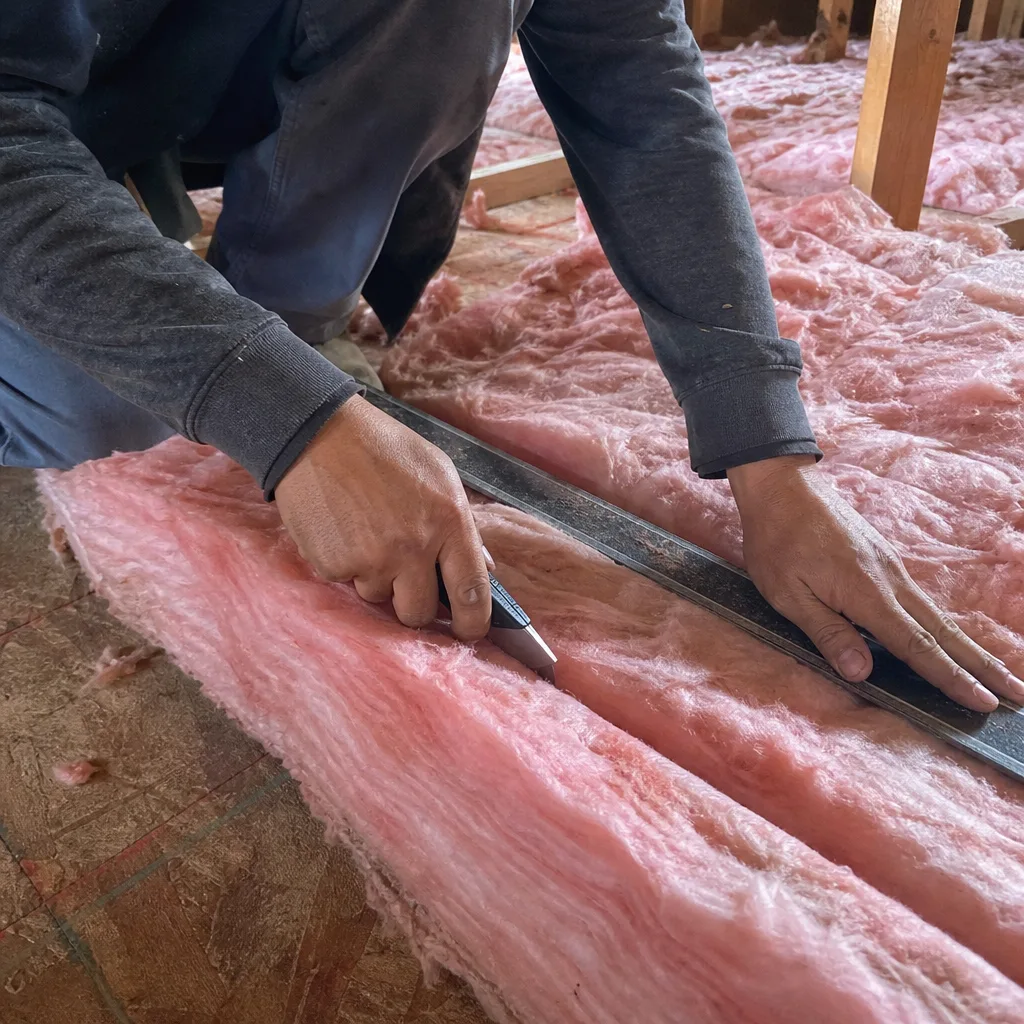
Most homeowners in El Monte call us about a hot second floor. The assumption is that more insulation in the attic will fix it. Sometimes it will. Often it won’t, because the problem isn’t conductive heat flow through the insulation - it’s radiant heat gain through the roof deck, then re-radiation to the ceiling below.
Here’s the physics in plain terms. Conduction is heat moving through solid materials: roof deck to rafter to insulation to drywall. The R-value of your insulation resists this. Radiation is heat traveling as infrared energy across air gaps: the 160°F roof deck radiates directly to the top of your insulation, or to the ceiling if insulation is thin. No amount of R-value stops radiation; only a radiant barrier or reflective surface does.
In El Monte, both matter. A typical July afternoon produces:
- Roof deck temperatures of 140°F to 165°F on dark shingles, measured with infrared cameras on our Durfee Avenue jobs. This is 40°F to 60°F above ambient air temperature.
- Radiant heat transfer to the attic floor of 30 to 50 BTU per square foot per hour, depending on roof color and pitch. Standard R-38 fiberglass reduces conductive flow to perhaps 1 BTU/sf/hr, but the radiation keeps the attic air at 120°F+, which then convects around any gaps in the insulation.
- Heat storage in the roof structure that continues radiating for hours after sunset. We’ve logged attic temperatures above 100°F at 10 p.m. in August on homes with no radiant barrier.
The fix depends on the attic configuration:
Radiant barrier at the roof deck: Foil-faced sheathing or stapled radiant barrier across rafters. This reflects 95%+ of radiant energy back toward the roof deck, dropping attic air temperature 20°F to 40°F. Most effective in vented attics where the reflected heat can escape. We’ve measured attic air at 85°F on a 105°F day with proper radiant barrier and ventilation - versus 125°F without. Attic Insulation in El Monte covers combined radiant barrier and insulation assemblies.
Insulation at the roof deck (unvented conditioned attic): Closed-cell spray foam or rigid foam against the underside of the roof deck, bringing the thermal boundary to the roof plane. The roof deck still gets hot, but that heat is stopped at the foam surface. Interior attic air stays near conditioned space temperature. This approach eliminates the radiant problem by eliminating the hot attic entirely. Spray Foam Insulation in El Monte details when this approach fits.
More mass insulation alone: Adding R-60 fiberglass in a vented attic with no radiant barrier helps, but the attic still hits 115°F. The insulation slows conduction, but the hot attic air convects through any gaps, and the ceiling drywall still sees radiant load. We’ve had homeowners in South El Monte add insulation twice before calling us; the second layer didn’t solve what the first layer couldn’t because radiation was the dominant heat flow.
Our standard El Monte attic package includes: air sealing of top plates, can lights, and penetrations; baffle installation to maintain soffit ventilation; then insulation to R-38 or above. For south-facing roofs with dark shingles, we specify radiant barrier as standard, not optional. The blower-door test confirms the air sealing; the infrared camera confirms the radiant barrier coverage. Both go in the Documented Photo Record.
Wildfire Smoke and Building Envelope Tightness
The 2020 Bobcat Fire burned within 15 miles of El Monte. The 2025 Line Fire pushed AQI above 200 for three consecutive days. Wildfire smoke is no longer a remote concern for San Gabriel Valley homeowners; it’s a recurring indoor air quality event that your building envelope either mitigates or amplifies.
Smoke particles are small - PM2.5 at 2.5 microns, ultrafine particles below 0.1 micron. They penetrate buildings through the same pathways as heat loss: attic bypasses, recessed can lights, electrical penetrations, gaps at top plates, and crawl space vents. A loose envelope doesn’t just waste energy; it admits smoke.
We measure envelope tightness in ACH50 - air changes per hour at 50 Pascals of pressure, the standard blower-door test pressure. Here’s what the numbers mean for smoke infiltration:
- Above 10 ACH50: Very loose. Smoke enters at rates that overwhelm most portable air purifiers. Common in pre-1970 El Monte homes with original construction. We’ve tested homes near Peck Road at 18 ACH50.
- 5 to 10 ACH50: Moderately loose. Some smoke infiltration during pressurized events. Typical of homes with added insulation but no air sealing.
- 3 to 5 ACH50: Moderately tight. Manageable with filtration. Achievable with thorough air sealing and quality windows.
- Below 3 ACH50: Tight. Requires mechanical ventilation (HRV/ERV) but provides excellent smoke protection. We hit 2.1 ACH50 on a comprehensive El Monte retrofit in 2023.
The critical insight: insulation without air sealing does almost nothing for smoke. Blown fiberglass doesn’t filter particles; it just slows heat. A can light in a bedroom ceiling is a direct pathway from attic to room, and smoke doesn’t care about your R-value.
Our approach on every El Monte job is seal first, then insulate. The air sealing package includes:
- Top plate sealing with acoustical sealant or foam, every intersection of wall and ceiling
- Can light enclosures or replacement with airtight IC-rated LEDs
- Electrical and plumbing penetration foam, including wire holes in top plates
- Drywall-to-stud sealing at attic hatches and kneewalls
- Crawl space sealing where applicable - Crawl Space Encapsulation & Vapor Barrier in El Monte addresses this directly
The before-and-after blower-door numbers are published for every applicable job. A recent Garvey neighborhood home went from 6,200 CFM50 to 2,400 CFM50 - a 61% reduction in envelope leakage. During the next smoke event, the homeowner reported indoor AQI stayed below 50 while outdoor readings hit 180. The documentation matters: without the blower-door test, you’re guessing whether your envelope is tight enough.
What a Blower-Door Test Actually Measures
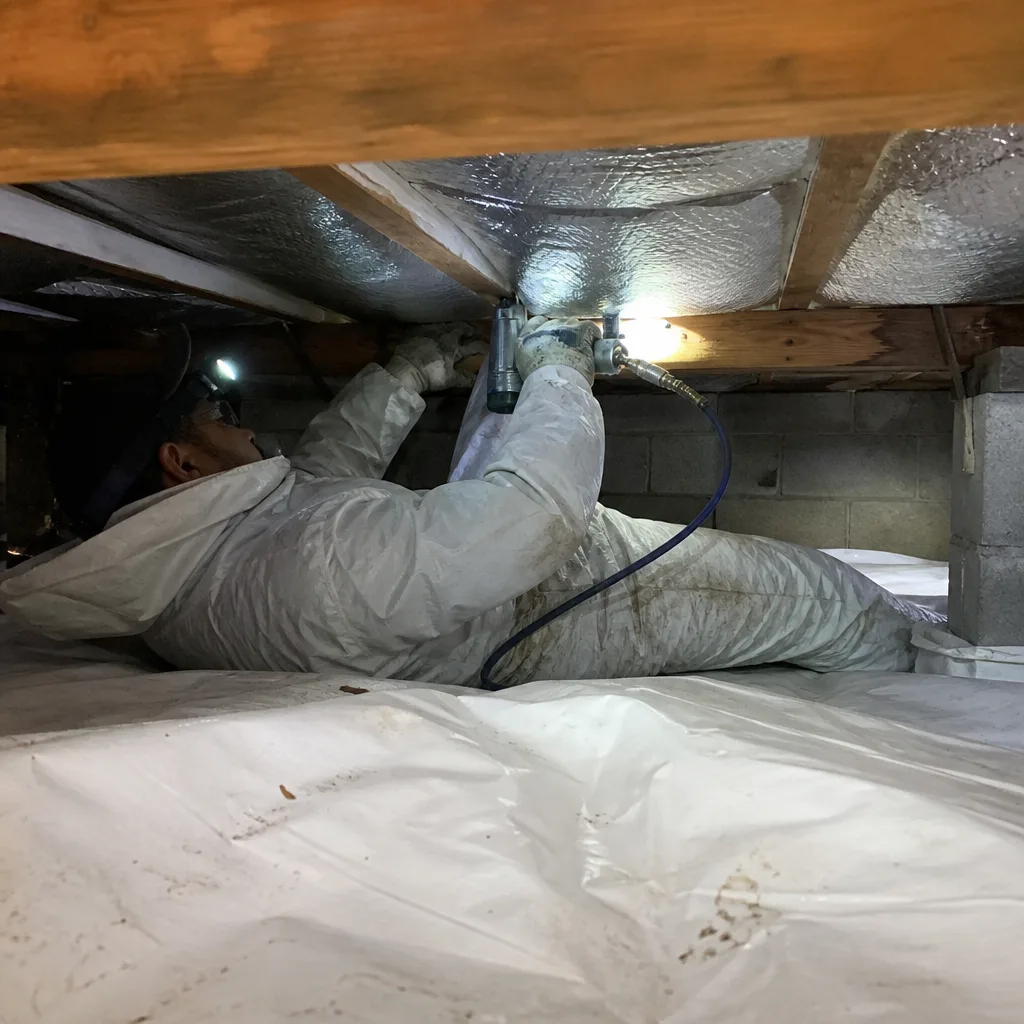
A blower-door test is a pressurization reading that shows, in one number, how much air your building envelope is losing. The equipment is simple: a calibrated fan mounted in an exterior door, a manometer measuring pressure difference, and software calculating airflow at standard test pressure. The result - CFM50, cubic feet per minute at 50 Pascals - is the single most useful diagnostic in residential energy work.
Here’s what happens during a test on a typical El Monte home. We close all exterior doors and windows, open all interior doors, and set up the fan to depressurize the house to 50 Pascals - roughly the pressure of a 20 mph wind. The fan speed required to maintain that pressure tells us the total hole size in the envelope. A typical 1,600 square foot El Monte home from the 1960s might read 4,500 CFM50. That’s equivalent to a 9-inch by 9-inch hole open to outside, continuously.
The test does more than produce a headline number. With the house under pressure, we can:
- Locate leaks with a smoke pencil or infrared camera: The pressure gradient pulls air through every gap, making them visible. We’ve found open stud cavities in Mountain View homes that were hidden by insulation, acting as chimneys between floors.
- Quantify the impact of specific repairs: Seal the attic, test again. Seal the crawl space, test again. Each step shows its contribution to the whole.
- Verify combustion safety: In homes with gas appliances, depressurization can reveal backdrafting risk. We won’t complete air sealing without this check.
- Project energy savings: El Monte’s cooling-dominated climate means every 100 CFM50 reduction saves roughly 150 to 200 kWh annually in typical cooling load, depending on duct location and system efficiency.
Why the test belongs at the start, not the end:
We’ve been called to homes where a previous contractor blew insulation, collected payment, and left. The homeowner still had hot rooms, high bills, and now couldn’t see the attic floor to diagnose why. A blower-door test after insulation is installed can measure overall tightness but can’t guide targeted sealing without removing material. The correct sequence is: test, seal, test, insulate, test. Each test validates the step before and guides the step after.
Under Haven Standard, we provide before-and-after blower-door readings on every applicable job. The homeowner receives the numbers in writing, with the documented photo record showing where leaks were found and how they were sealed. No performance claim without measurement. That’s Clause 1 applied to diagnostics.
Insulation Materials That Work in El Monte
Material selection in El Monte is constrained by climate, code, and building geometry. Here’s how the common options perform in actual Zone 10 conditions, with specific applications we’ve used in local homes.
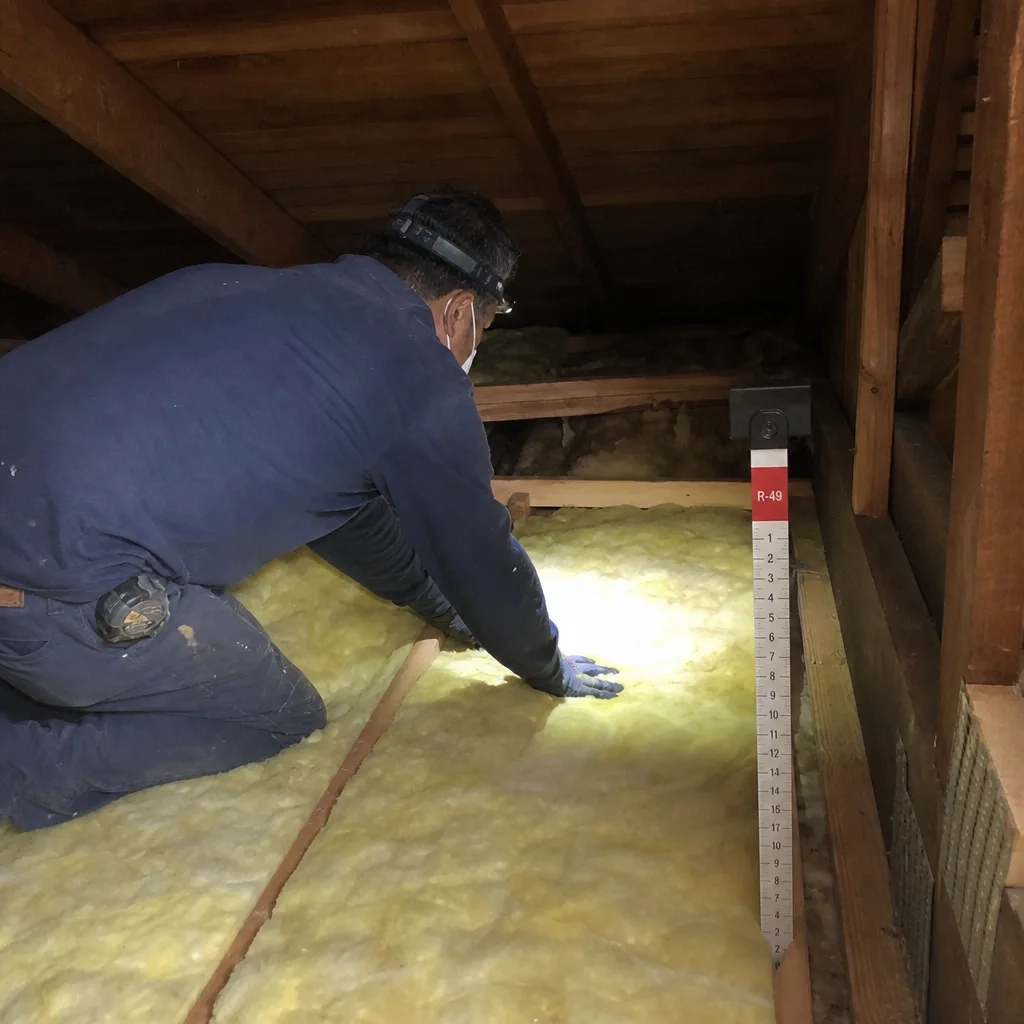
Blown-in fiberglass (CertainTeed InsulSafe SP or equivalent): The standard for open attic floors in El Monte. Settles less than older formulations, maintains R-value at the temperature extremes we see. We specify minimum 12 inches for R-38 in new construction, 14+ inches in retrofits accounting for some settling. Best for vented attics with good access and relatively uniform joist spacing. Not suitable for roof deck application.
Blown-in cellulose: Higher density than fiberglass, better air resistance, slightly better sound attenuation. The borate fire retardant is a plus in wildfire country. We use it in El Monte homes where floor traffic noise between stories is a concern, or where we’re dense-packing walls from the exterior. Requires care with vapor management - not because cellulose fails, but because dense-pack in a humid climate needs the assembly to dry in at least one direction.
Open-cell spray foam (Icynene Classic Plus or similar): Half-pound density foam that expands to fill cavities, creates an air barrier at 3.5 inches, and is vapor-permeable. We use it in El Monte for:
- Vaulted ceilings where batt insulation leaves gaps at the ridge
- Floor assemblies over unconditioned crawl spaces, combined with crawl space sealing
- Sound control in media rooms or bedrooms under flight paths
Not for roof deck application in unvented attics - the vapor permeability can allow moisture accumulation against the deck in our climate.
Closed-cell spray foam (Demilec Heatlok XT or similar): Two-pound density, R-6.5 per inch, vapor barrier at 1.5 inches. Our choice for:
- Unvented conditioned attics - applied directly to roof deck, creating thermal boundary at the roof plane
- Crawl space walls in full encapsulations
- Rim joist sealing in homes with elevated floors
- Structural reinforcement in earthquake-vulnerable crawl spaces - the rigid foam adds shear resistance
Higher cost per R-value than fiberglass, but the air sealing is integral, not added. On complex El Monte homes with multiple roof planes, dormers, or conditioned attic space, it’s often the only practical path to a continuous thermal boundary.
Mineral wool (Rockwool Comfortbatt or AFB): Fireproof, hydrophobic, high density. We specify Rockwool in El Monte for:
- Party walls in duplexes and townhomes - the fire rating is inherent, not added
- Interior walls where sound transmission is the primary concern
- Exterior walls in wildfire-urban interface zones - won’t contribute fuel if embers penetrate siding
Heavier than fiberglass, requires more structural support in horizontal applications. Not typically our first choice for open attic floors due to cost and handling, but specified where fire or moisture resilience is paramount.
Radiant barriers: Not insulation in the R-value sense, but essential for El Monte’s radiant heat problem. Foil-faced OSB at the roof deck during re-roofing is optimal. Retrofit radiant barrier foil across rafters is second-best. Radiant barrier paint on the roof deck is least effective - we’ve measured 15% to 30% reflectance versus 95%+ for foil products. We don’t specify paint.
Material sourcing: we use Owens Corning, Johns Manville, Knauf, Rockwool, CertainTeed, Icynene, Demilec, and GreenFiber products as specified for each job. No proprietary lock-in, no single-source requirement. The right material for the assembly, not the material we have a rebate on.
Common Mistakes to Avoid
- Blowing insulation over unsealed attic floors. This is the most common error we correct in El Monte. The insulation hides the leaks, makes future sealing nearly impossible without removal, and often convects around the gaps, reducing effective R-value by 30% or more. Seal first, then insulate. Always.
- Installing vapor barriers on the wrong side. Polyethylene sheeting on the warm-in-winter side is correct for cold climates. In El Monte, it traps morning marine layer moisture against drywall. We’ve found mold on ceiling drywall in Five Points homes where this was done “by the book” - the wrong book.
- Blocking soffit vents with insulation. Every vented attic needs a clear air path from soffit to ridge. We find baffles missing or crushed in roughly half the El Monte attics we inspect. The insulation performs worse, and the roof deck overheats, accelerating shingle degradation.
- Ignoring the garage ceiling. Attached garages in El Monte often have living space above or shared walls with conditioned rooms. An uninsulated garage ceiling is a thermal bridge and an air leakage path. We’ve measured 15°F temperature differences in bedrooms over uninsulated garages.
- Specifying R-value without air sealing target. A contractor who quotes “R-38 blown fiberglass” without mentioning ACH50 or CFM50 is selling a product, not a performance outcome. The number that matters for comfort and bills is the combination: insulation R-value plus envelope tightness.
- Using recessed can lights without airtight enclosures. IC-rated cans are fire-safe but not air-sealed. In El Monte’s smoke events and hot attic conditions, they’re literal holes in your ceiling. We specify airtight LED retrofits or sealed enclosures on every job.
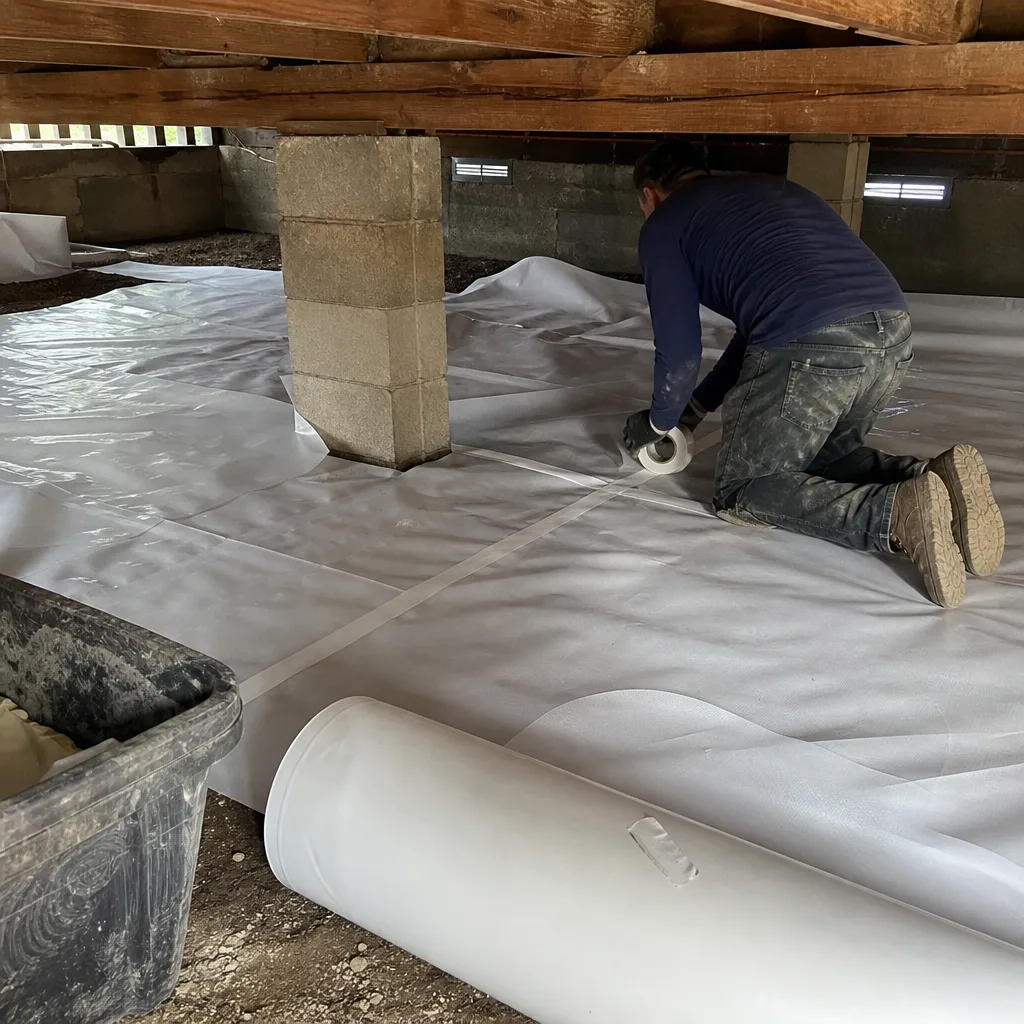
- Neglecting the crawl space. El Monte has significant crawl space construction, especially in pre-1980 homes. An unsealed crawl space with a dirt floor is a humidity source, a radon pathway, and a thermal bypass. Crawl Space Encapsulation & Vapor Barrier in El Monte addresses this directly.
When to Call a Professional
Some insulation work is straightforward for experienced homeowners. Most isn’t, and the cost of getting it wrong - moisture damage, fire risk from improper clearances, or simply wasted money on ineffective work - exceeds the savings of DIY.
Call a professional when: your home was built before 1980 and has never had a blower-door test; you’re considering spray foam of any type; you’ve had ice damming, ceiling stains, or musty odors from the attic or crawl space; you’re finishing an attic or garage conversion and need to meet Title 24; or you’ve received a quote that specifies R-value without mentioning air sealing or envelope tightness.
Topside Attic Insulation El Monte offers free estimates in El Monte - call (626) 415-3454. Every estimate includes a written price, scope, and warranty before any work starts, per Haven Standard Clause 1. We also provide free second opinions on any written estimate from another contractor; bring us the paperwork and we’ll read it with you.
Frequently Asked Questions
Most attic insulation jobs in El Monte run between $2,800 and $5,500 for a typical 1,200 to 2,000 square foot home, depending on existing insulation condition, access difficulty, and whether air sealing is included. Air sealing alone typically adds $800 to $1,800 but delivers more comfort improvement than insulation without it. We provide a written price before any work starts - call (626) 415-3454 for an exact quote; estimates are free.
Title 24 requires R-38 minimum in attics, R-19 in wood-framed walls, and R-13 in floors for Climate Zone 10. In practice, we specify R-38 to R-49 in attics with full air sealing, as the incremental material cost is low and the performance benefit is measurable. National guides recommending R-60 are written for colder zones where heating dominates; in El Monte, air sealing matters more than the last few R-points.
Insulation alone does not filter smoke. A tight building envelope does, by reducing the infiltration pathways that smoke particles follow. We’ve measured 60% to 70% reductions in smoke particle entry after comprehensive air sealing, verified by before-and-after blower-door tests. For smoke events, combine envelope tightening with a MERV 13+ HVAC filter and portable HEPA units in sleeping areas.
Spray foam is worth the premium when the geometry is complex - vaulted ceilings, multiple dormers, conditioned attic space - or when the roof deck itself must become the thermal boundary. For simple rectangular attics with good access, blown fiberglass or cellulose at R-38 with thorough air sealing often delivers comparable performance at lower cost. We recommend spray foam when it solves a problem that other materials cannot.
Fiberglass and mineral wool insulation lasts 80 to 100 years if protected from moisture and disturbance. Cellulose settles slightly in the first years, typically 5% to 10%, then stabilizes. Spray foam does not degrade measurably in normal building conditions. The real lifespan issue in El Monte is not the insulation material but the assembly around it: roof leaks, pest damage, or remodeling disturbance. Our 365-Day Done Right Promise covers any installation issue; material warranties from manufacturers like CertainTeed or Demilec extend well beyond.
A vented attic has outside air flowing through soffit and ridge vents, with insulation at the floor. An unvented attic is sealed and conditioned, with insulation at the roof deck. In El Monte, vented attics are standard and cost-effective for simple roof forms. Unvented conditioned attics make sense when the attic contains HVAC equipment, when the roof geometry makes floor insulation impractical, or when radiant barrier at the roof deck is desired. We’ve converted several Peck Road and Mountain View attics to unvented when the existing ductwork was losing 20% to 30% of cooling capacity to a 130°F attic.
The Bottom Line
Insulation in El Monte is not a commodity purchase. Climate Zone 10’s cooling dominance, marine layer humidity, and wildfire exposure create conditions that generic national advice misaddresses. The correct approach: air seal first with verified blower-door numbers, then insulate to Title 24 minimums or above with materials selected for the specific assembly and exposure. Radiant barriers for south-facing roofs, vapor-smart assemblies for humidity cycling, and documented performance at project close - these are the differences between insulation that exists and insulation that works. We’ve sealed and insulated over 9,000 homes since 2016, every one with a written price before work started and a documented record when the crew left. The Haven Standard applies to every El Monte job we take.
Ready to see what your envelope is actually doing? Call (626) 415-3454 for a free estimate. We’ll run the blower-door test, show you the numbers, and deliver a written price and scope before any work starts.
Written by Wes Okafor, Owner at Topside Attic Insulation El Monte, serving El Monte since 2016.